


Primary sourceNewspaper article18 June 1934
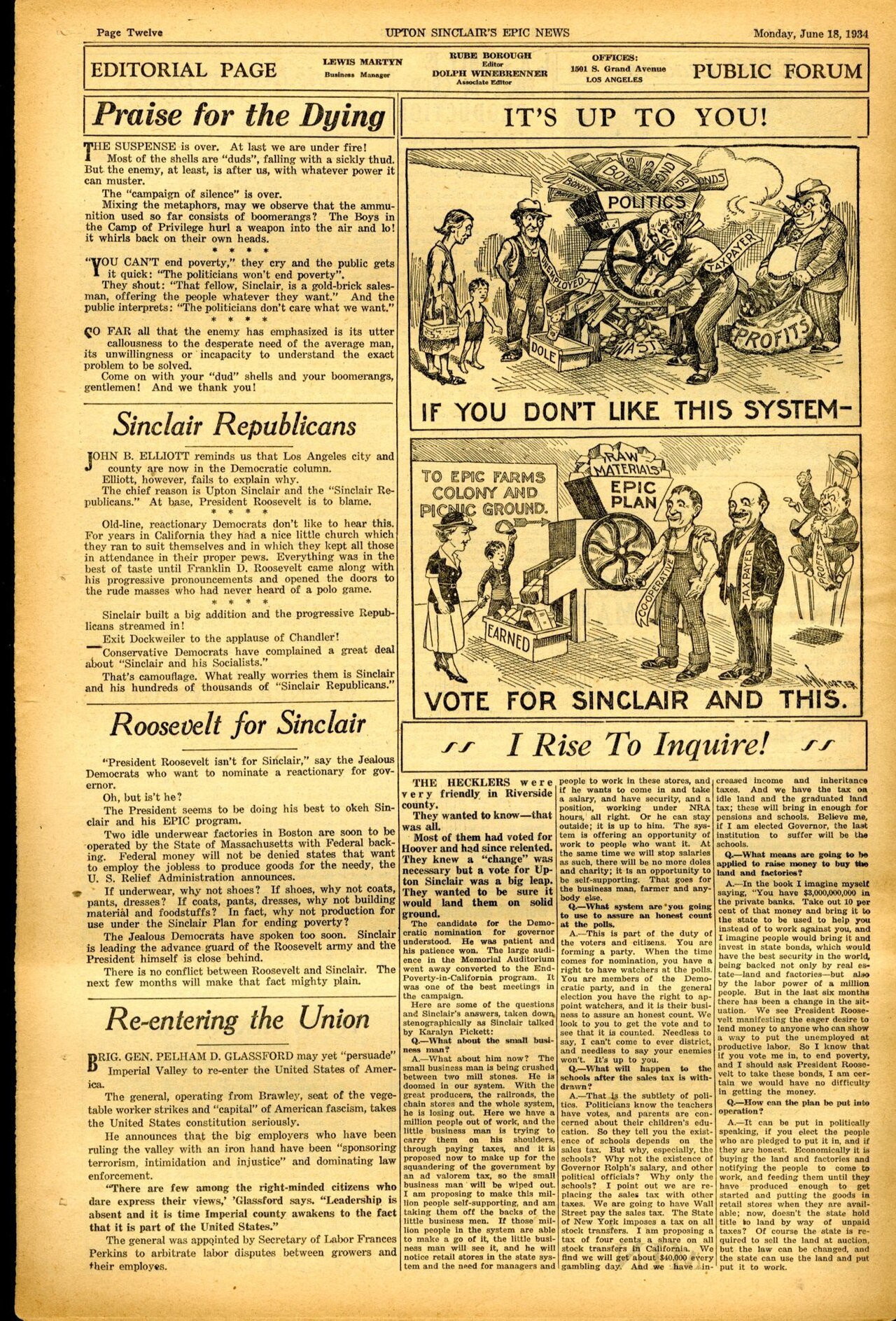
EPIC News, Page 12, 18 June 1934
EPIC News · 18 June 1934
An inside editorial page of the EPIC campaign newspaper, printed during Upton Sinclair's 1934 campaign for governor of California. It shows how his supporters argued their case to voters.
Shows Sinclair's 1934 governor campaign through its own newspaper, which he was associated with as its name carries his.
About this source
What it is
This is page 12 of the EPIC News, dated Monday, 18 June 1934, under the masthead "Upton Sinclair's EPIC News." The page is an editorial page with the names of the business manager, editor and associate editor, and a Public Forum section. Its headlines include "Praise for the Dying" and "Sinclair Republicans," and it has two political cartoons labeled "If you don't like this system" and "Vote for Sinclair and this." The newspaper was produced by EPIC News and the scan is held on Wikimedia Commons.
Why it matters
EPIC stood for "End Poverty in California," the program Sinclair used in his 1934 governor campaign. This page shows the campaign speaking directly to readers, answering critics who called Sinclair a "gold-brick salesman" and who said that politicians would not end poverty. It reveals how a campaign paper framed the fight as a struggle against an "enemy" of the average man, and how it used everyday language and cartoons to win votes.
Look closer
- Which words in the headlines and column text do the editors use to describe their opponents, and how do they want readers to feel?
- What do the two cartoons ask the reader to think or do, and who do you think they were aimed at?
- What does this page leave out, such as the voices of the opponents it quotes only briefly?
This newspaper article is part of the curated material that grounds the AI version of Upton Sinclair on Humy.ai — when students ask about related events, the AI can quote it and cite it.
More Upton Sinclair sources
Meet the AI Upton Sinclair →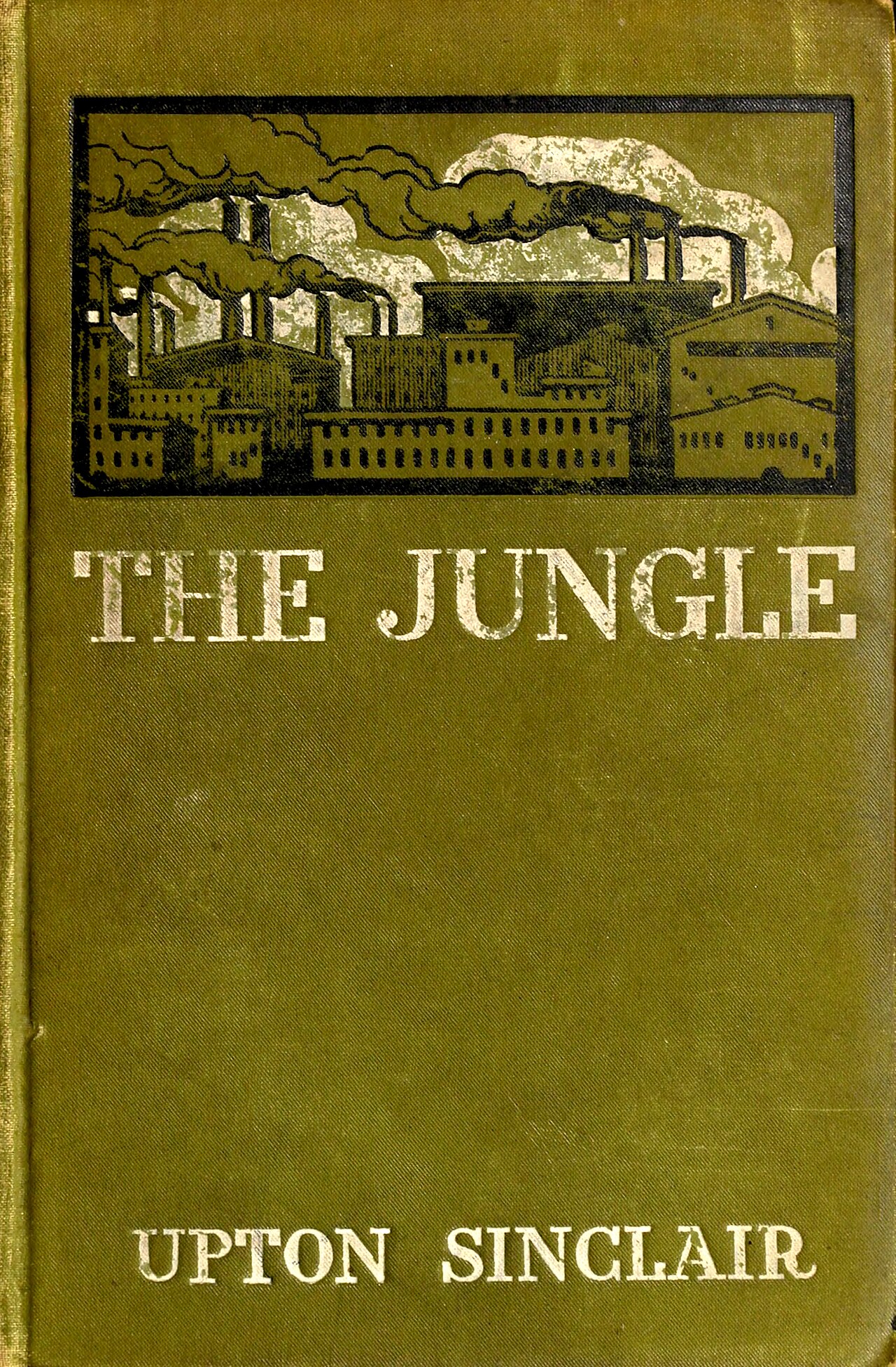 Book
Primary source
The Jungle
Upton Sinclair · 1906
Primary source
Pure Food and Drug Act
1906
 Photograph
Primary source
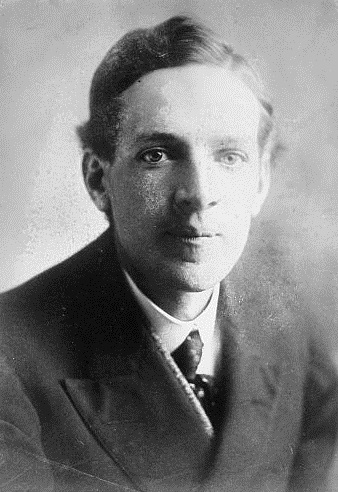
Upton Sinclair Early in His Career
Bain Collection
Primary source
The Brass Check
Upton Sinclair · 1919
 Photograph
Primary source
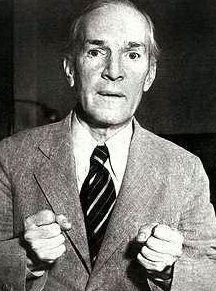
Upton Beall Sinclair Jr. on Time Magazine
International · 1934
Ready when you are
Start chatting with Upton Sinclair now.
20 messages free · No credit card · Available in 50+ languages.