


Secondary sourcePainting1634/35
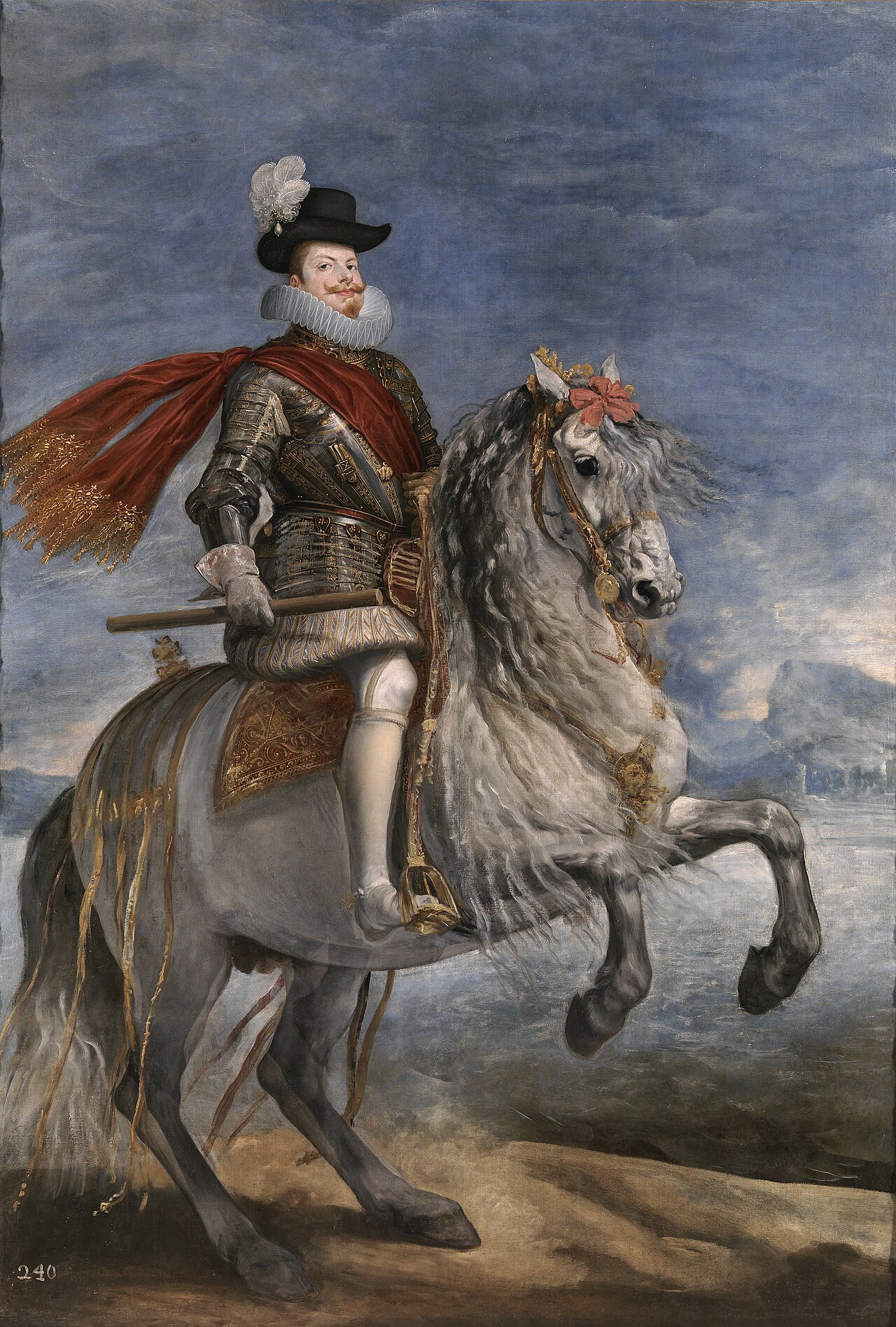
Equestrian Portrait of Philip III
Diego Velázquez · 1634/35
A posthumous painting by Velázquez showing Philip III on horseback, made for his son Philip IV's palace hall over a decade after the king's death.
This posthumous equestrian portrait of Philip III was commissioned by his son to fix his image within the Habsburg dynasty.
About this source
What it is
This painting shows King Philip III of Spain on a rearing horse. It was painted by Diego Velázquez and his workshop in 1634/35, more than ten years after Philip III died, and was commissioned by his son, King Philip IV. It was made for the Hall of Realms at the Buen Retiro Palace and now hangs in the Museo del Prado.
Why it matters
Because it was painted after Philip III's death, this portrait is not a record of how he actually looked but of how his son's court wanted him remembered, as part of a series of royal family portraits. It shows how images of dead kings were still used to support the authority of their descendants.
Look closer
- Why might a king commission a portrait of his father years after he died?
- What symbols of power and military strength can you find in the painting?
- How might this differ from a portrait made while Philip III was alive?
This painting is part of the curated material that grounds the AI version of Philip III of Spain and Diego Velázquez on Humy.ai — when students ask about related events, the AI can quote it and cite it.
More Philip III of Spain sources
Browse all 92 →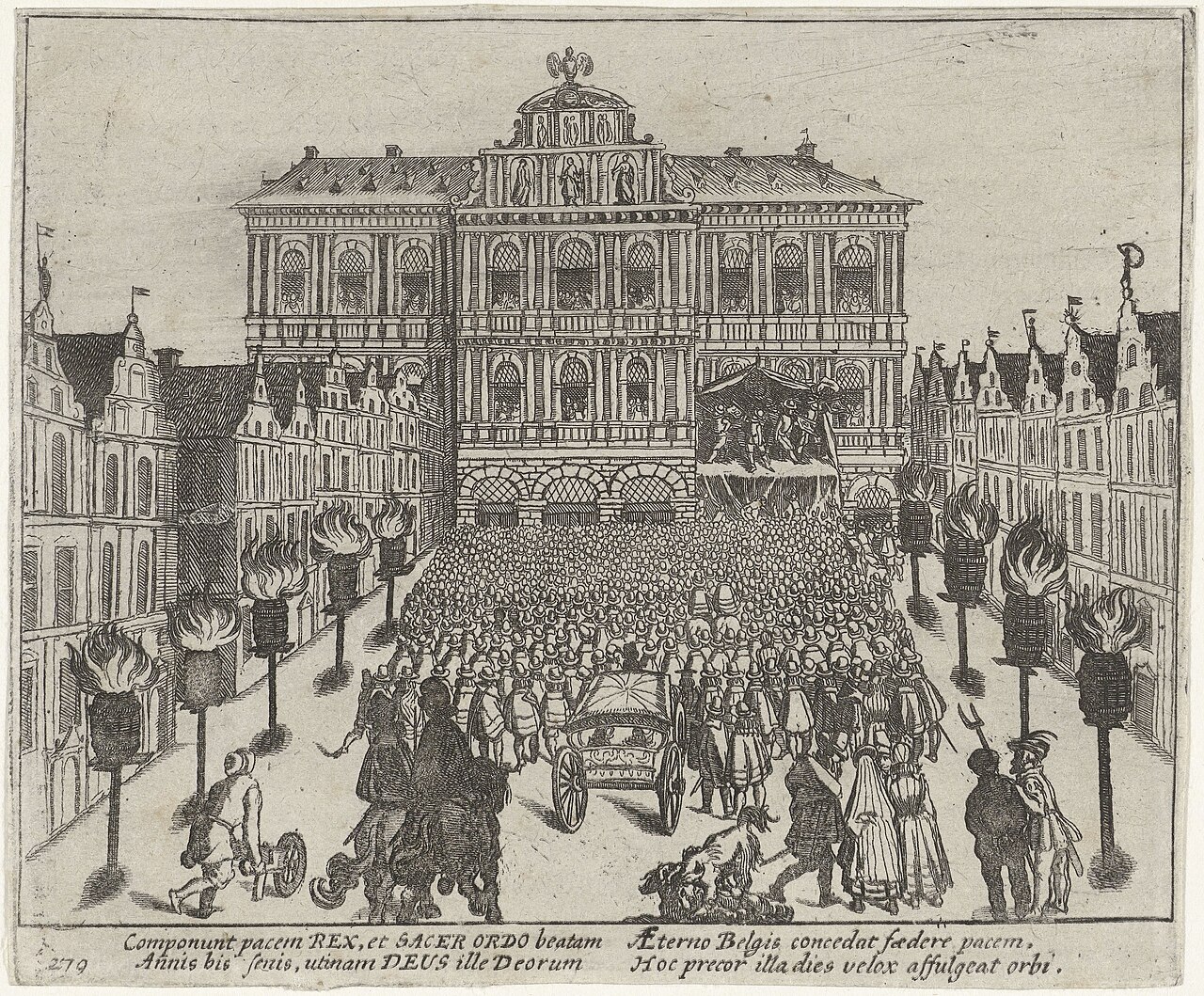 Document
Primary source
Twelve Years' Truce
1609
 Sculpture
Secondary source
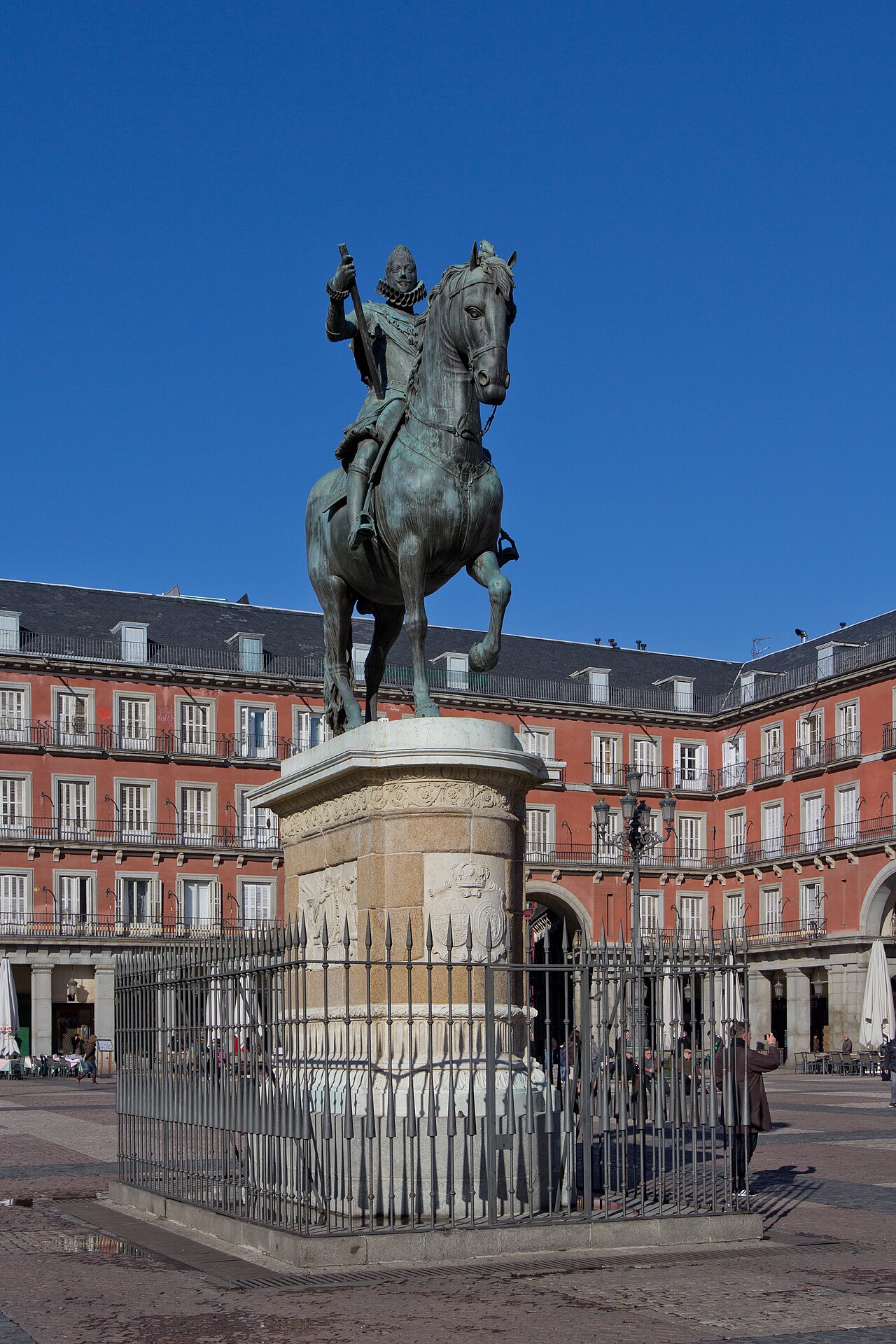
Equestrian statue of Philip III of Spain, Madrid
Giambologna · 1616
 Painting
Primary source
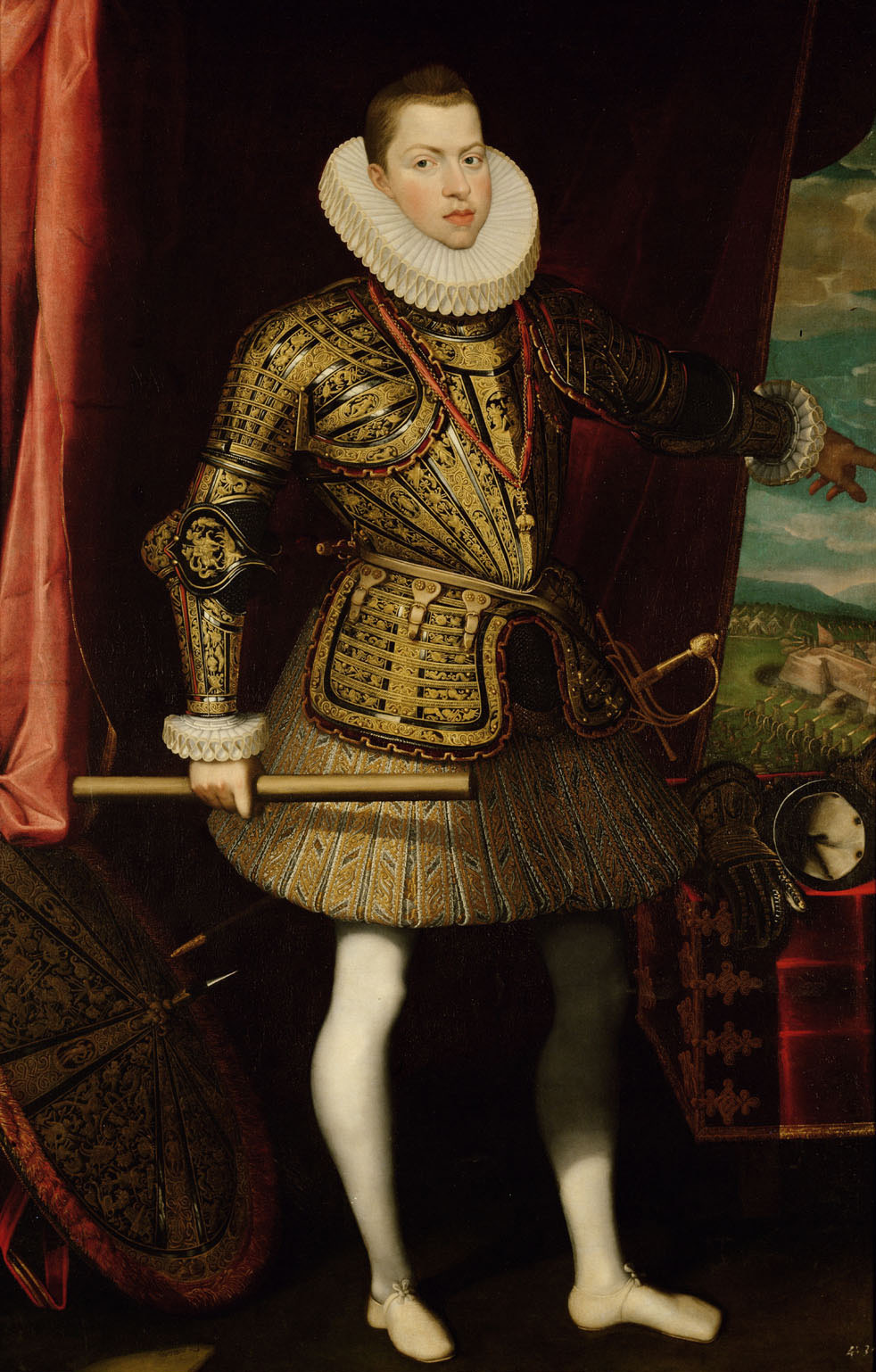
King Philip III of Spain as General of the Infantry
Juan Pantoja de la Cruz · 1601
 Painting
Primary source
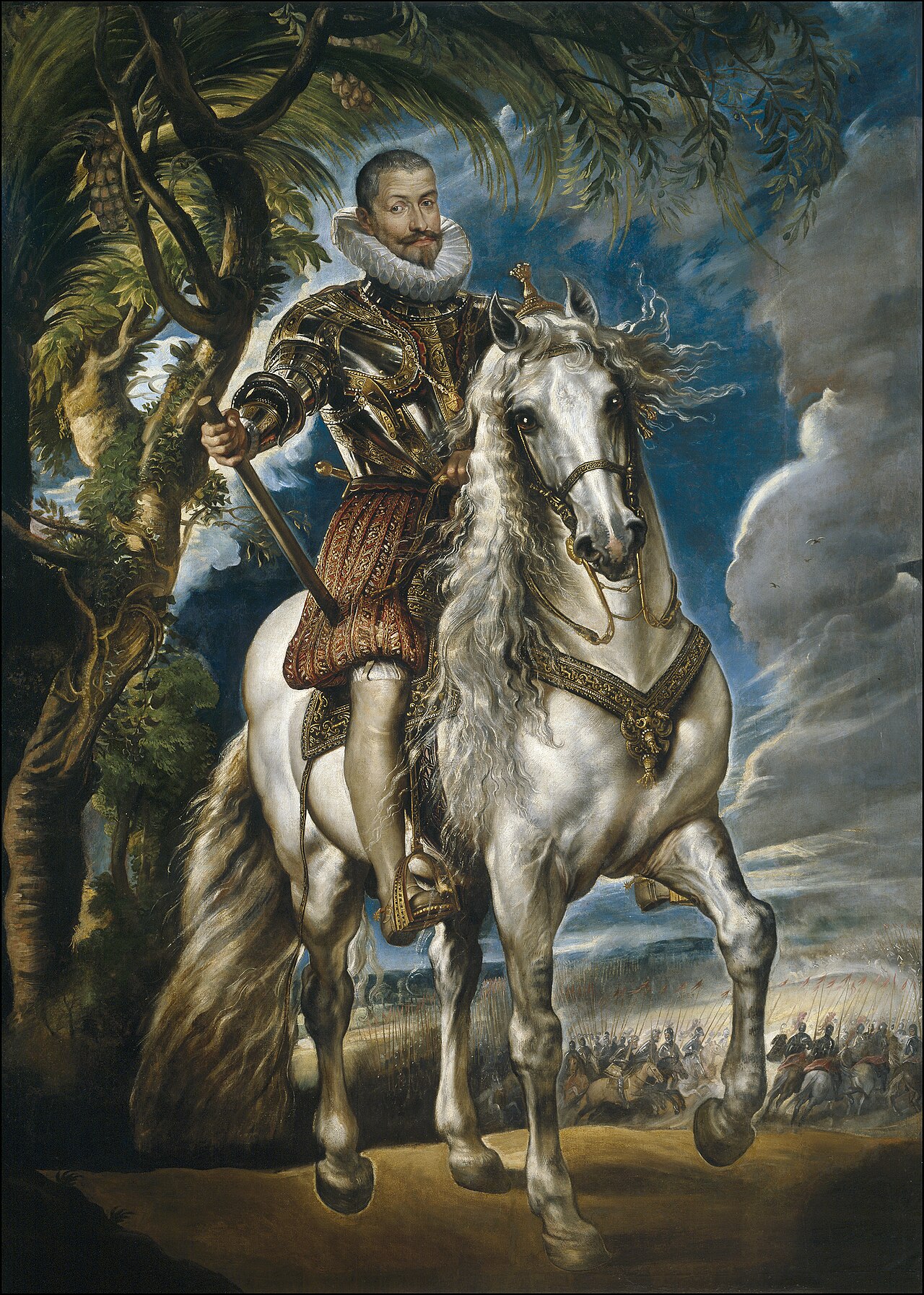
Equestrian Portrait of the Duke of Lerma
Peter Paul Rubens · 1603
Free account
Read every Philip III of Spain source
Sign up free →
Ready when you are
Start chatting with Philip III of Spain now.
20 messages free · No credit card · Available in 50+ languages.