


Tertiary sourceArtifact19th century (reconstruction of 3rd century BCE original)
Eratosthenes' Map of the World
Unknown author · 19th century (reconstruction of 3rd century BCE original)
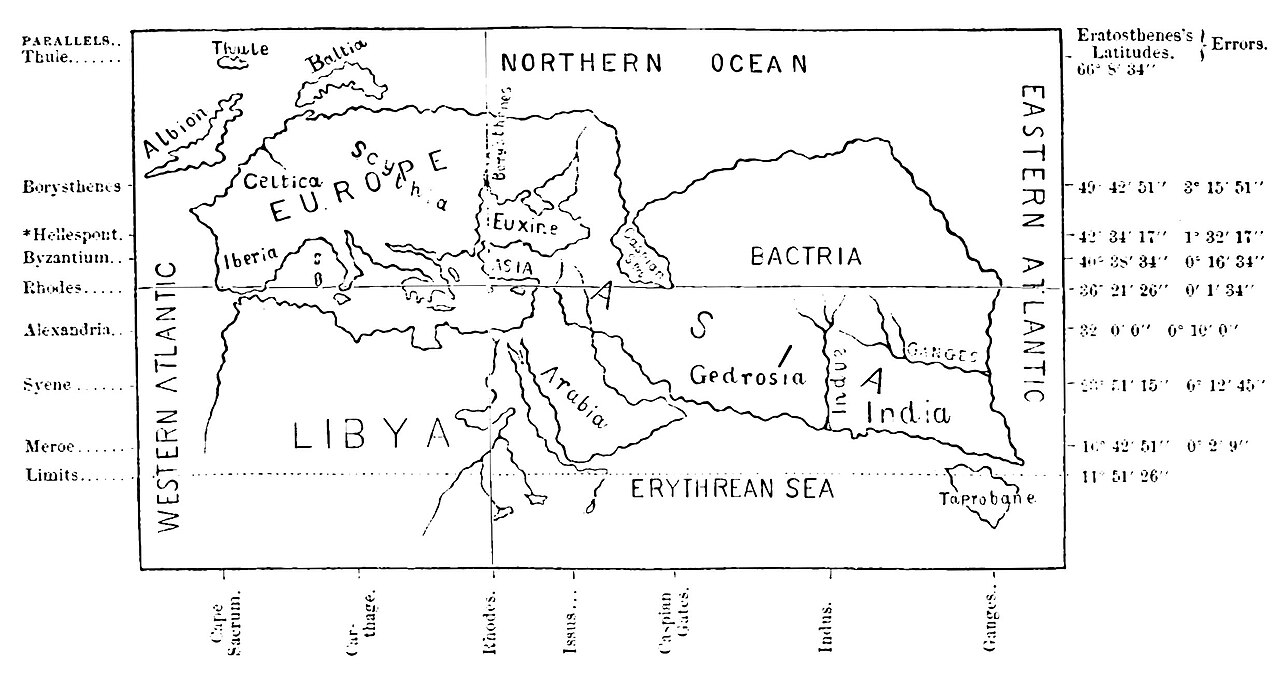
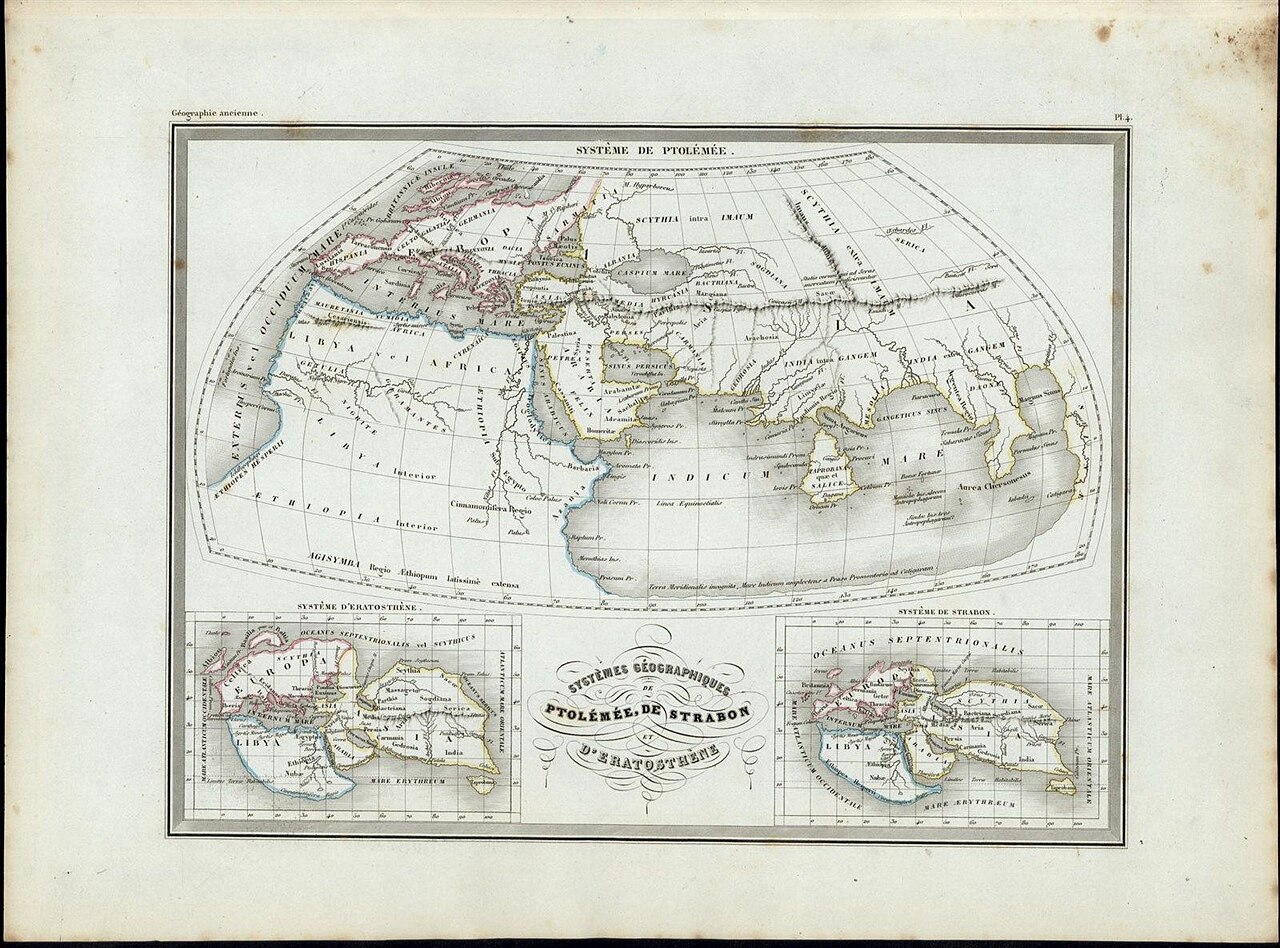
A 19th-century engraved reconstruction of the world map Eratosthenes is believed to have drawn, based on descriptions in ancient texts.
This is a modern reconstruction of the world map Eratosthenes is believed to have created, based on ancient descriptions.
About this source
What it is
This is a line engraving from the 19th century that reconstructs the world map attributed to Eratosthenes, showing the lands and seas known to the Greeks, labeled with names such as Europe, Asia, Libya, India, and Taprobane, along with latitude lines and meridians.
Why it matters
No original map by Eratosthenes survives; this image is a later scholarly attempt to visualise what his map might have looked like, based on descriptions preserved in ancient texts such as Strabo's Geography. It reflects Eratosthenes' pioneering use of a grid of parallels and meridians to organise geographical knowledge, an early step toward mapping the world mathematically.
Because it is a modern reconstruction rather than the original artifact, it tells us as much about how later scholars have tried to recover and interpret ancient geography as it does about Eratosthenes himself.
Look closer
- Since this map is a later reconstruction, how much can we trust it to show what Eratosthenes actually drew?
- What does the use of parallels and meridians suggest about how Eratosthenes thought about the Earth?
- What has been left out or guessed at in a reconstruction like this?
This artifact is part of the curated material that grounds the AI version of Eratosthenes on Humy.ai — when students ask about related events, the AI can quote it and cite it.
More Eratosthenes sources
Browse all 52 →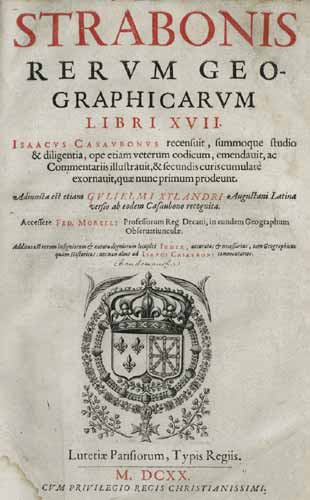 Book
Secondary source
Geography
Strabo · c. 20 AD
 Letter
Primary source
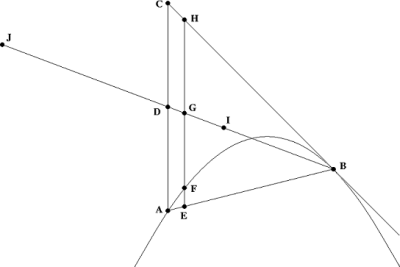
The Method of Mechanical Theorems
Archimedes · c. 250 BCE
 Document
Secondary source
Suda
various authors · c. 1000
Secondary source
Natural History, Book 2, on Eratosthenes' Earth Measurement
Pliny the Elder · c. 77 CE
Free account
Read every Eratosthenes source
Sign up free →
Ready when you are
Start chatting with Eratosthenes now.
20 messages free · No credit card · Available in 50+ languages.