


Secondary sourceBookc. 77 CE
Natural History, Book 2, on Eratosthenes' Earth Measurement
Pliny the Elder · c. 77 CE
Pliny the Elder's Roman encyclopedia reports Eratosthenes' famous measurement of the Earth's circumference.
Pliny's Natural History preserves and praises Eratosthenes' calculation of the Earth's circumference.
Free Humy account · No credit card · 120,912 sources to read
About this source
What it is
This passage comes from Book 2 of the Natural History, a vast encyclopedia written in Latin around 77 CE by the Roman writer Pliny the Elder. In it, Pliny reports Eratosthenes' calculation of the Earth's circumference as 252,000 stadia, a figure Pliny praises for its subtlety.
Why it matters
This is one of the key ancient sources telling us about Eratosthenes' famous measurement of the Earth, an achievement that shows the sophistication of Greek geometry and astronomy. Some historians think Eratosthenes chose this particular number because it could be divided evenly by every number from one to ten, which would make later calculations easier; others think it reflects a specific unit of length he used.
That a Roman writer, working centuries later and in a different language, still found this measurement worth recording and praising shows how far Eratosthenes' reputation as a scientist travelled.
Look closer
- Why might a round, easily divisible number have been useful to Eratosthenes and later readers?
- What does Pliny's praise tell us about how Romans viewed Greek scientific achievement?
- What are the risks of relying on a report written more than two centuries after the original calculation?
This book is part of the curated material that grounds the AI version of Eratosthenes on Humy.ai — when students ask about related events, the AI can quote it and cite it.
More Eratosthenes sources
Browse all 52 →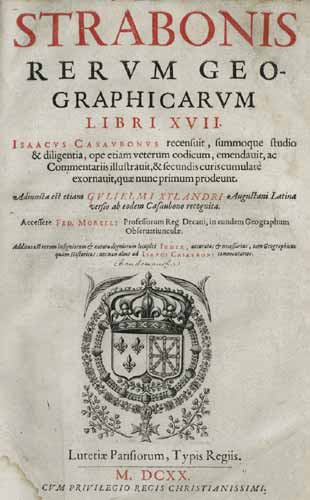 Book
Secondary source
Geography
Strabo · c. 20 AD
 Letter
Primary source
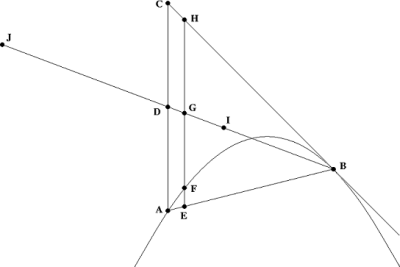
The Method of Mechanical Theorems
Archimedes · c. 250 BCE
 Document
Secondary source
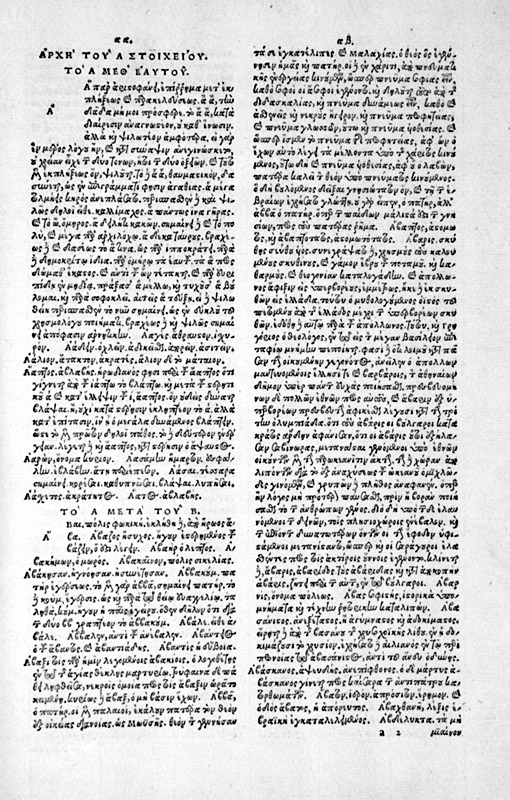
Suda
various authors · c. 1000
 Artifact
Tertiary source
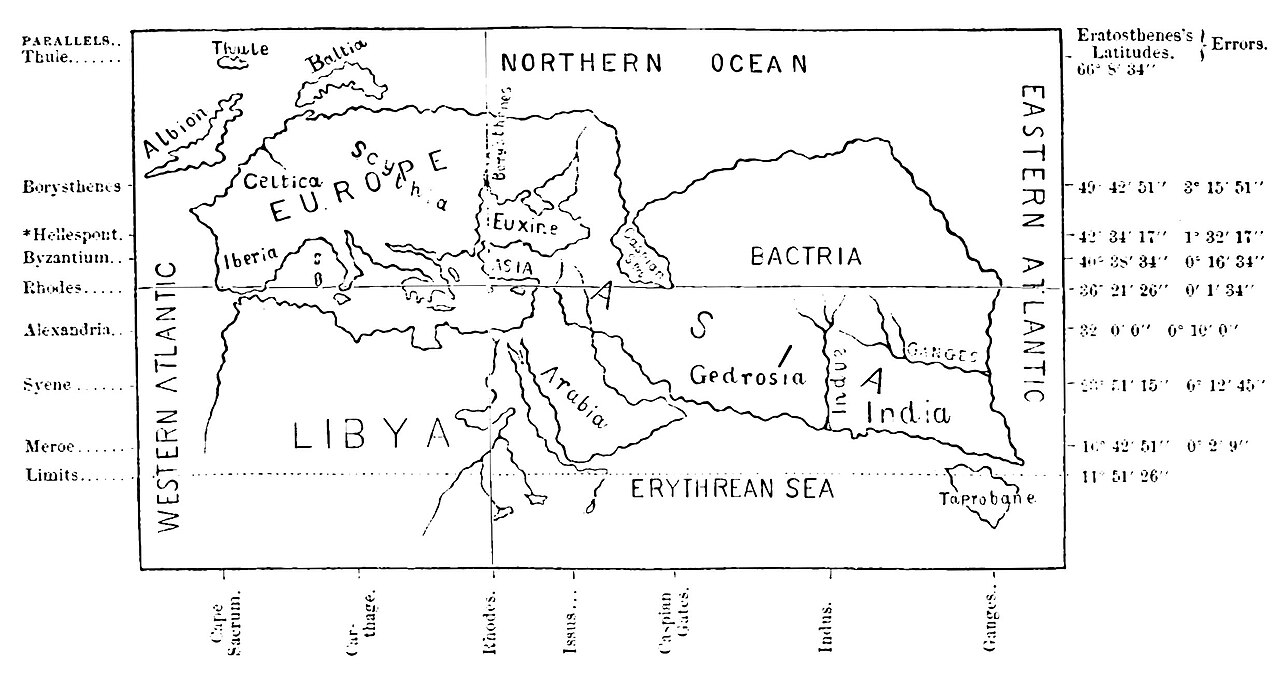
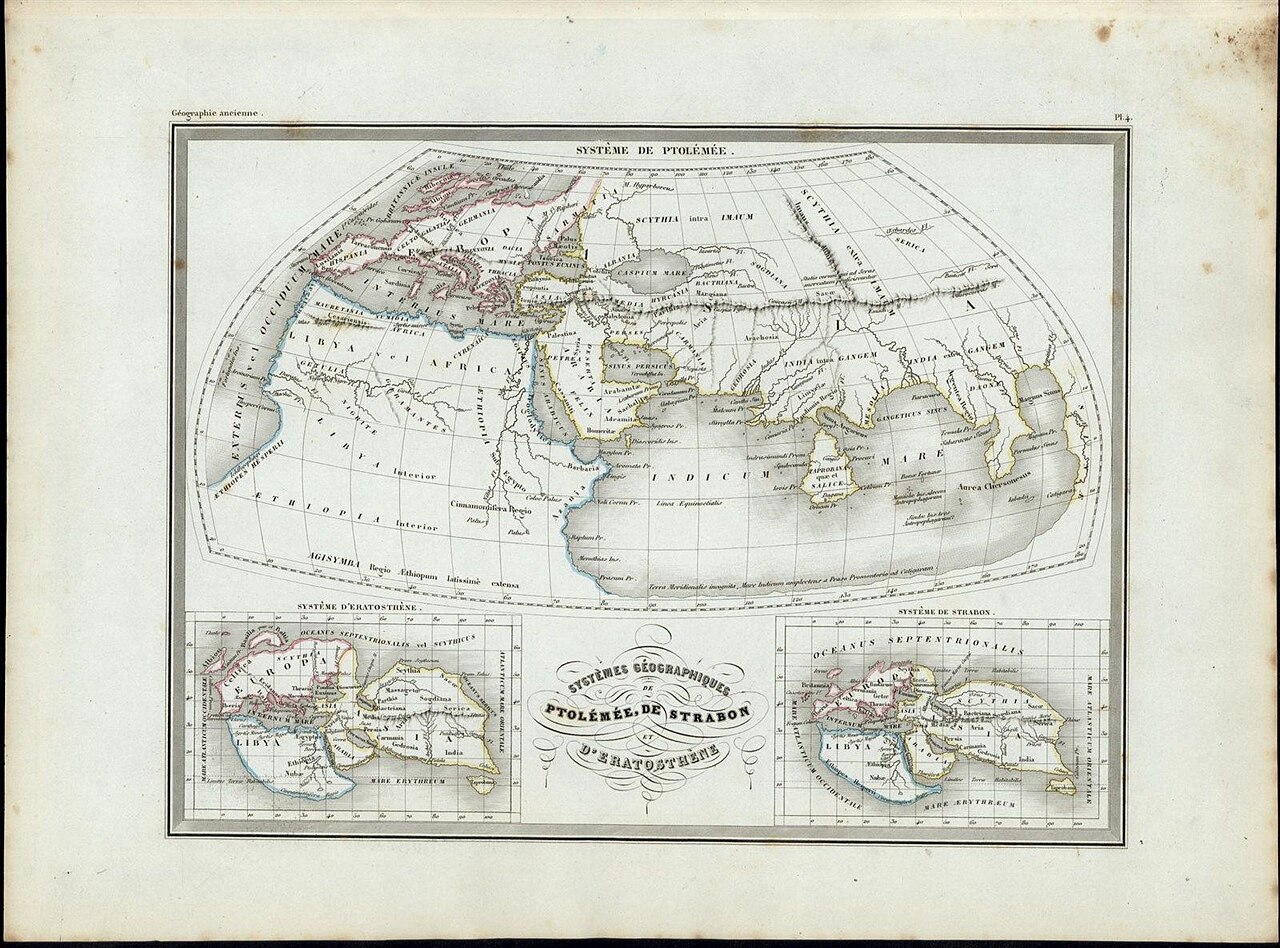
Eratosthenes' Map of the World
Unknown author · 19th century (reconstruction of 3rd century BCE original)
Free account
Read every Eratosthenes source
Sign up free →
Ready when you are
Start chatting with Eratosthenes now.
20 messages free · No credit card · Available in 50+ languages.