


Primary sourceBook1847
Evangeline
Henry Wadsworth Longfellow · 1847
An 1847 epic poem by Longfellow about an Acadian woman separated from her love during the 1755 expulsion of the Acadians.
Longfellow's authorship of this poem made him famous and shaped popular memory of the Acadian expulsion.
Free Humy account · No credit card · 53,307 sources to read
About this source
What it is
This epic poem was written by Henry Wadsworth Longfellow and published in 1847. It tells the story of a fictional Acadian woman, Evangeline, searching for her lost fiancé after the British expulsion of Acadians from Nova Scotia. Longfellow wrote it in unrhymed dactylic hexameter, inspired by his friend Nathaniel Hawthorne, who first heard the underlying story.
Why it matters
Though Longfellow had never visited Nova Scotia and relied on history books for background, the poem became enormously popular and shaped how Americans and Acadians themselves remembered the expulsion. It remains an important text for Acadian and Cajun identity, even though modern historians note it is not a reliable historical account.
Look closer
- Why might a poem, rather than a history book, have had such a strong effect on public memory?
- What choices did Longfellow make about form and language, and why did he defend them?
- What parts of the real history of the Acadian expulsion might the poem simplify or leave out?
This book is part of the curated material that grounds the AI version of Henry Wadsworth Longfellow on Humy.ai — when students ask about related events, the AI can quote it and cite it.
More Henry Wadsworth Longfellow sources
Browse all 97 →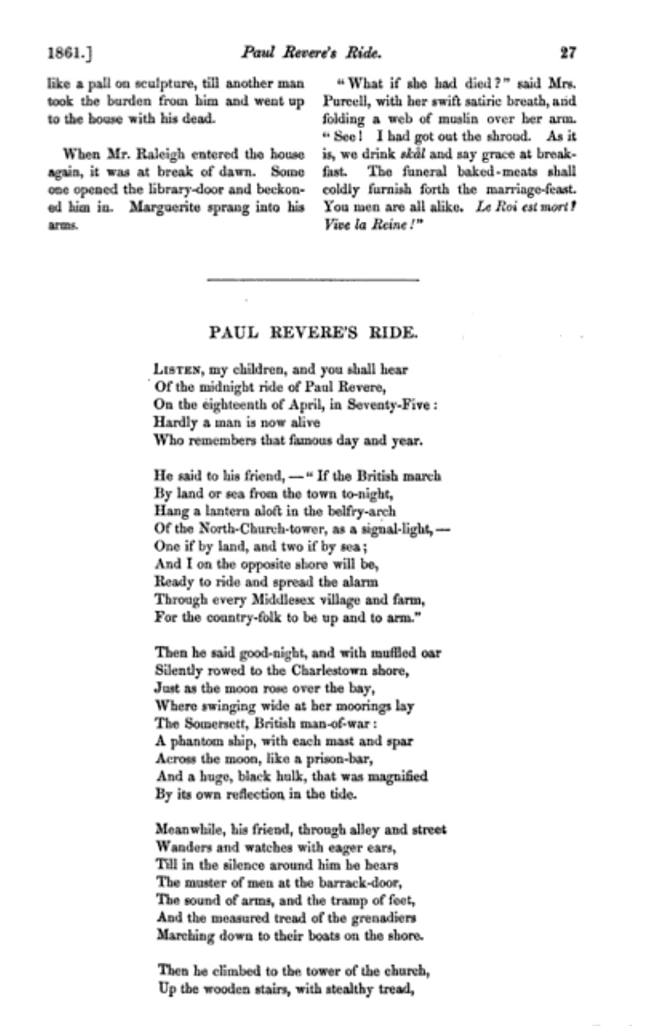 Book
Secondary source
Paul Revere's Ride
Henry Wadsworth Longfellow · 1860
Primary source
The Song of Hiawatha
Henry Wadsworth Longfellow · 1855
Primary source
A Psalm of Life
Henry Wadsworth Longfellow · 1838
 Book
Primary source
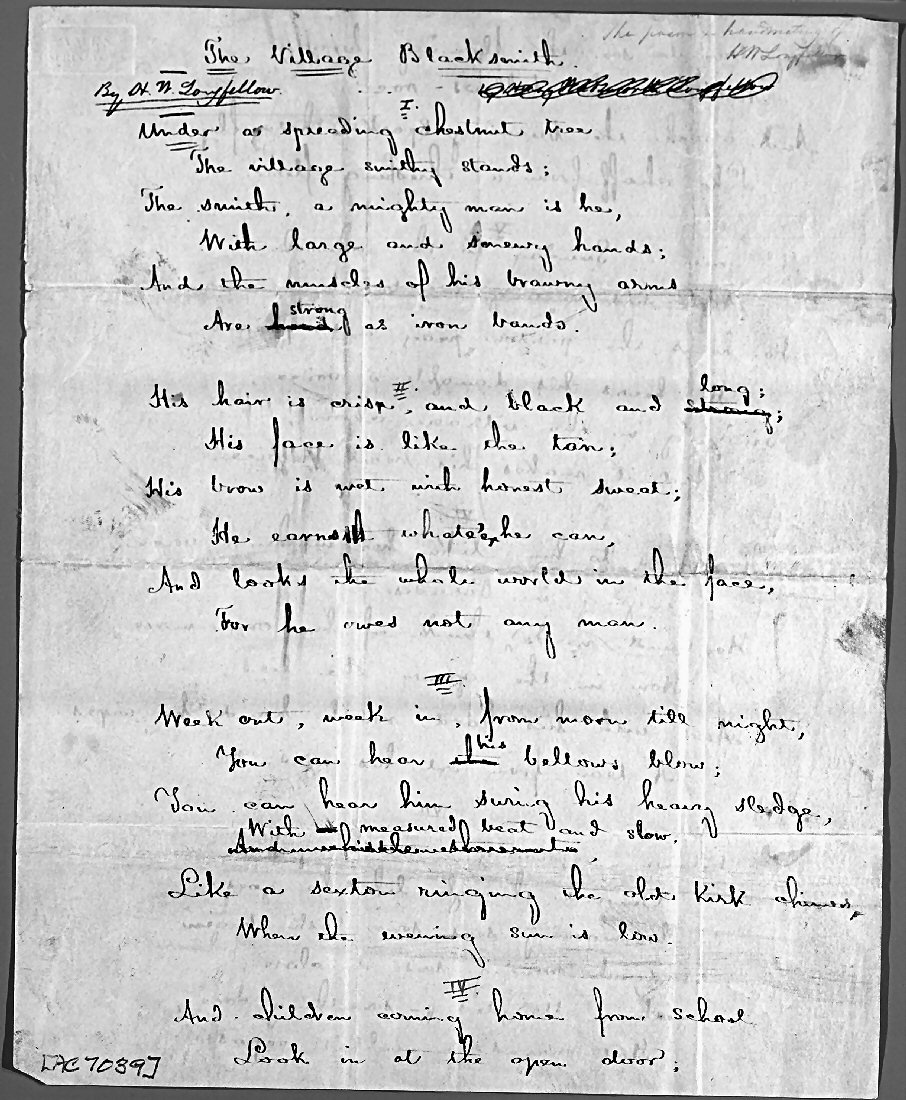
The Village Blacksmith
Henry Wadsworth Longfellow · 1840
Free account
Browse every Henry Wadsworth Longfellow source
Sign up free →
Ready when you are
Start chatting with Henry Wadsworth Longfellow now.
20 messages free · No credit card · Available in 50+ languages.