


Primary sourceBook1855
The Song of Hiawatha
Henry Wadsworth Longfellow · 1855
Longfellow's 1855 epic poem imagining the adventures of an Ojibwe hero, drawn from Native American legends and European epic traditions.
Longfellow's most famous epic, written at the height of his career and showing his Romantic view of Native American life.
Free Humy account · No credit card · 53,307 sources to read
About this source
What it is
This long poem was written by Henry Wadsworth Longfellow and published in 1855. It imagines the life of a Native American hero named Hiawatha, set along Lake Superior, drawing on Ojibwe oral traditions as recorded by ethnographer Henry Rowe Schoolcraft and on conversations with Native acquaintances such as Ojibwe chief George Copway.
Why it matters
The poem shows Longfellow's ambition to create a great American epic, modeled partly on the Finnish Kalevala. It also reveals how 19th-century white Americans represented Native peoples—mixing real traditions with invented or mistaken details, such as confusing the name Hiawatha with a different legendary figure, Manabozho. It became hugely popular and shaped (often inaccurately) how many Americans imagined Native cultures.
Look closer
- Why might Longfellow have relied on secondhand sources rather than Ojibwe storytellers themselves?
- What does the poem's popularity tell us about 19th-century American attitudes toward Native peoples?
- What might be missing or distorted when one culture retells another's stories?
This book is part of the curated material that grounds the AI version of Henry Wadsworth Longfellow on Humy.ai — when students ask about related events, the AI can quote it and cite it.
More Henry Wadsworth Longfellow sources
Browse all 97 →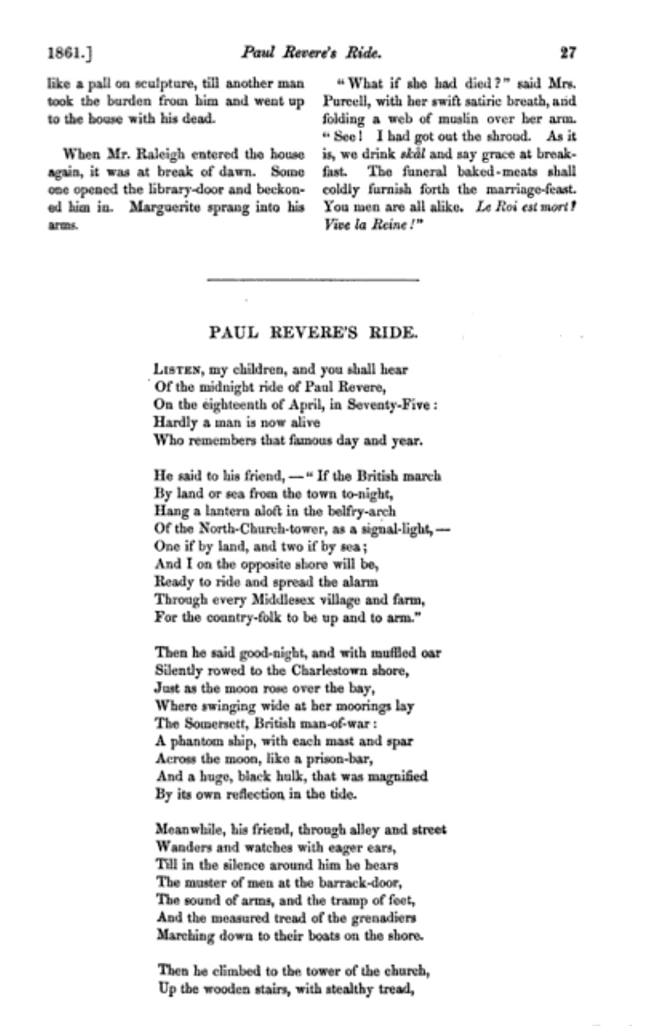 Book
Secondary source
Paul Revere's Ride
Henry Wadsworth Longfellow · 1860
Primary source
Evangeline
Henry Wadsworth Longfellow · 1847
Primary source
A Psalm of Life
Henry Wadsworth Longfellow · 1838
 Book
Primary source
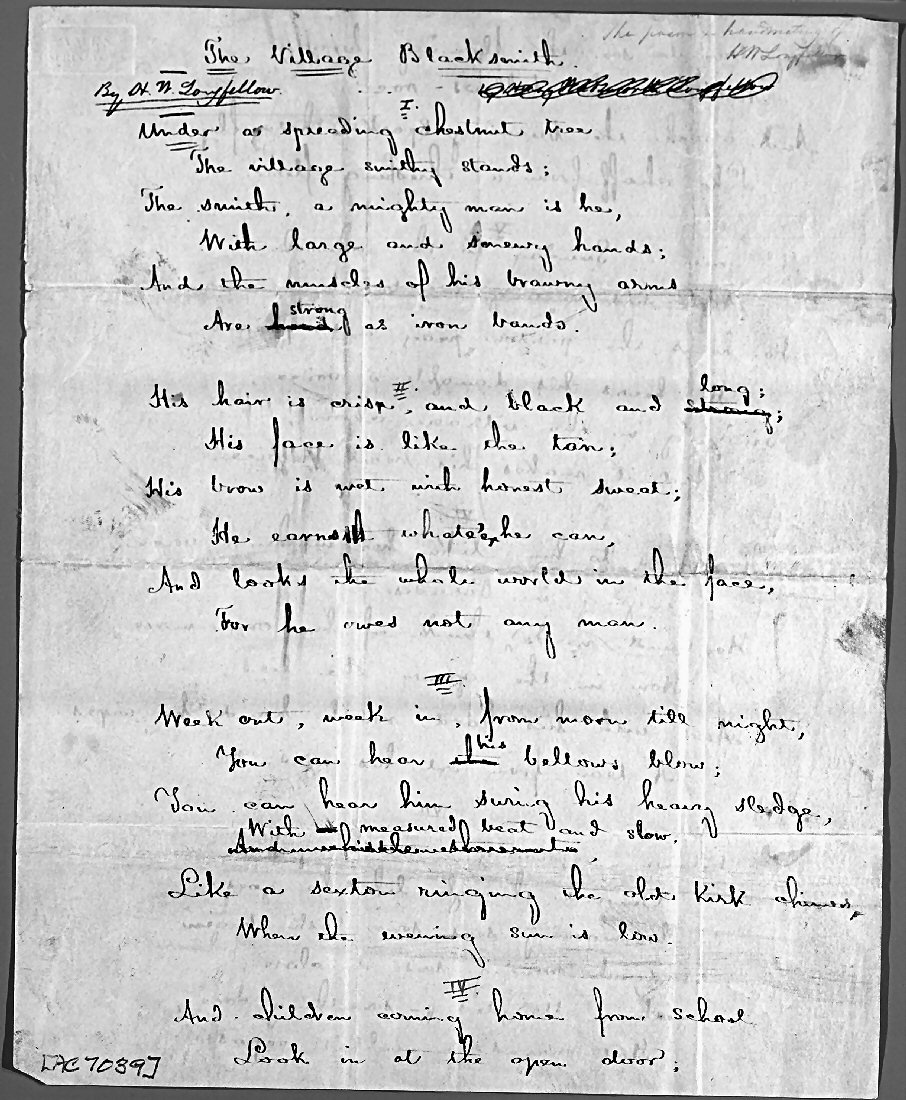
The Village Blacksmith
Henry Wadsworth Longfellow · 1840
Free account
Browse every Henry Wadsworth Longfellow source
Sign up free →
Ready when you are
Start chatting with Henry Wadsworth Longfellow now.
20 messages free · No credit card · Available in 50+ languages.