


Secondary sourcePainting
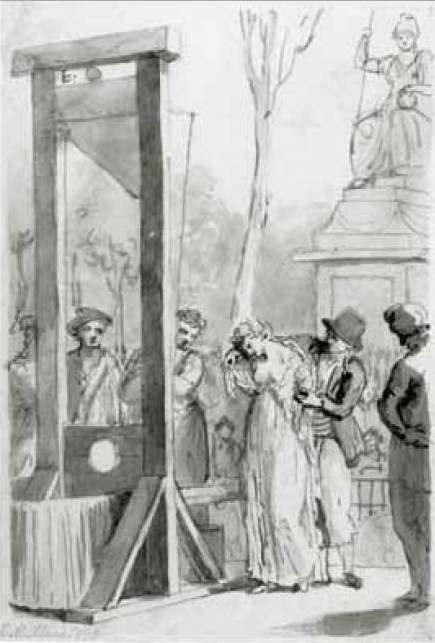
Exécution d'Olympe de Gouges
Mettais
A drawing showing the execution by guillotine of Olympe de Gouges on 3 November 1793.
This drawing depicts her execution, the violent end of her political career during the Terror.
About this source
What it is
This is a pen-and-wash drawing by an artist named Mettais, made close to the time of the event, showing a public execution by guillotine. It depicts a woman in a white dress being led to the scaffold, watched by a crowd, with a statue standing nearby.
Why it matters
Olympe de Gouges was executed on 3 November 1793 during the Terror, one of the most radical and violent phases of the French Revolution. This image shows how her outspoken political writing, including her criticism of revolutionary leaders, led to her death. It is a reminder of how dangerous political speech became for women who challenged those in power.
Look closer
- What does the crowd's presence tell you about how executions functioned in this period?
- Why might the artist have included a statue in the scene?
- What does this image leave out about who Olympe de Gouges was and what she had written?
This painting is part of the curated material that grounds the AI version of Olympe de Gouges on Humy.ai — when students ask about related events, the AI can quote it and cite it.
More Olympe de Gouges sources
Meet the AI Olympe de Gouges →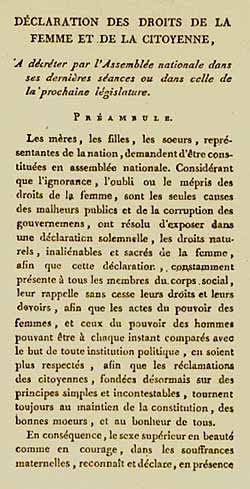 Document
Primary source
Declaration of the Rights of Woman and the Female Citizen
Olympe de Gouges · 1791
 Document
Primary source
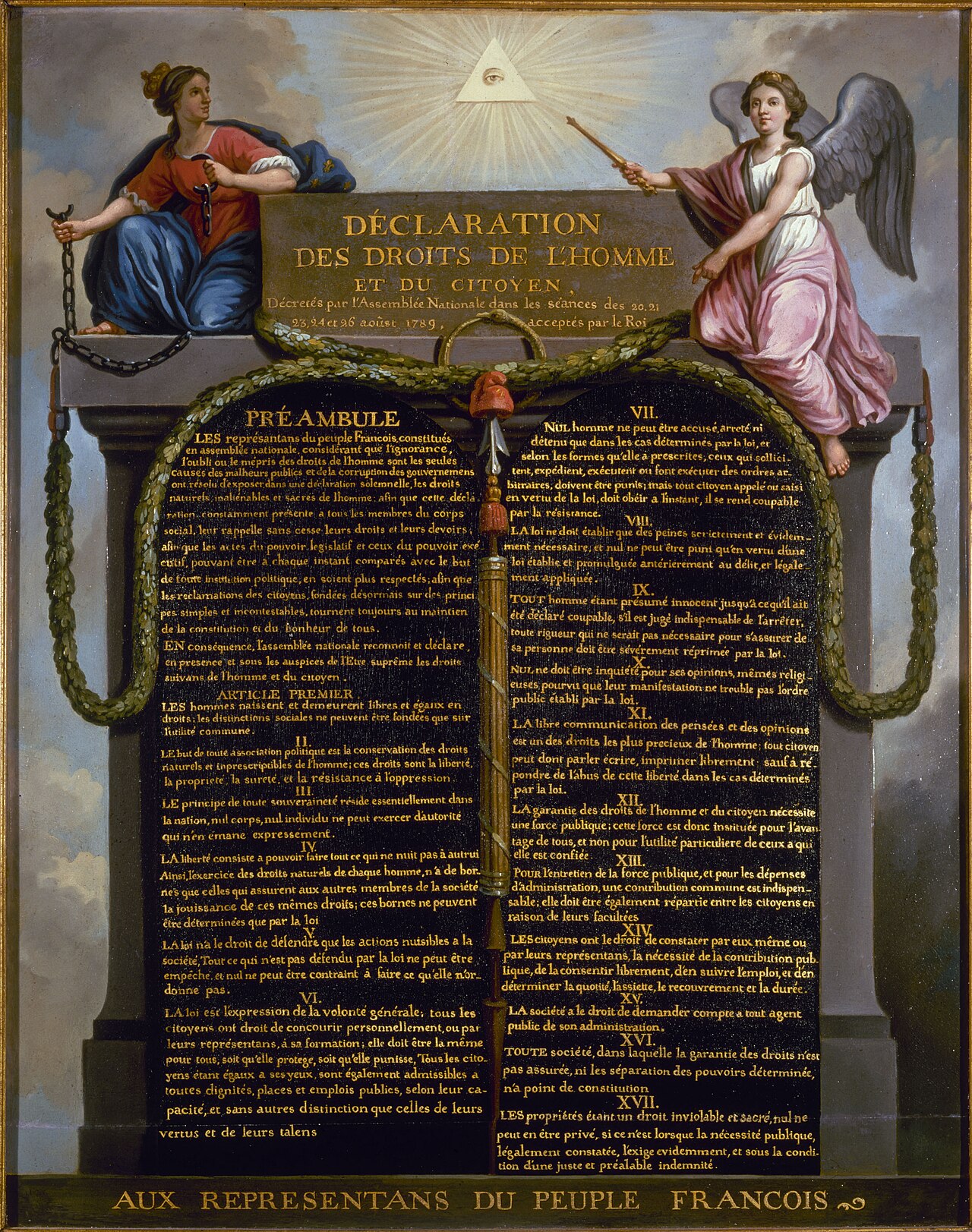
Declaration of the Rights of Man and of the Citizen
National Constituent Assembly · 1789
 Document
Primary source
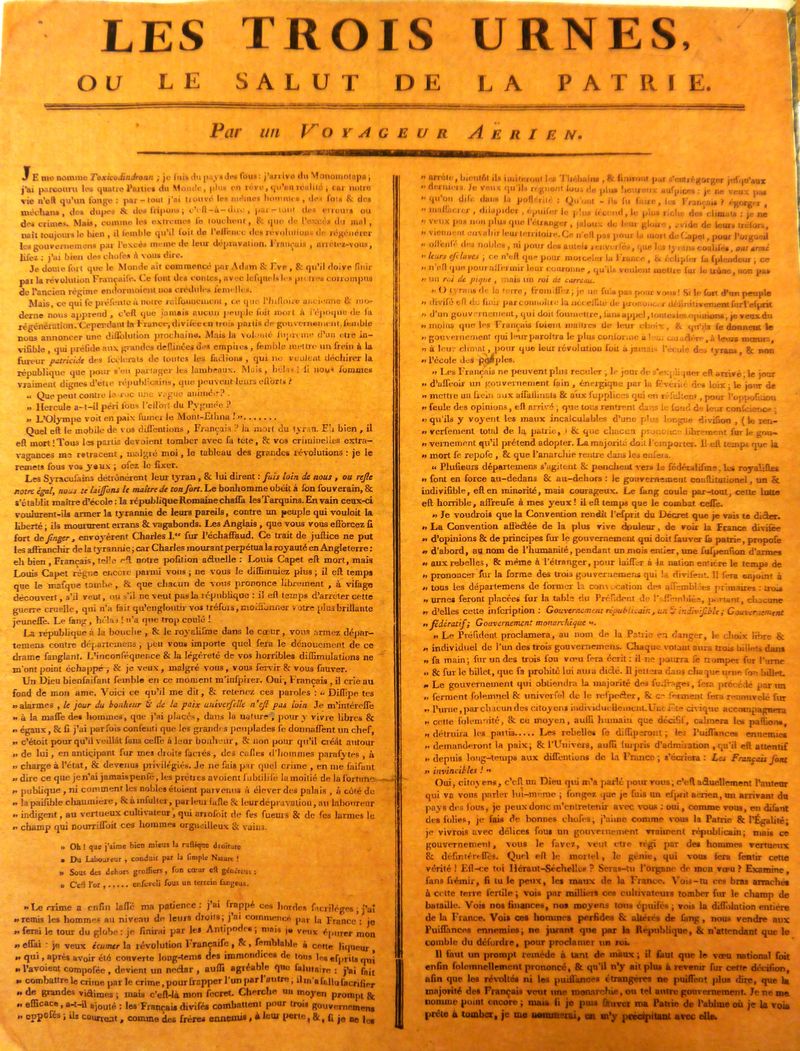
Les Trois Urnes, ou le Salut de la Patrie, par un voyageur aérien
Olympe de Gouges · 1793
 Painting
Primary source
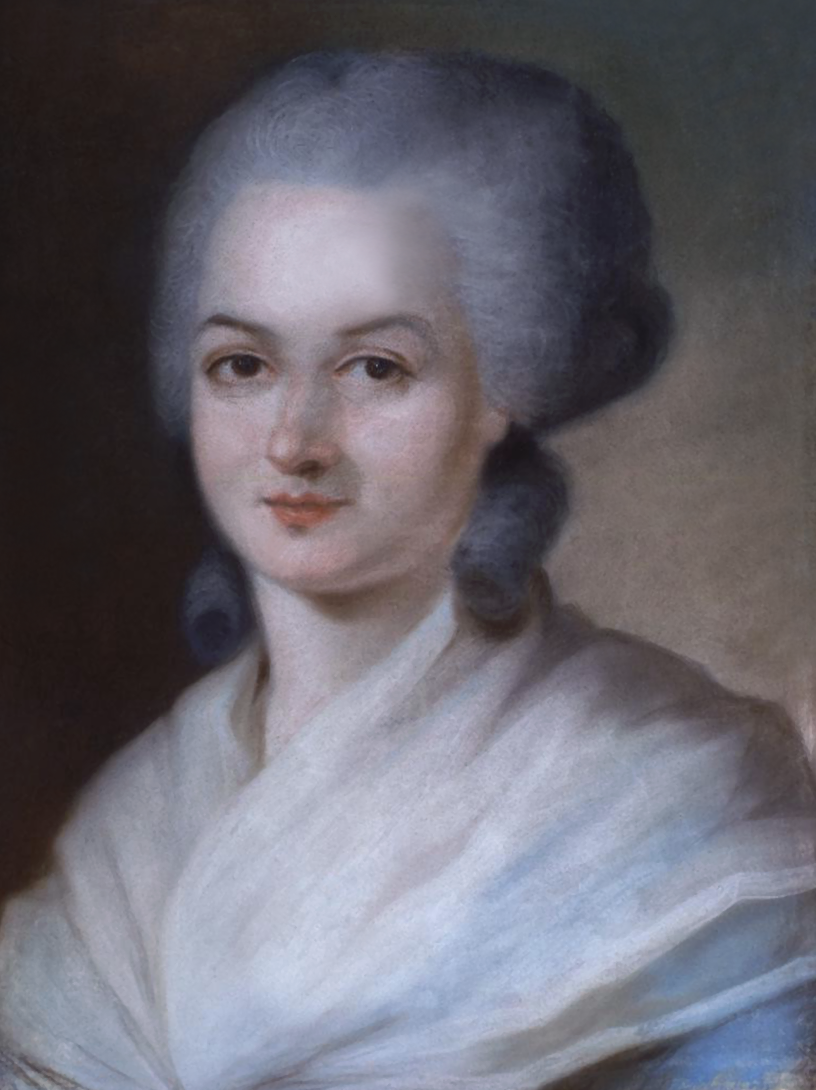
Portrait of Olympe de Gouges
Alexander Kucharsky
 Document
Primary source
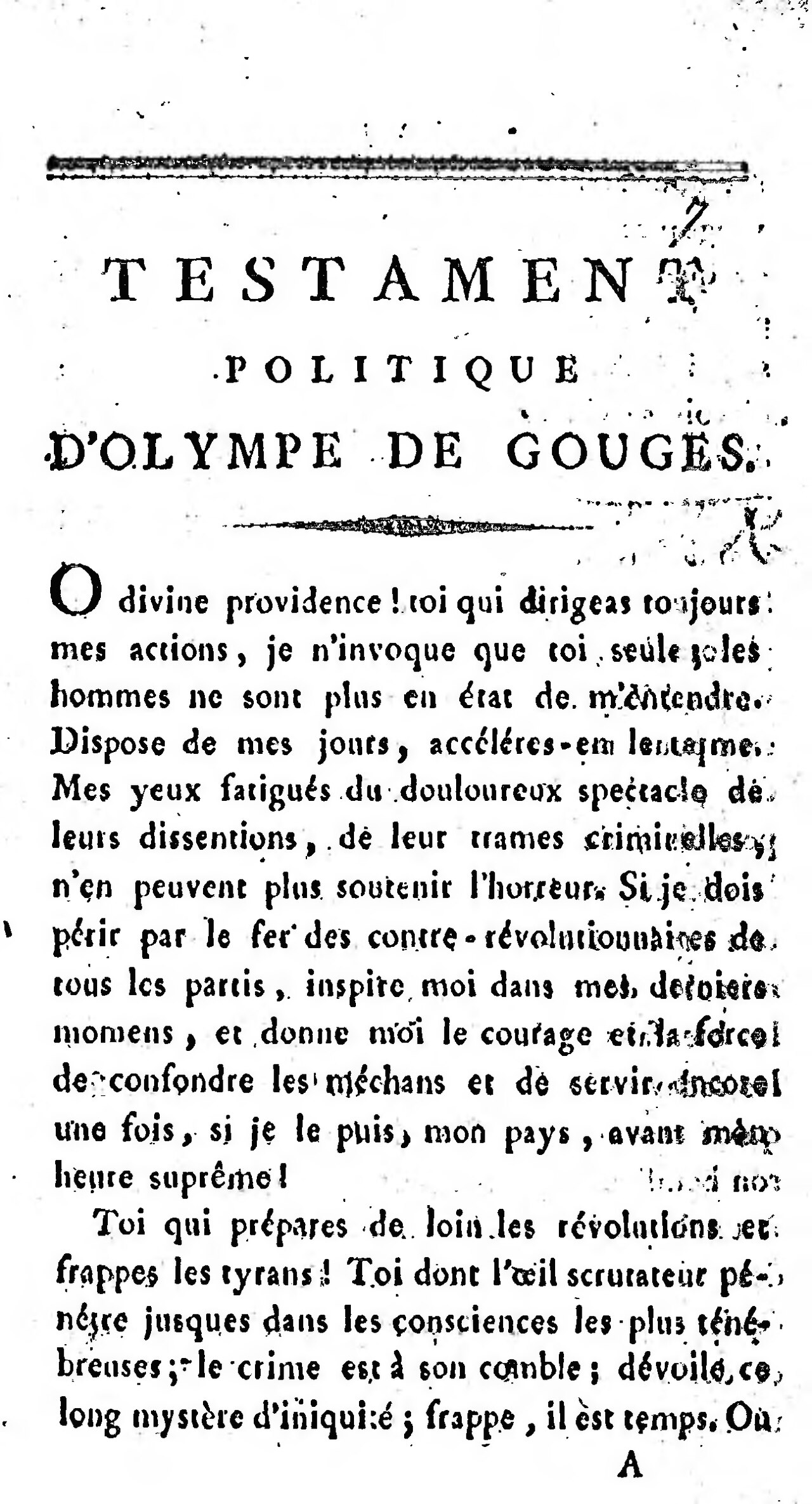
Testament politique d'Olympe de Gouges
Olympe de Gouges · June 1793
Ready when you are
Start chatting with Olympe de Gouges now.
20 messages free · No credit card · Available in 50+ languages.