


Primary sourceDocument84–55 BC
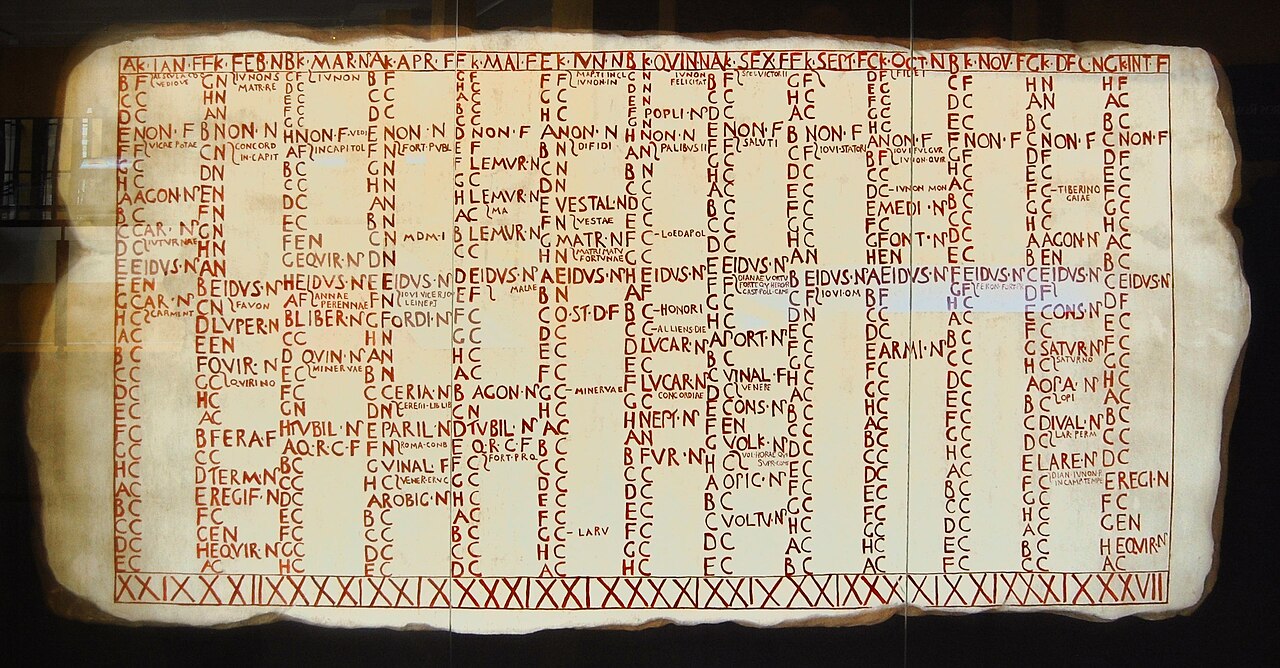
Fasti Antiates Maiores
84–55 BC
The only surviving painted Roman calendar from before Caesar's calendar reform, showing the lunisolar system his Julian calendar replaced.
This pre-Julian calendar shows the chaotic timekeeping system that Caesar's calendar reform was designed to fix.
About this source
What it is
This painted wall-calendar, created between 84 and 55 BC, is the oldest surviving local Roman calendar and the only one known from before the Julian reform. It was discovered in 1915 at Anzio and is now in the Museo Nazionale Romano, Palazzo Massimo alle Terme, Rome. The image shown is a museum replica.
Why it matters
The calendar lists thirteen months, including an extra leap month, and marks days for courts, assemblies, and religious festivals. It shows the complicated, irregular system of timekeeping that existed in Rome before Julius Caesar introduced his reformed calendar, helping students see what problem Caesar's reform was meant to solve.
Look closer
- Why might a calendar with an extra 'leap month' be harder to use than a fixed yearly calendar?
- What kinds of days does the calendar mark, and what does that tell us about Roman public life?
- Why is it useful to see a replica of an ancient object rather than only reading a description of it?
This document is part of the curated material that grounds the AI version of Julius Caesar on Humy.ai — when students ask about related events, the AI can quote it and cite it.
More Julius Caesar sources
Meet the AI Julius Caesar →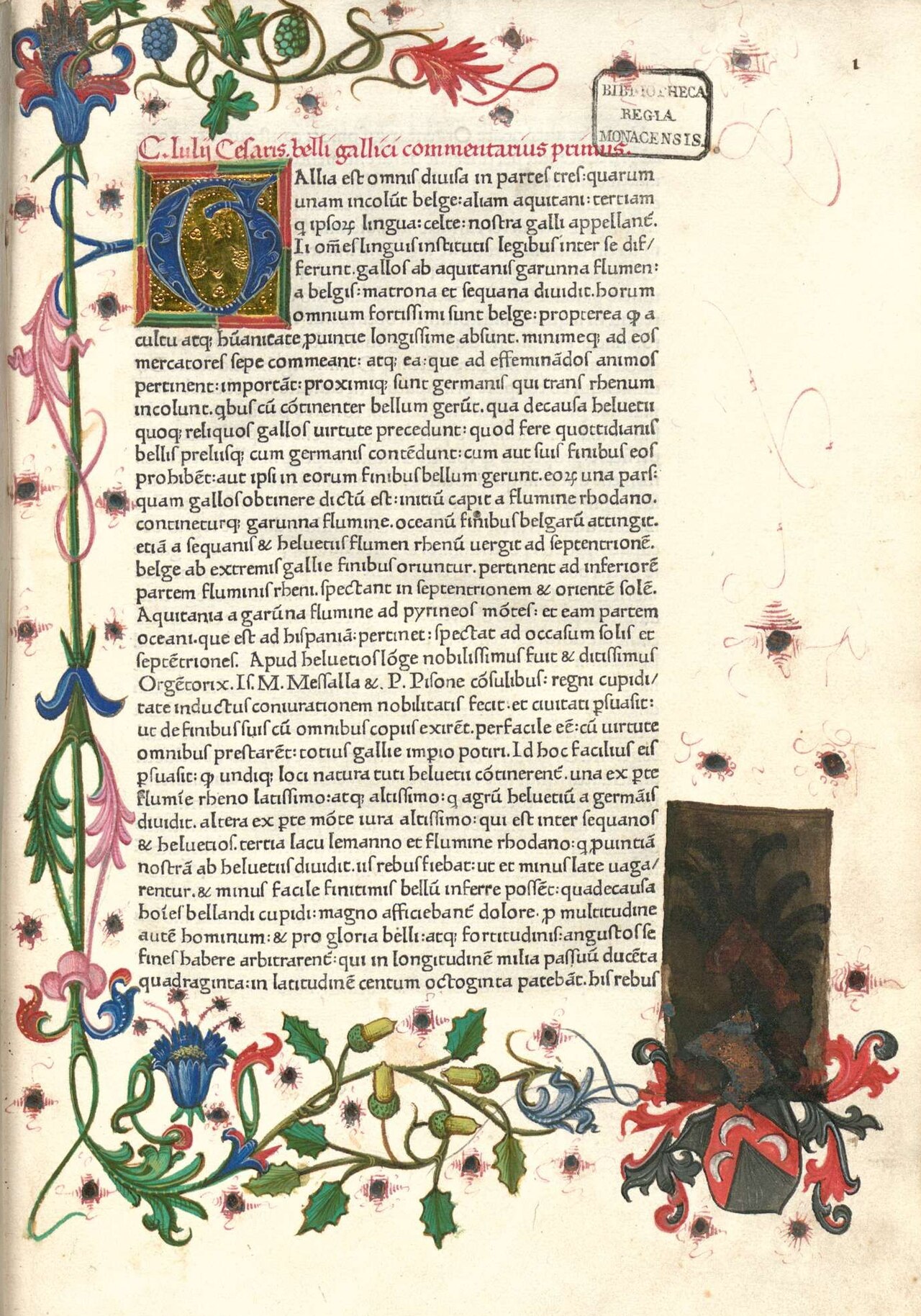 Book
Primary source
Commentarii de Bello Gallico
Julius Caesar · c. 58-50 BCE (this copy 1469)
 Painting
Secondary source
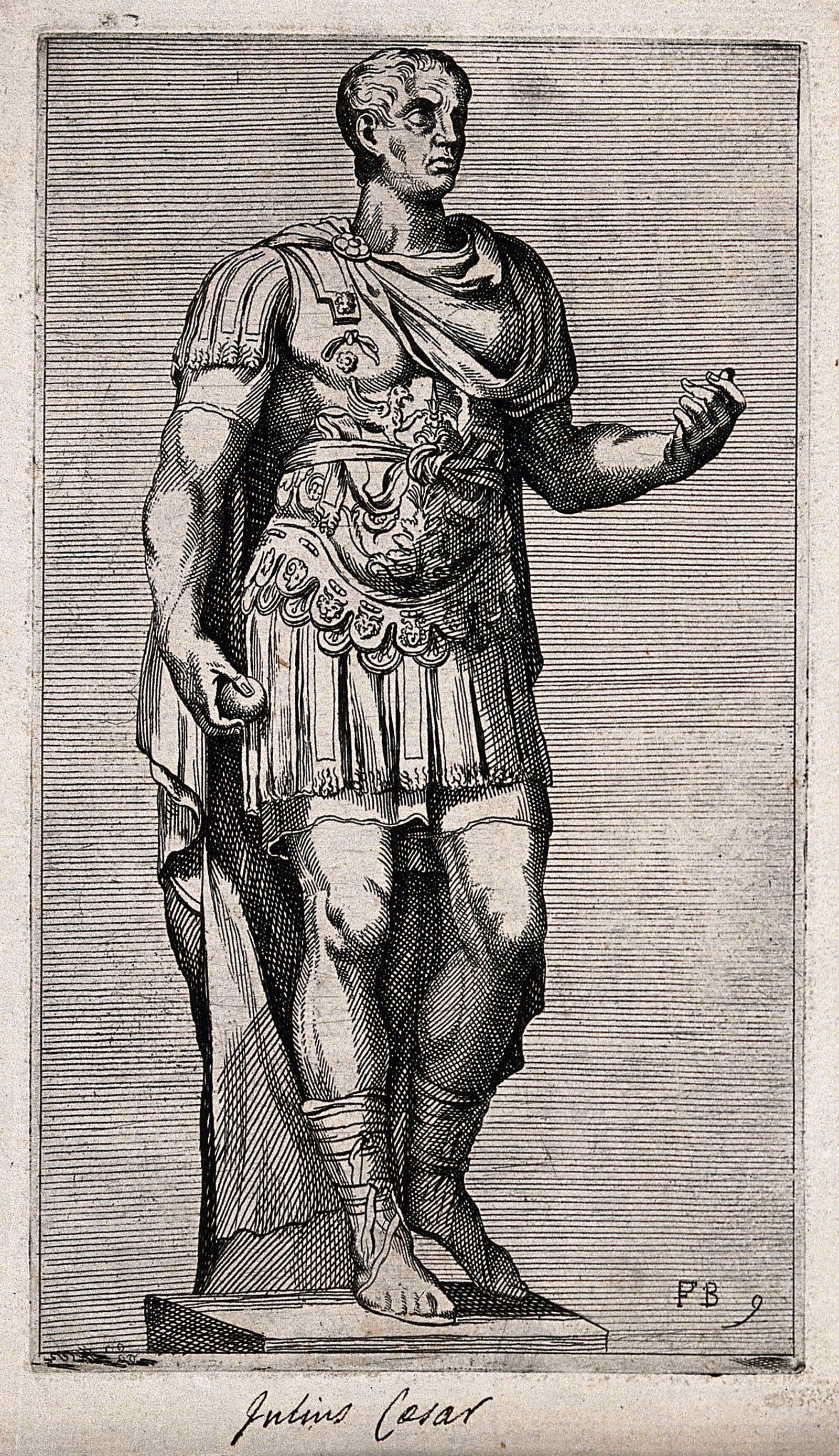
Etched Portrait of Julius Caesar
F. Perrier
 Painting
Secondary source
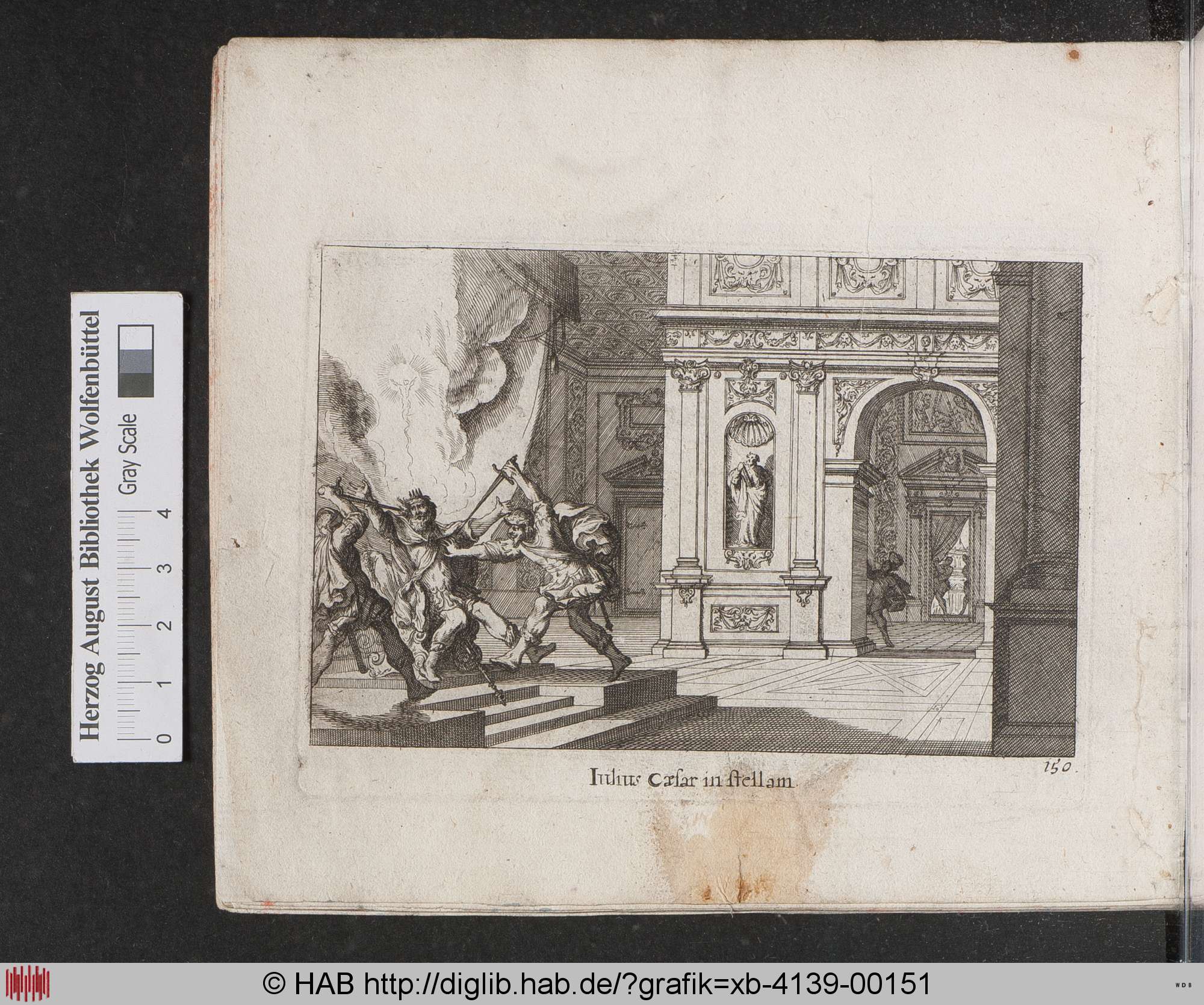
Murder of Julius Caesar in the Senate
 Book
Primary source
Commentarii de Bello Civili
Julius Caesar · 49-48 BCE
 Painting
Secondary source
The Murder of Julius Caesar
1606
Ready when you are
Start chatting with Julius Caesar now.
20 messages free · No credit card · Available in 50+ languages.