


Secondary sourcePainting1925
Francisco Pizarro
Julio Vila y Prades · 1925
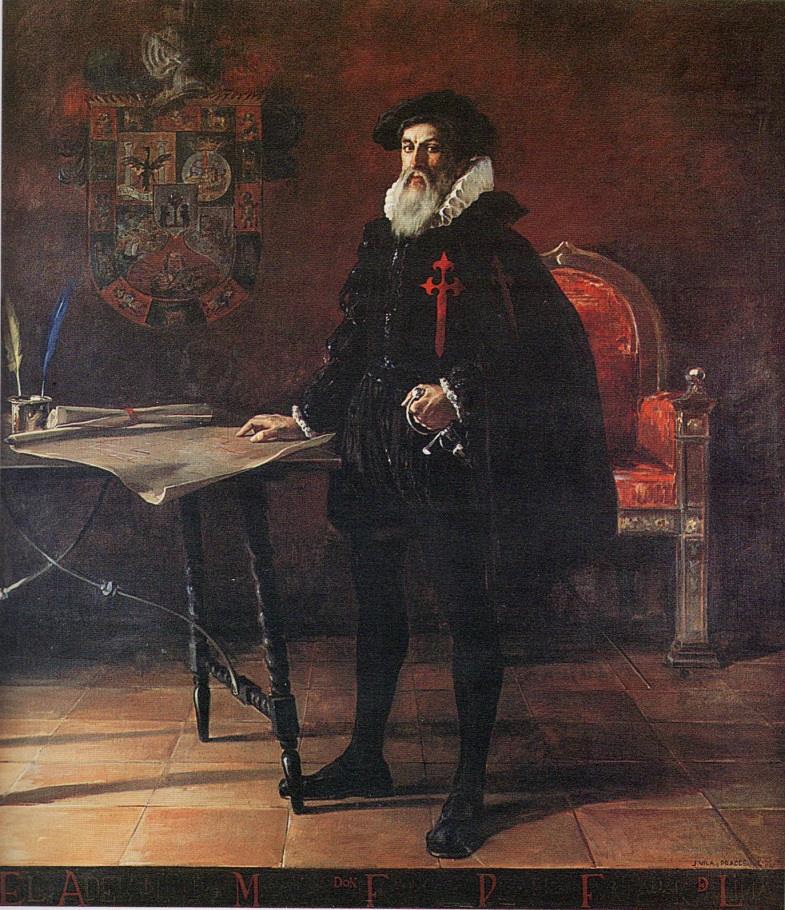
A 1925 painted portrait imagining Francisco Pizarro as a nobleman, made centuries after his death.
An imagined 20th-century portrait honoring Pizarro's legacy as conqueror of the Inca Empire.
About this source
What it is
This painting by Julio Vila y Prades was made in 1925, long after Pizarro's lifetime. It shows a bearded man in black 16th-century dress with a white ruff and a red Santiago cross, standing near a table with writing materials and a coat of arms above him.
Why it matters
Painted nearly four hundred years after Pizarro's death, this work is part of a tradition of imagined historical portraits meant to honor his legacy as the conqueror of the Inca Empire and a founder of Spanish rule in Peru. It reveals more about how later generations wanted to remember him than about his true appearance.
Look closer
- What objects surround the figure, and what do they suggest about his role?
- Why might an artist in 1925 still be painting portraits of a 16th-century conquistador?
- What would change if we knew this image was imagined rather than drawn from life?
This painting is part of the curated material that grounds the AI version of Francisco Pizarro on Humy.ai — when students ask about related events, the AI can quote it and cite it.
More Francisco Pizarro sources
Meet the AI Francisco Pizarro →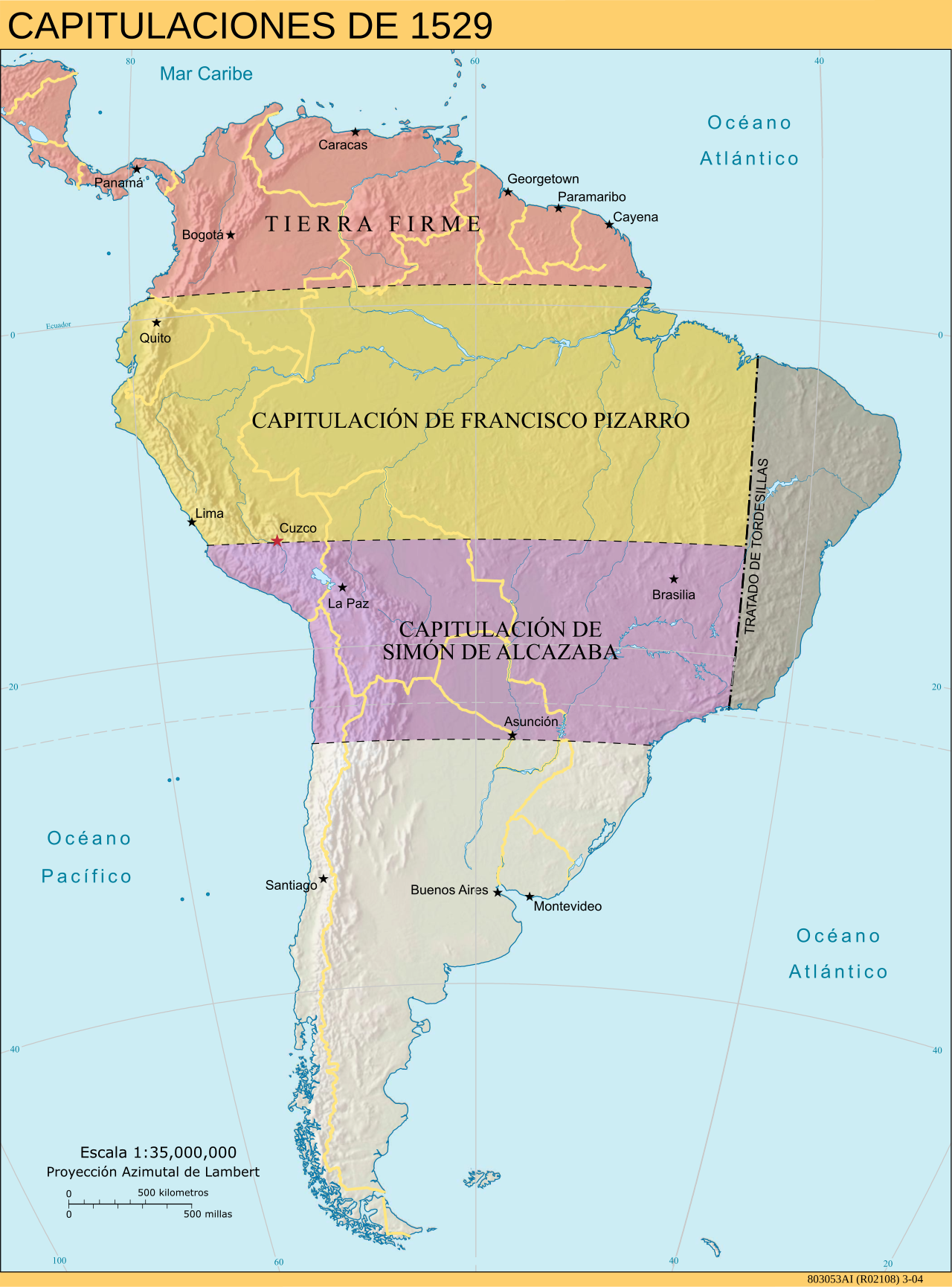 Document
Primary source
Capitulation of Toledo
Crown of Castile · 26 July 1529
 Painting
Secondary source
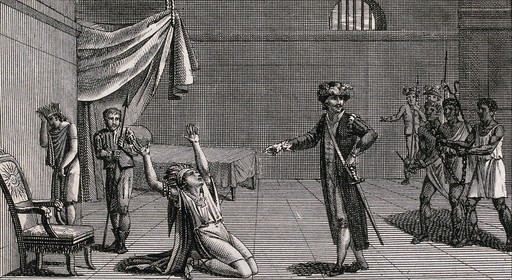
L'Ynca du Pérou aux pieds de Pizarre
A.C.F. Villerey after N. Vallain
 Painting
Secondary source
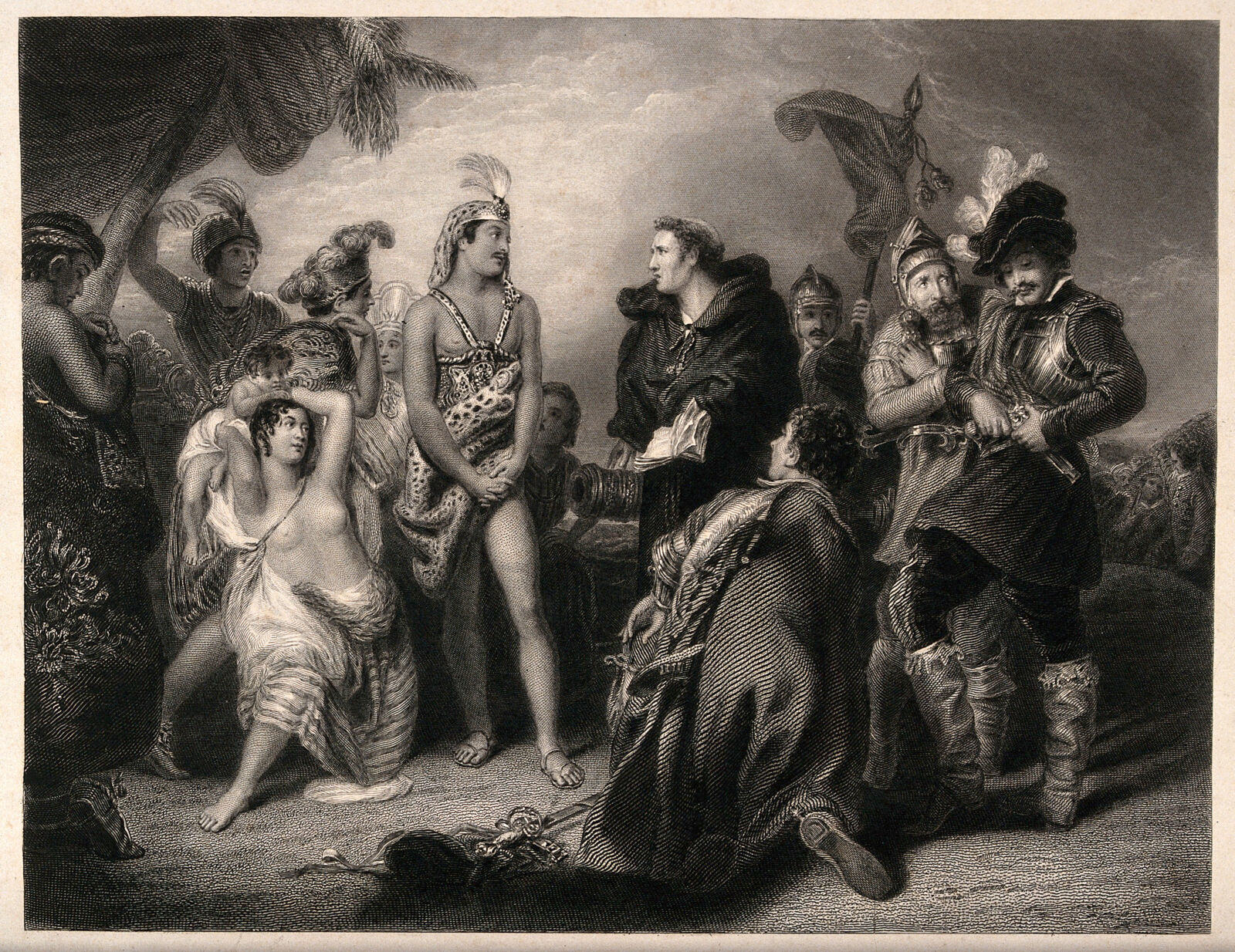
Valverde urging Atahualpa to convert
Henry Perronet Briggs (painting); engraved by W. Greatbach · 1830
 Book
Primary source
Verdadera relación de la conquista del Perú
Francisco de Jerez · 1534 (this edition 1891)
 Painting
Secondary source
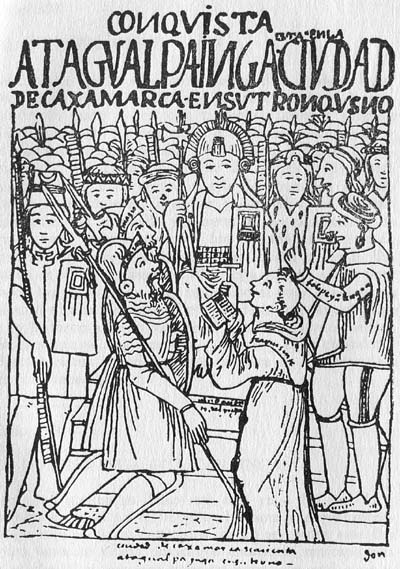
Atawallpa Pizarro tinkuy
Felipe Guaman Poma de Ayala · 1532 (depicted); drawing later
Ready when you are
Start chatting with Francisco Pizarro now.
20 messages free · No credit card · Available in 50+ languages.