


Secondary sourceArtifact1737
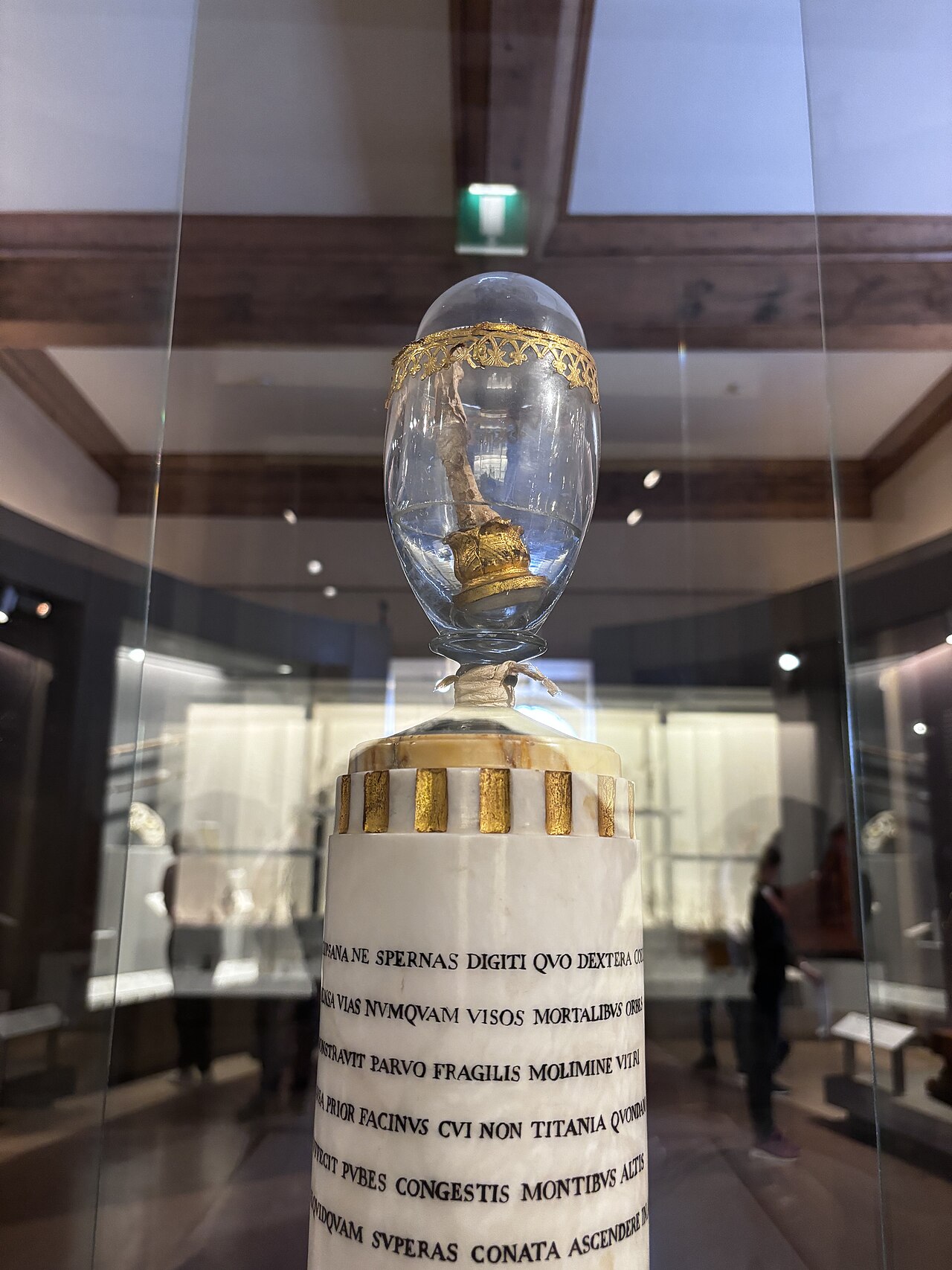
Galileo's Finger
1737
A finger removed from Galileo's body in 1737 and preserved as a relic, showing how he came to be honored as a hero of science after his death.
This relic is part of Galileo's body, preserved after his death as a symbol of his later status as a scientific hero.
About this source
What it is
This is a small dried relic, said to be Galileo Galilei's middle finger, removed from his remains in 1737. It is displayed in a glass case on a marble pedestal with a gold-trimmed base and a Latin inscription.
Why it matters
Long after his death and condemnation by the Church, Galileo was treated almost like a saint of science, with parts of his body preserved and displayed the way religious relics were. This shows the dramatic change in how he was remembered: from a man punished for his ideas to a celebrated founder of modern science.
Look closer
- Why might people choose to preserve a finger as a relic, rather than just a portrait or writings?
- What does the glass case and Latin inscription suggest about how Galileo was honored?
- How does this object compare to religious relics, and what does that comparison tell you?
This artifact is part of the curated material that grounds the AI version of Galileo Galilei on Humy.ai — when students ask about related events, the AI can quote it and cite it.
More Galileo Galilei sources
Meet the AI Galileo Galilei →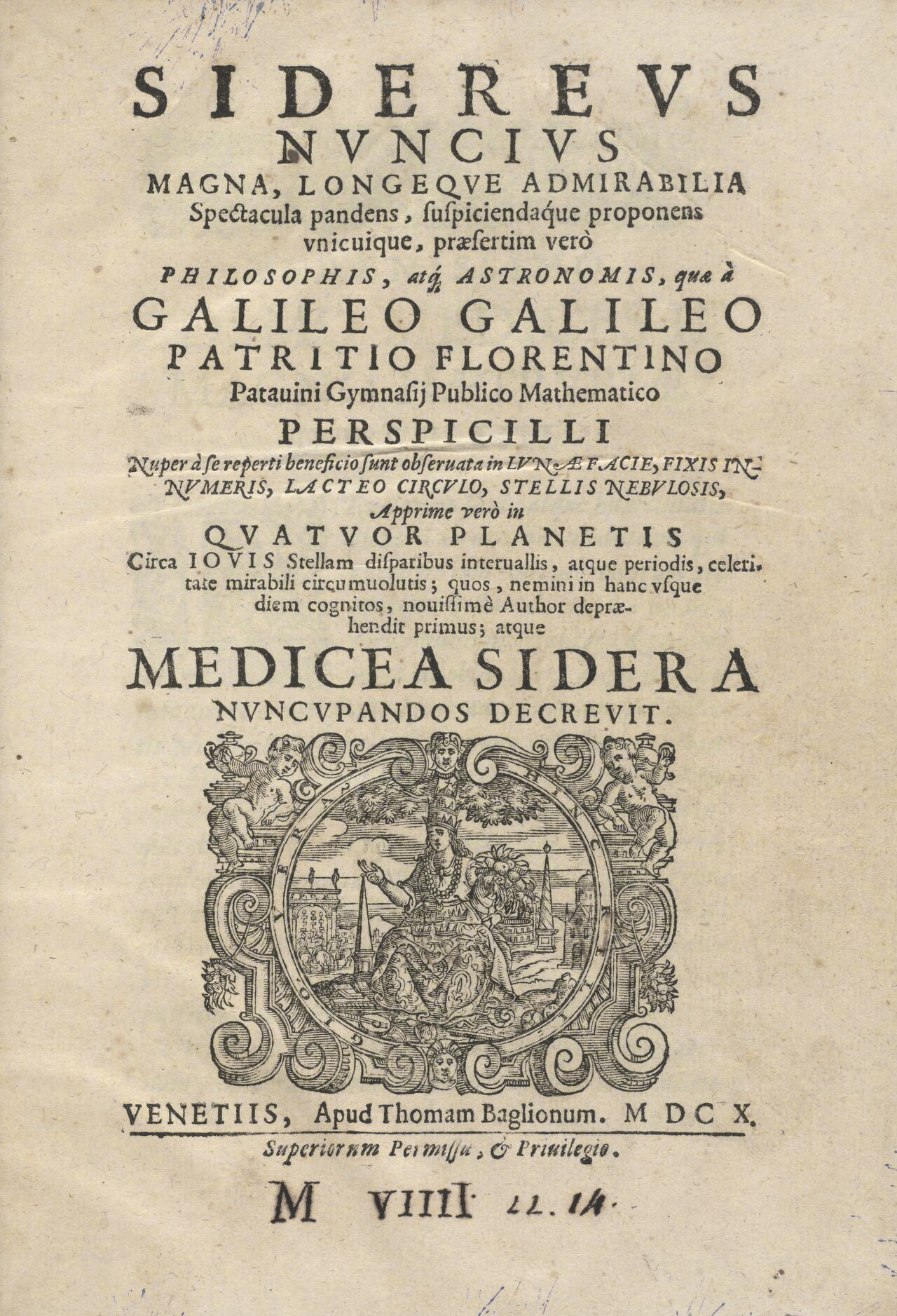 Book
Primary source
Sidereus Nuncius
Galileo Galilei · 1610
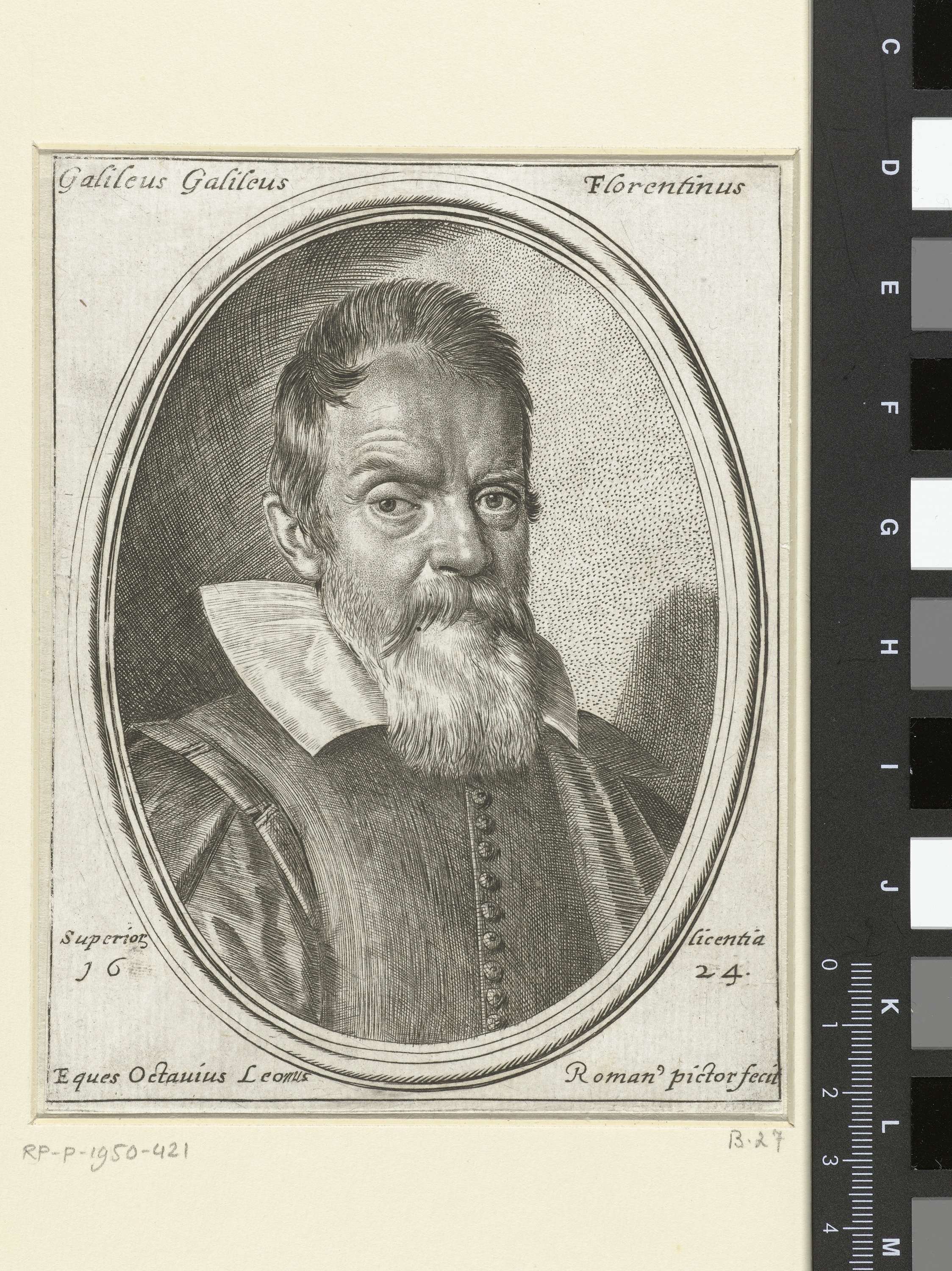 Painting
Primary source
Portrait of Galileo Galilei (1624 print)
1624
 Painting
Primary source
Oil Portrait of Galileo in His Study
Unknown Italian painter · 18th century (?)
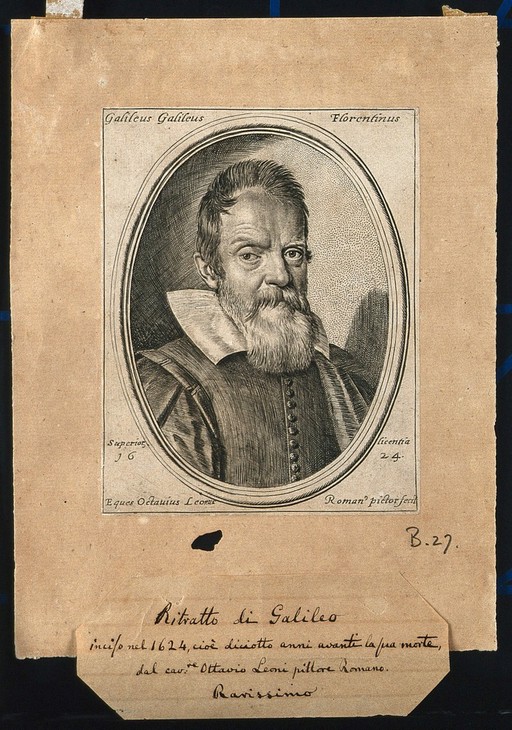 Painting
Primary source
Galileo Galilei, line engraving by Ottavio Leoni
Ottavio Leoni · 1624
 Book
Primary source
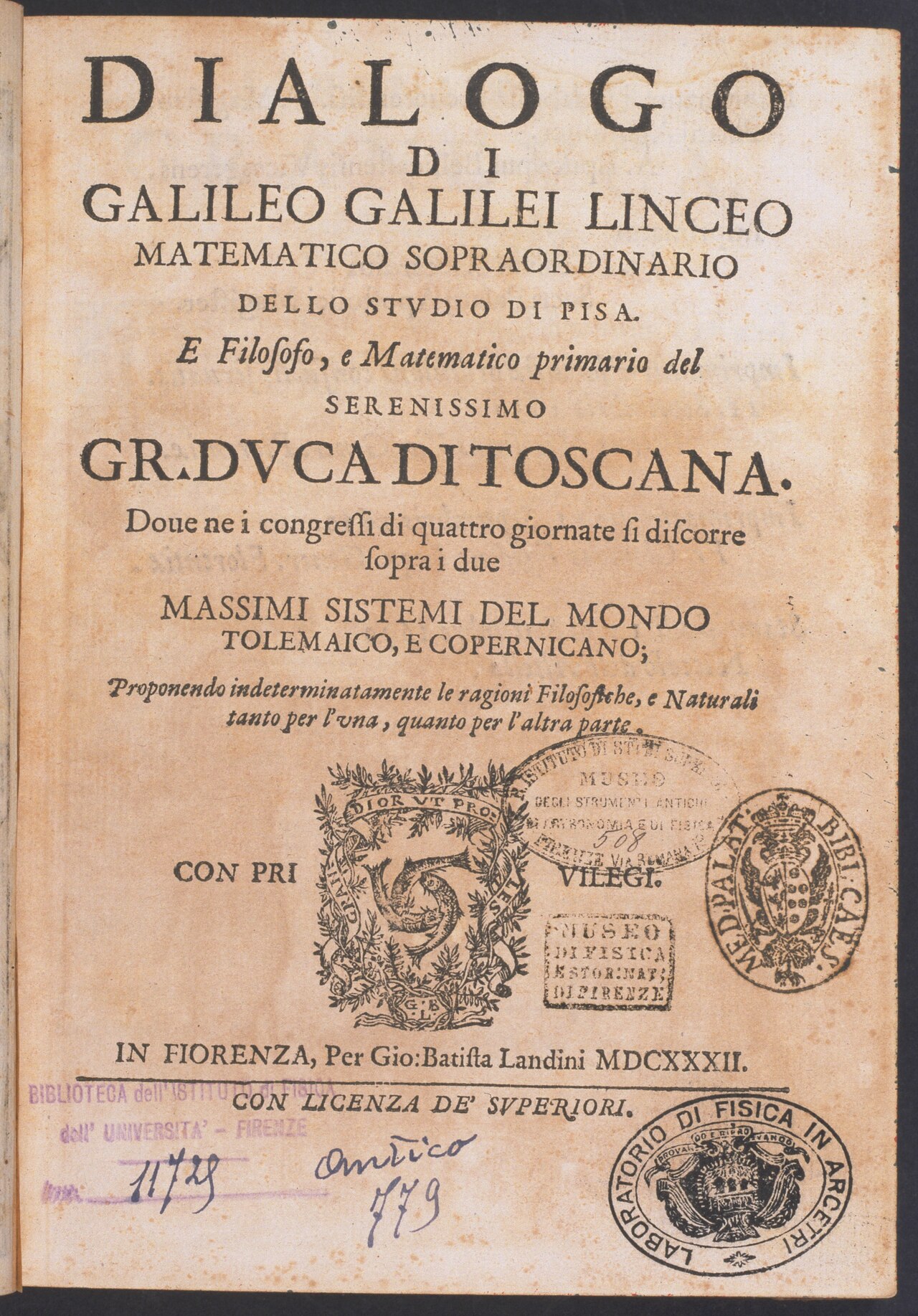
Dialogue Concerning the Two Chief World Systems
Galileo Galilei · 1632
Ready when you are
Start chatting with Galileo Galilei now.
20 messages free · No credit card · Available in 50+ languages.