


Primary sourceArtifact4 April – 4 August 527
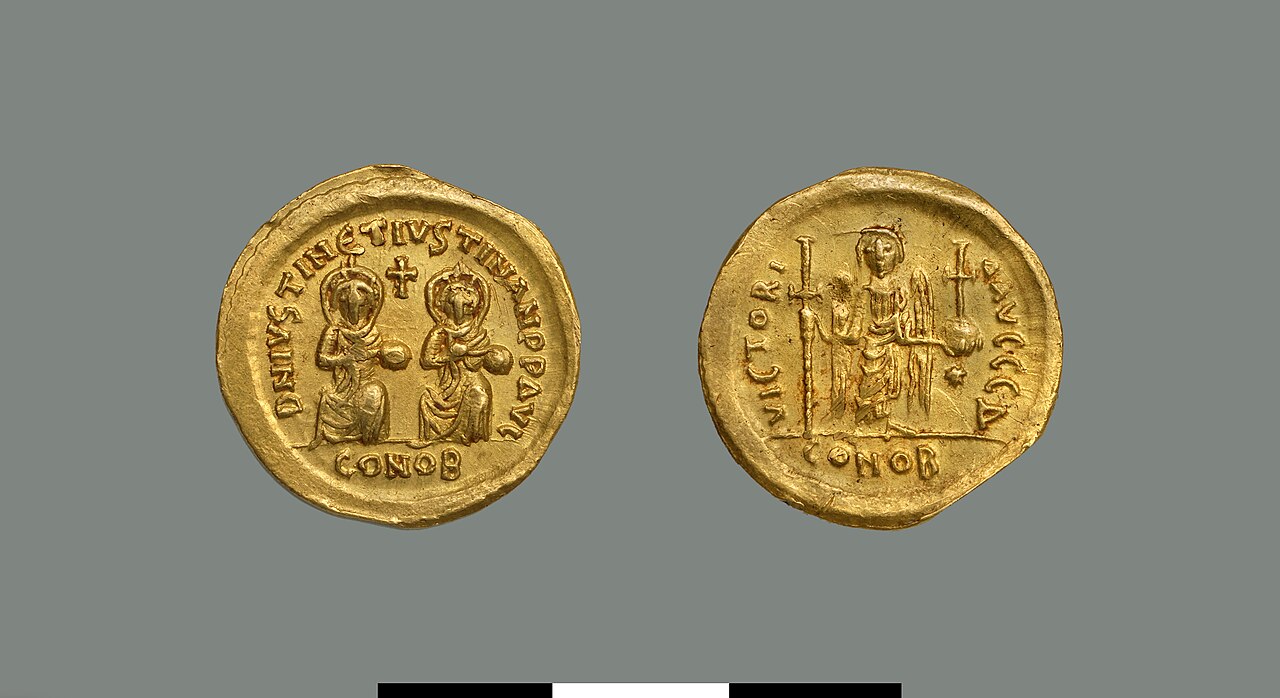
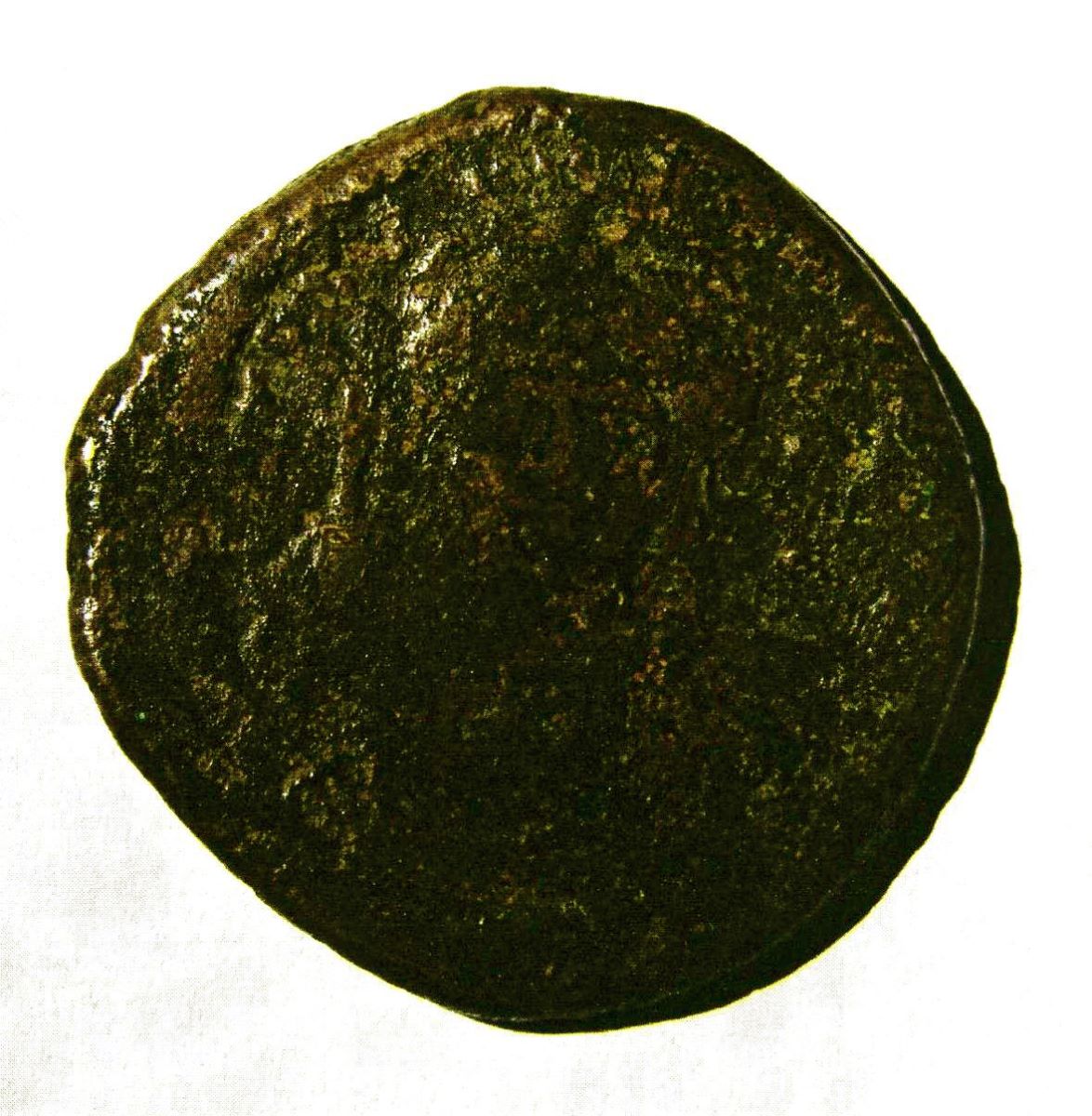
Gold Solidus of Justinian I, 527
4 April – 4 August 527
A gold coin struck in Constantinople in the first year of Justinian's reign, showing imperial figures and symbols.
Struck in the very first months of Justinian's reign, this coin carried his imperial image to his subjects.
About this source
What it is
This gold solidus coin was struck in Constantinople in 527, the year Justinian became emperor. The obverse shows two standing crowned figures holding orbs with a cross between them, and the reverse shows a standing figure holding a cross and orb, with Latin lettering including VICTORI and the mint mark CONOB.
Why it matters
Coins were one of the main ways a new emperor's image and message reached ordinary people across the empire. Struck right at the start of Justinian's reign, this coin shows how he and his government wanted to present imperial power and religious symbolism from the very beginning.
Look closer
- What do the cross and the orb symbols suggest about how the emperor wanted to be seen?
- Why would a government put religious symbols on money?
- What can a coin tell you about power that a written document cannot?
This artifact is part of the curated material that grounds the AI version of Justinian I on Humy.ai — when students ask about related events, the AI can quote it and cite it.
More Justinian I sources
Meet the AI Justinian I →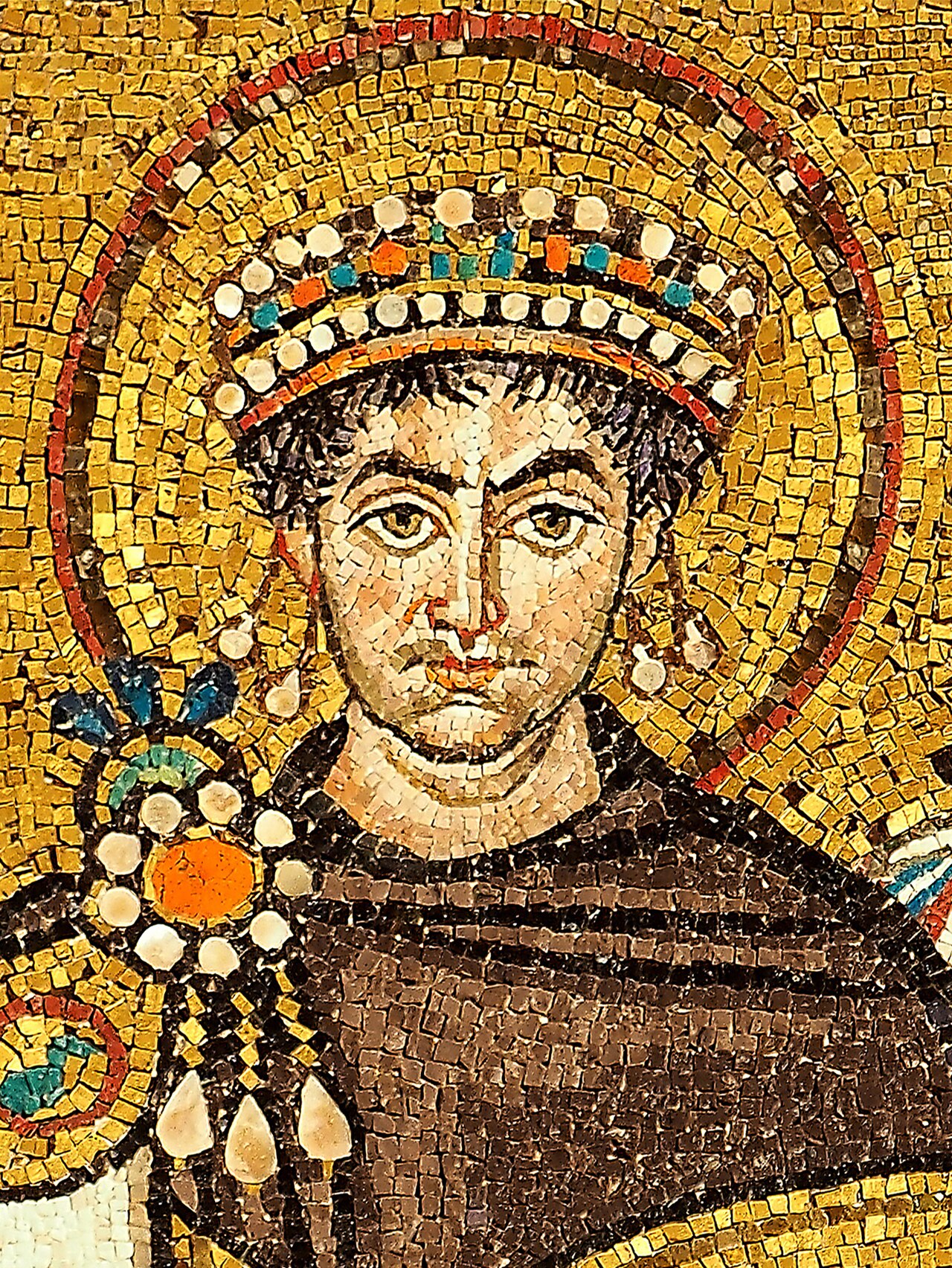 Artifact
Primary source
Portrait of Justinian I, San Vitale Mosaic
Byzantine mosaicists · c. 547
 Painting
Secondary source
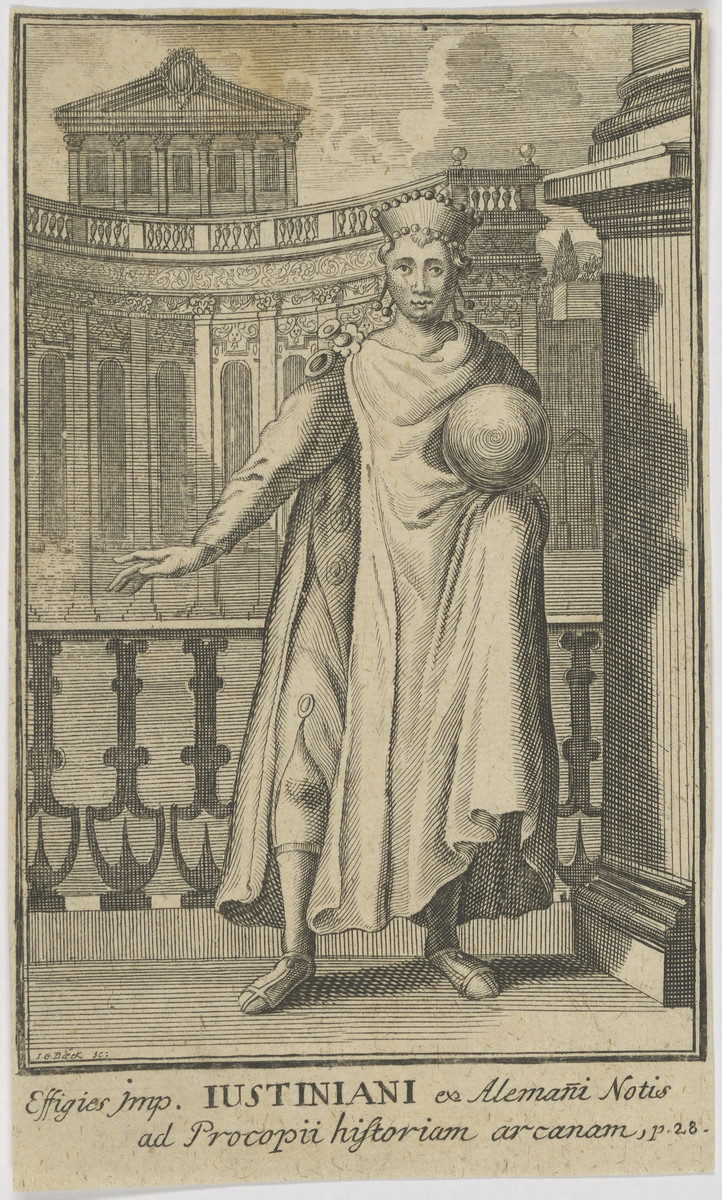
Portrait of Emperor Justinian
Johann Friedrich Böck
 Document
Primary source
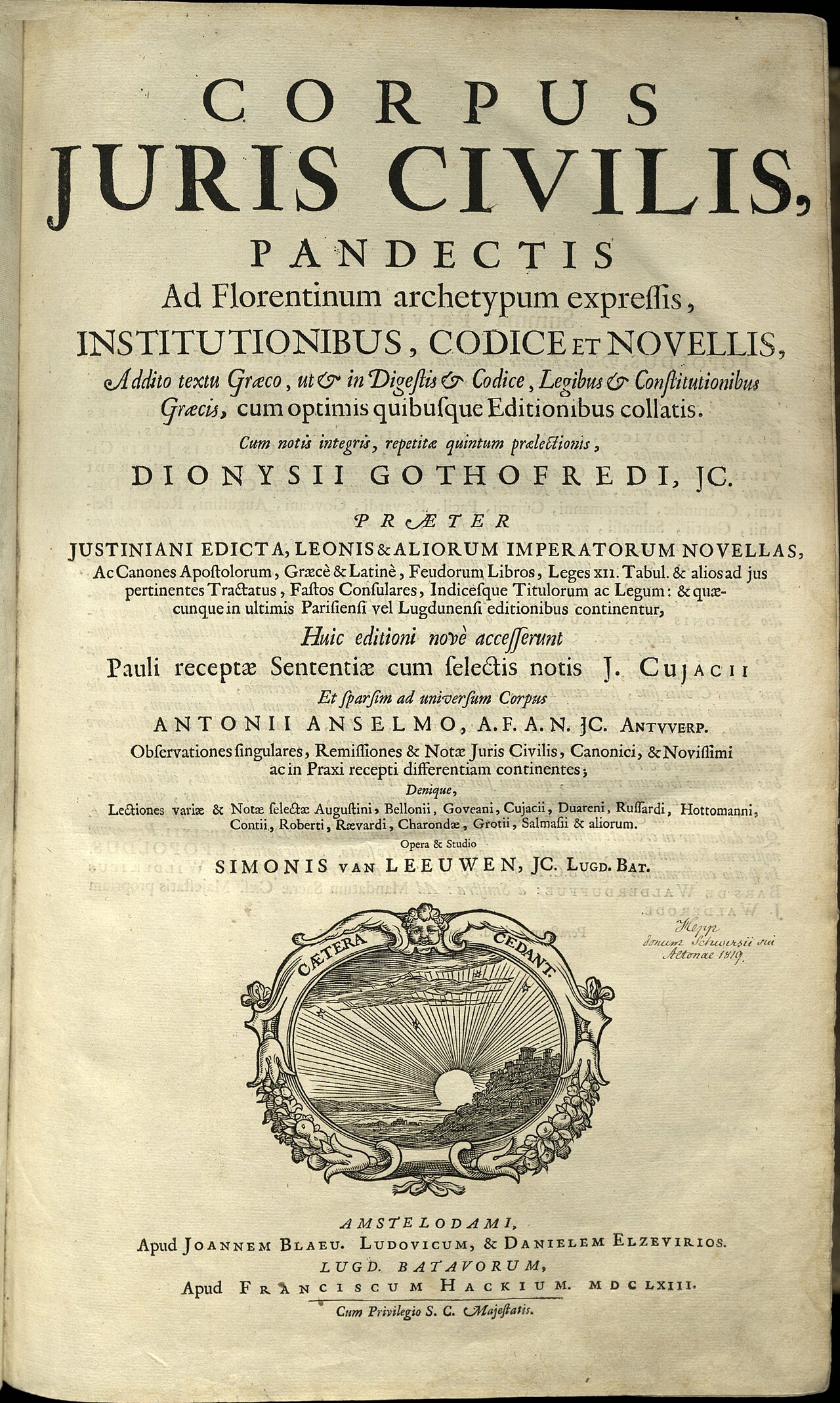
Corpus Juris Civilis
Tribonian · 528-534
 Artifact
Primary source
Bronze Follis of Justinian I with Globus Cruciger
 Artifact
Secondary source
Hagia Sophia
Isidore of Miletus and Anthemius of Tralles · 532-537 CE
Ready when you are
Start chatting with Justinian I now.
20 messages free · No credit card · Available in 50+ languages.