


Primary sourceArtifactc. 278-276 BC
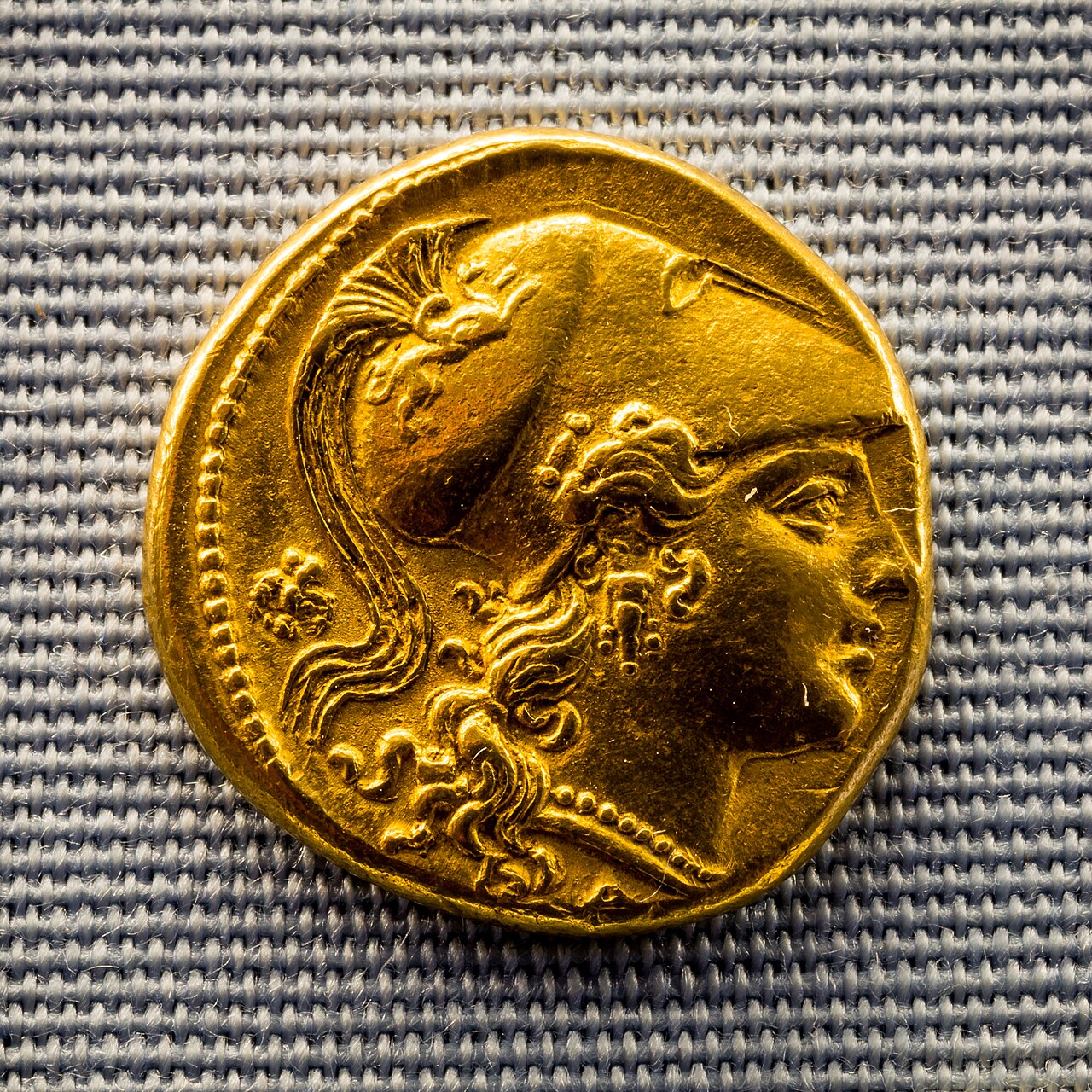
Gold stater of Pyrrhus with Athena and Nike
Mint of Pyrrhus, Syracuse · c. 278-276 BC
A gold coin struck at Syracuse for King Pyrrhus, showing Athena and Nike, made when he claimed kingship over Sicily.
This coin was struck by Pyrrhus's own mint at Syracuse, proclaiming his kingship and victories.
About this source
What it is
This gold coin, a stater, was struck at the mint of Pyrrhus in Syracuse around 278–276 BC, when he held power in Sicily. One side shows the head of the goddess Athena wearing a crested helmet; the reverse shows Nike, goddess of victory, holding a trophy and wreath, with the inscription naming Pyrrhus as king.
Why it matters
The coin's imagery follows the style of earlier Hellenistic royal coinage, modelled on rulers like Alexander the Great, presenting Pyrrhus as a victorious and legitimate monarch. Coins like this were a direct way for kings to spread their image and claims to power across the territories they controlled.
Look closer
- Why might Pyrrhus choose Athena and Nike for his coinage rather than his own portrait?
- What does the inscription naming him king tell us about how he wanted to be recognised in Sicily?
- Coins travelled widely — what does that suggest about their purpose beyond just money?
This artifact is part of the curated material that grounds the AI version of Pyrrhus of Epirus on Humy.ai — when students ask about related events, the AI can quote it and cite it.
More Pyrrhus of Epirus sources
Browse all 78 →
Ready when you are
Start chatting with Pyrrhus of Epirus now.
20 messages free · No credit card · Available in 50+ languages.