


Secondary sourceArtifact1963
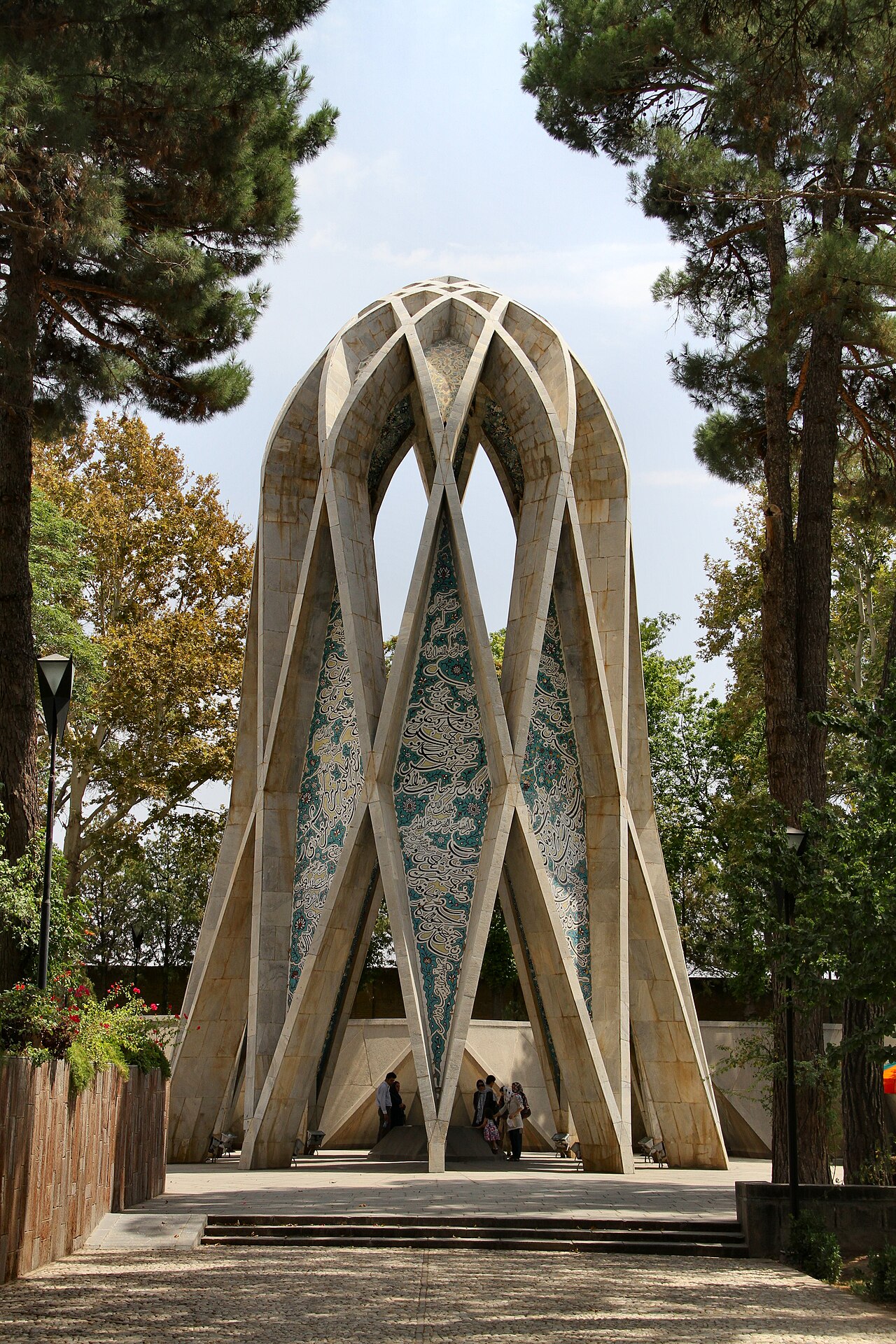
Grave of Omar Khayyám
Houshang Seyhoun · 1963
The modern mausoleum built in 1963 in Nishapur, Iran, marking the burial site of the poet and mathematician Omar Khayyam.
The modern mausoleum built over Khayyam's grave, showing his lasting status as a celebrated national figure in Iran.
About this source
What it is
This is a photograph of the mausoleum built over the grave of Omar Khayyam in Nishapur, Iran. Completed in 1963 and designed by the architect Houshang Seyhoun, it is a tall, white, modern structure with a lattice-like lattice of crossing arches and teal mosaic panels bearing inscriptions, set among trees.
Why it matters
The monument reflects how Iran came to honor Khayyam in the 20th century as a major national figure in mathematics and poetry. It stands near the site described in earlier accounts, including the story told by the medieval writer Nizami Aruzi about Khayyam's burial place. The modern design shows how a historical figure can be remembered and reshaped by later generations through architecture.
Look closer
- Why might a country build a large modern monument for someone who died many centuries earlier?
- What might the architect have wanted to communicate through this striking, modern design?
- How is this very different from the older tomb site shown in earlier paintings?
This artifact is part of the curated material that grounds the AI version of Omar Khayyam on Humy.ai — when students ask about related events, the AI can quote it and cite it.
More Omar Khayyam sources
Meet the AI Omar Khayyam →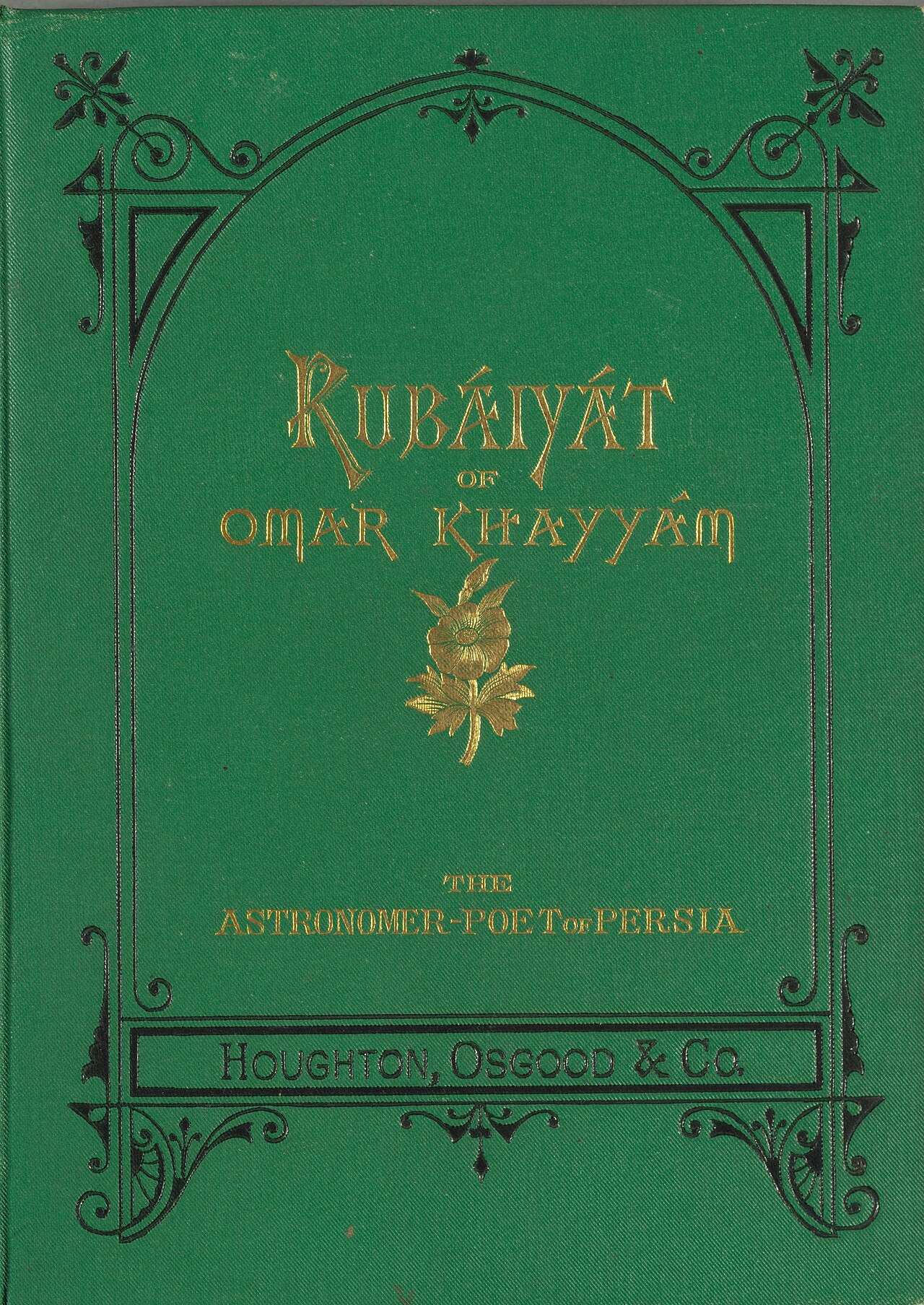 Book
Secondary source
Rubáiyát of Omar Khayyám
Edward FitzGerald · 1878
 Document
Primary source
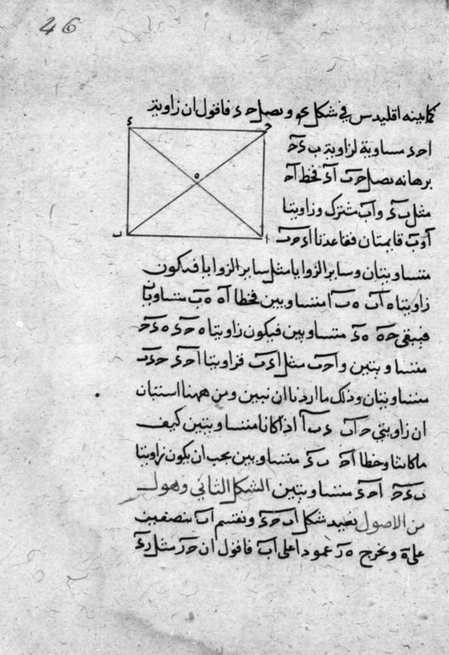
Khayyam Geometry Manuscript
Omar Khayyám
Secondary source
The Rubaiyat of Omar Khayyam (First Edition)
Edward FitzGerald · 1859
 Book
Secondary source
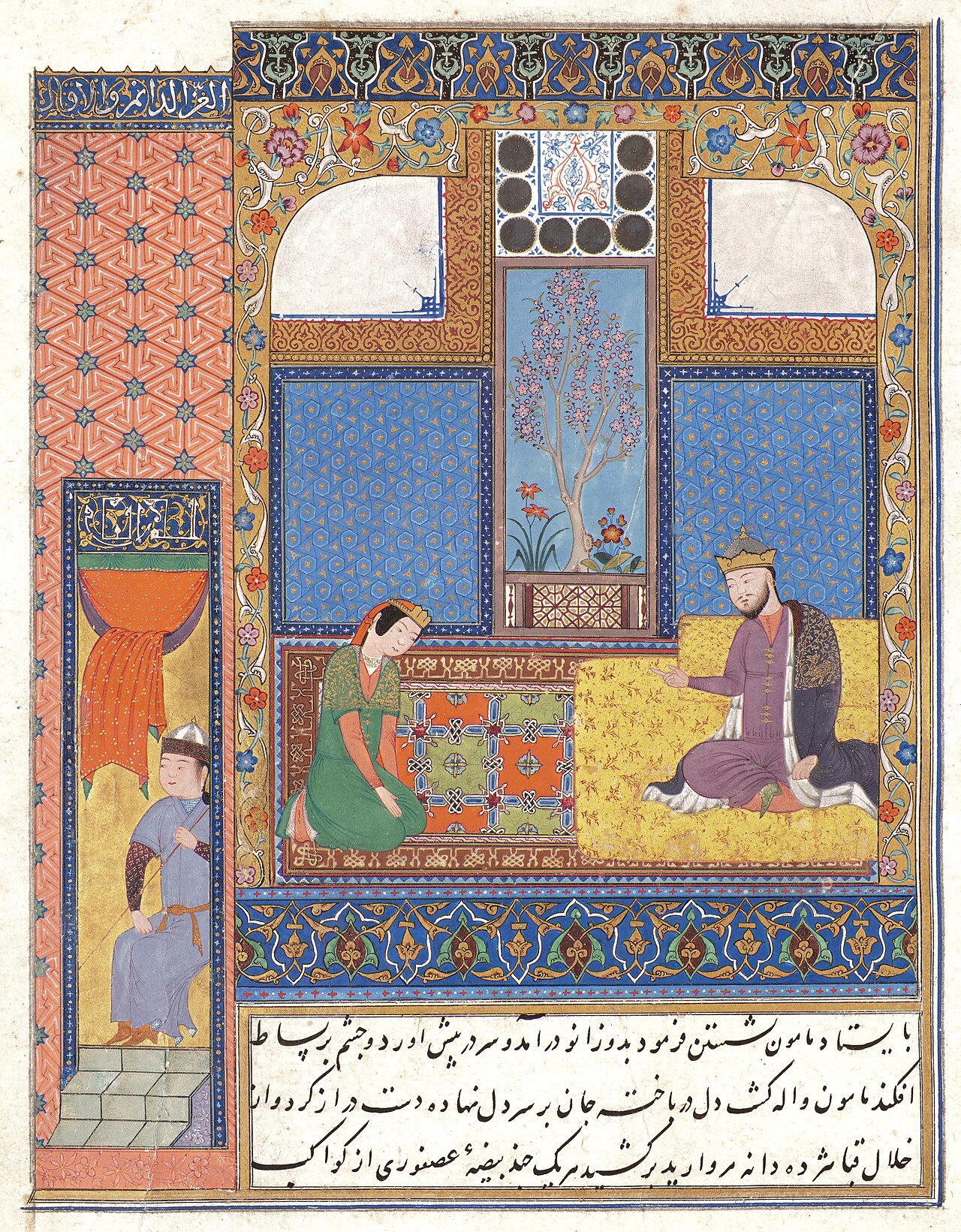
Chahar Maqala
Nizami Aruzi · 1155–1157
 Artifact
Secondary source
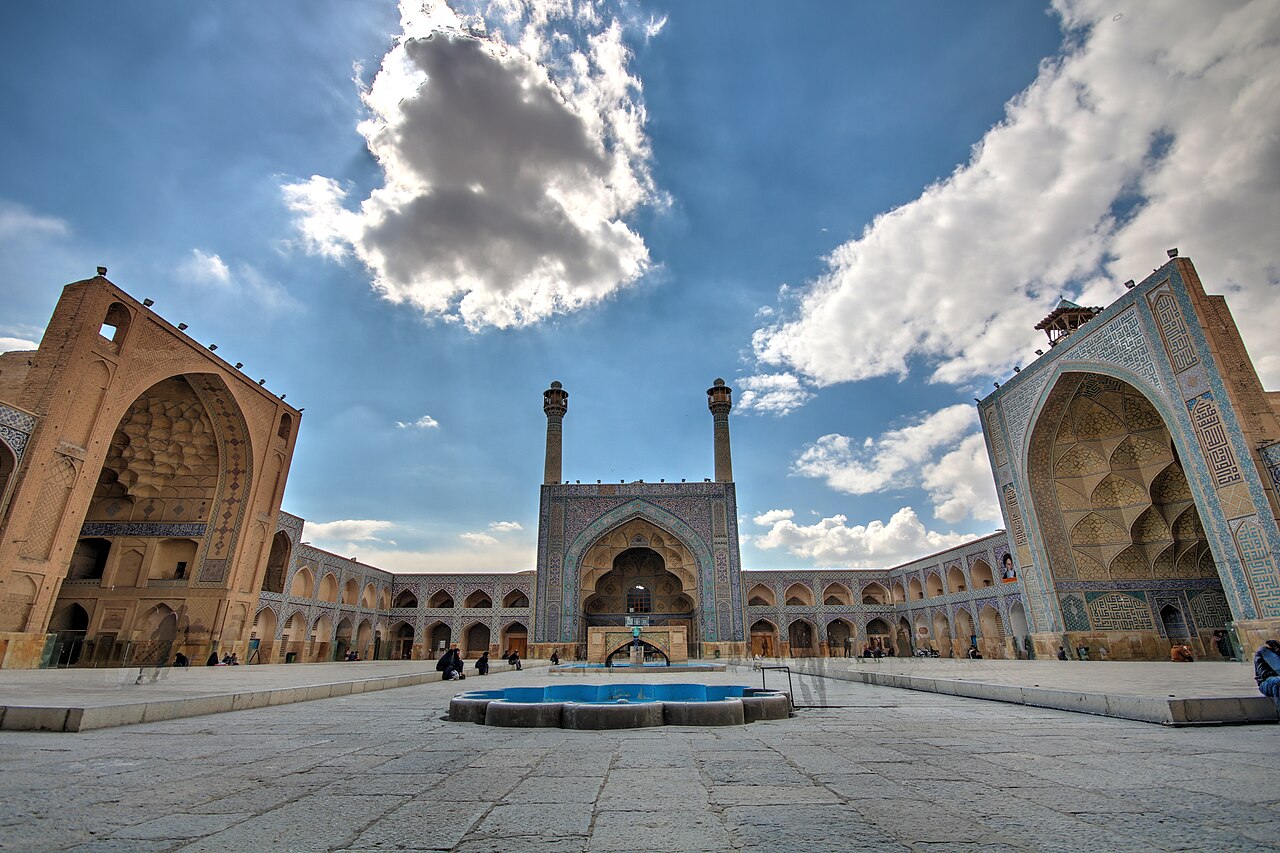
Jameh Mosque of Isfahan
841 (rebuilt 1086-1089 under Khayyám's patrons)
Ready when you are
Start chatting with Omar Khayyam now.
20 messages free · No credit card · Available in 50+ languages.