


Primary sourceArtifact1st century AD
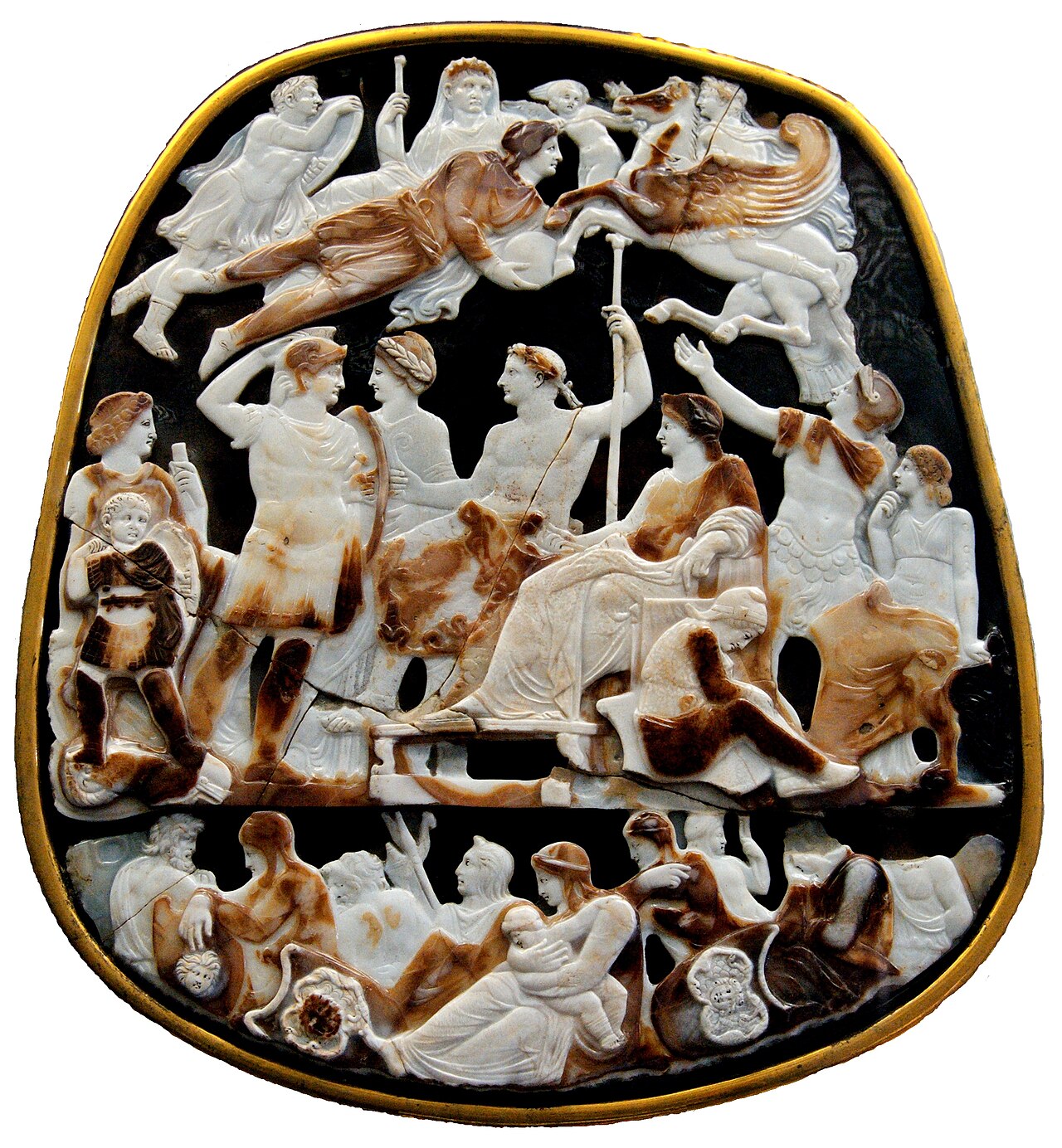
Great Cameo of France
Dioscurides · 1st century AD
A large carved sardonyx cameo of the Julio-Claudian imperial family, likely including a young Caligula among its figures.
Possibly shows the young Caligula among the Julio-Claudian family into which he was born.
Free Humy account · No credit card · 120,912 sources to read
About this source
What it is
The Great Cameo of France is a five-layered sardonyx cameo, probably carved in the early to mid first century AD and attributed to the gem-cutter Dioscurides. It is the largest surviving Roman imperial cameo, carved with twenty-four figures on three levels, and is now held in the Bibliothèque Nationale in Paris.
Why it matters
The cameo was made to assert the continuity and legitimacy of the Julio-Claudian dynasty, the ruling family into which Caligula was born. Scholars believe the figures include the emperor Tiberius, his mother Livia, Germanicus and Agrippina the Elder, and possibly the young Caligula himself standing nearby, alongside deified ancestors and conquered barbarians. Its long later history — passing through Byzantine, French royal and revolutionary hands — shows how prized such imperial symbols remained for centuries.
Look closer
- Why would a Roman emperor want a single object to show family continuity across generations?
- What might it mean that experts still disagree on the identity of several figures?
- What does the care taken over this object's survival tell you about how later rulers valued Roman imperial imagery?
This artifact is part of the curated material that grounds the AI version of Caligula, Tiberius, Arminius and Germanicus on Humy.ai — when students ask about related events, the AI can quote it and cite it.
More Caligula sources
Browse all 88 →

Ready when you are
Start chatting with Caligula now.
20 messages free · No credit card · Available in 50+ languages.