


Primary sourceDocument1991
Harmelin v. Michigan
Thurgood Marshall · 1991
A 1991 dissent by Justice Thurgood Marshall that agrees with Justice White on proportionality and restates his view that capital punishment is always unconstitutional.
Shows Marshall's opposition to harsh punishment, including his position that capital punishment is always unconstitutional.
About this source
What it is
This is a dissenting opinion written by Justice Thurgood Marshall in Harmelin v. Michigan, decided in 1991 and reported at 501 U.S. 957. The case concerned a life sentence without parole for drug possession. Marshall says he agrees with Justice White's dissent, except where White says the Eighth Amendment does not prohibit the death penalty. The text is preserved on Wikisource.
Why it matters
Marshall restates his long-held view that capital punishment is unconstitutional in all instances. He also argues that the Eighth Amendment requires comparative proportionality review of death sentences, because of the uniqueness of the death penalty. His opinion shows how he tied his opposition to harsh punishment to earlier cases such as Gregg v. Georgia. It reveals the sharp divisions among the justices over how the Eighth Amendment limits punishment.
Look closer
- Why does Marshall say that the death penalty is treated differently under the Eighth Amendment?
- How does Marshall use earlier opinions and cases to support his position?
- What does this dissent leave out about the drug offense and the defendant's own circumstances?
This document is part of the curated material that grounds the AI version of Thurgood Marshall on Humy.ai — when students ask about related events, the AI can quote it and cite it.
More Thurgood Marshall sources
Meet the AI Thurgood Marshall →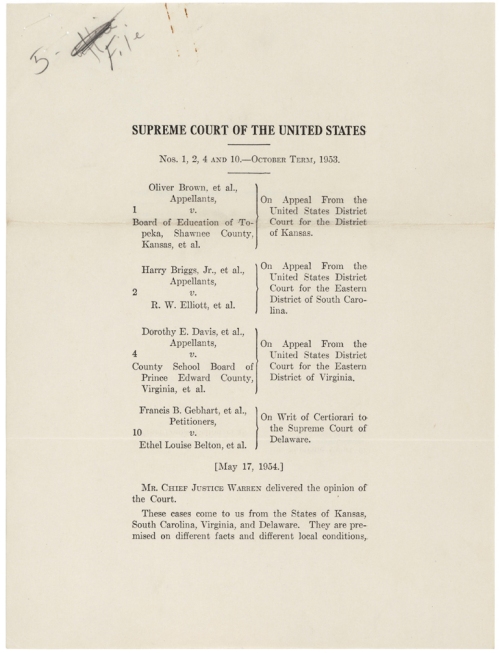 Document
Primary source
Brown v. Board of Education
Earl Warren · 17 May 1954
 Painting
Primary source
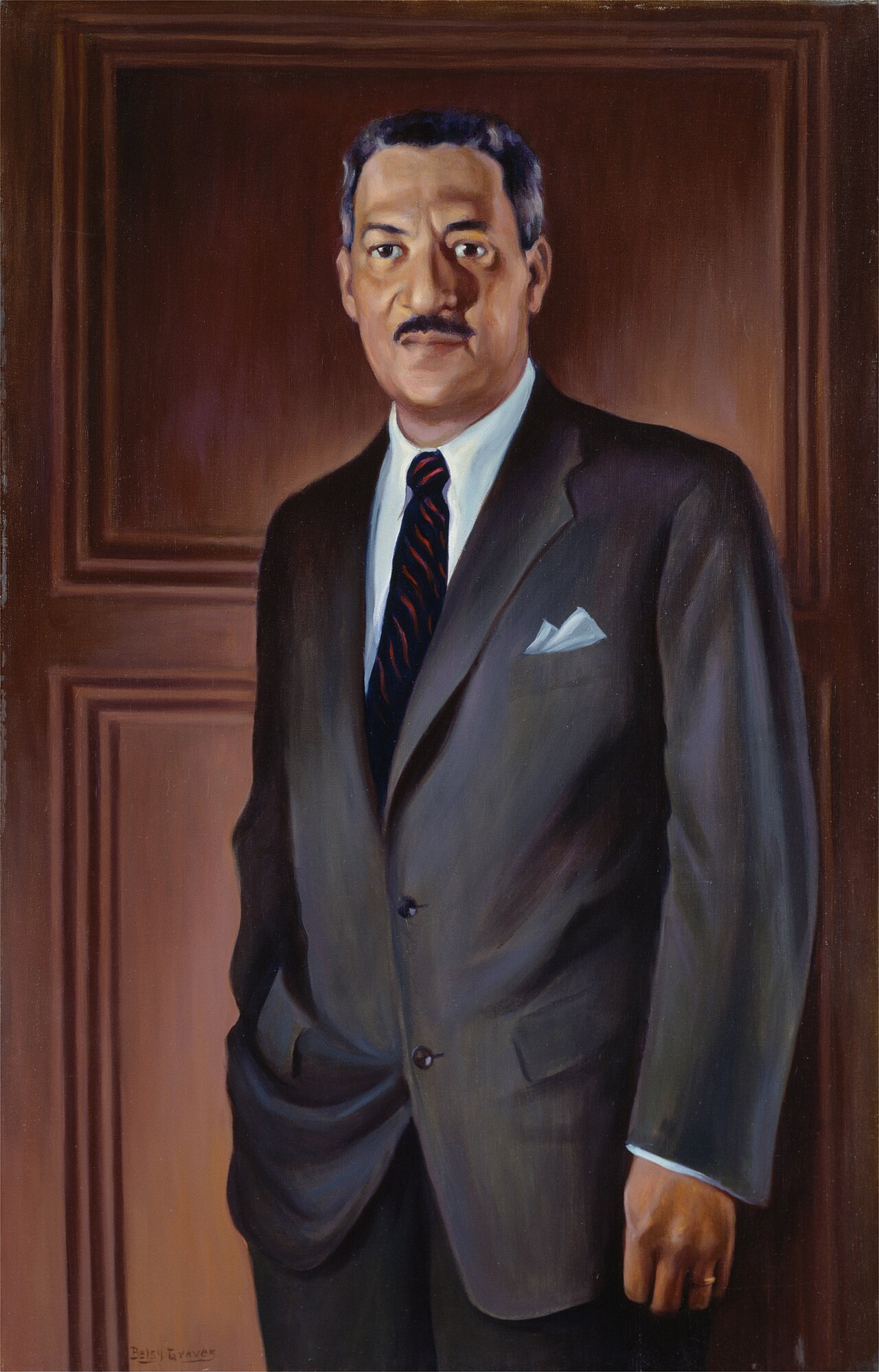
Thurgood Marshall
Betsy Graves Reyneau · 1956
 Photograph
Primary source
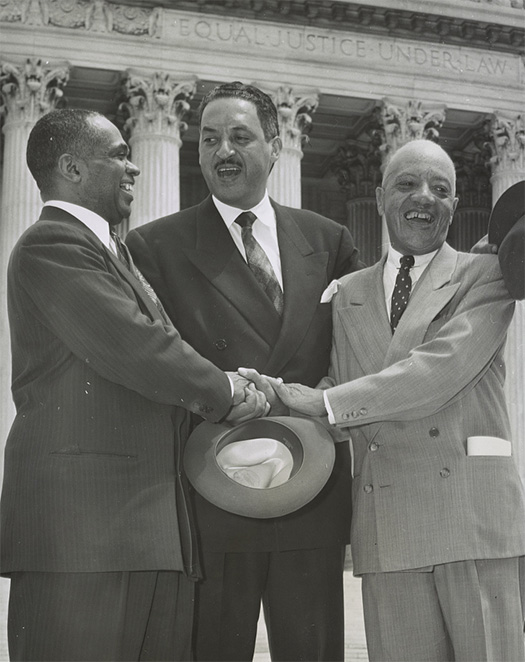
George Edward Chalmer Hayes, Thurgood Marshall, and James Nabrit in 1954 winning Brown case
1954
 Photograph
Primary source
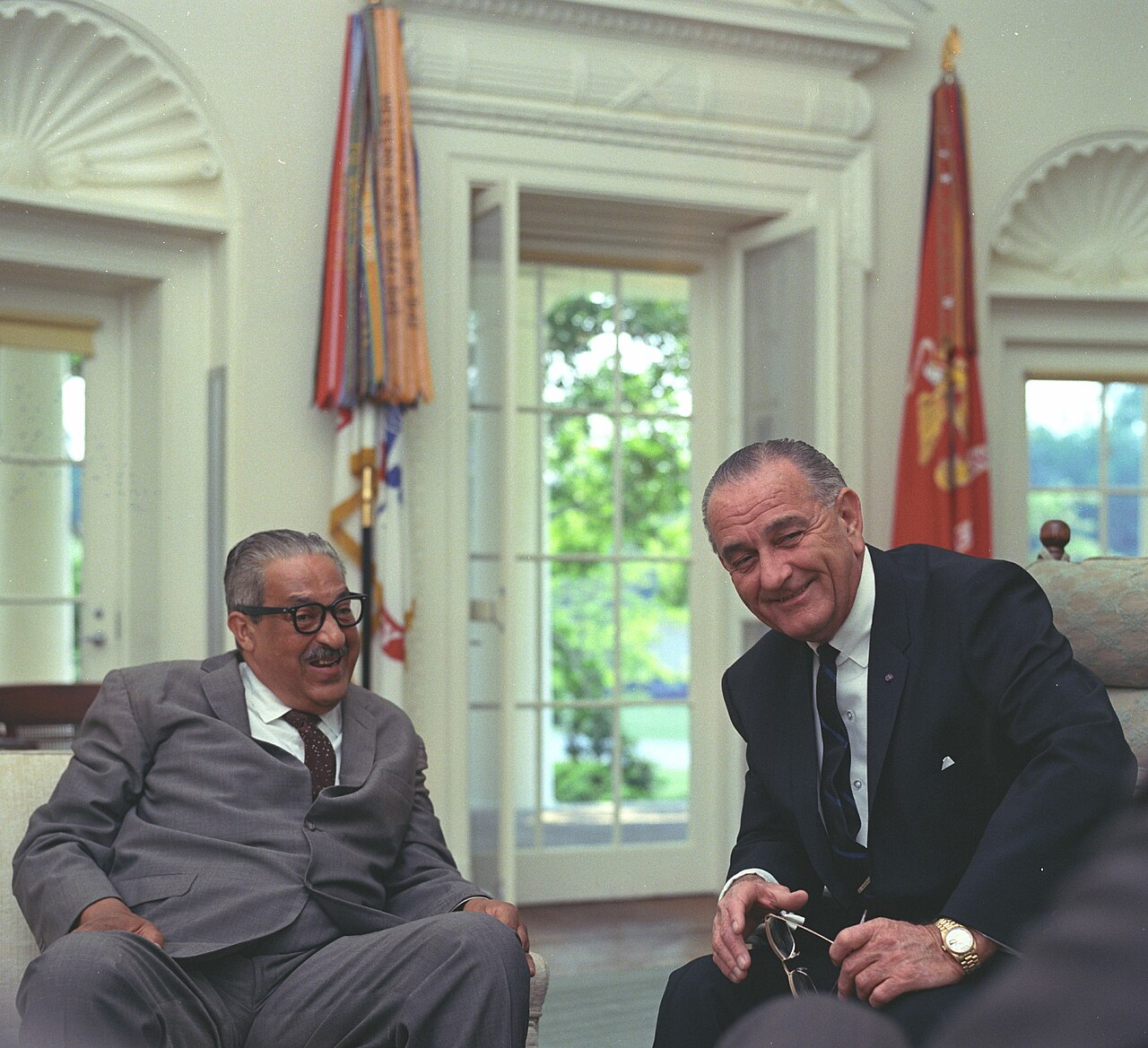
Thurgood Marshall and President Lyndon B. Johnson, June 13, 1967
Frank Wolfe · 13 June 1967
Primary source
Cooper v. Aaron
12 September 1958
Ready when you are
Start chatting with Thurgood Marshall now.
20 messages free · No credit card · Available in 50+ languages.