


Primary sourceSculpturec. 1479–1458 BCE
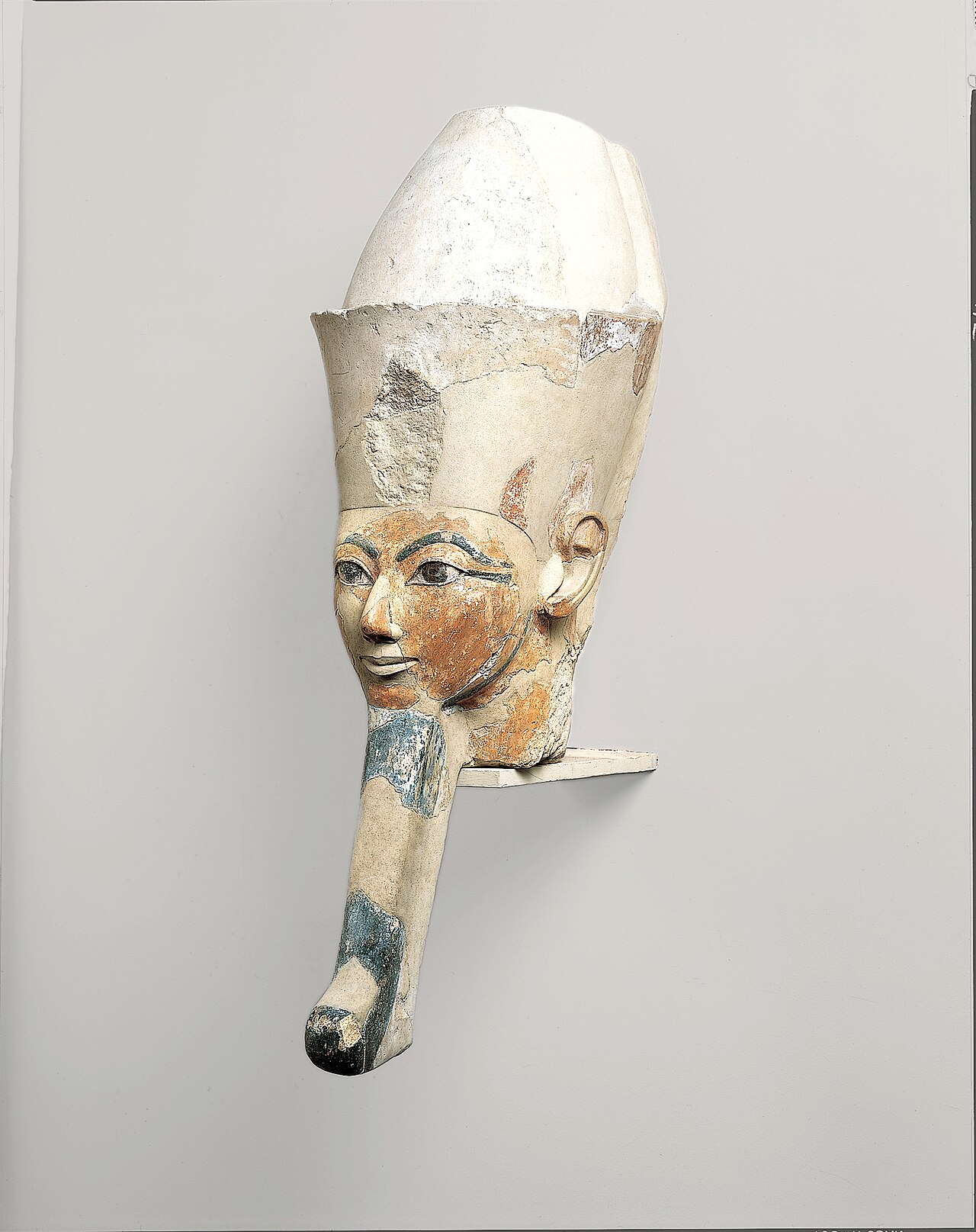
Head from an Osiride Statue of Hatshepsut
c. 1479–1458 BCE
A painted limestone head wearing the double crown, from a statue of Hatshepsut shaped like the god Osiris, made during her reign.
This head, wearing the double crown, is from an Osiride statue made to commemorate Hatshepsut's reign.
About this source
What it is
This is the head from a painted limestone statue of Hatshepsut made in the Osiride style, where a pharaoh is shown with the crossed arms and attributes of the god Osiris. It dates from her reign, around 1479–1458 BCE. The head wears the tall white double crown, has a striped headdress edge, and a blue-green false beard.
Why it matters
Osiride statues were placed in niches of temples and linked the living pharaoh to the god of the afterlife, showing royal and religious power together. By having herself shown this way, Hatshepsut placed herself among the long line of pharaohs who used Osiris imagery, strengthening her claim to the throne. Because it was made during her lifetime, this head is a direct source of evidence about her rule.
Look closer
- Why might a ruler want to be shown as a god after death?
- What do the crown and false beard tell you about ideas of royal appearance?
- What is missing from this head that might tell us more if we had the whole statue?
This sculpture is part of the curated material that grounds the AI version of Hatshepsut on Humy.ai — when students ask about related events, the AI can quote it and cite it.
More Hatshepsut sources
Meet the AI Hatshepsut →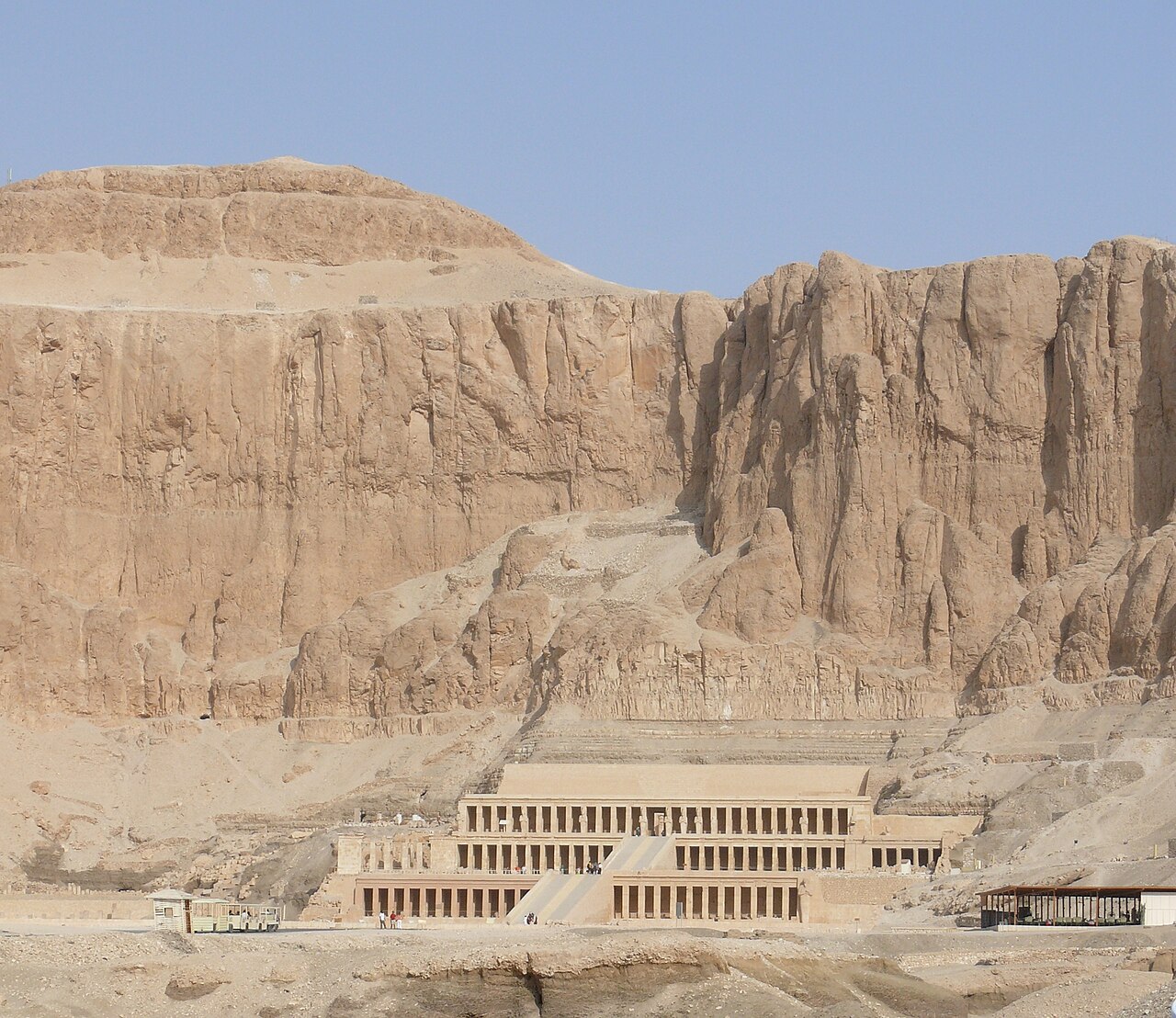 Artifact
Primary source
Mortuary Temple of Hatshepsut
Senenmut and/or Hapuseneb (attributed) · c. 1479–1458 BCE
 Photograph
Secondary source
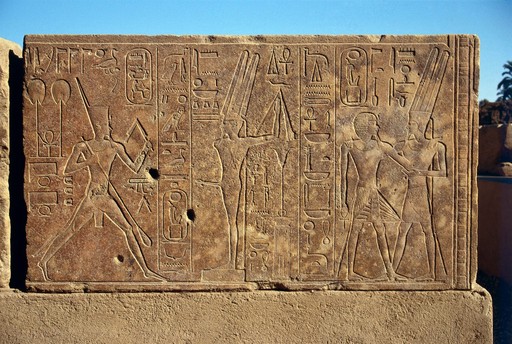
Hatshepsut Dancing Before Min, Karnak Relief
Carole Reeves · 1989
 Sculpture
Primary source
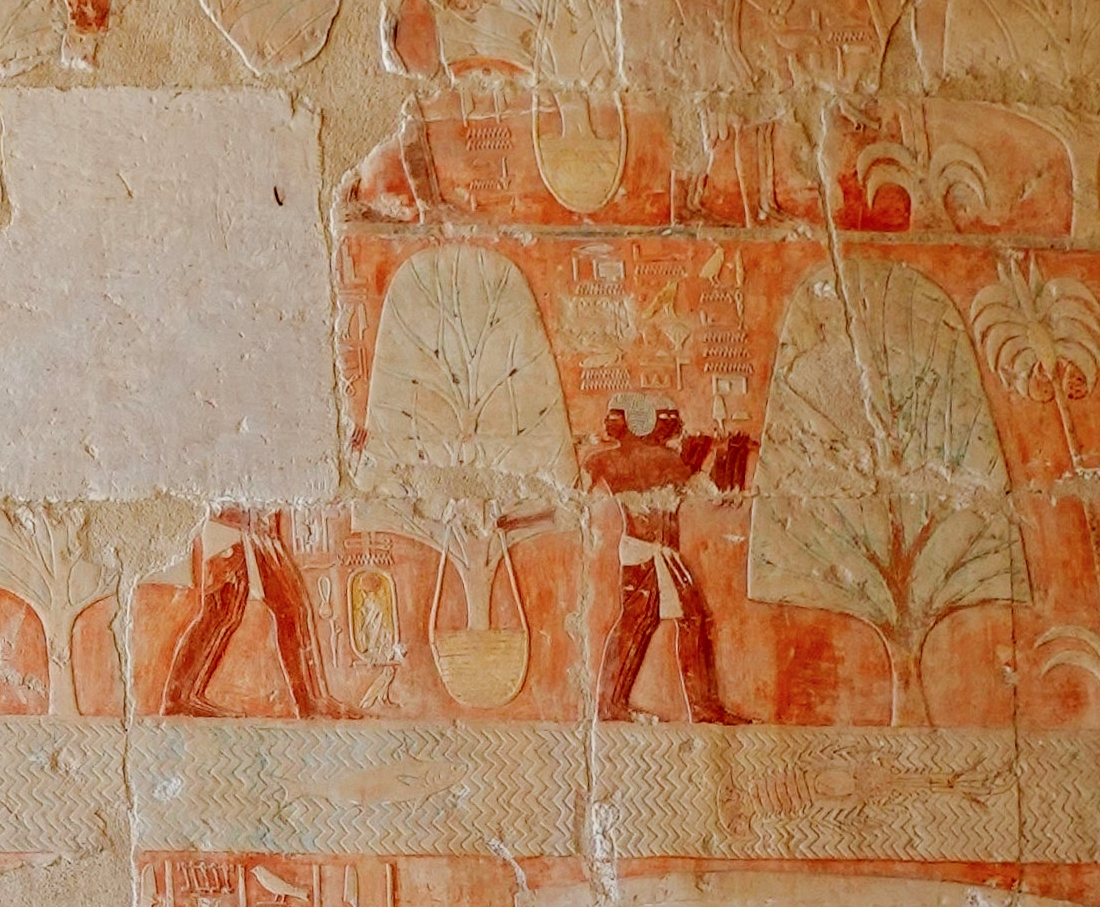
Punt Expedition Reliefs
Royal workshops of Hatshepsut · c. 1470 BCE
 Sculpture
Primary source
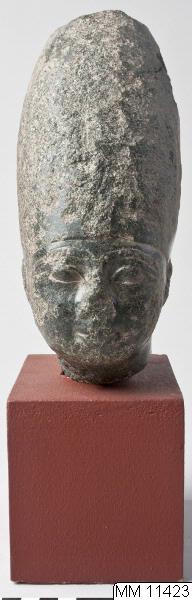
Sculpture Head Probably of Hatshepsut
 Sculpture
Primary source
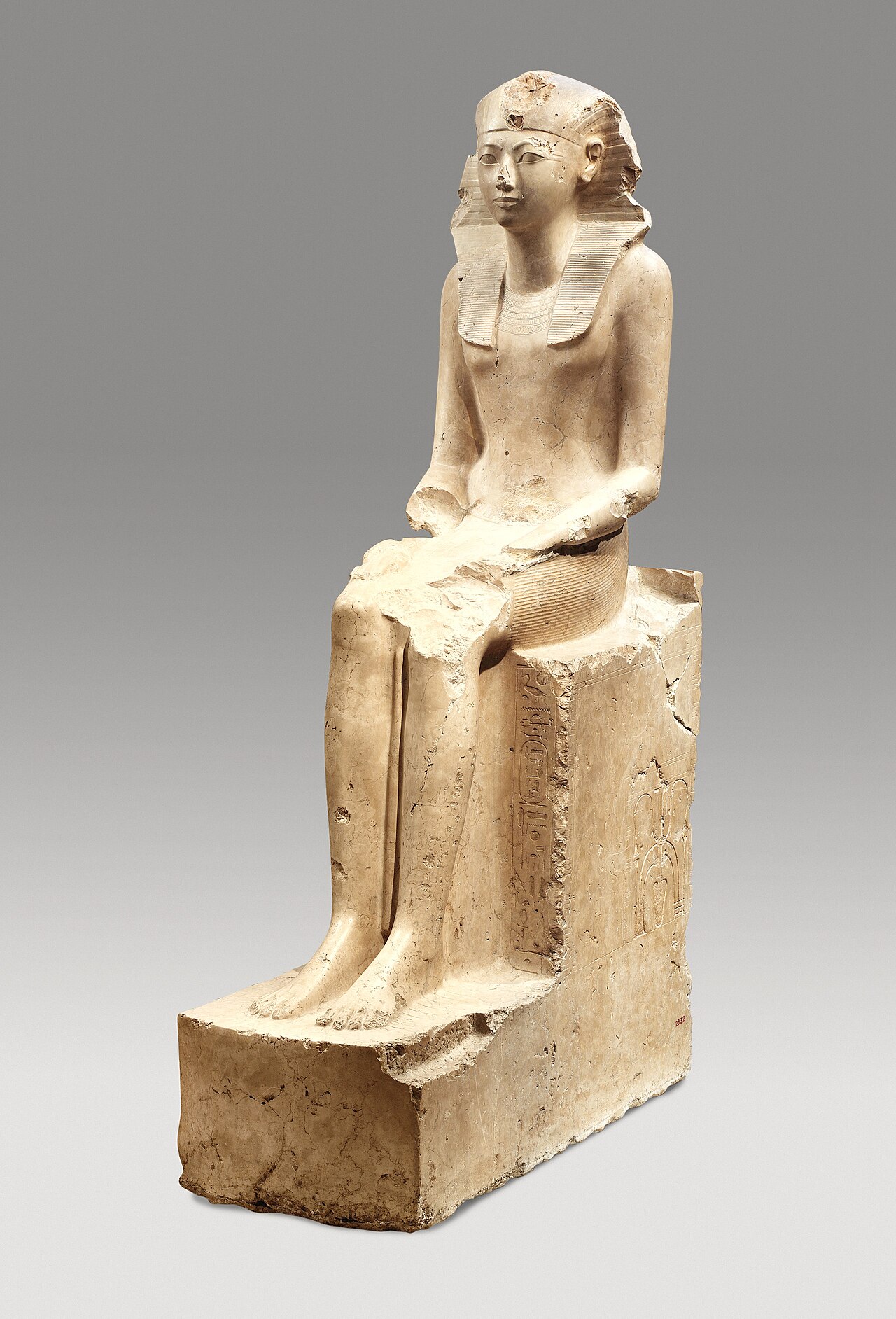
Seated Statue of Hatshepsut
c. 1466 BCE
Ready when you are
Start chatting with Hatshepsut now.
20 messages free · No credit card · Available in 50+ languages.