


Primary sourceSculptureca. 1473–1458 BCE
Head of an Osiride Statue of Hatshepsut, Colonnade
ca. 1473–1458 BCE
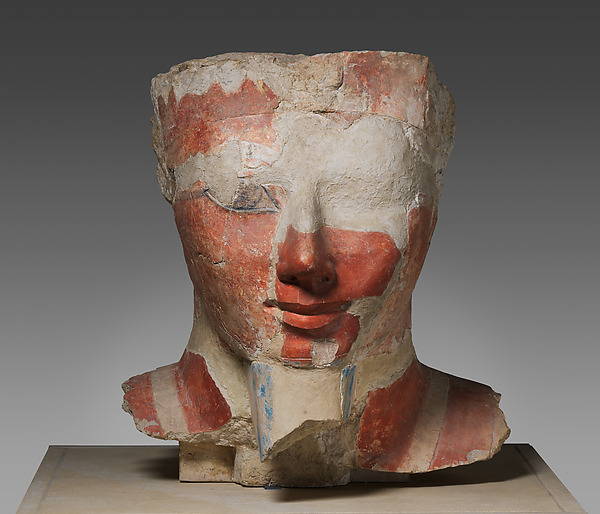
A weathered painted limestone head from an Osiride statue of Hatshepsut that once stood in her temple colonnade.
This weathered head belonged to one of many Osiride statues Hatshepsut had built along her temple colonnade.
About this source
What it is
This painted limestone head is a fragment from an Osiride statue of Hatshepsut, originally placed in the colonnade of her temple. It dates from her reign in the New Kingdom's Eighteenth Dynasty and is held at the Metropolitan Museum of Art.
Why it matters
Hatshepsut's temple was lined with rows of these Osiride statues, each one repeating her image as both pharaoh and god. The worn paint and chipped stone show how much time and weathering these monuments have endured, and remind us that what survives is only a fraction of what once existed.
Look closer
- What does the damage to the paint and stone tell you about the statue's long history?
- Why might a ruler want many repeated images of herself in one place?
- What parts of the original statue are missing, and how might that change how we understand it?
This sculpture is part of the curated material that grounds the AI version of Hatshepsut on Humy.ai — when students ask about related events, the AI can quote it and cite it.
More Hatshepsut sources
Meet the AI Hatshepsut →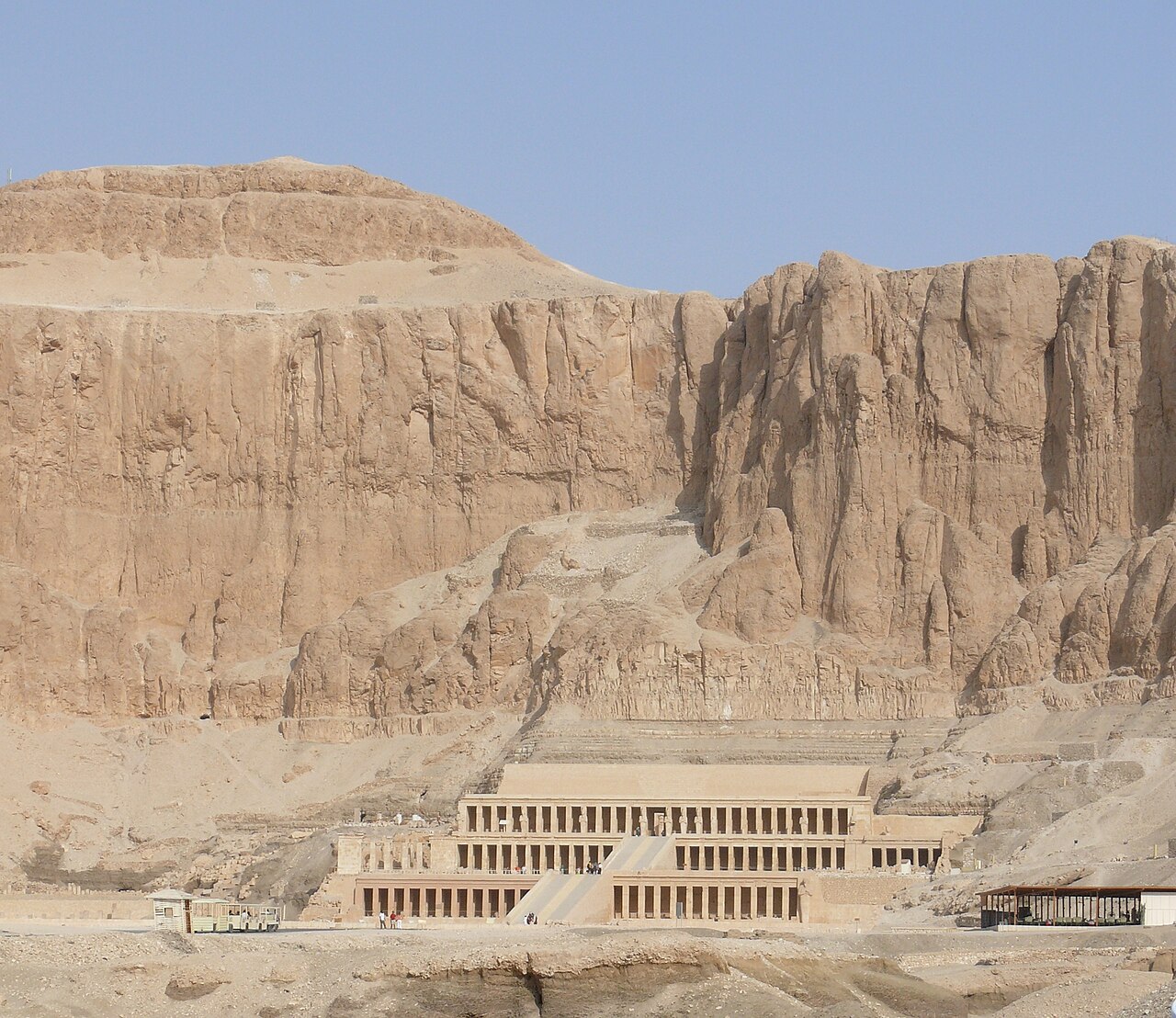 Artifact
Primary source
Mortuary Temple of Hatshepsut
Senenmut and/or Hapuseneb (attributed) · c. 1479–1458 BCE
 Photograph
Secondary source
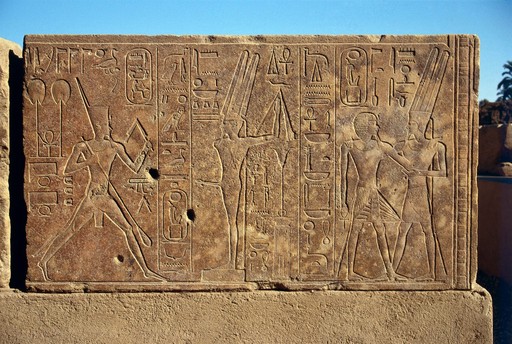
Hatshepsut Dancing Before Min, Karnak Relief
Carole Reeves · 1989
 Sculpture
Primary source
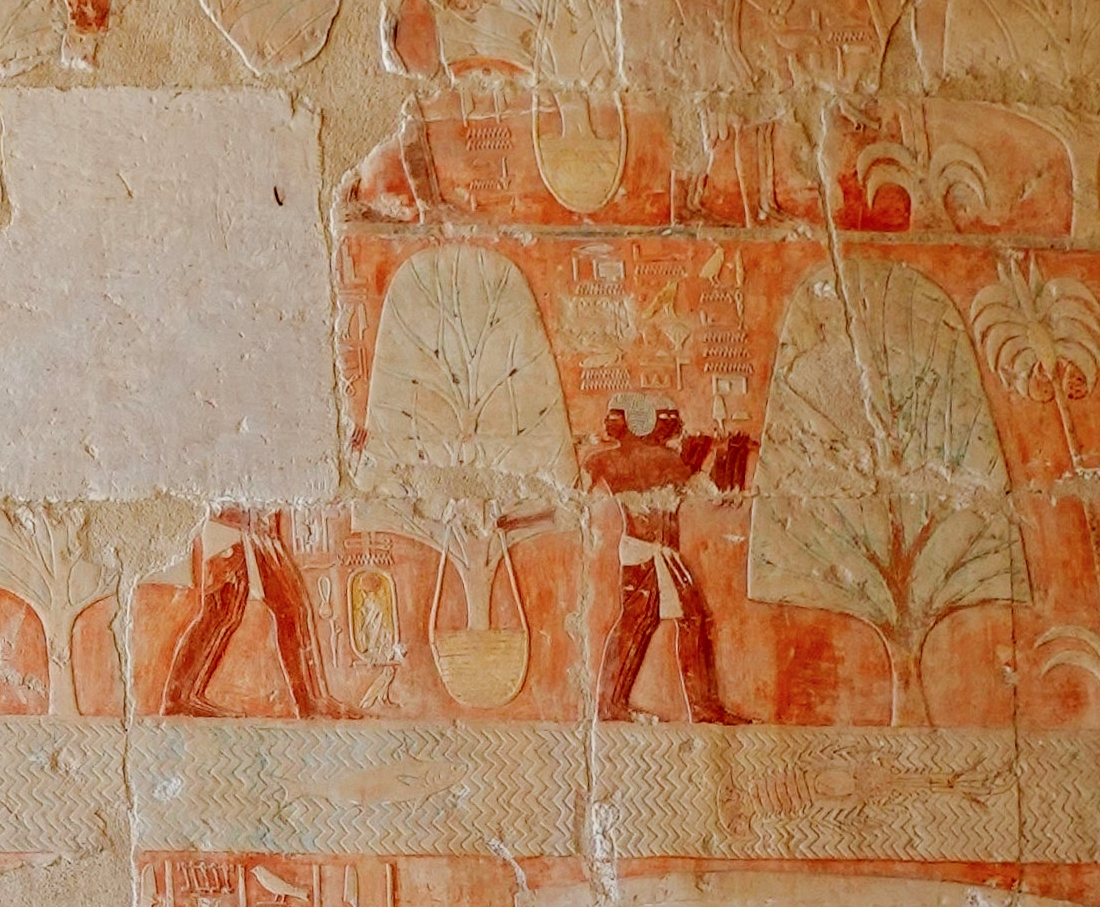
Punt Expedition Reliefs
Royal workshops of Hatshepsut · c. 1470 BCE
 Sculpture
Primary source
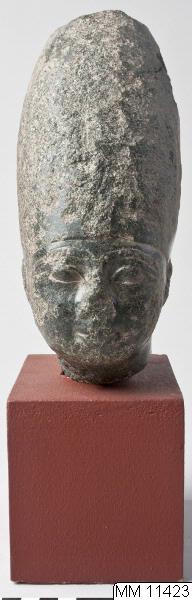
Sculpture Head Probably of Hatshepsut
 Sculpture
Primary source
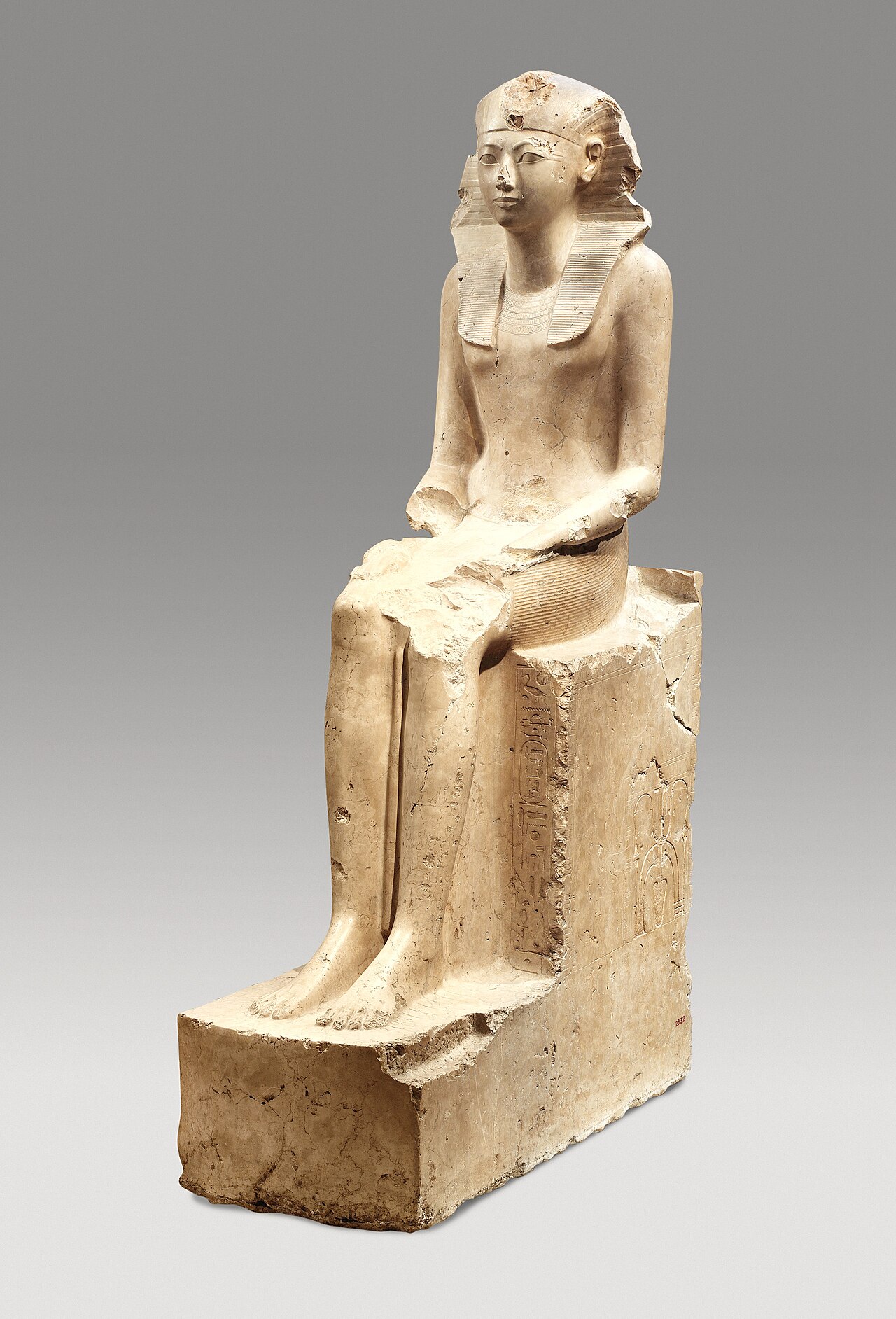
Seated Statue of Hatshepsut
c. 1466 BCE
Ready when you are
Start chatting with Hatshepsut now.
20 messages free · No credit card · Available in 50+ languages.