


Secondary sourcePainting1563
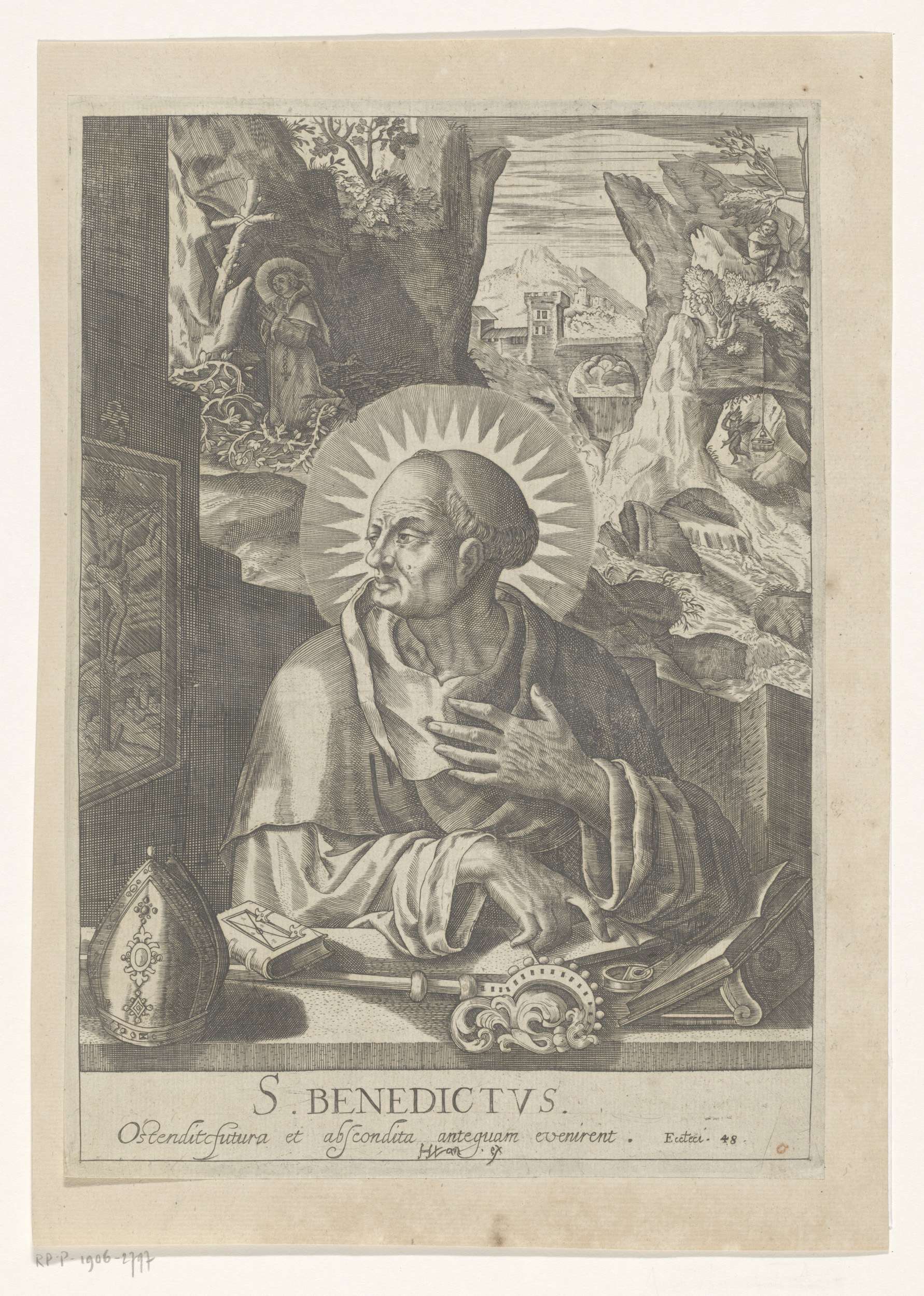
Heilige Benedictus
1563
A 1563 Dutch print showing Benedict with his mitre, staff and book, praying before a crucifix, used to study how later centuries pictured him.
A later print imagining Benedict with symbols of religious office, useful for studying how his image changed over time.
About this source
What it is
This engraved print, dated 1563 and held by the Rijksmuseum in the Netherlands, shows Saint Benedict seated with a mitre, staff and book before him, gazing at an image of the crucified Christ. A Latin inscription appears beneath the image.
Why it matters
Made many centuries after Benedict's lifetime, this print shows how later artists imagined and depicted him using symbols of religious authority, such as the mitre and staff, even though these were not necessarily part of his own time. It is useful evidence for how Benedict's image developed over the centuries rather than for his actual life.
Look closer
- What objects surround Benedict, and what might they be meant to symbolise about his authority?
- Why do you think the artist chose to include small background scenes?
- Since this was made over a thousand years after Benedict lived, what can and can't it tell us about him?
This painting is part of the curated material that grounds the AI version of Saint Benedict on Humy.ai — when students ask about related events, the AI can quote it and cite it.
More Saint Benedict sources
Meet the AI Saint Benedict →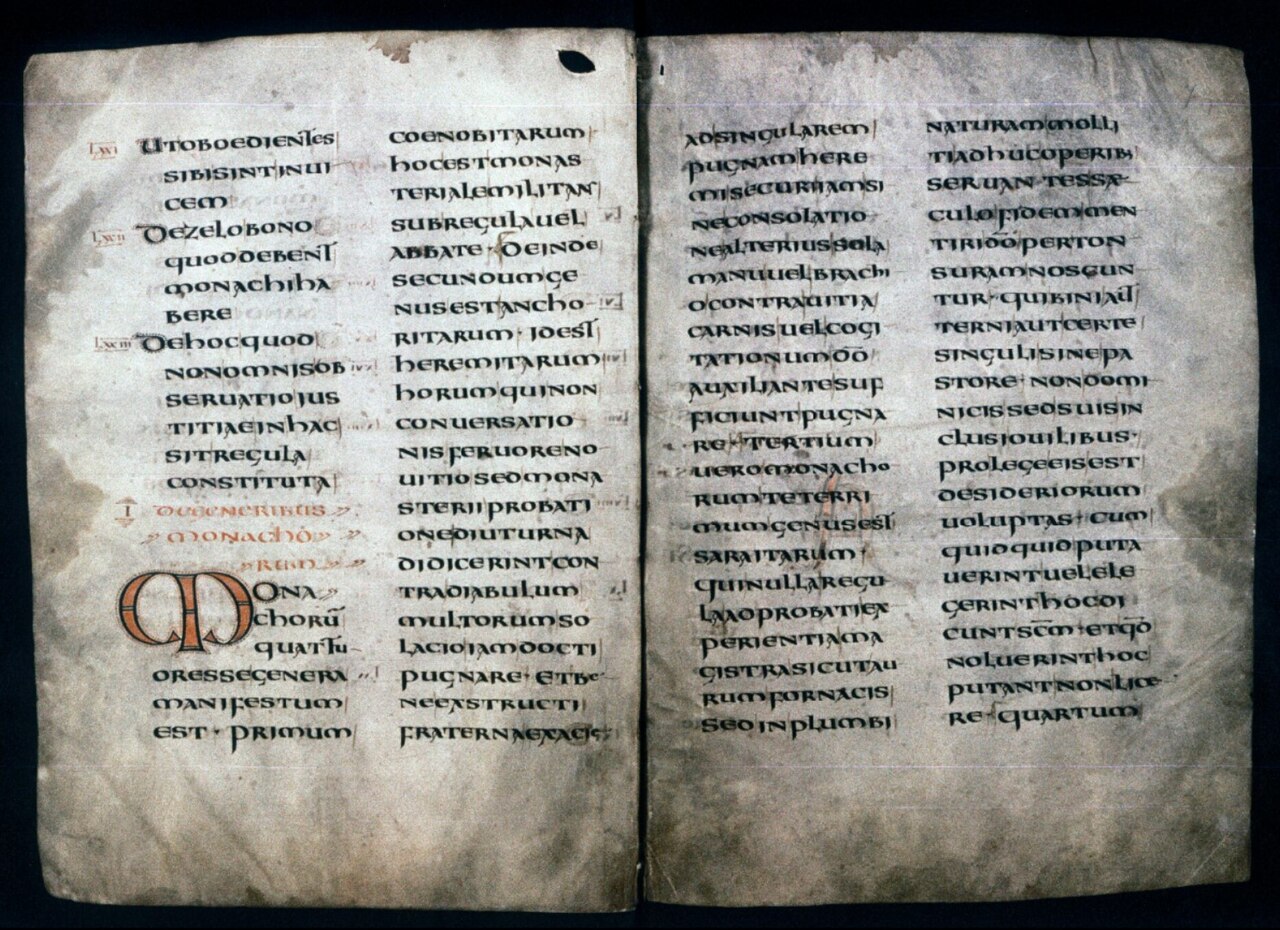 Book
Primary source
Rule of Saint Benedict
Benedict of Nursia · c. 600
 Artifact
Secondary source
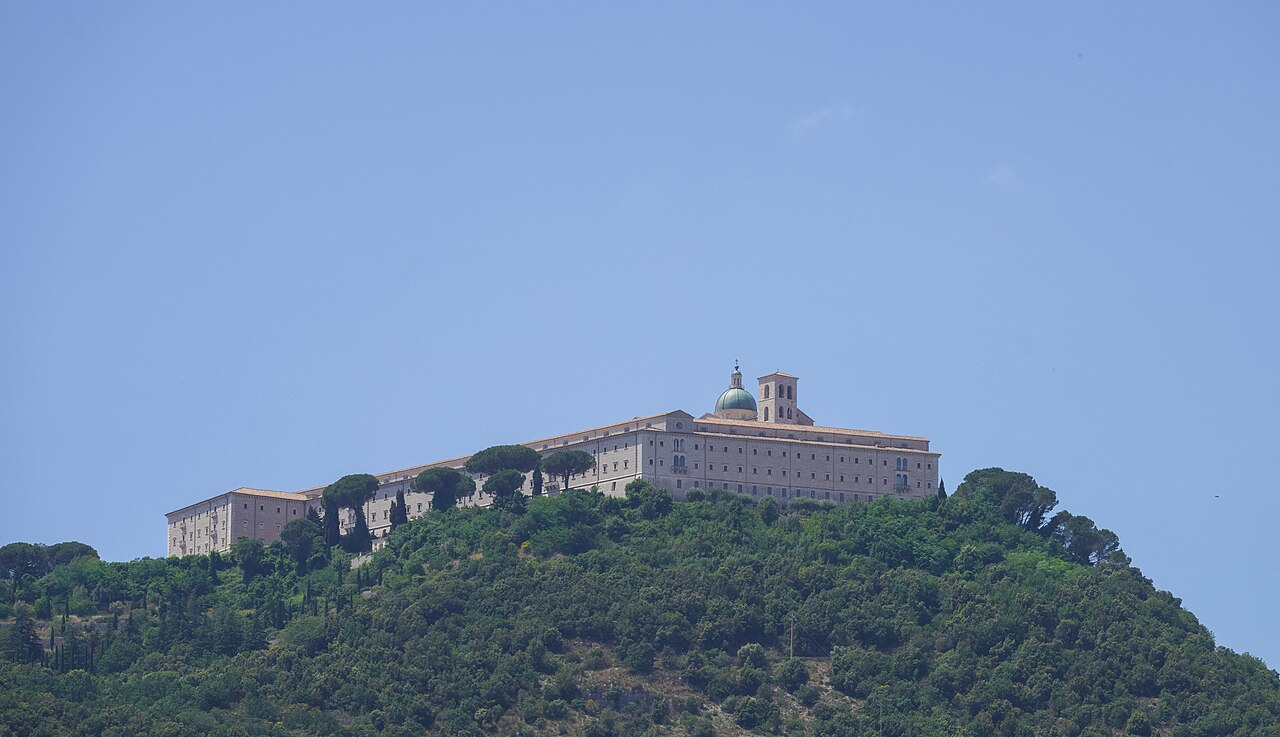
Monte Cassino
founded c. 529/530
 Painting
Secondary source
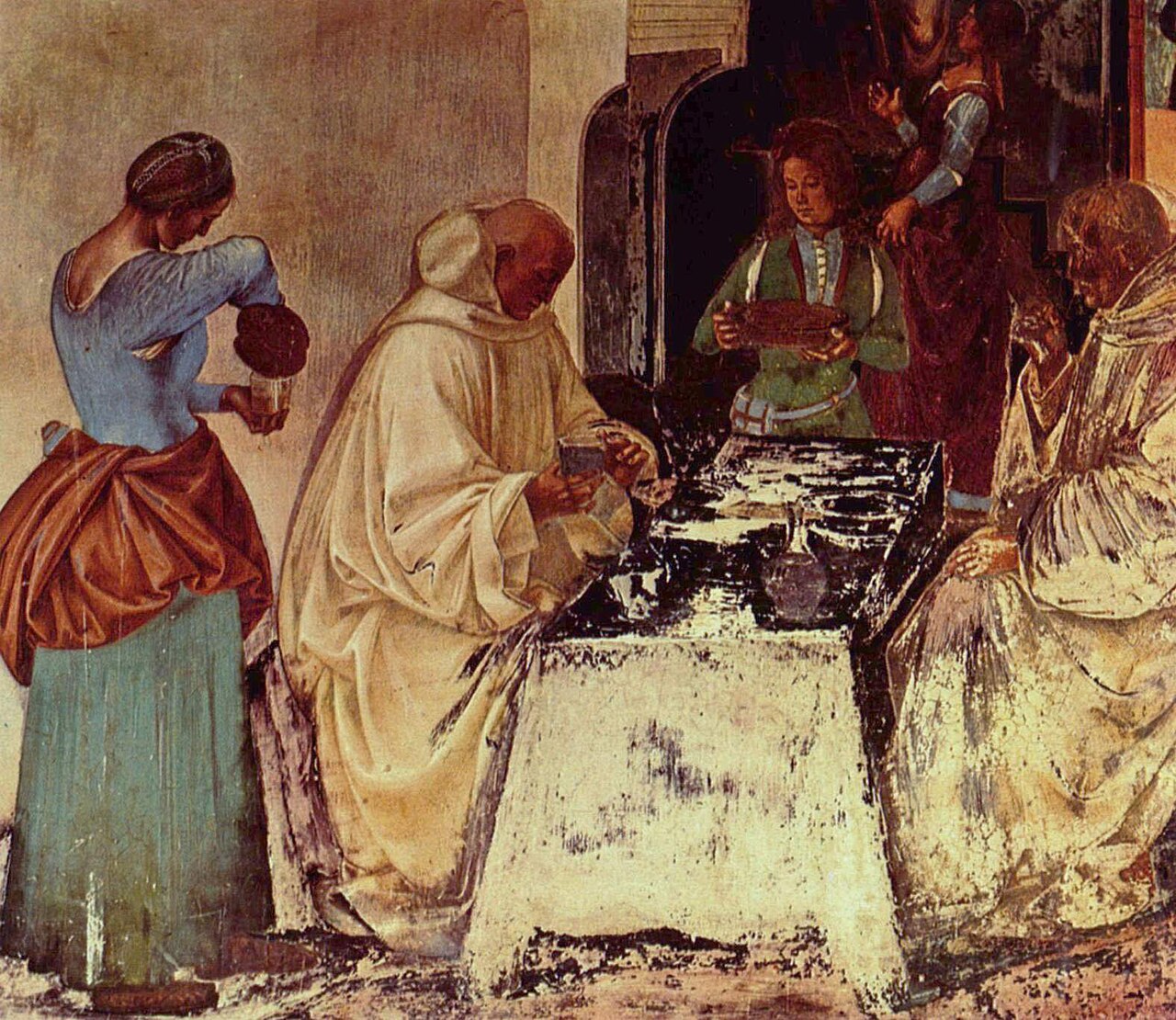
Fresco Cycle of the Life of St Benedict at Monte Oliveto Maggiore
Luca Signorelli and Sodoma · 1497-1505 (fresco cycle); abbey founded 1313
 Artifact
Secondary source
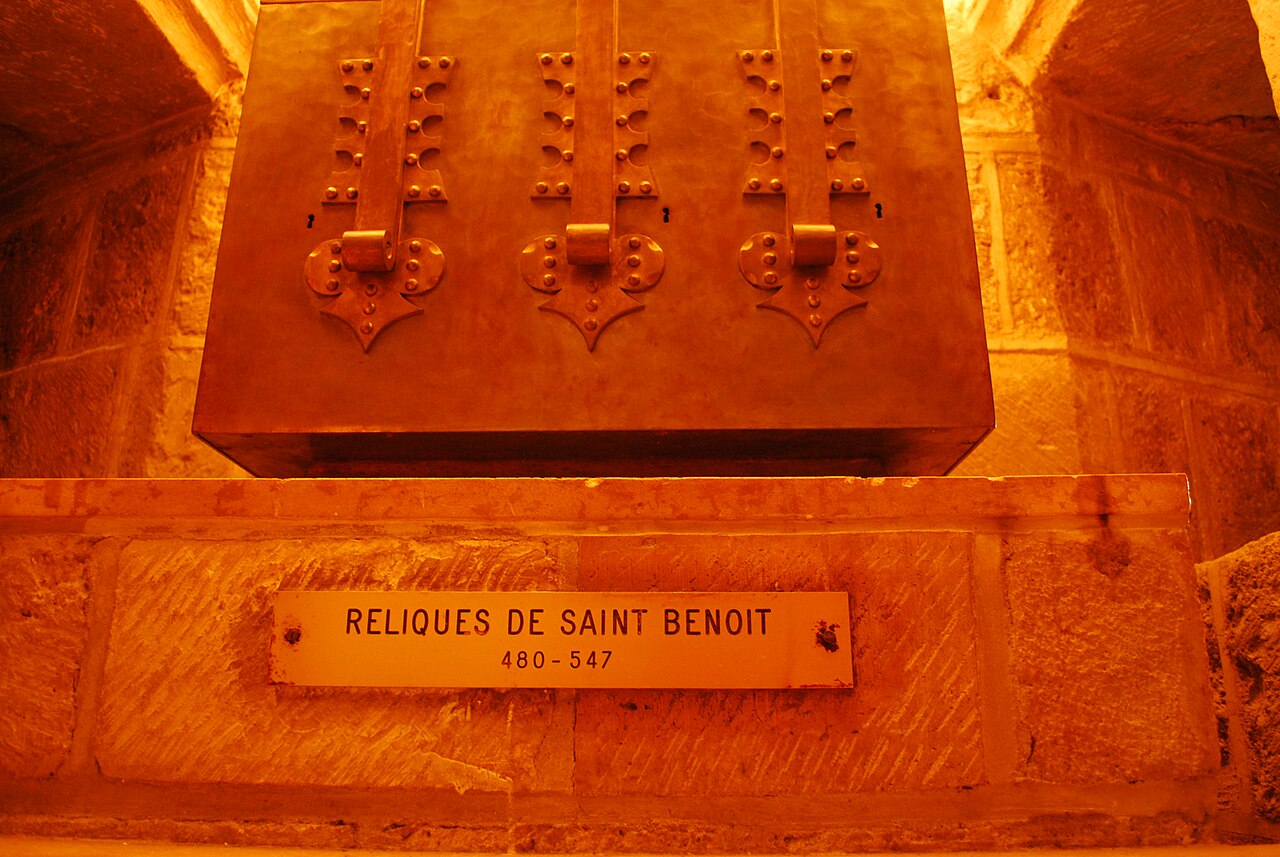
Reliquary of Saint Benedict at Fleury
 Artifact
Secondary source
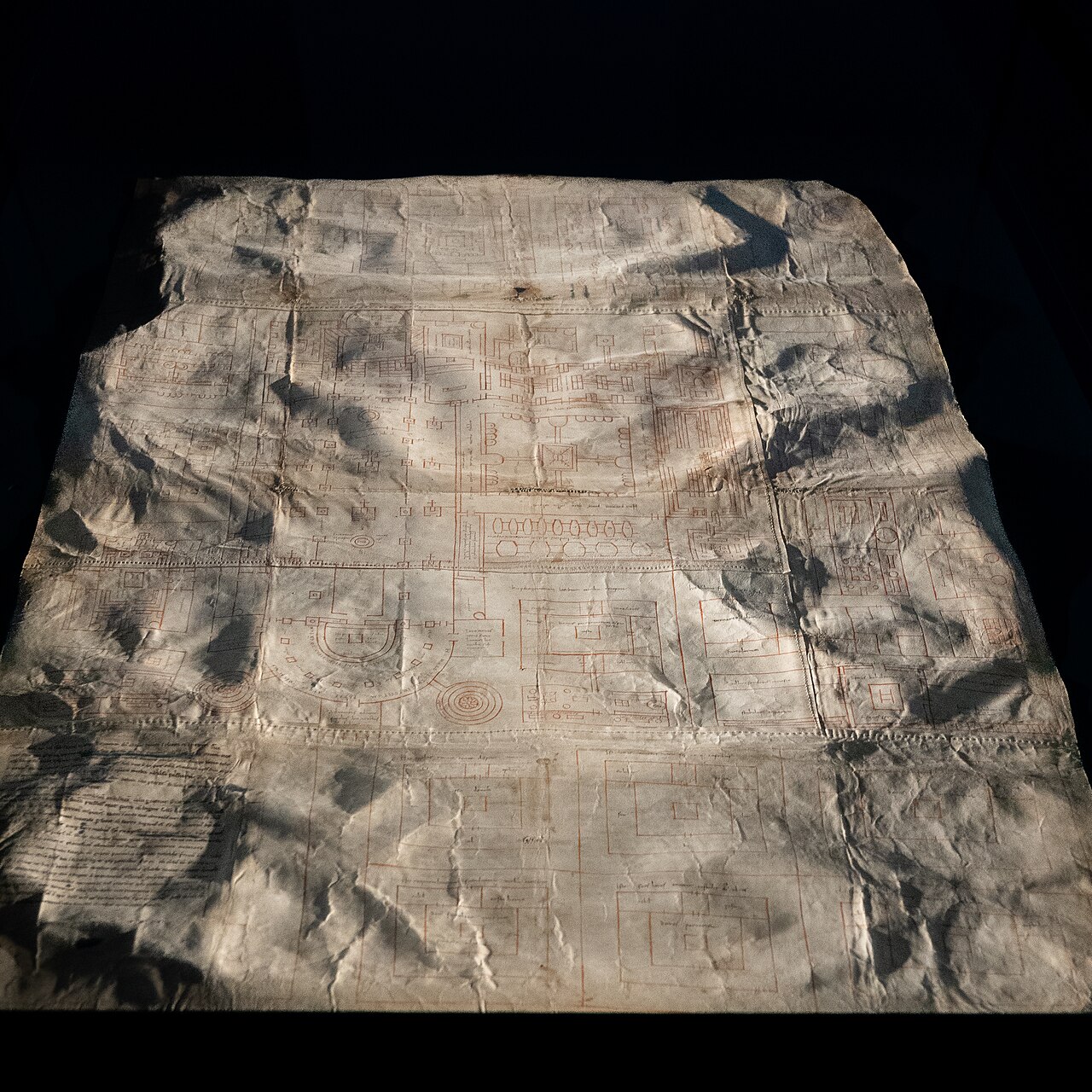
Plan of Saint Gall
c. 820-830
Ready when you are
Start chatting with Saint Benedict now.
20 messages free · No credit card · Available in 50+ languages.