


Secondary sourcePaintingEdo period
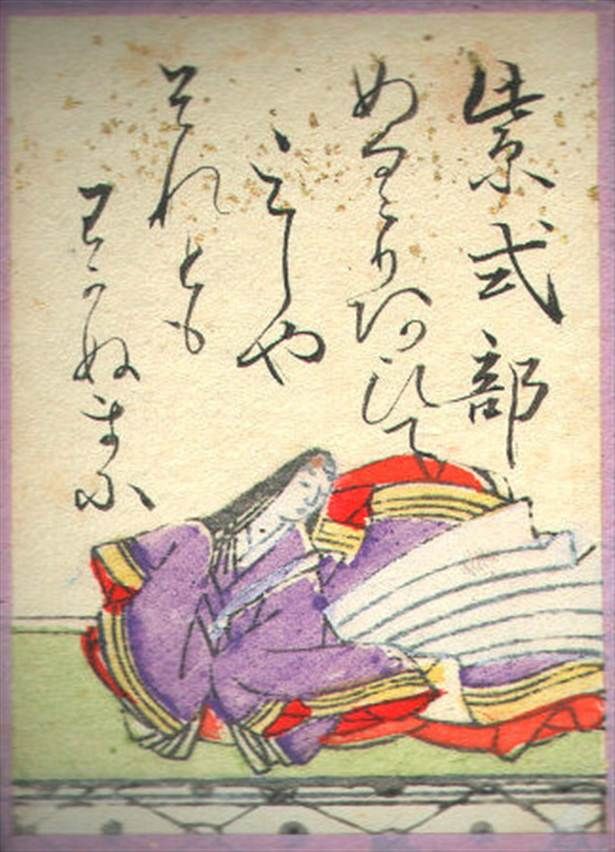
Hyakunin Isshu Playing Card Showing Murasaki Shikibu
Edo period
An Edo-period illustrated playing card portraying Murasaki Shikibu for the poem-matching game Hyakunin Isshu.
This playing card honors Murasaki Shikibu as a poet whose verse was included in the famous Hyakunin Isshu anthology.
About this source
What it is
This is an uta-garuta playing card created during the Edo period, part of a set used for the Hyakunin Isshu poetry card game. It shows a court woman in a purple robe reclining beside white bedding, with calligraphy filling the upper portion of the card.
Why it matters
Hyakunin Isshu is a classic anthology of one hundred poems by one hundred poets, and Murasaki Shikibu's inclusion shows how her poetry, alongside her prose, remained celebrated long after her death. Playing cards like this spread her image and work into everyday culture and games.
Look closer
- Why would a poet be remembered through a game rather than just through books?
- What does the clothing and pose suggest about how court women were imagined?
- What can the calligraphy on the card tell us, even if we cannot read it?
This painting is part of the curated material that grounds the AI version of Murasaki Shikibu on Humy.ai — when students ask about related events, the AI can quote it and cite it.
More Murasaki Shikibu sources
Meet the AI Murasaki Shikibu →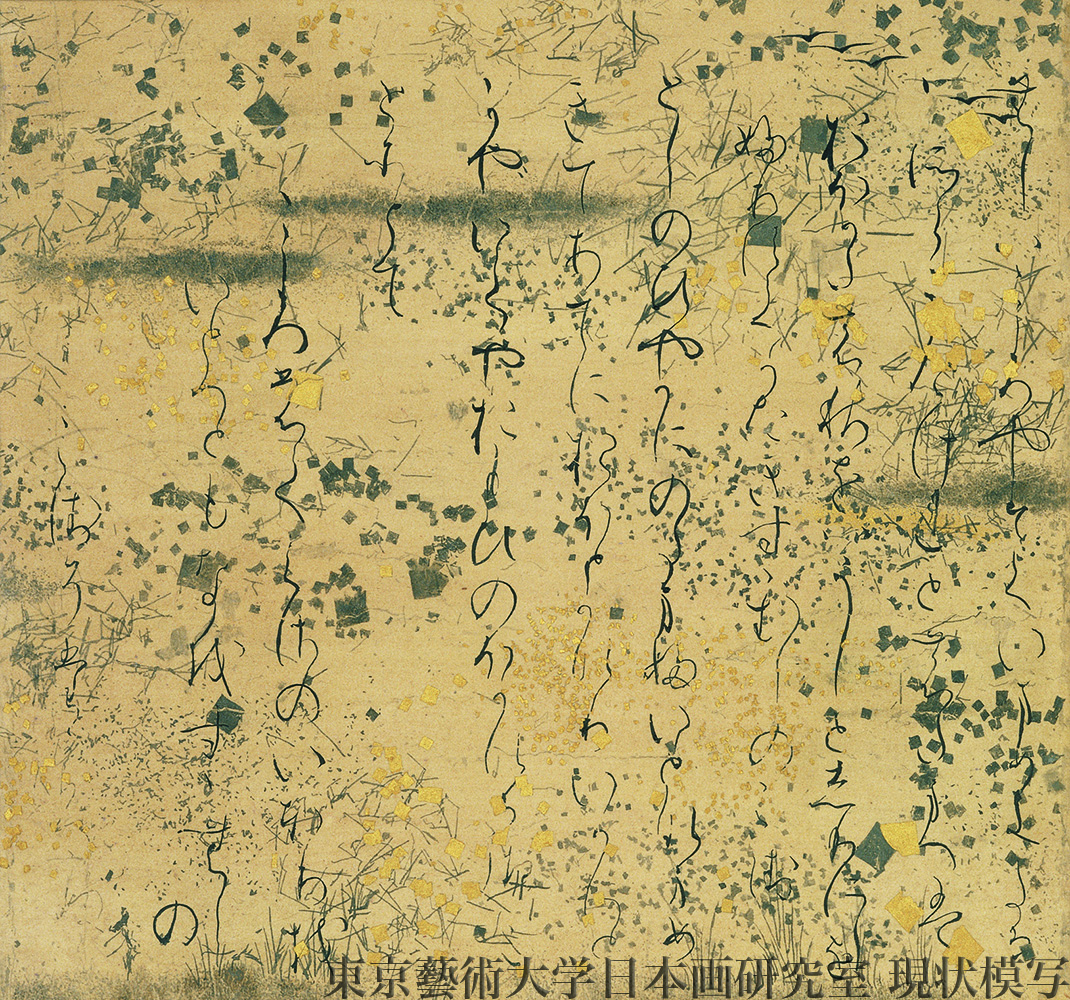 Book
Primary source
The Tale of Genji
Murasaki Shikibu · c. 1010
 Book
Primary source
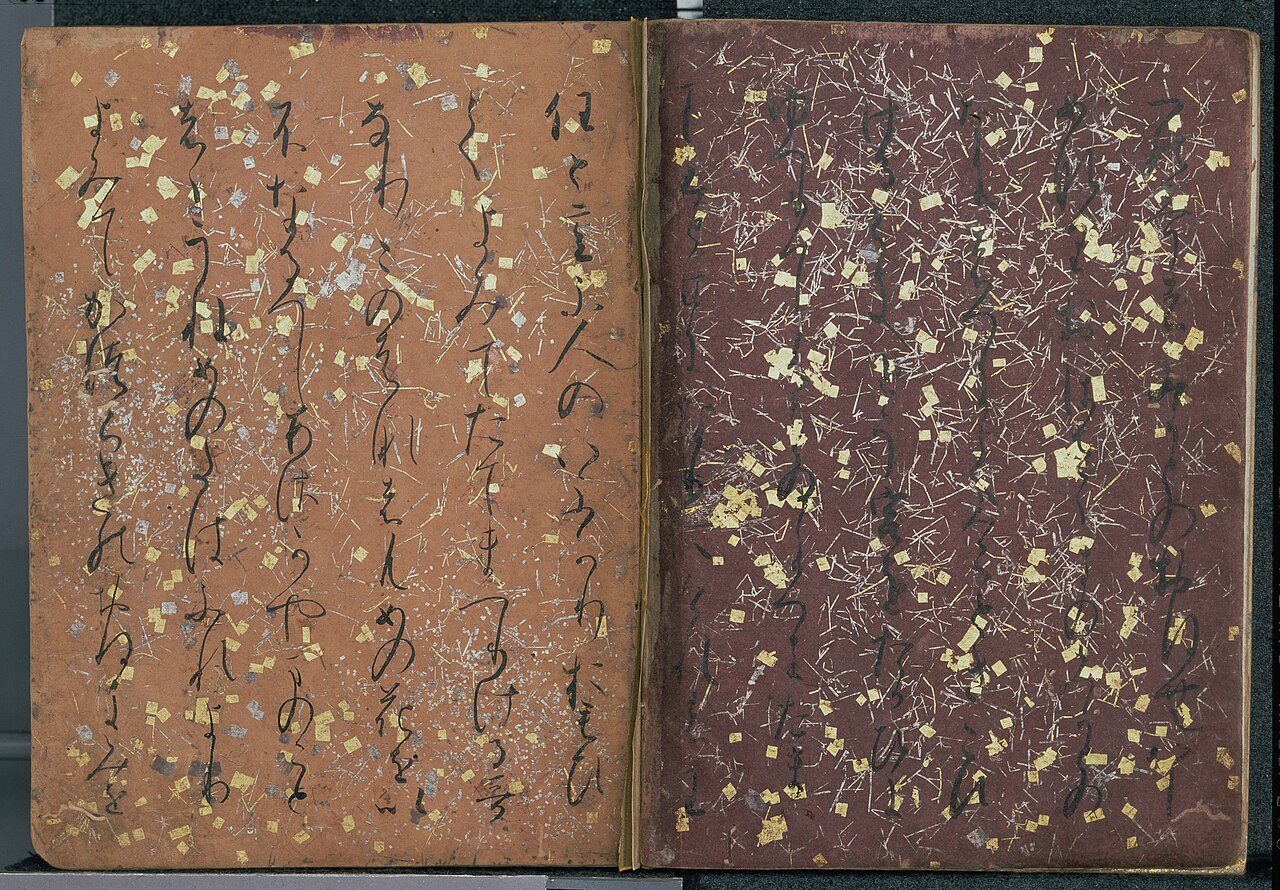
Kokin Wakashū
Ki no Tsurayuki and compilers · c. 905-920
Primary source
The Diary of Lady Murasaki
Murasaki Shikibu · c. 1008–1010
 Diary entry
Primary source
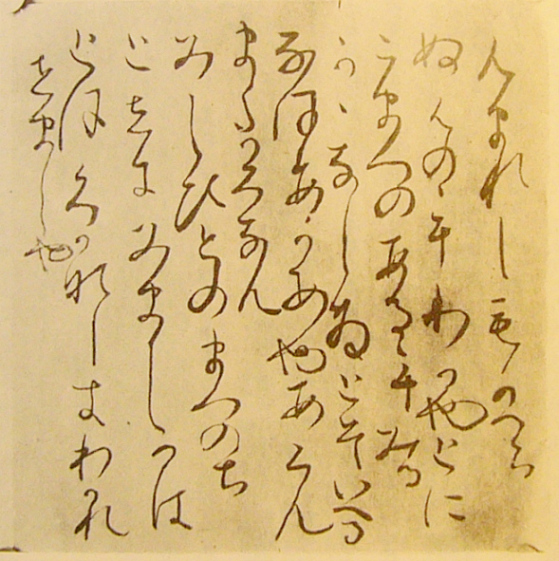
Tosa Nikki
Ki no Tsurayuki · 935 (copy 13th century)
 Book
Secondary source
Eiri Genji Monogatari
Yamamoto Shunshō · 1650
Ready when you are
Start chatting with Murasaki Shikibu now.
20 messages free · No credit card · Available in 50+ languages.