


Primary sourceArtifact1897
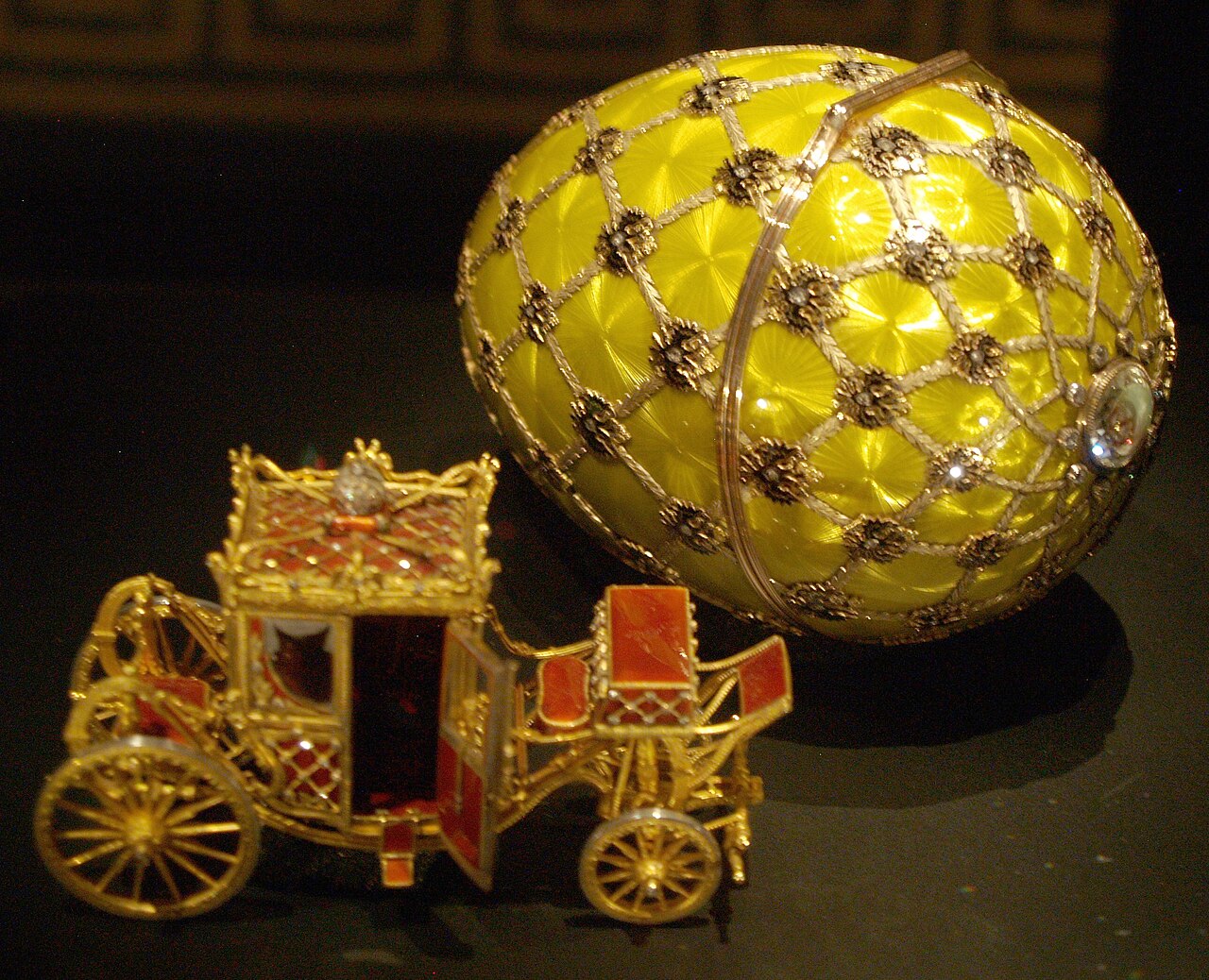
Imperial Coronation Egg
Michael Perkhin · 1897
A jewelled Fabergé egg Nicholas II gave to Empress Alexandra in 1897 to commemorate their coronation, containing a tiny replica coronation coach.
Nicholas II commissioned this egg as a coronation gift to his wife, showing the opulence of his court.
About this source
What it is
This gold and enamel egg was made in 1897 by the Fabergé workshop, under craftsman Michael Perkhin, for Tsar Nicholas II to give to Empress Alexandra Fyodorovna. It commemorates their coronation of 1896. Inside is a miniature replica of the carriage that carried the Empress to the ceremony. It is now held at the Fabergé Museum in Saint Petersburg.
Why it matters
The egg was one of a series of lavish gifts exchanged within the imperial family each Easter, and it shows the extraordinary wealth and craftsmanship available to the Romanovs. It also reflects how closely art and ceremony were tied to the image of imperial power in Nicholas's Russia, just a year before growing unrest would begin to challenge that power.
Look closer
- What details of the coronation does the design of the egg try to recreate?
- Why might a ruler choose to commission something this costly and detailed?
- What does an object like this reveal about the gap between the imperial court and ordinary Russians at the time?
This artifact is part of the curated material that grounds the AI version of Tsar Nicholas II on Humy.ai — when students ask about related events, the AI can quote it and cite it.
More Tsar Nicholas II sources
Meet the AI Tsar Nicholas II →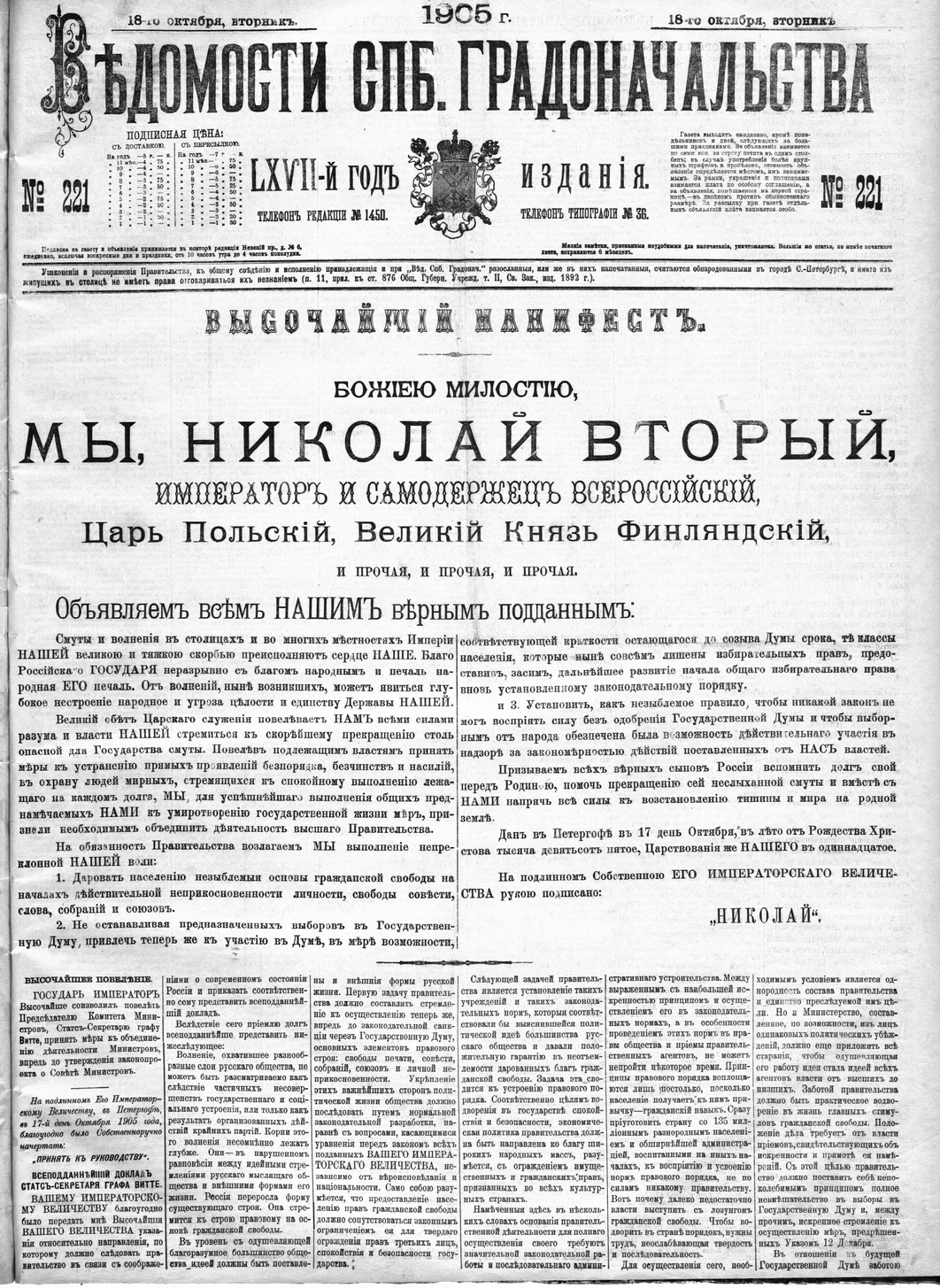 Newspaper article
Primary source
October Manifesto
Nicholas II of Russia · 30 October 1905
 Document
Primary source
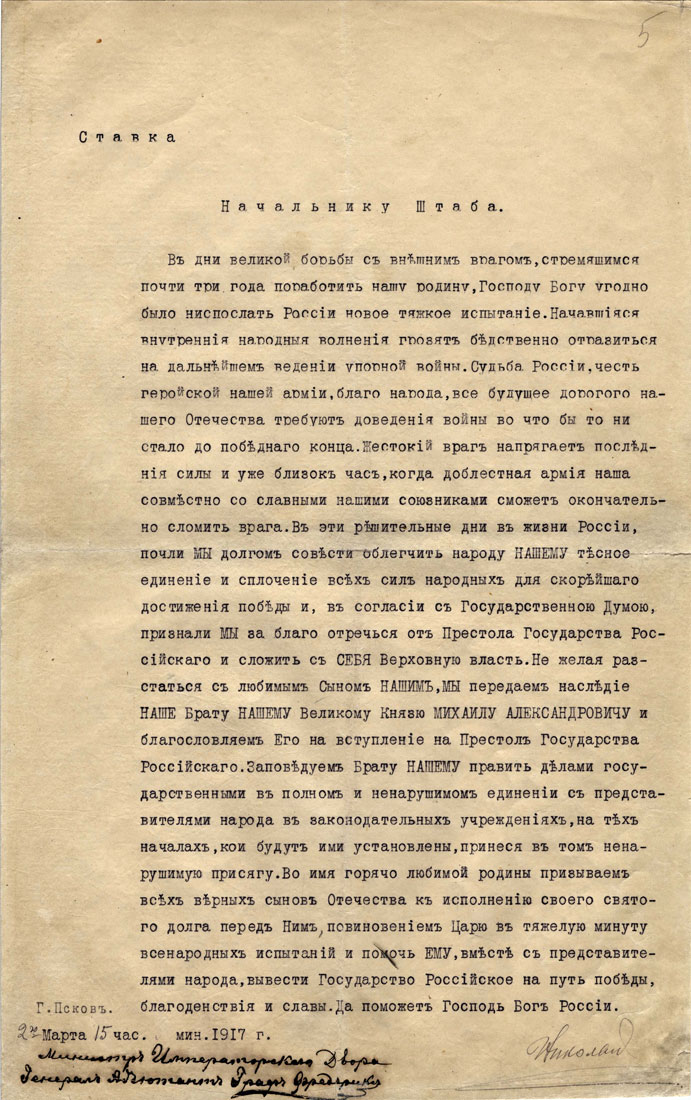
Nicholas II of Russia's abdication
Nicholas II of Russia · 2 March 1917 (O.S.) / 15 March 1917 (N.S.)
 Document
Primary source
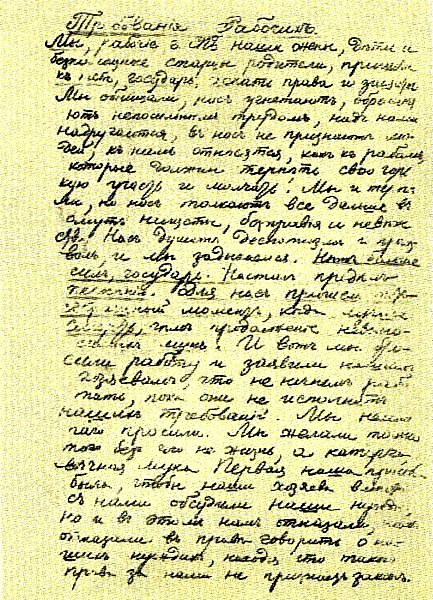
St. Petersburg Workmen's Petition to the Tsar
Georgy Gapon · January 1905
Primary source
Russian Constitution of 1906
Nicholas II of Russia · 6 May 1906
 Letter
Primary source
Willy–Nicky Correspondence
Nicholas II of Russia and Wilhelm II · July–August 1914
Ready when you are
Start chatting with Tsar Nicholas II now.
20 messages free · No credit card · Available in 50+ languages.