


Primary sourceArtifact1402–1424
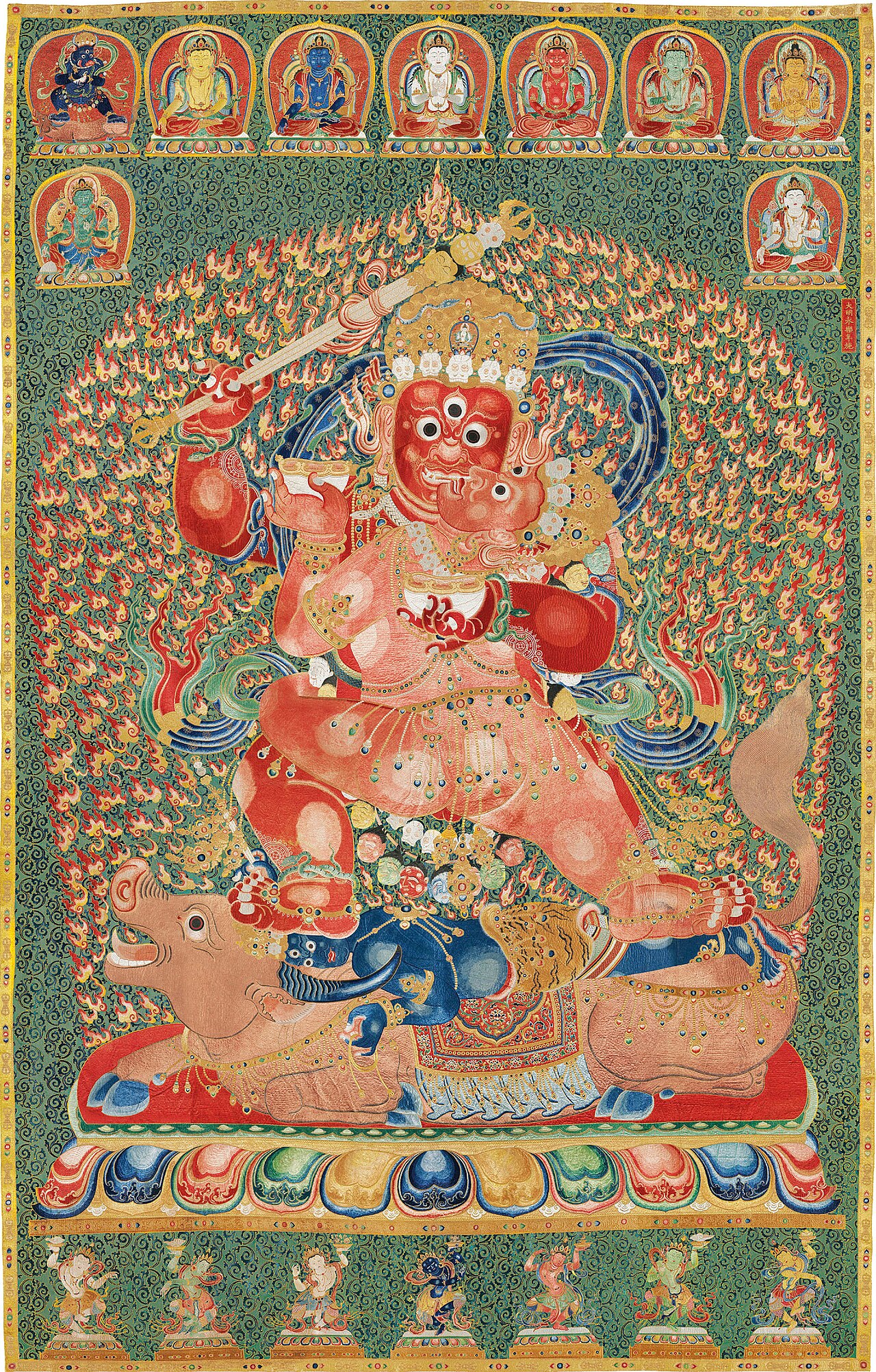
Imperial Embroidered Thangka of Raktayamari
1402–1424
An embroidered silk thangka of the deity Raktayamari bearing a Yongle presentation mark, made as an imperial gift to Tibet.
This thangka, bearing a Yongle presentation mark, was made in his court as a Buddhist diplomatic gift to Tibet.
About this source
What it is
A richly embroidered silk thangka depicting the wrathful deity Raktayamari, dated to the Yongle period (1402–1424) and carrying a six-character presentation mark identifying it as an imperial gift.
Why it matters
This thangka shows how the Yongle Emperor's court produced fine Buddhist religious art specifically to send as gifts to Tibet, part of a wider pattern of diplomacy between the Ming court and Tibetan Buddhist leaders. It reflects both imperial wealth and religious patronage.
Look closer
- What details in the embroidery suggest skilled, costly workmanship?
- Why might an emperor commission religious art as a diplomatic gift rather than keep it for himself?
- What does the presentation mark tell us about who made and sent this object?
This artifact is part of the curated material that grounds the AI version of Yongle Emperor on Humy.ai — when students ask about related events, the AI can quote it and cite it.
More Yongle Emperor sources
Meet the AI Yongle Emperor →
Ready when you are
Start chatting with Yongle Emperor now.
20 messages free · No credit card · Available in 50+ languages.