


Secondary sourcePainting1864
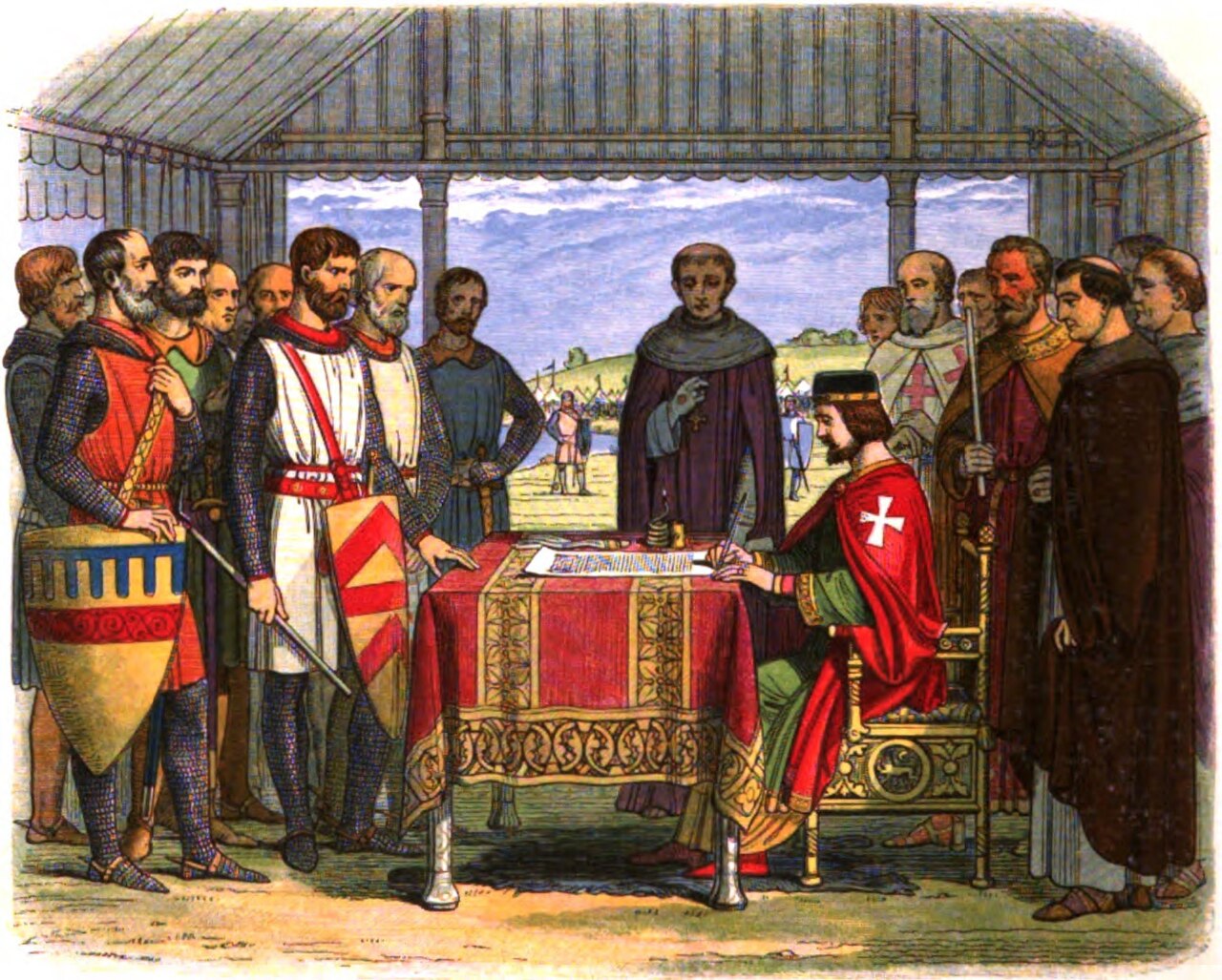
John Signs the Great Charter
James William Edmund Doyle and Edmund Evans · 1864
An 1864 coloured illustration in A Chronicle of England showing a king signing a document with barons and clergy around him. It is a Victorian imagining, not a primary view.
This illustration imagines King John signing the charter, showing how Victorian readers pictured the making of Magna Carta.
About this source
What it is
This is a coloured book illustration from A Chronicle of England, made in 1864 by James William Edmund Doyle and Edmund Evans. It shows a king in a red robe with a white cross seated at a draped table, signing a document. Armoured barons and clergy in robes stand around him under a timber-roofed pavilion, with a field and tents behind.
Why it matters
The illustration pictures King John signing Magna Carta more than six centuries after the event. It shows how Victorian readers were taught to imagine the charter's origins, using the king, the barons and the clergy as the main figures of the story.
Look closer
- Who is shown signing, and who stands around him, and what does that suggest about power?
- Which details of the tents, banners and clothing might the artist have invented?
- Why might a history book of 1864 choose this scene to explain the charter?
This painting is part of the curated material that grounds the AI version of Magna Carta on Humy.ai — when students ask about related events, the AI can quote it and cite it.
More Magna Carta sources
Meet the AI Magna Carta →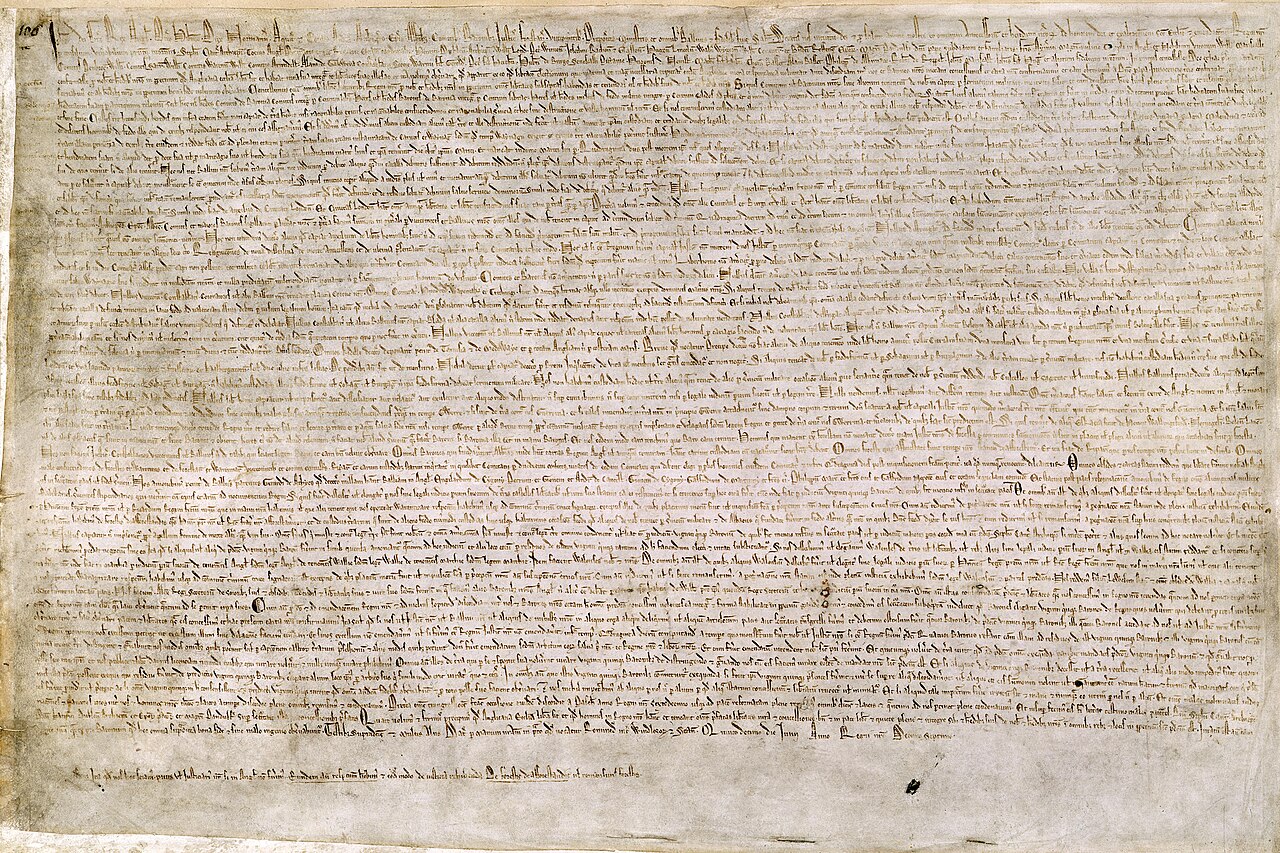 Document
Primary source
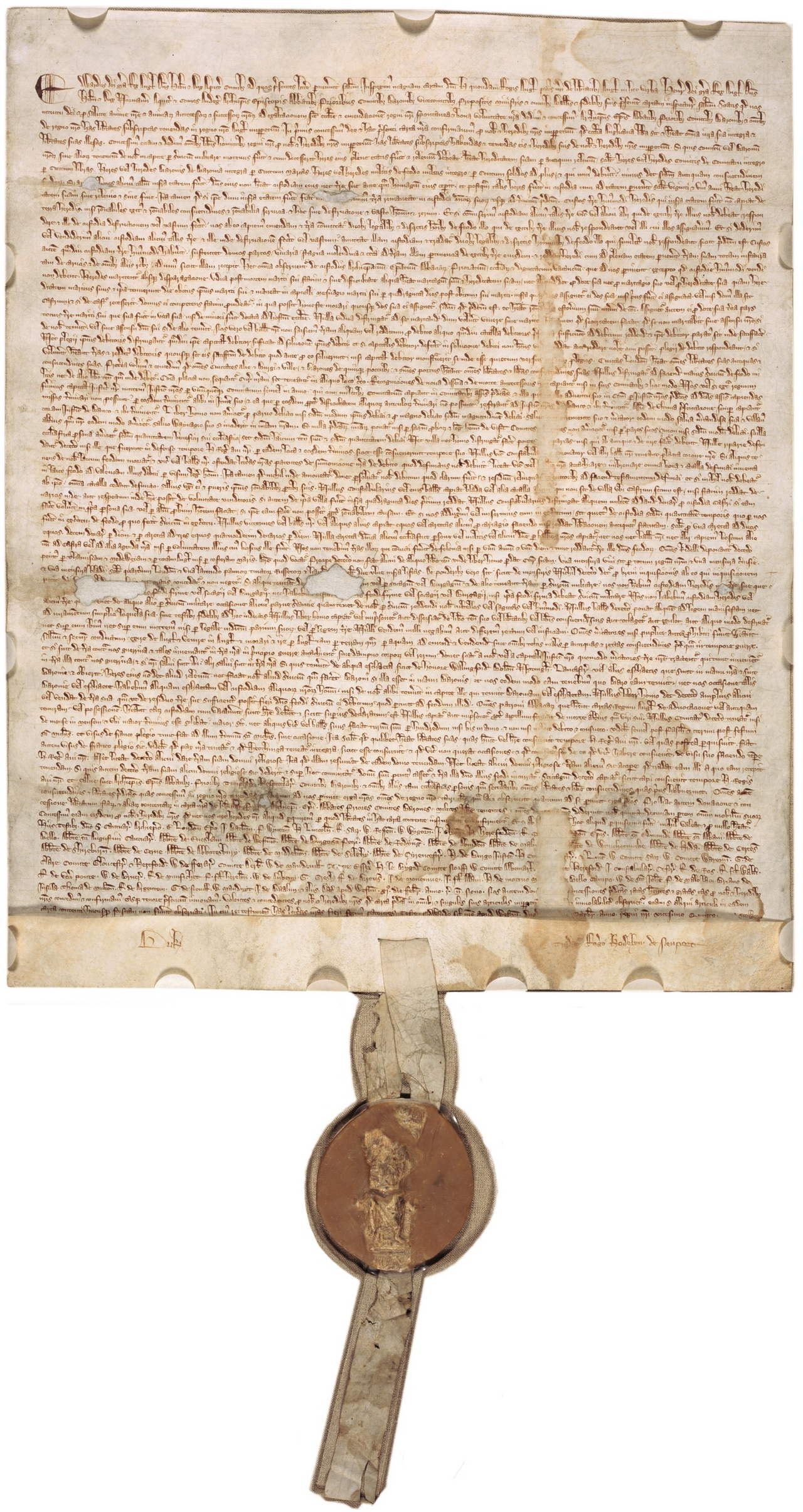
Magna Carta (1215 Exemplification)
1215
 Document
Primary source
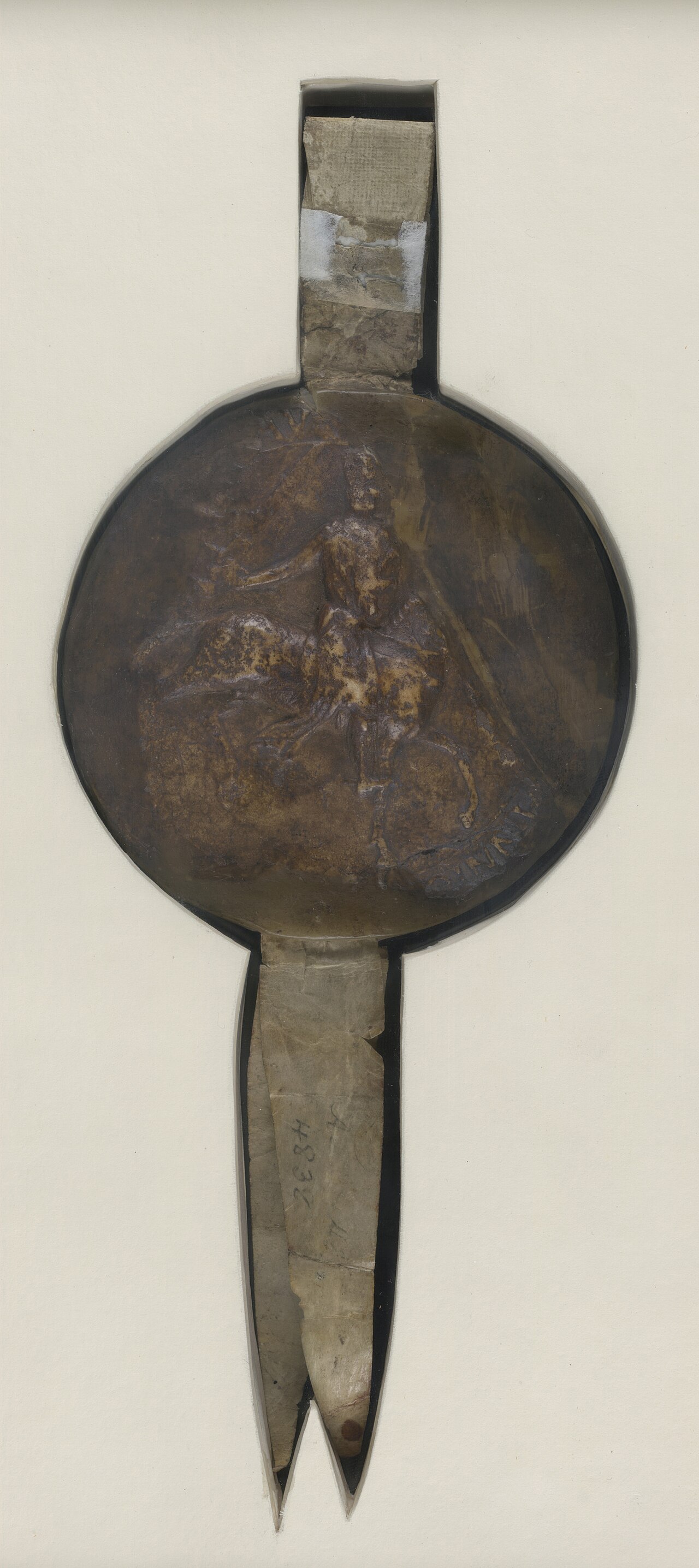
Articles of the Barons
1215
 Document
Primary source
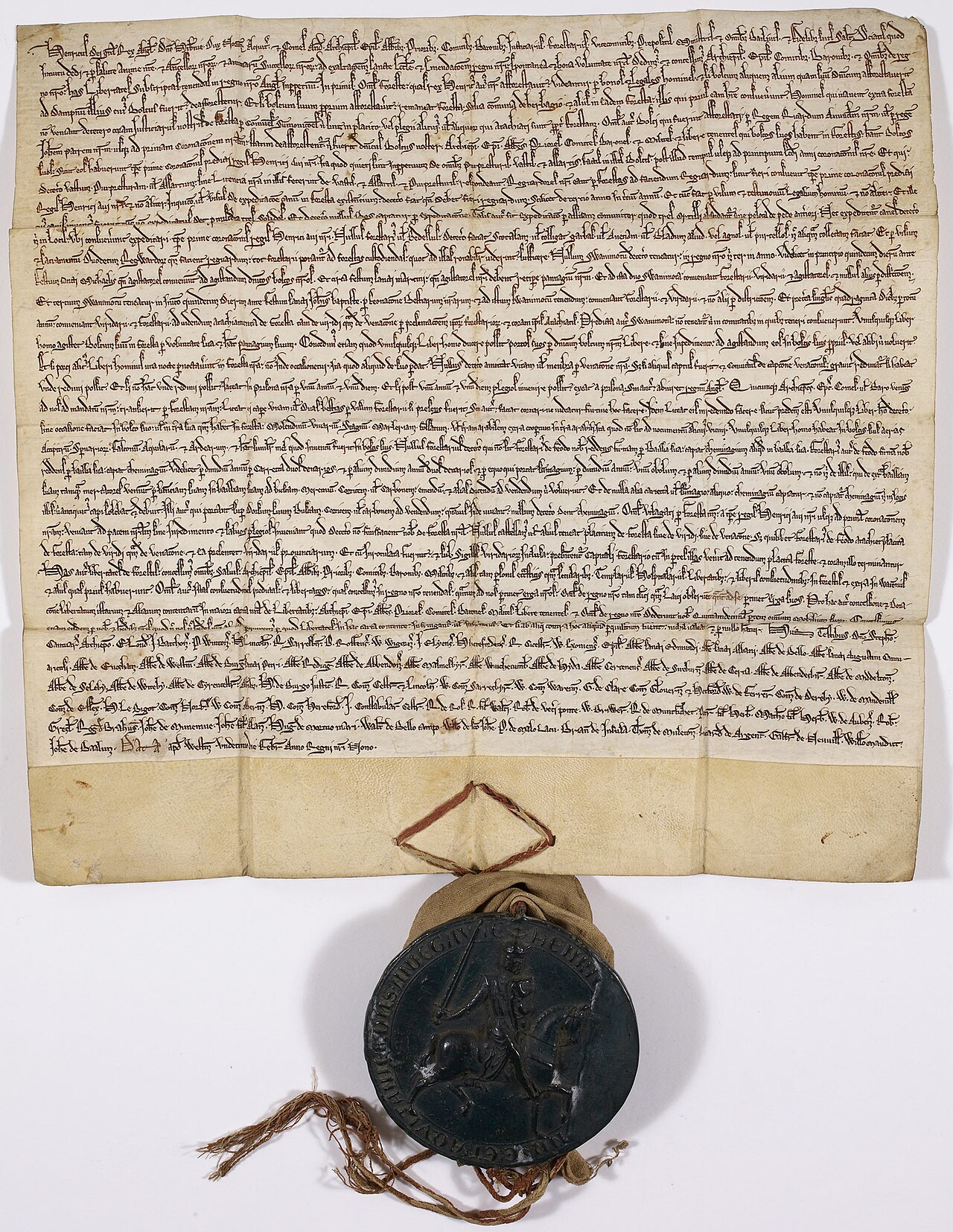
Charter of the Forest
1217
 Document
Primary source
Magna Carta 1297 (National Archives, Washington)
Edward I of England · 1297
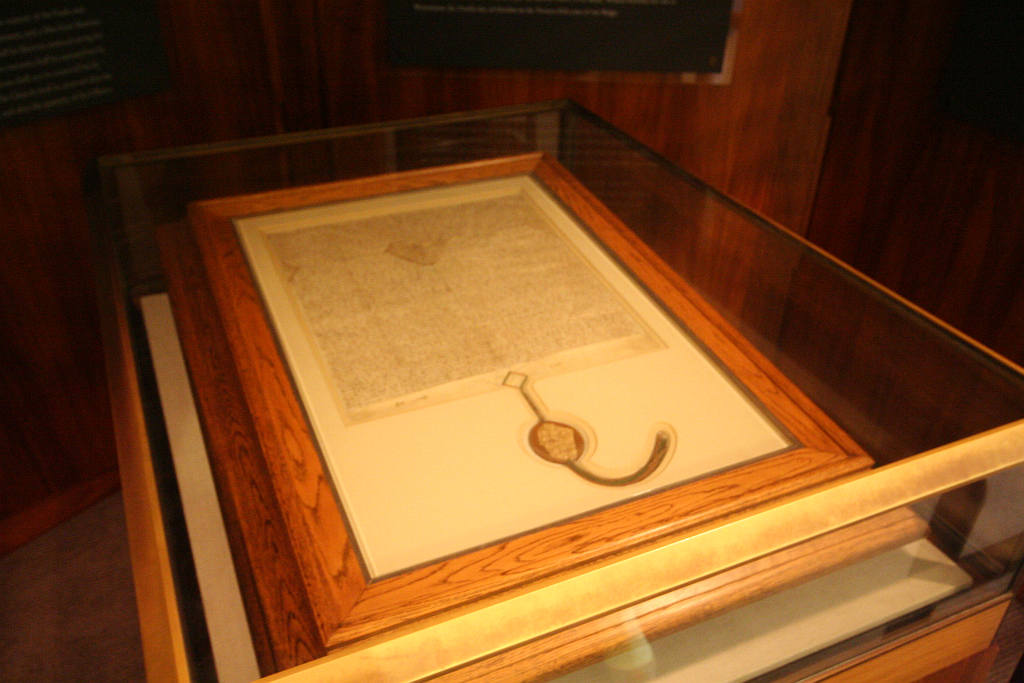 Document
Primary source
Magna Carta 1297 (Parliament House, Canberra)
Edward I of England · 1297
Ready when you are
Start chatting with Magna Carta now.
20 messages free · No credit card · Available in 50+ languages.