


Secondary sourceArtifact1763
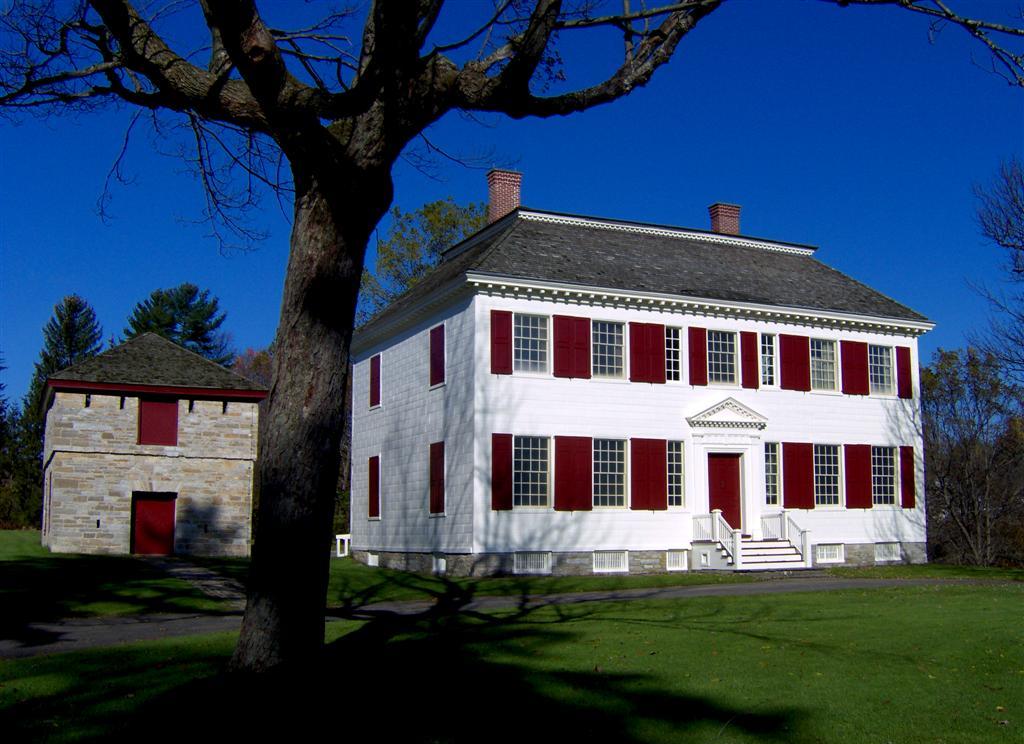
Johnson Hall State Historic Site
1763
The Mohawk Valley mansion of Sir William Johnson, where young Joseph Brant lived and learned British diplomacy and Mohawk politics.
Brant grew up connected to this household, absorbing both British customs and Haudenosaunee diplomacy here.
About this source
What it is
Johnson Hall, built in 1763 near the Mohawk River, was the home of Sir William Johnson, the British Superintendent of Indian Affairs, and his Mohawk partner Molly Brant, Joseph Brant's sister. It later became a National Historic Landmark and house museum.
Why it matters
The hall was a meeting place, a 'council fire,' for diplomacy between the British and many Indigenous nations, including the Mohawk and other Iroquois League peoples. It was here that Joseph Brant grew up surrounded by both British colonial culture and Indigenous diplomacy, shaping the leader he became. The Johnson family's choice to side with the British during the American Revolution later cost them the house, which was seized by the rebel government.
Look closer
- Why would a British official build such a large house in Mohawk territory?
- What does the council fire tell you about how diplomacy worked here?
- How might living in this house have shaped Brant's outlook on two different worlds?
This artifact is part of the curated material that grounds the AI version of Joseph Brant (Thayendanegea) on Humy.ai — when students ask about related events, the AI can quote it and cite it.
More Joseph Brant (Thayendanegea) sources
Meet the AI Joseph Brant (Thayendanegea) →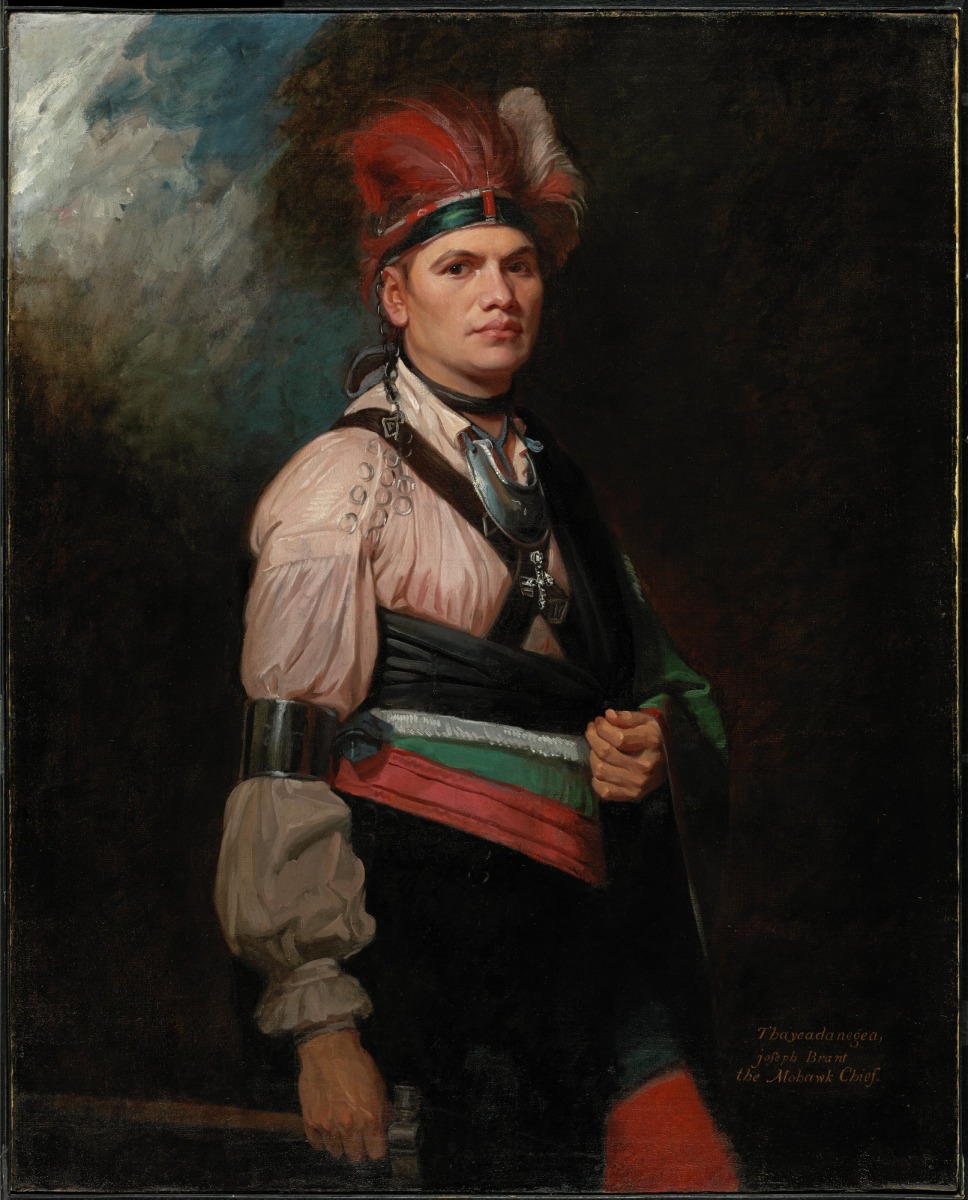 Painting
Primary source
Thayendanegea (Joseph Brant)
George Romney · 1776
 Painting
Primary source
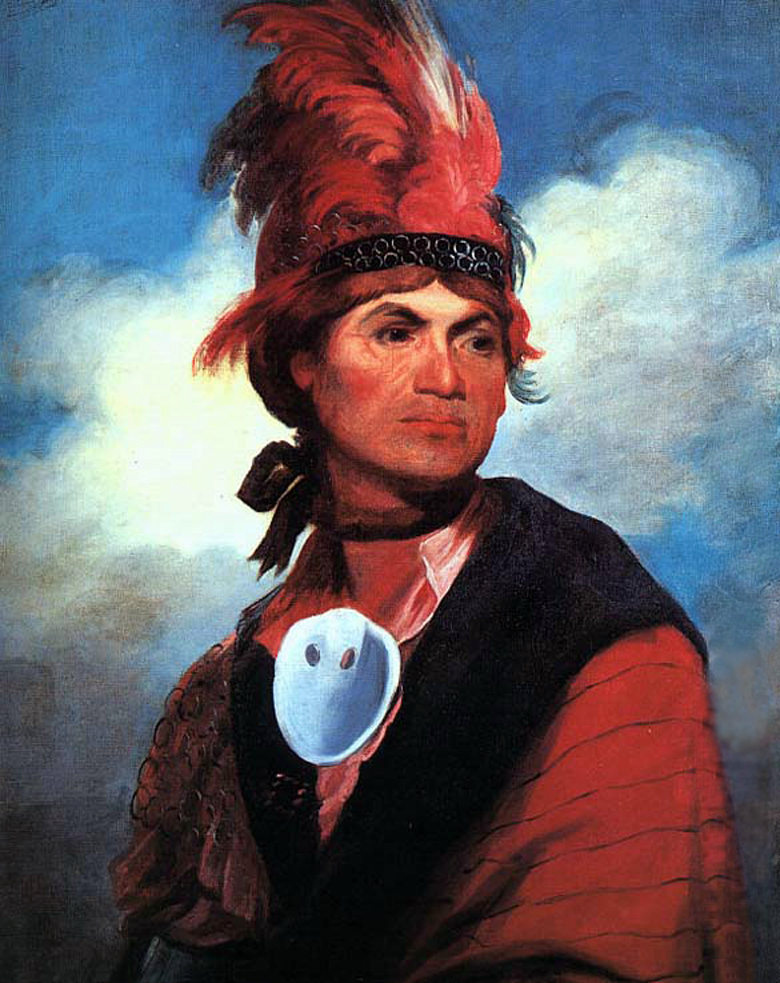
Joseph Brant by Gilbert Stuart
Gilbert Stuart · 1786
 Painting
Primary source
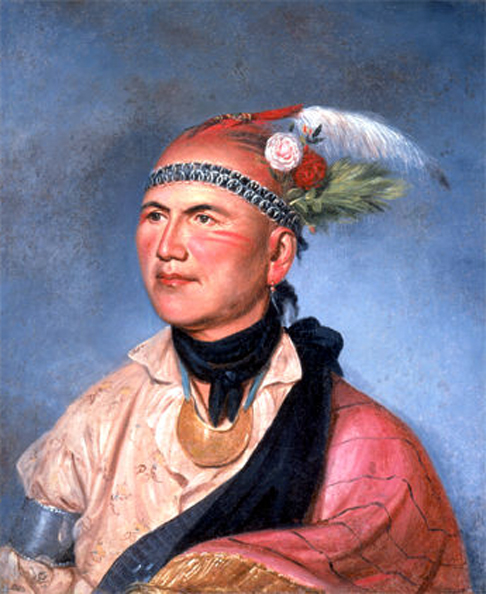
Joseph Brant by Charles Willson Peale
Charles Willson Peale · 1797
 Painting
Secondary source
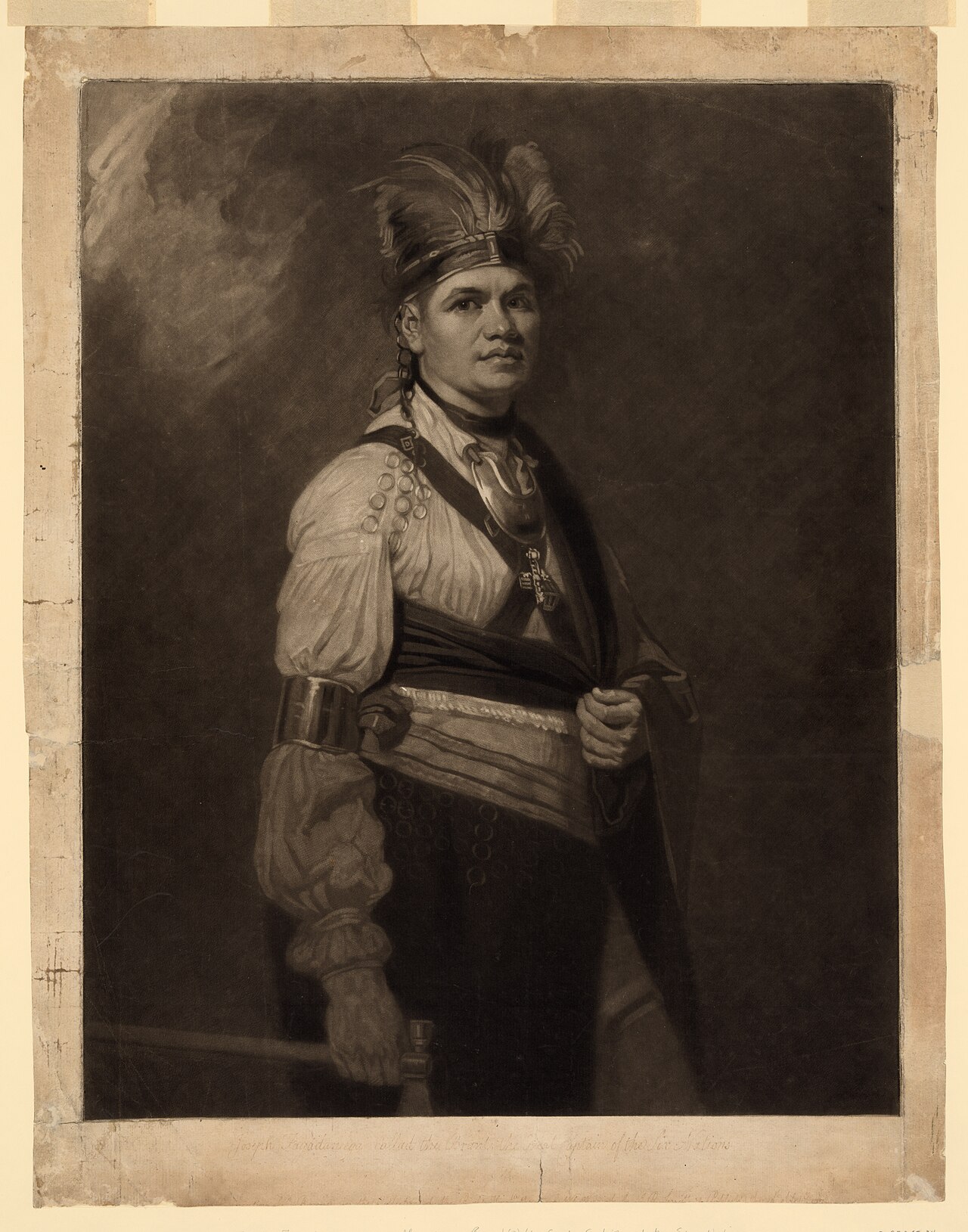
Joseph Fayadaneega, called the Brant, the Great Captain of the Six Nations
John Raphael Smith, after George Romney · 1779
 Painting
Primary source
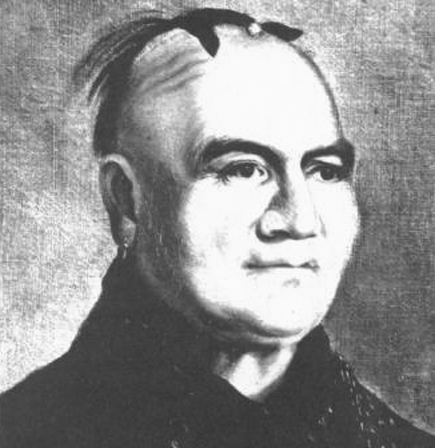
Joseph Brant by Ezra Ames
Ezra Ames · 1806
Ready when you are
Start chatting with Joseph Brant (Thayendanegea) now.
20 messages free · No credit card · Available in 50+ languages.