


Secondary sourceDocument1946
Judgement of the International Military Tribunal at Nuremberg
1946
The 1946 judgment of the Nuremberg tribunal, which records that Hindenburg was involved in Hitler's appointment as Chancellor.
This judgment names Hindenburg as the president who appointed Hitler Chancellor, placing him in the history that the tribunal examined.
Free Humy account · No credit card · 120,912 sources to read
About this source
What it is
This is the judgment of the International Military Tribunal at Nuremberg, dated 1946. It is a long official legal text, available as a transcription on Wikisource. The judgment was issued after the Agreement of 8 August 1945 set up the tribunal. The passage that names Hindenburg says that Hitler succeeded in being appointed Chancellor of the Reich by President Von Hindenburg, and that the defendants Goring, Schacht and Von Papen were active in enlisting support.
Why it matters
The tribunal was set up by the governments of the United Kingdom, the United States, the French Republic and the Soviet Union to try war criminals. Its judgment became a major record of how the Nazi regime came to power and how its leaders acted. The passage links Hindenburg to Hitler's appointment and to men such as Goring, Schacht and Von Papen, who were on trial.
Look closer
- Who wrote this judgment, and what did they need to prove about the defendants?
- Why does the passage mention Hindenburg, and what role does it give him compared with the defendants?
- What does a legal judgment leave out that a historian would want to know about the people it names?
This document is part of the curated material that grounds the AI version of Paul Von Hindenburg, Franz von Papen, Hjalmar Schacht and Karl Dönitz on Humy.ai — when students ask about related events, the AI can quote it and cite it.
More Paul Von Hindenburg sources
Browse all 81 →Primary source
Reichstag Fire Decree
28 February 1933
Primary source
Enabling Act of 1933
24 March 1933
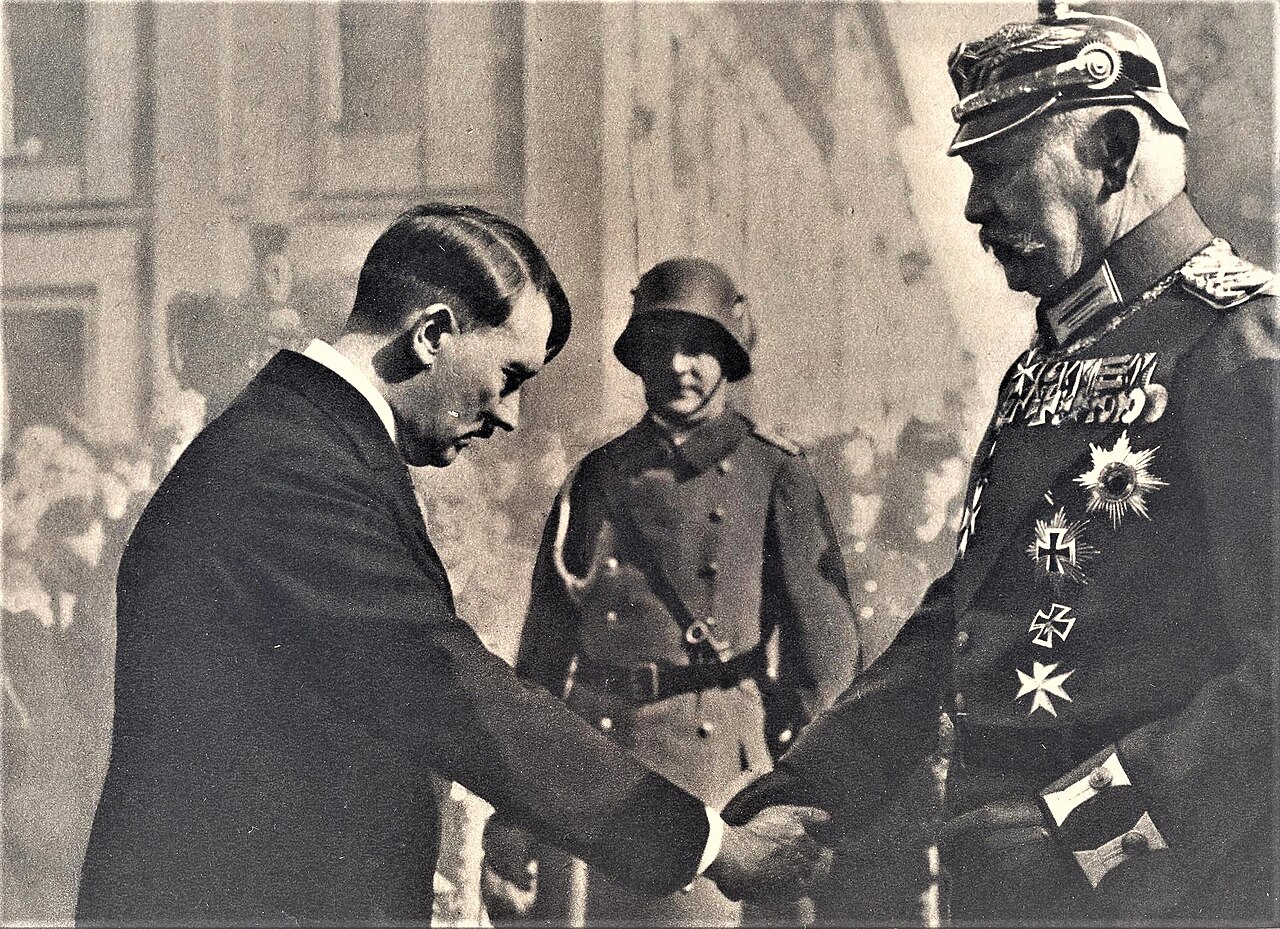 Photograph
Primary source
Hitler and Hindenburg at Potsdam
Unknown · 21 March 1933
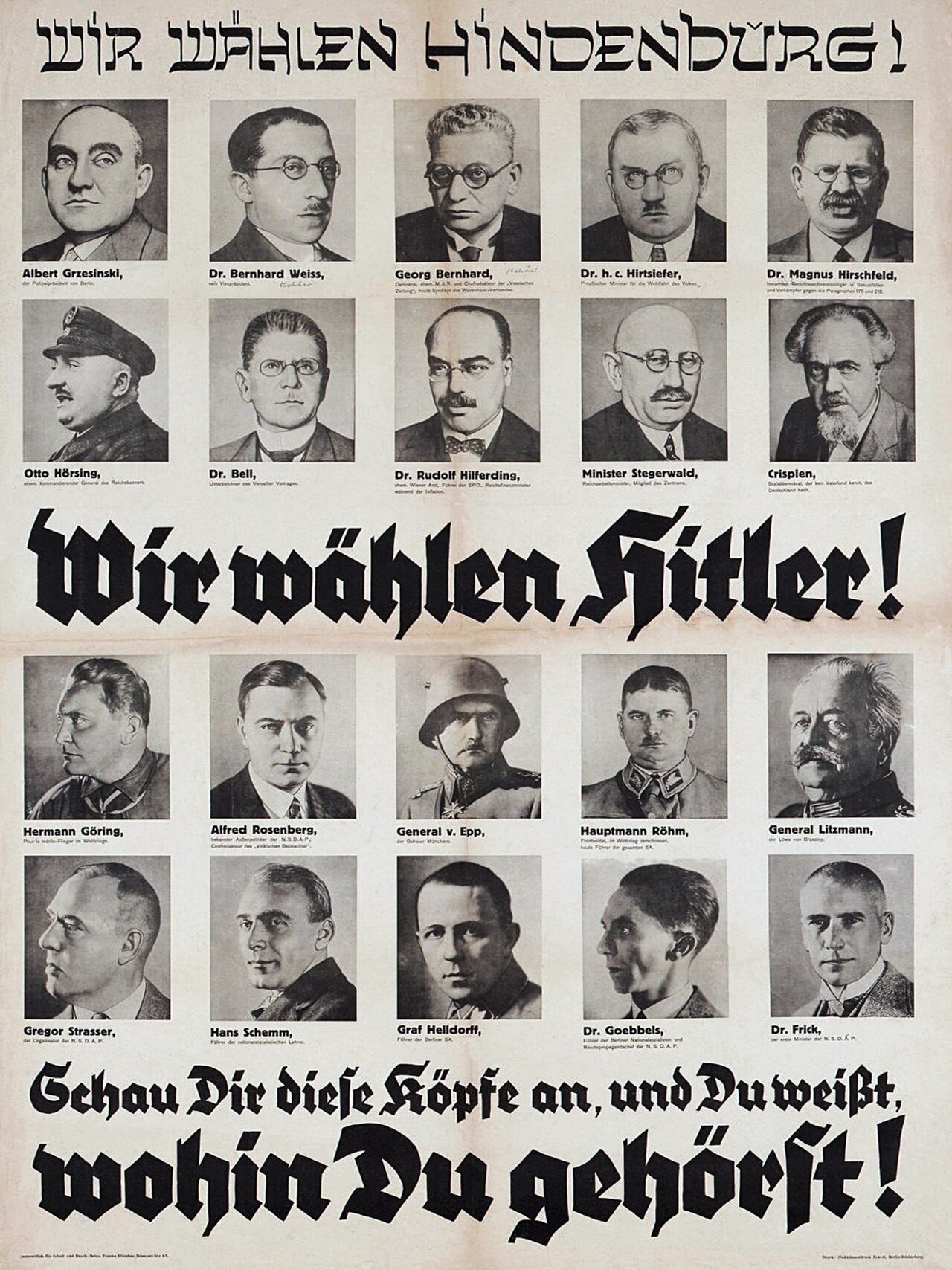 Artifact
Primary source
Wir wählen Hindenburg! Wir wählen Hitler! NSDAP election poster
Unknown (NSDAP) · 1932
Free account
Read every Paul Von Hindenburg source
Sign up free →
Ready when you are
Start chatting with Paul Von Hindenburg now.
20 messages free · No credit card · Available in 50+ languages.