


Primary sourceDocument1991
Kamen v. Kemper Financial Services
Thurgood Marshall · 1991
A 1991 Supreme Court opinion by Thurgood Marshall on whether federal law should require shareholders in derivative suits to make a demand on the board even when state law excuses it as futile.
Marshall wrote this majority opinion as a Supreme Court Justice, addressing how federal and state law divide corporate power.
About this source
What it is
This is the opinion of the Supreme Court of the United States in Kamen v. Kemper Financial Services, decided in 1991 and written by Justice Thurgood Marshall. The case asks whether the Court should create a federal common law rule requiring a shareholder in a derivative action under the Investment Company Act of 1940 to make a demand on the board of directors, even when state law would excuse that demand as futile. The Court declines to displace state law. The opinion is reported as 500 U.S. 90 and is listed on Wikisource.
Why it matters
The opinion explains how mutual funds pool the investment money of individual shareholders and how the firm that organizes a fund also acts as its investment adviser. Marshall describes the Investment Company Act as a way to limit the conflicts of interest in that arrangement. The decision shows how federal courts left corporate governance largely to the states.
Look closer
- Why might the same firm both run a mutual fund and advise it, and what conflicts could follow?
- Who benefits from a rule requiring a demand on the board, and who might be harmed by it?
- What does the opinion leave out about the individual shareholders whose savings were at stake?
This document is part of the curated material that grounds the AI version of Thurgood Marshall on Humy.ai — when students ask about related events, the AI can quote it and cite it.
More Thurgood Marshall sources
Meet the AI Thurgood Marshall →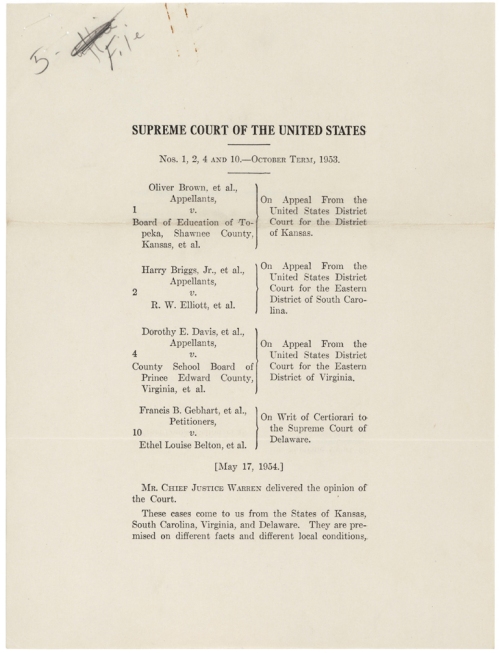 Document
Primary source
Brown v. Board of Education
Earl Warren · 17 May 1954
 Painting
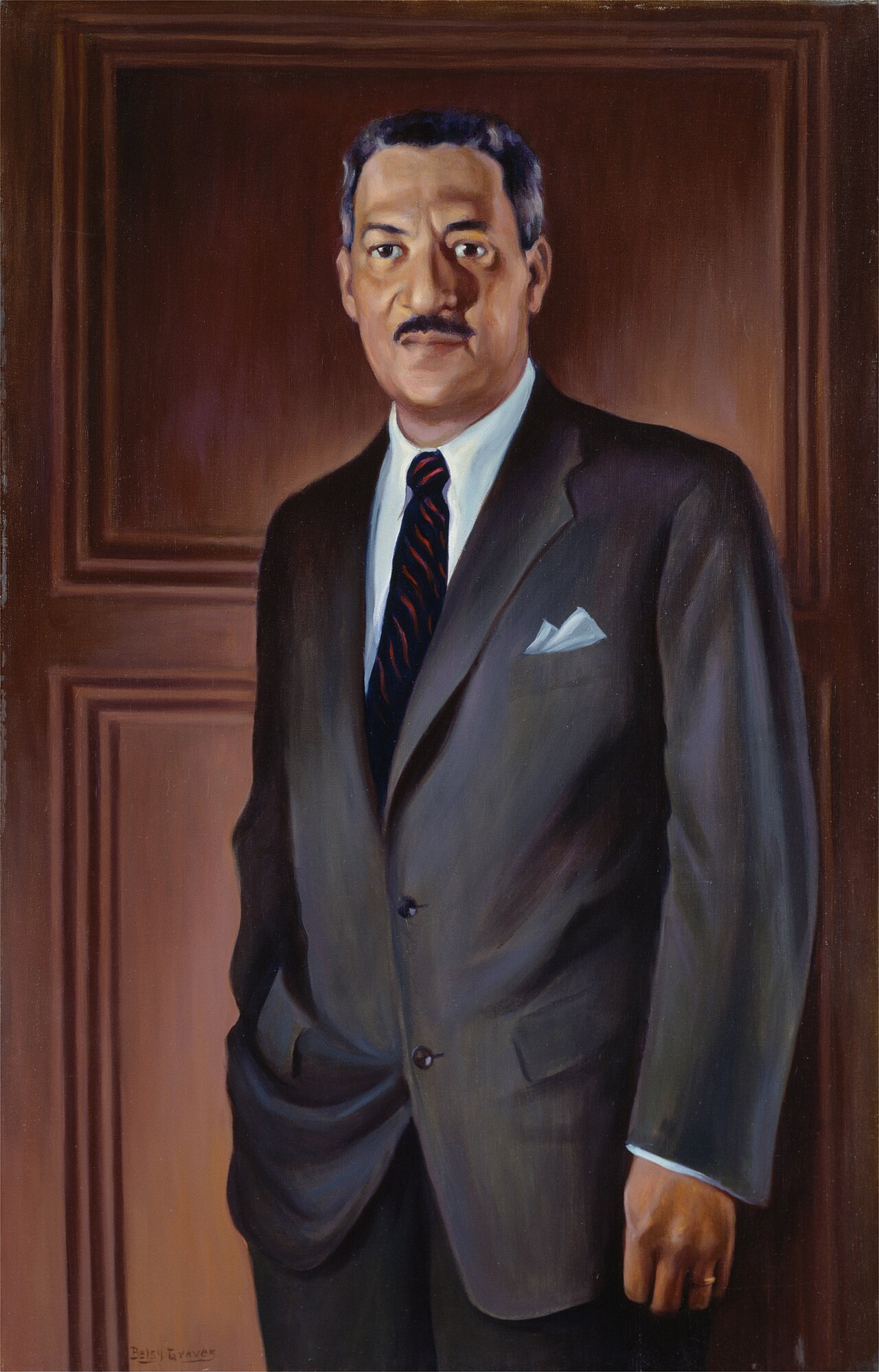
Primary source
Thurgood Marshall
Betsy Graves Reyneau · 1956
 Photograph
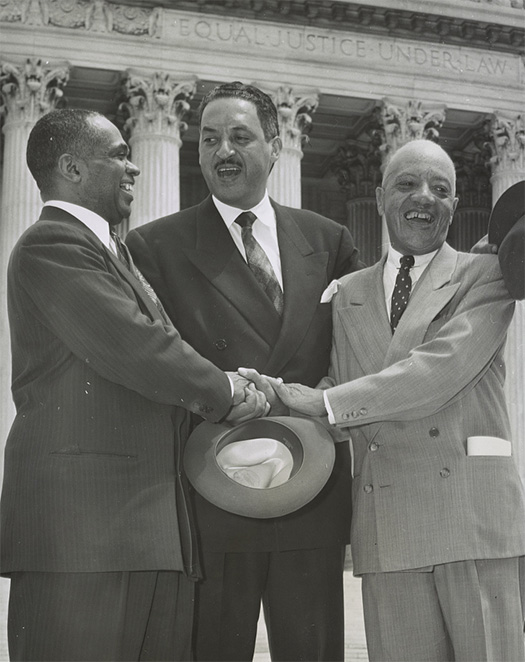
Primary source
George Edward Chalmer Hayes, Thurgood Marshall, and James Nabrit in 1954 winning Brown case
1954
 Photograph
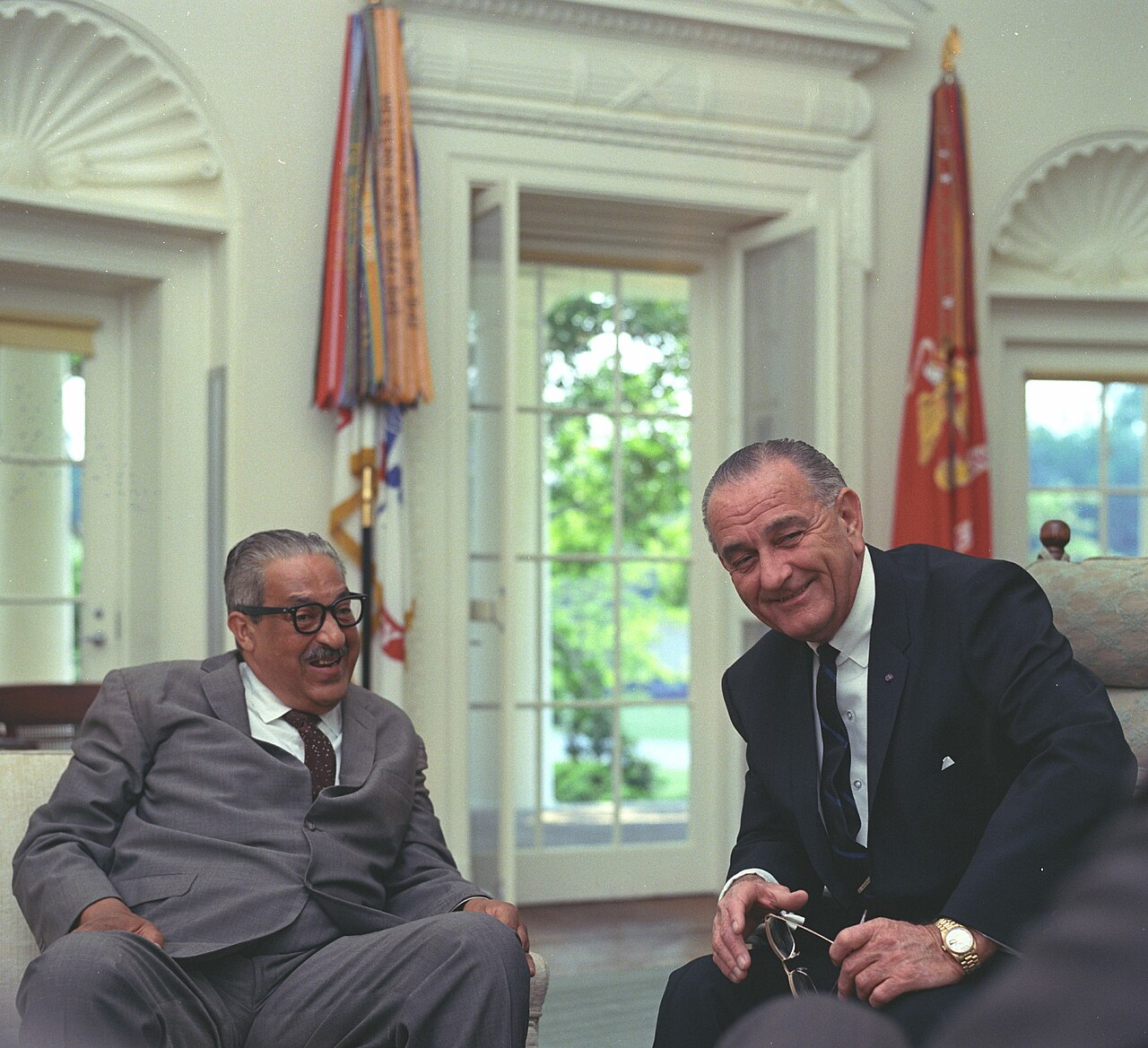
Primary source
Thurgood Marshall and President Lyndon B. Johnson, June 13, 1967
Frank Wolfe · 13 June 1967
Primary source
Cooper v. Aaron
12 September 1958
Ready when you are
Start chatting with Thurgood Marshall now.
20 messages free · No credit card · Available in 50+ languages.