


Primary sourceDocument1989
Kentucky Department of Corrections v. Thompson
Thurgood Marshall · 1989
A 1989 Supreme Court dissent by Thurgood Marshall, joined by Justices Brennan and Stevens, arguing that prisoners need procedural protection before visits from family and friends are denied.
Marshall wrote this dissent as a Supreme Court justice, showing his view that due process protects prisoners' contact with family and friends.
About this source
What it is
This is a dissent written by Justice Thurgood Marshall in Kentucky Department of Corrections v. Thompson, decided in 1989 and reported in volume 490 of the United States Reports. Marshall wrote that Justices Brennan and Stevens joined him. The text is listed on Wikisource, which holds the copy.
Why it matters
The case asked whether prisoners at the Kentucky State Reformatory had a liberty interest, protected by the Due Process Clause of the Fourteenth Amendment, in receiving visits from parents, spouses, children, clergy and close friends. Marshall argued that the majority let officials deny visits for any reason, or none, and that prisoners would not even learn why a visitor was turned away. He wrote that a right to visits would not mean unlimited visits, only basic procedural safeguards.
Look closer
- What powers does Marshall say the majority gave prison officials, and what does he say prisoners would not be told?
- Why does Marshall say his position does not mean unlimited visiting rights?
- What does this dissent leave out that the majority opinion would include?
This document is part of the curated material that grounds the AI version of Thurgood Marshall on Humy.ai — when students ask about related events, the AI can quote it and cite it.
More Thurgood Marshall sources
Meet the AI Thurgood Marshall →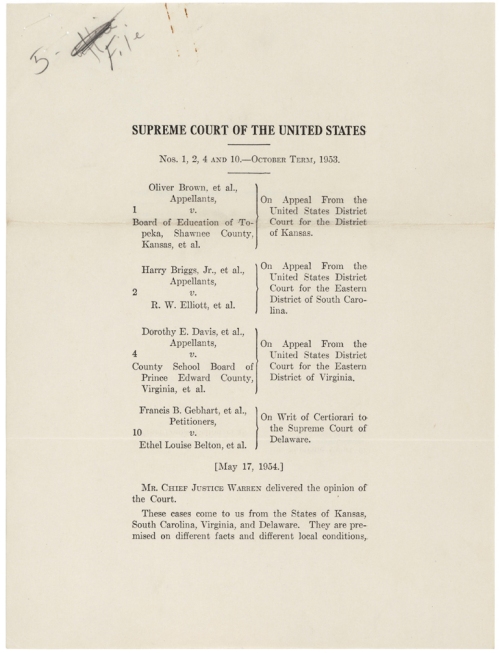 Document
Primary source
Brown v. Board of Education
Earl Warren · 17 May 1954
 Painting
Primary source
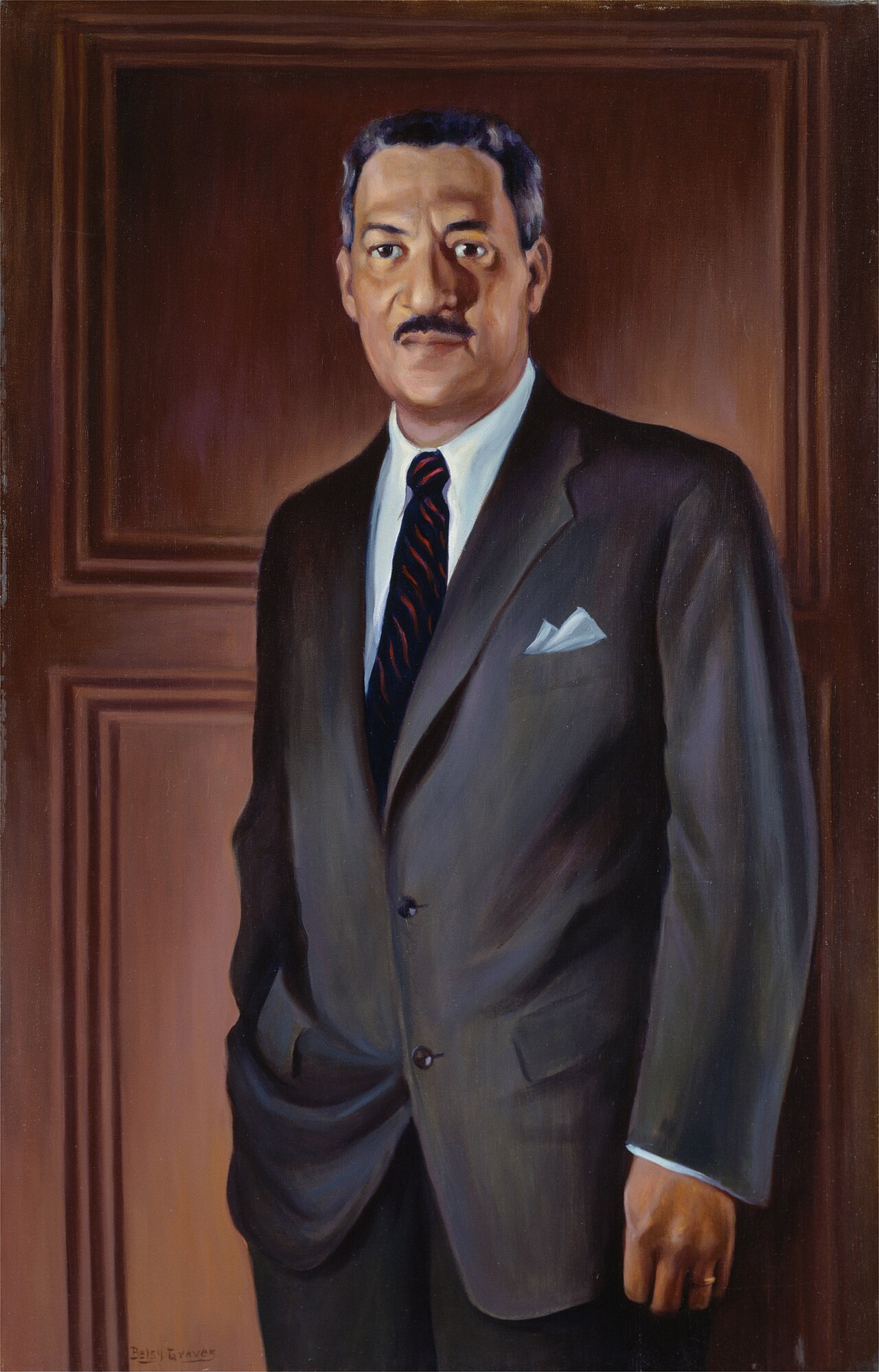
Thurgood Marshall
Betsy Graves Reyneau · 1956
 Photograph
Primary source
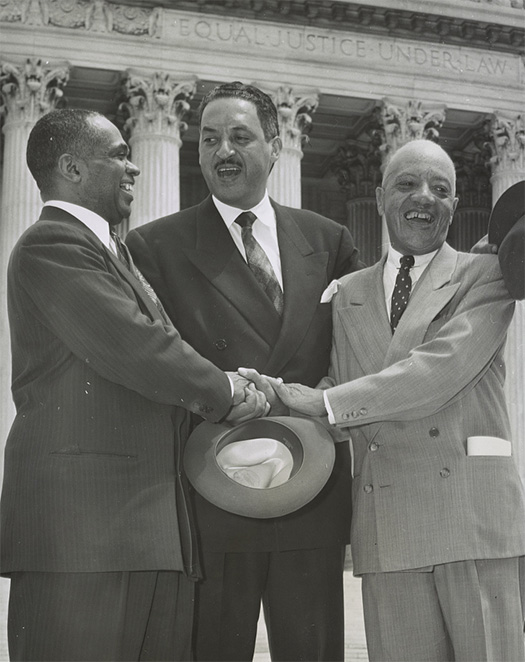
George Edward Chalmer Hayes, Thurgood Marshall, and James Nabrit in 1954 winning Brown case
1954
 Photograph
Primary source
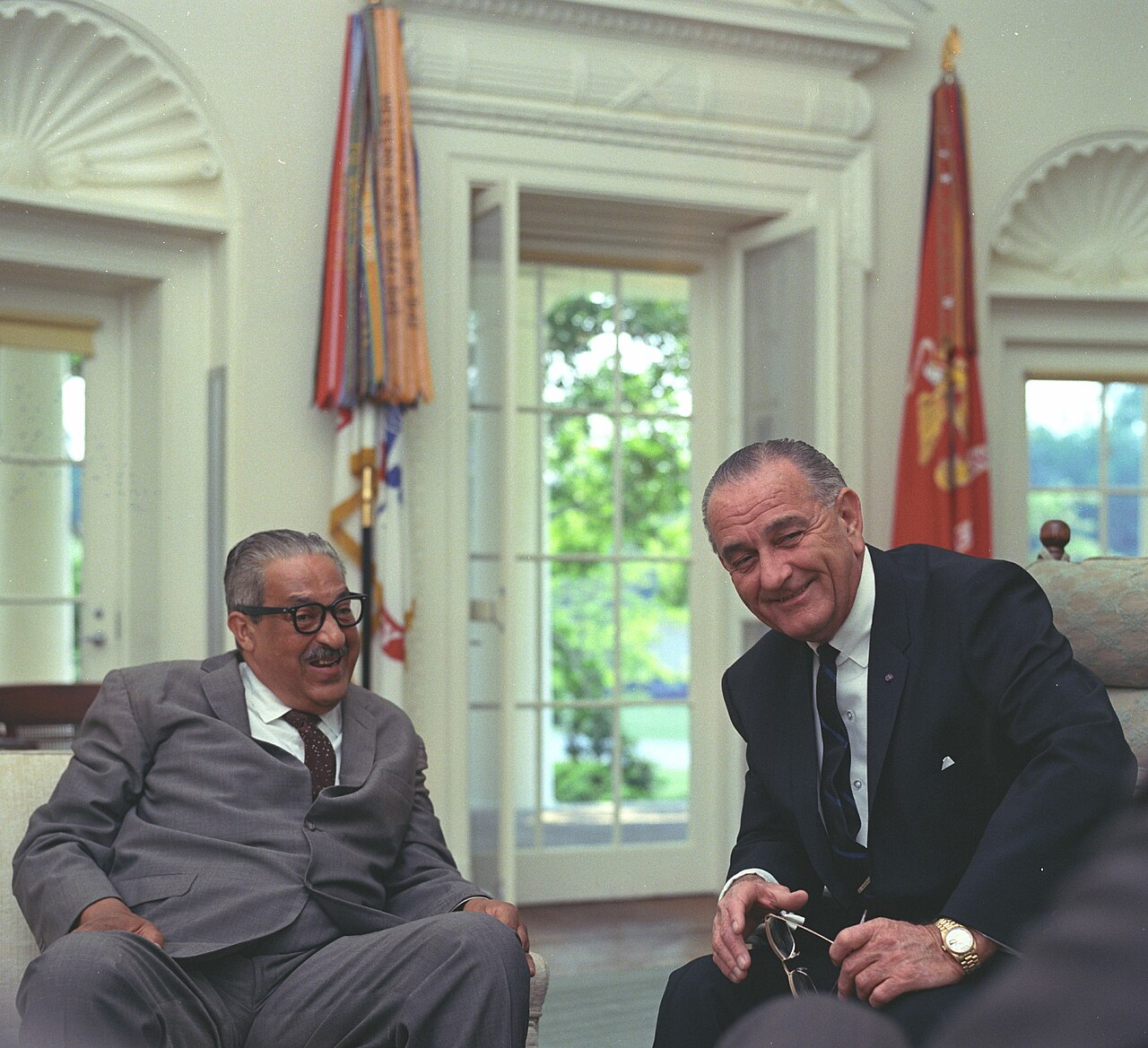
Thurgood Marshall and President Lyndon B. Johnson, June 13, 1967
Frank Wolfe · 13 June 1967
Primary source
Cooper v. Aaron
12 September 1958
Ready when you are
Start chatting with Thurgood Marshall now.
20 messages free · No credit card · Available in 50+ languages.