


Secondary sourceArtifact1772
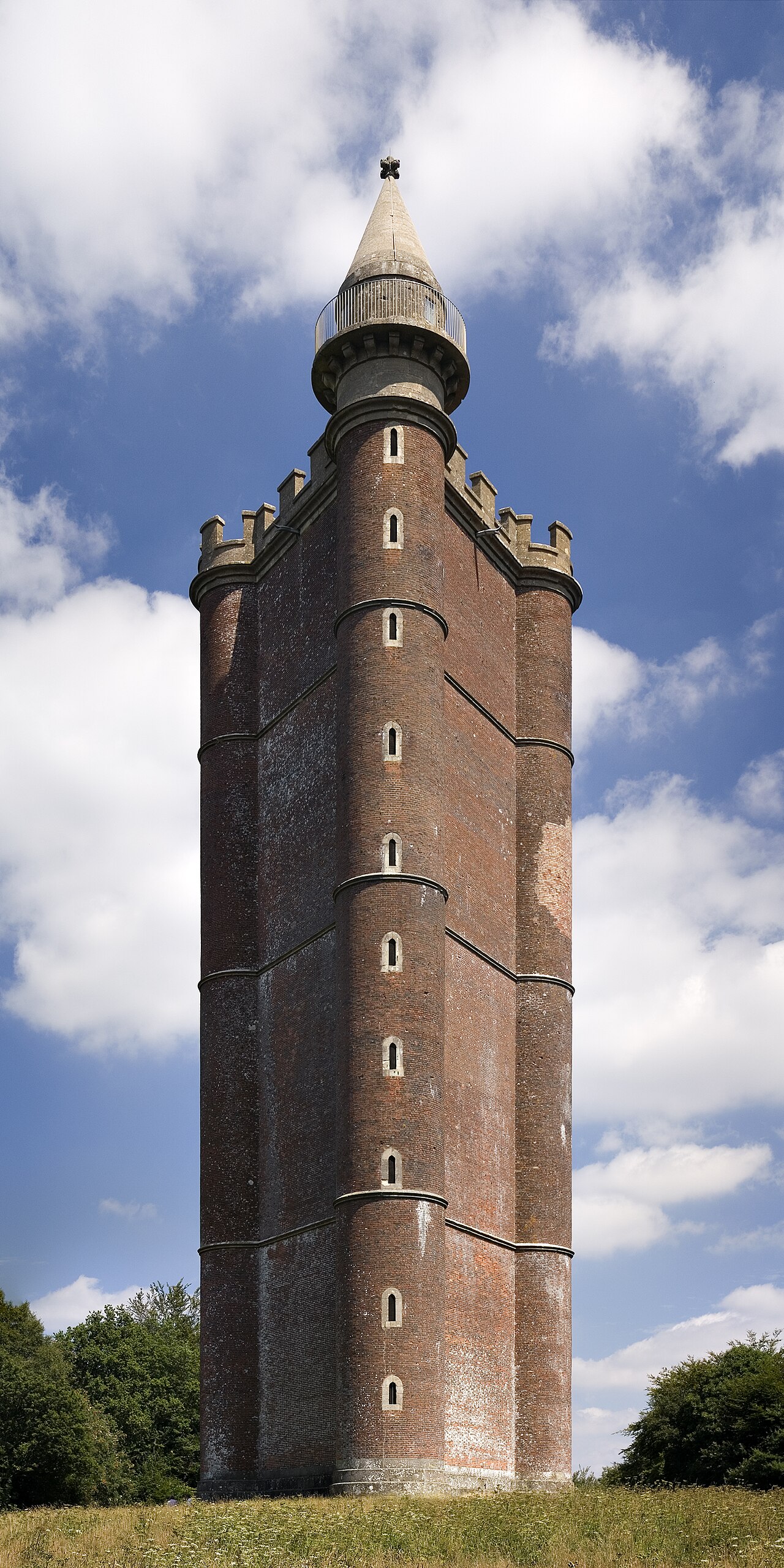
King Alfred's Tower
Henry Flitcroft · 1772
A tall folly tower built in Somerset in 1772, near the spot where Alfred is said to have rallied his forces before the Battle of Edington.
Built on the traditional site where Alfred rallied his men, this folly honors him as a symbol of English resistance and kingship.
About this source
What it is
Alfred's Tower is a triangular brick folly on the Stourhead estate in Somerset, England. It was designed by architect Henry Flitcroft for the banker Henry Hoare II and completed in 1772. It stands near the traditional site of Egbert's Stone, where Alfred the Great is said to have rallied the Saxons in 878 before the Battle of Edington. The tower now belongs to the National Trust and has a statue of Alfred and a dedication inscription on its east face.
Why it matters
The tower was not built to record history exactly, but to celebrate it: Hoare raised it to mark the end of a war and a new king's accession, borrowing Alfred's fame to make his own point. It shows how people in the 1700s imagined and used Alfred as a symbol of English endurance and leadership, long after his death.
Look closer
- Why might a wealthy landowner centuries later want to be linked with Alfred's story?
- What does the statue on the tower tell visitors to think about Alfred?
- Does a monument like this tell us more about Alfred's own time or about the time it was built?
This artifact is part of the curated material that grounds the AI version of Alfred the Great on Humy.ai — when students ask about related events, the AI can quote it and cite it.
More Alfred the Great sources
Meet the AI Alfred the Great →

Ready when you are
Start chatting with Alfred the Great now.
20 messages free · No credit card · Available in 50+ languages.