


Primary sourcePainting1768–1769
King George III (1768)
Nathaniel Dance-Holland · 1768–1769
A full-length state portrait of George III painted by Nathaniel Dance-Holland during the early years of the American crisis.
An official state portrait of George III exhibited publicly during the years of the growing American crisis.
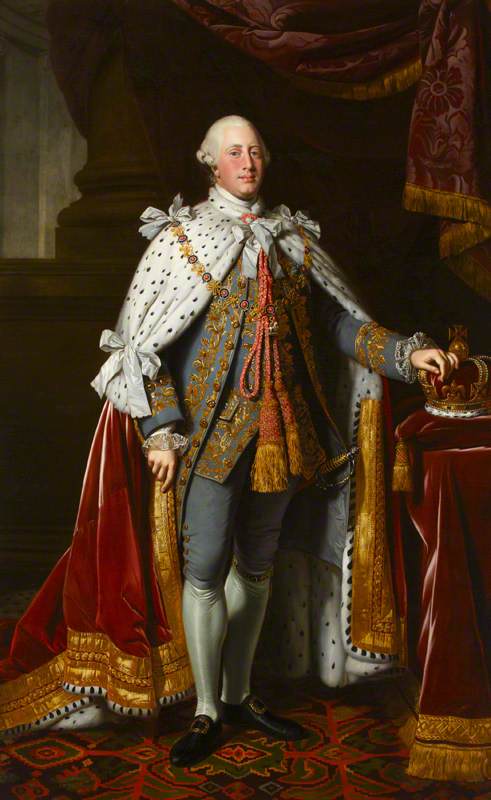
About this source
What it is
This oil portrait by Nathaniel Dance-Holland, painted 1768–1769, depicts King George III in full ceremonial robes. Dance-Holland, a founder member of the Royal Academy, exhibited this and a companion portrait of Queen Charlotte at the first Royal Academy Exhibition in 1769. Both paintings are held by the National Trust at Uppark House, West Sussex.
Why it matters
As an official state image created for public exhibition, this portrait presented George III formally to the public during the years leading up to the American crisis. It is an alternative official image to other state portraits of the period and shows how royal image-making worked through the new Royal Academy.
Look closer
- What do the crown, robes and sash tell us about how George III wanted to be presented to the public?
- Why might the artist have chosen a full-length standing pose rather than a seated one?
- What political tensions of the late 1760s does this grand image not reveal?
This painting is part of the curated material that grounds the AI version of George III on Humy.ai — when students ask about related events, the AI can quote it and cite it.
More George III sources
Meet the AI George III →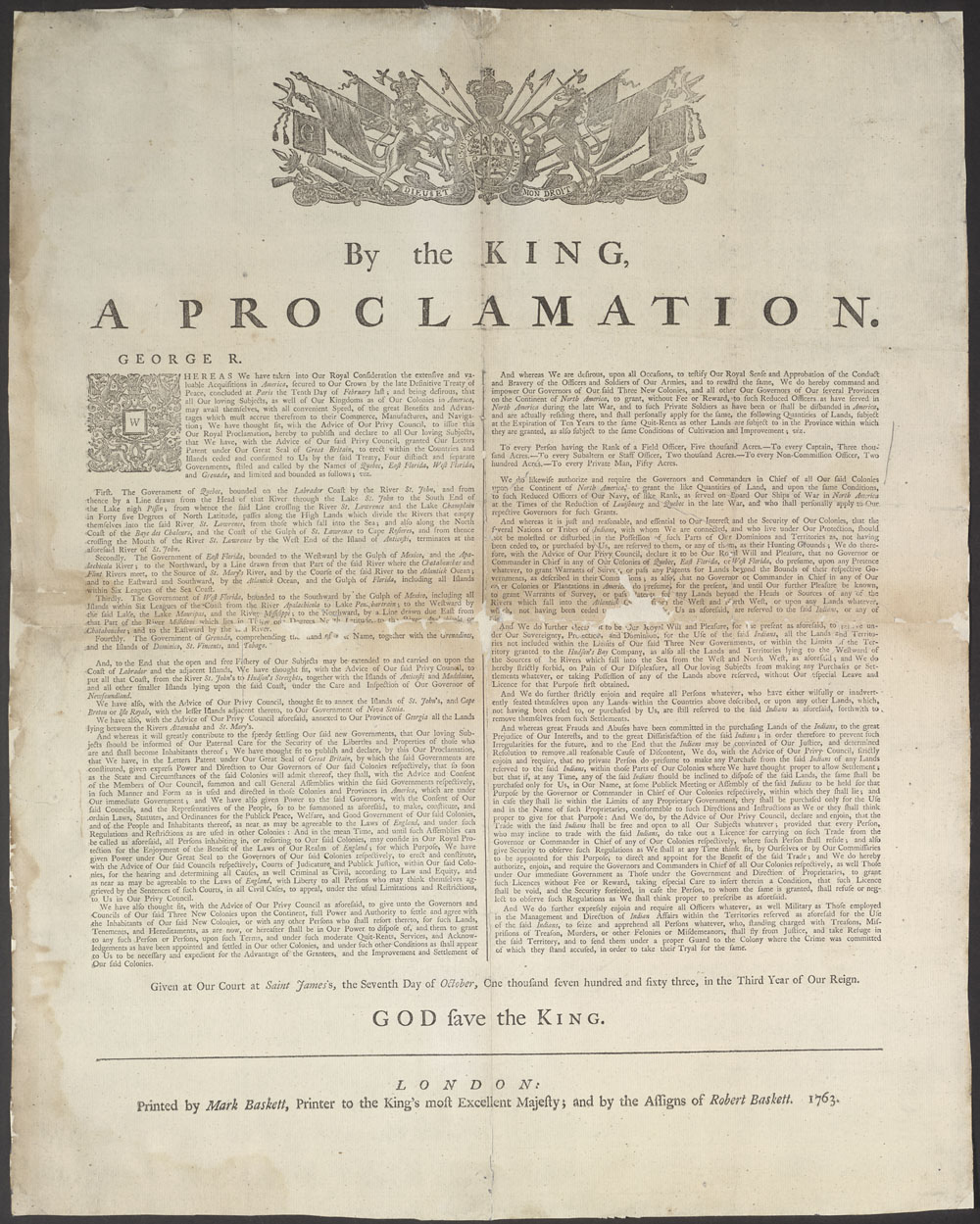 Document
Primary source
Royal Proclamation of 1763
7 October 1763
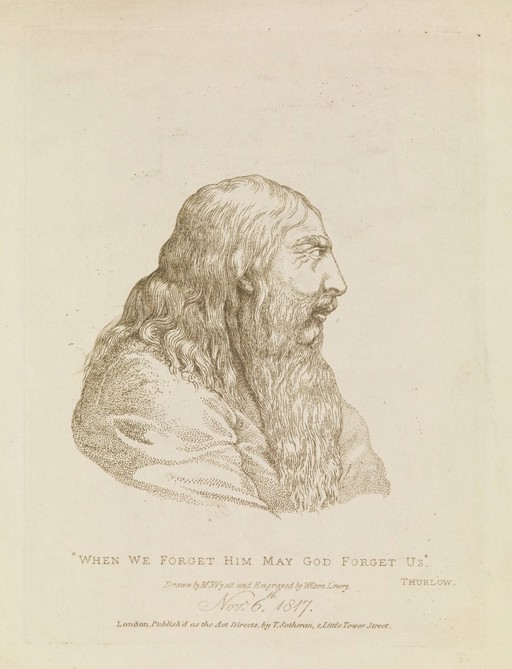 Painting
Primary source
King George III, Etching by Wilson Lowry after M. C. Wyatt
Matthew Coates Wyatt · 6 November 1817
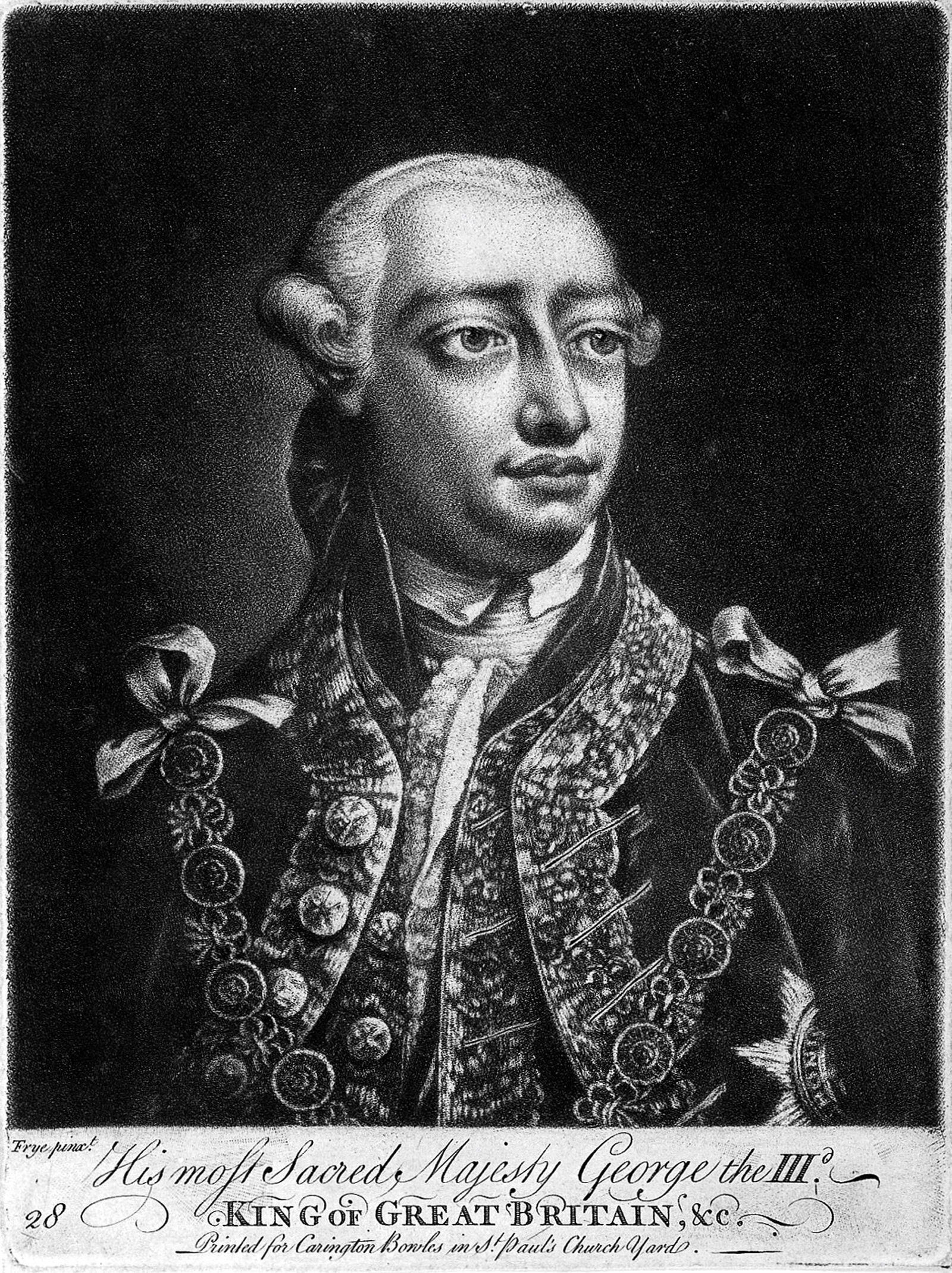 Painting
Primary source
King George III, Mezzotint after Thomas Frye
Thomas Frye · not later than 1762
 Document
Primary source
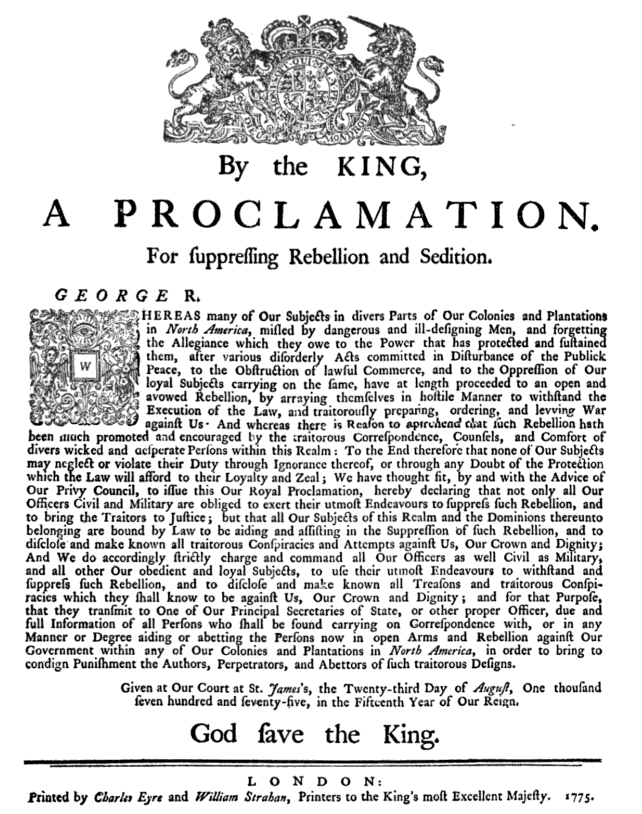
Proclamation of Rebellion
George III of Great Britain · 23 August 1775
 Document
Primary source
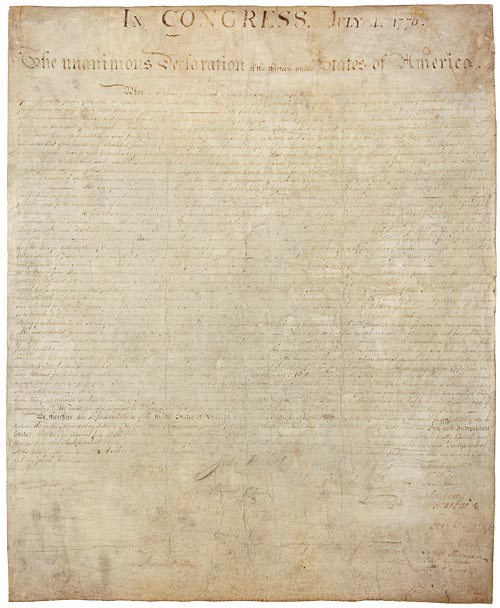
Declaration of Independence
Continental Congress (drafted by Thomas Jefferson) · 1776
Ready when you are
Start chatting with George III now.
20 messages free · No credit card · Available in 50+ languages.