


Secondary sourcePaintingOriginal fresco 1900, reproduction published 1910
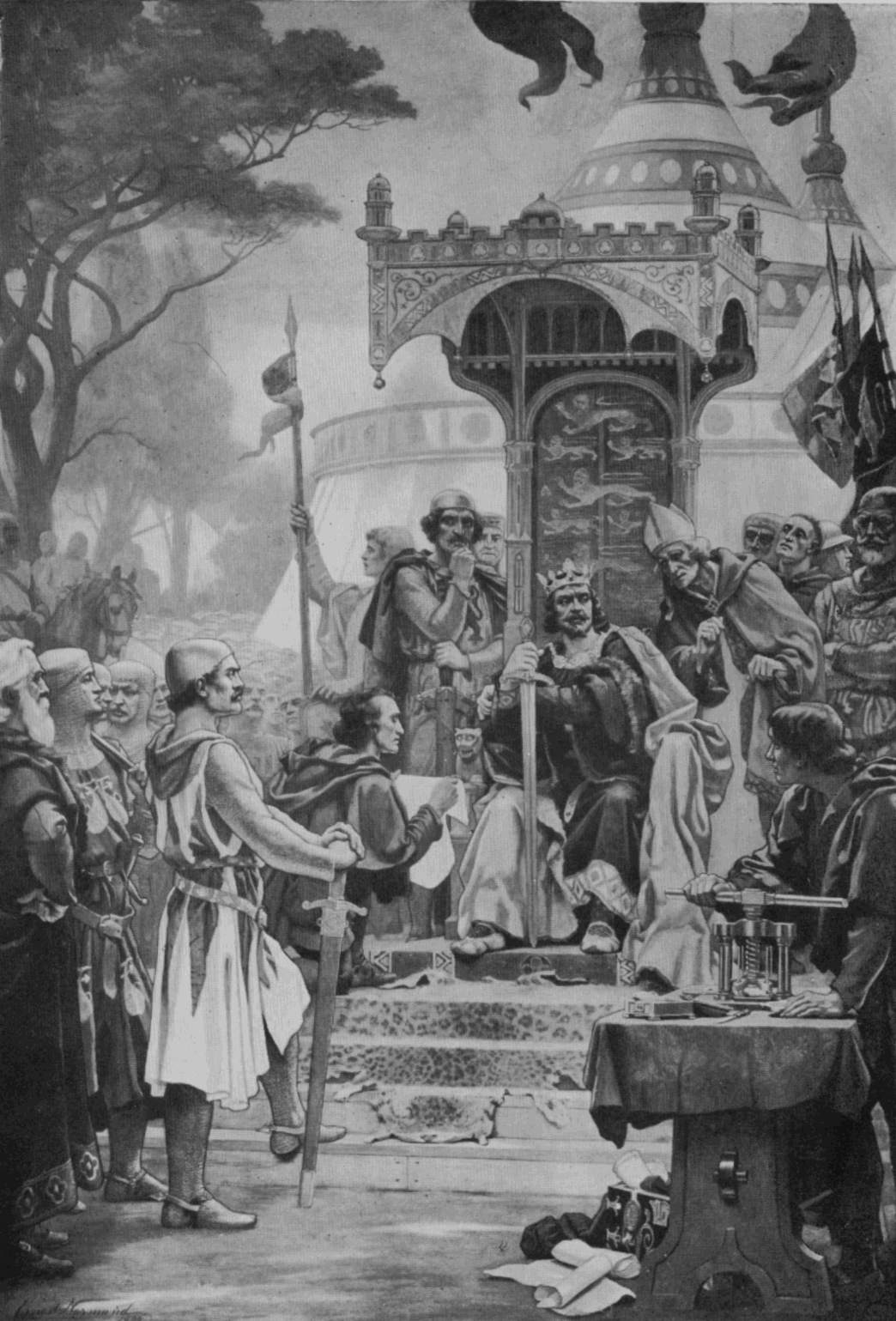
King John granting Magna Charta
Ernest Normand · Original fresco 1900, reproduction published 1910
A reproduction of Ernest Normand's 1900 fresco showing King John granting the charter, a later imagined scene.
Shows a later artist's imagined scene of King John, the figure in this archive, granting the Magna Carta.
About this source
What it is
This is a black-and-white reproduction of a painting that was originally a fresco made in 1900 by Ernest Normand. It was published as a reproduction in 1910. The image shows a crowned king on a throne under an ornate canopy, holding a sword. A clerk at a table writes, while nobles and churchmen stand around. Armed men in white tunics stand at left. The fresco was made for the Royal Exchange.
Why it matters
King John granted the Magna Carta in 1215 after pressure from the English barons. This fresco was made about six hundred years later, in 1900, when the charter was celebrated as a symbol of English freedom. The picture shows how that later age imagined the king and the clerks who recorded his decisions.
Look closer
- Why does the king sit on a throne with a sword, and what does that say about royal power?
- What role does the clerk writing at the table play in the scene?
- Who is missing from this image, and whose voice does it leave out?
This painting is part of the curated material that grounds the AI version of Magna Carta on Humy.ai — when students ask about related events, the AI can quote it and cite it.
More Magna Carta sources
Meet the AI Magna Carta →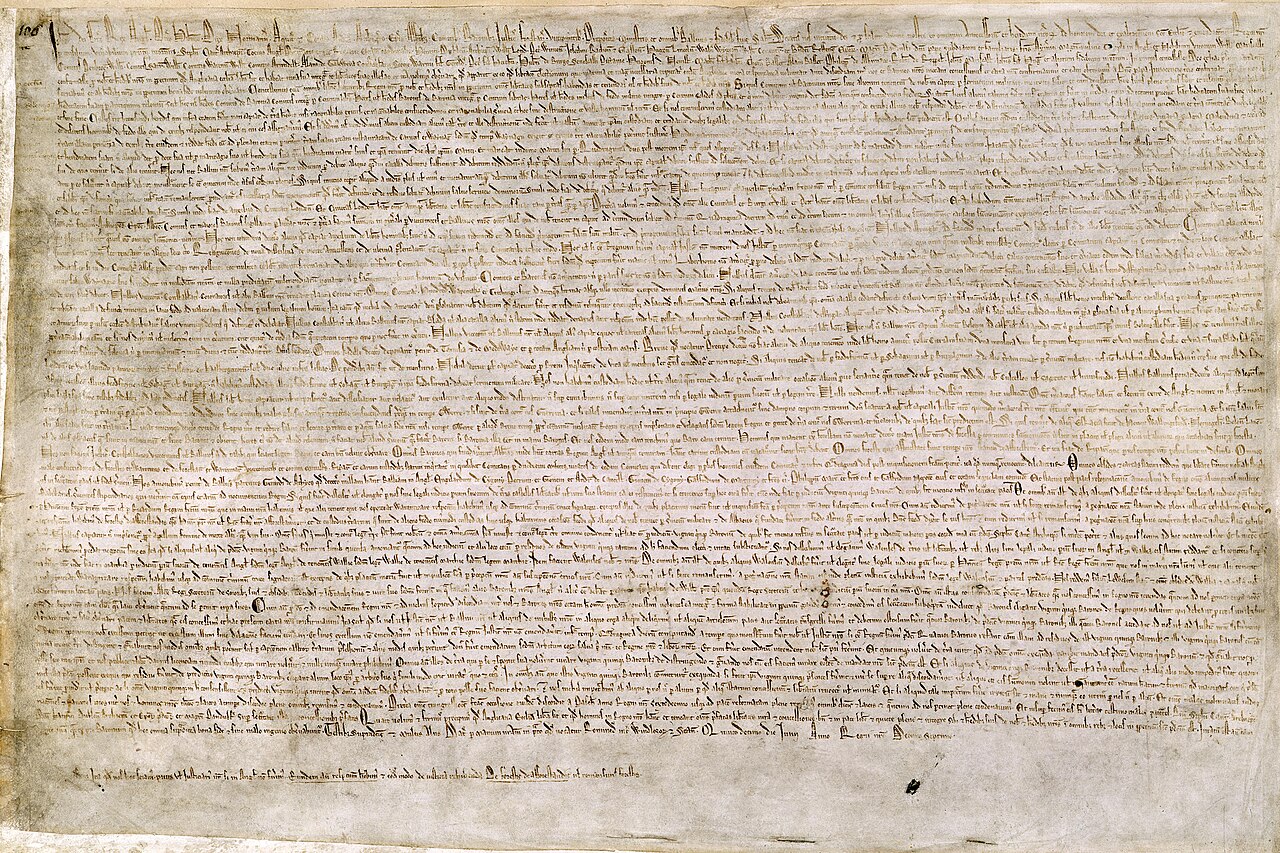 Document
Primary source
Magna Carta (1215 Exemplification)
1215
 Document
Primary source
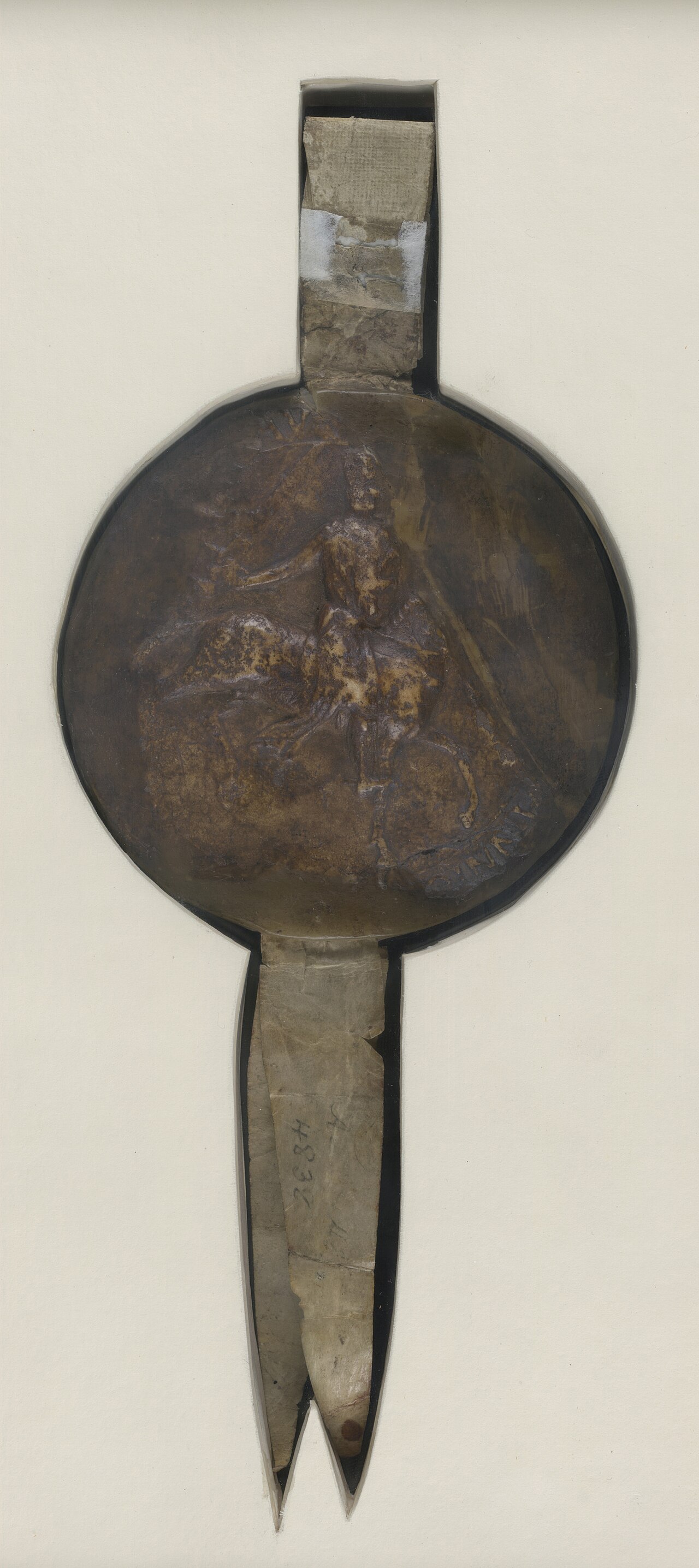
Articles of the Barons
1215
 Document
Primary source
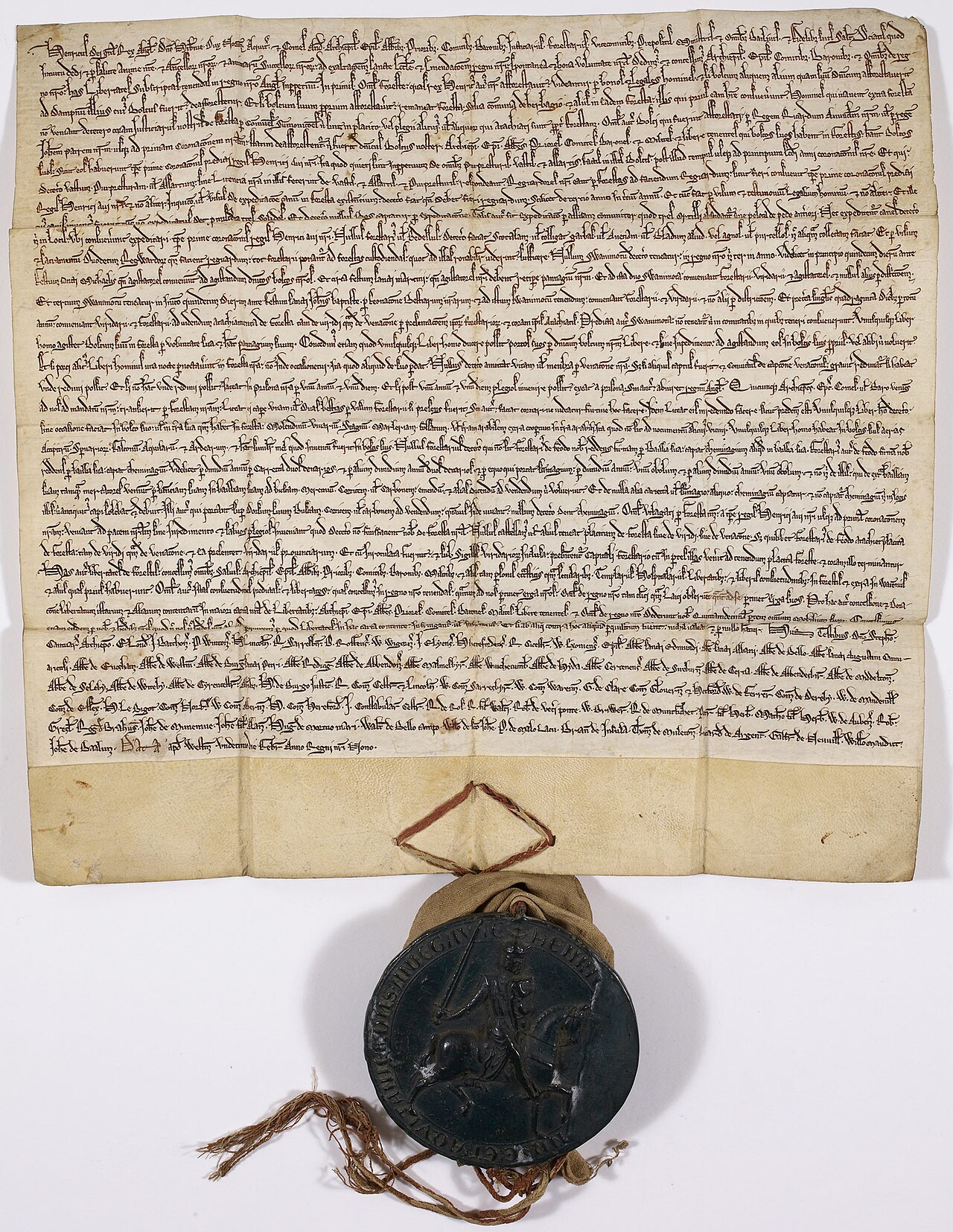
Charter of the Forest
1217
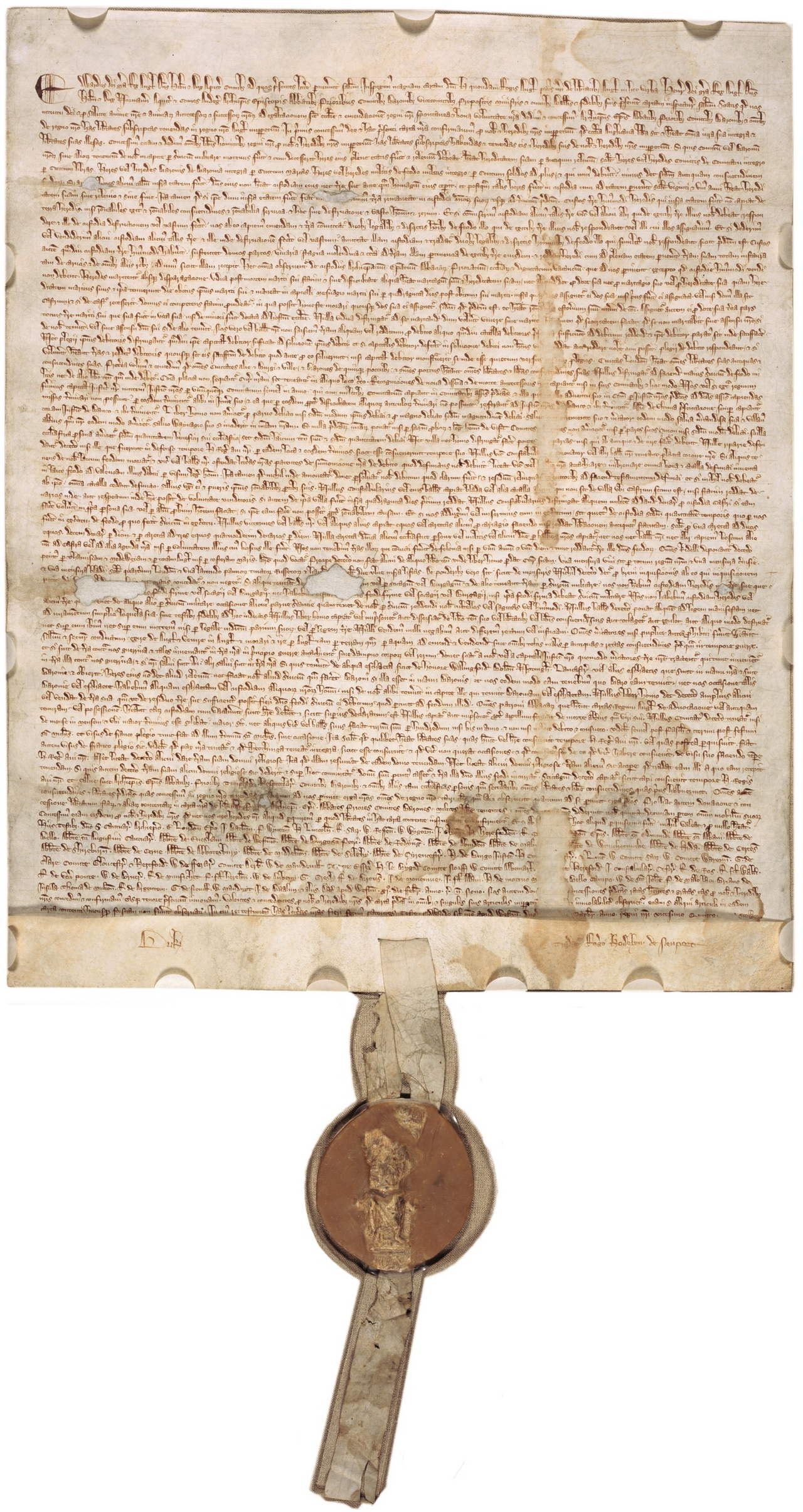 Document
Primary source
Magna Carta 1297 (National Archives, Washington)
Edward I of England · 1297
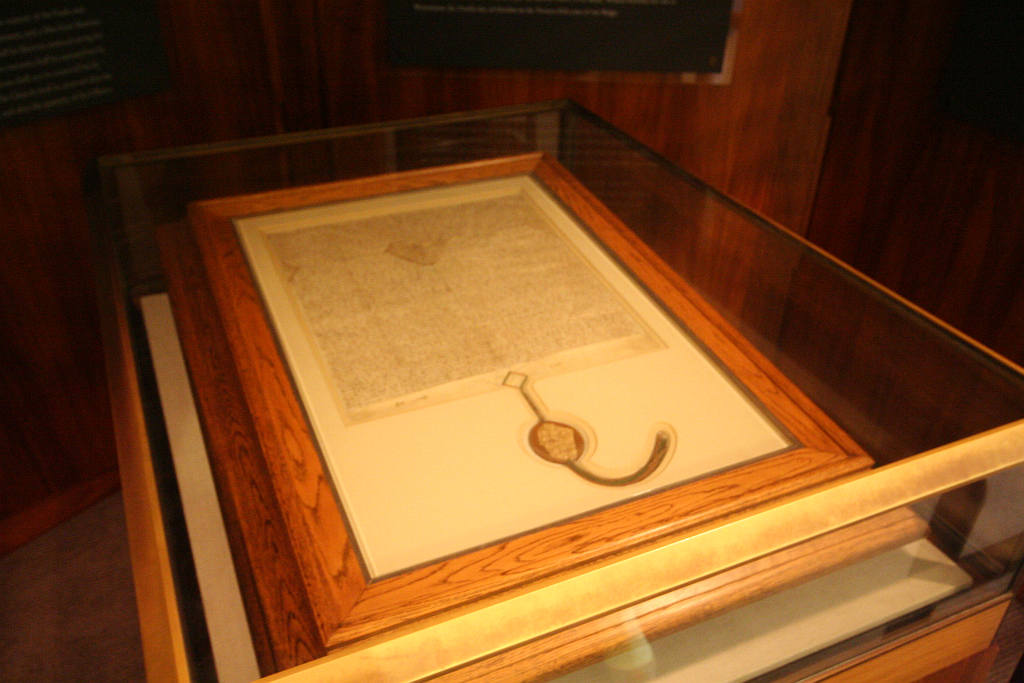 Document
Primary source
Magna Carta 1297 (Parliament House, Canberra)
Edward I of England · 1297
Ready when you are
Start chatting with Magna Carta now.
20 messages free · No credit card · Available in 50+ languages.