


Secondary sourcePhotograph
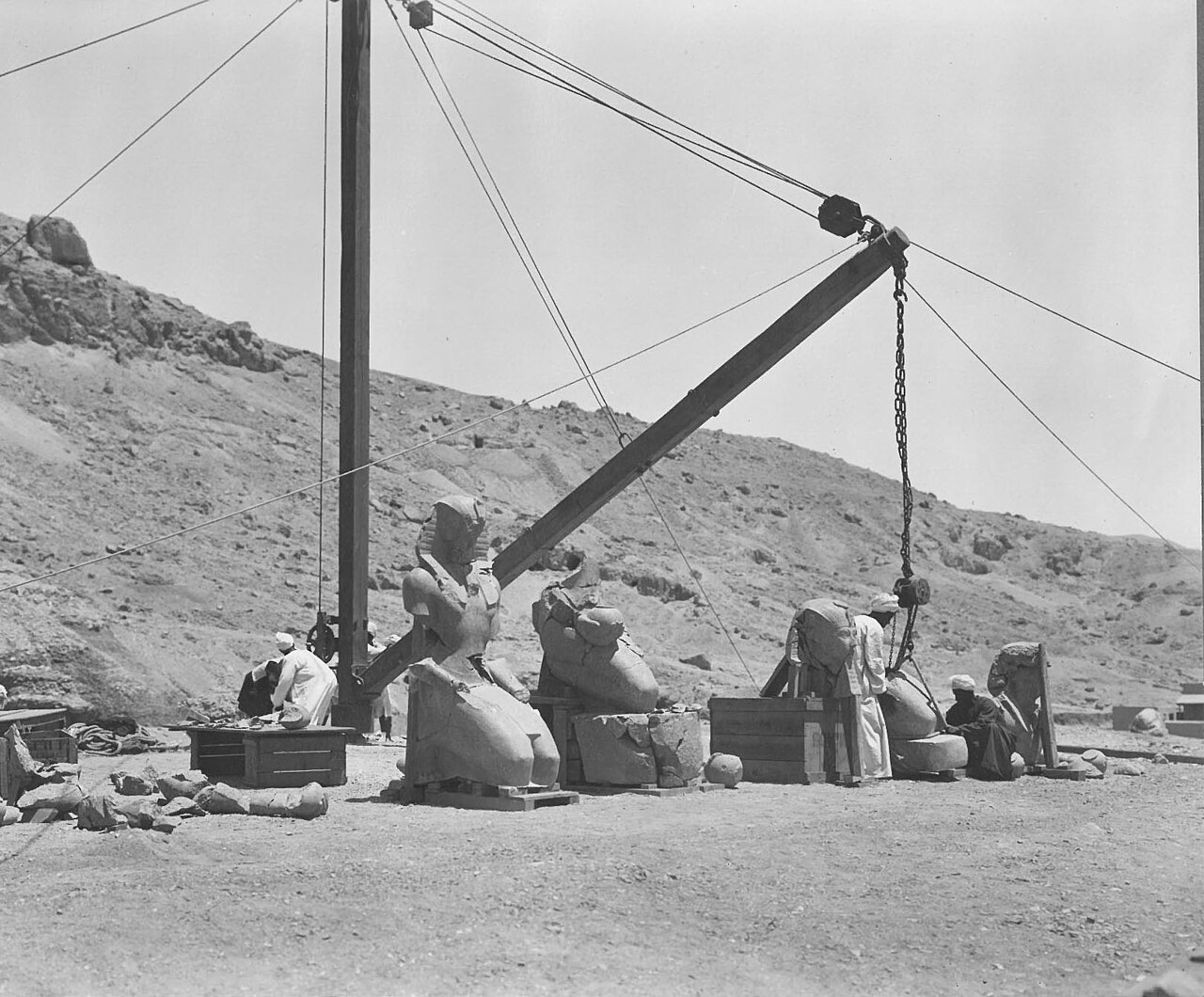
Large Kneeling Statue of Hatshepsut
A photograph of excavators lifting a broken kneeling statue of Hatshepsut shown as a male king offering to the gods.
The statue being excavated here shows Hatshepsut in the masculinised royal image she adopted as pharaoh.
About this source
What it is
This black-and-white photograph shows a large kneeling statue of Hatshepsut being excavated and lifted by a crane, with workers and other statue fragments nearby. The statue portrays her kneeling and making an offering, shown in the masculine royal form she used once she became pharaoh.
Why it matters
Hatshepsut had herself depicted with the body and dress of a male king in much of her official art, following the standard image expected of a pharaoh. This photograph documents the excavation of one such statue, giving evidence of how archaeologists recovered and studied the material record of her reign.
Look closer
- Why might Hatshepsut have chosen to be shown with a male body in royal statues?
- What does the broken condition of the statue suggest about its history?
- What do the excavation methods shown here tell us about archaeology in this period?
This photograph is part of the curated material that grounds the AI version of Hatshepsut on Humy.ai — when students ask about related events, the AI can quote it and cite it.
More Hatshepsut sources
Meet the AI Hatshepsut →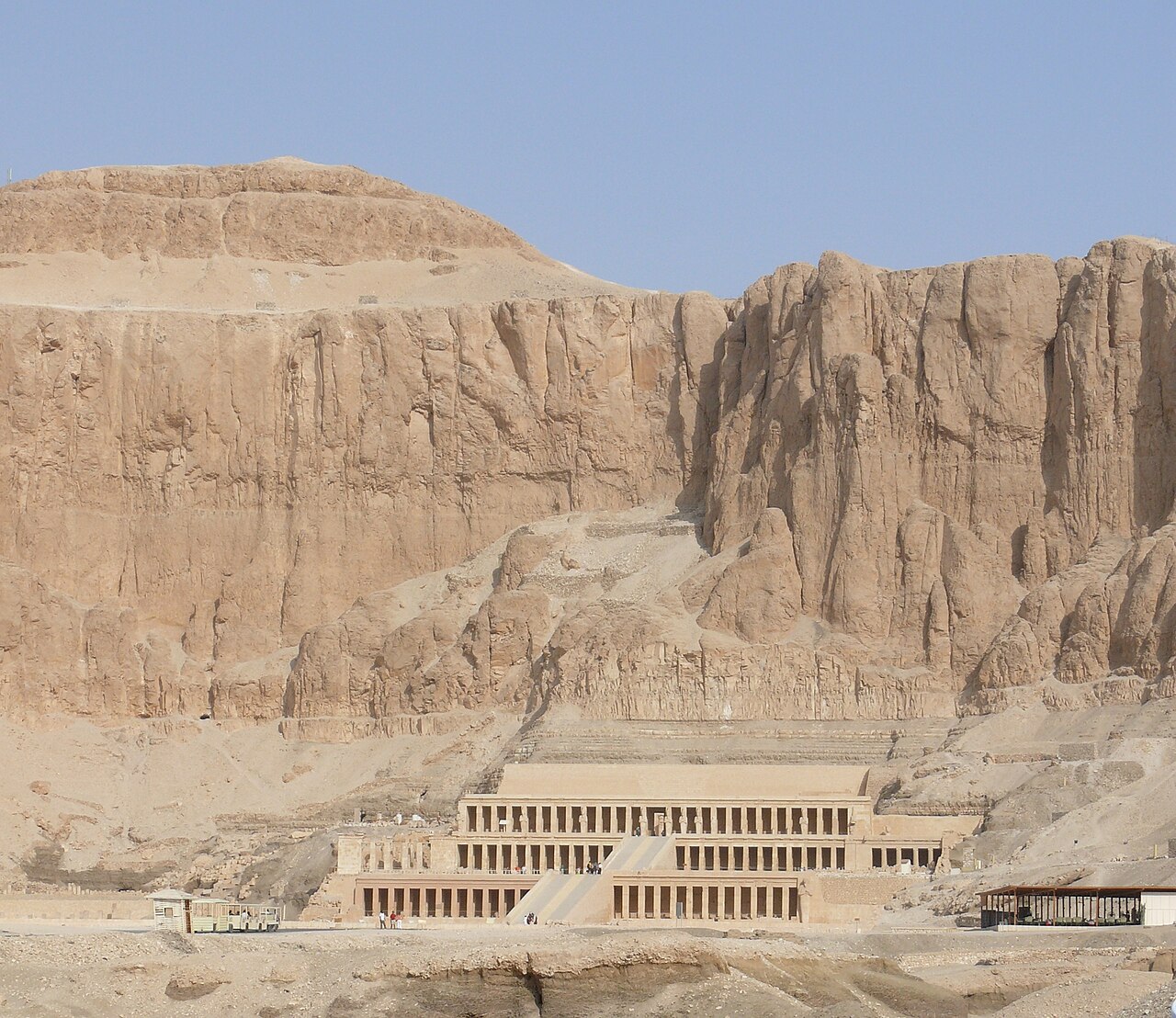 Artifact
Primary source
Mortuary Temple of Hatshepsut
Senenmut and/or Hapuseneb (attributed) · c. 1479–1458 BCE
 Photograph
Secondary source
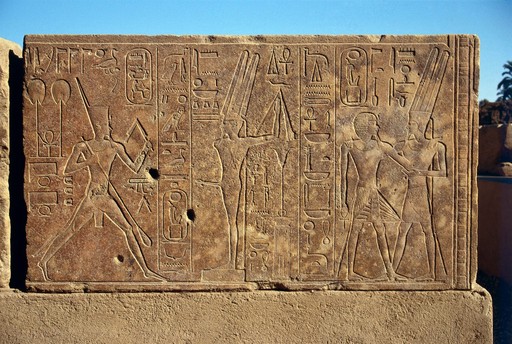
Hatshepsut Dancing Before Min, Karnak Relief
Carole Reeves · 1989
 Sculpture
Primary source
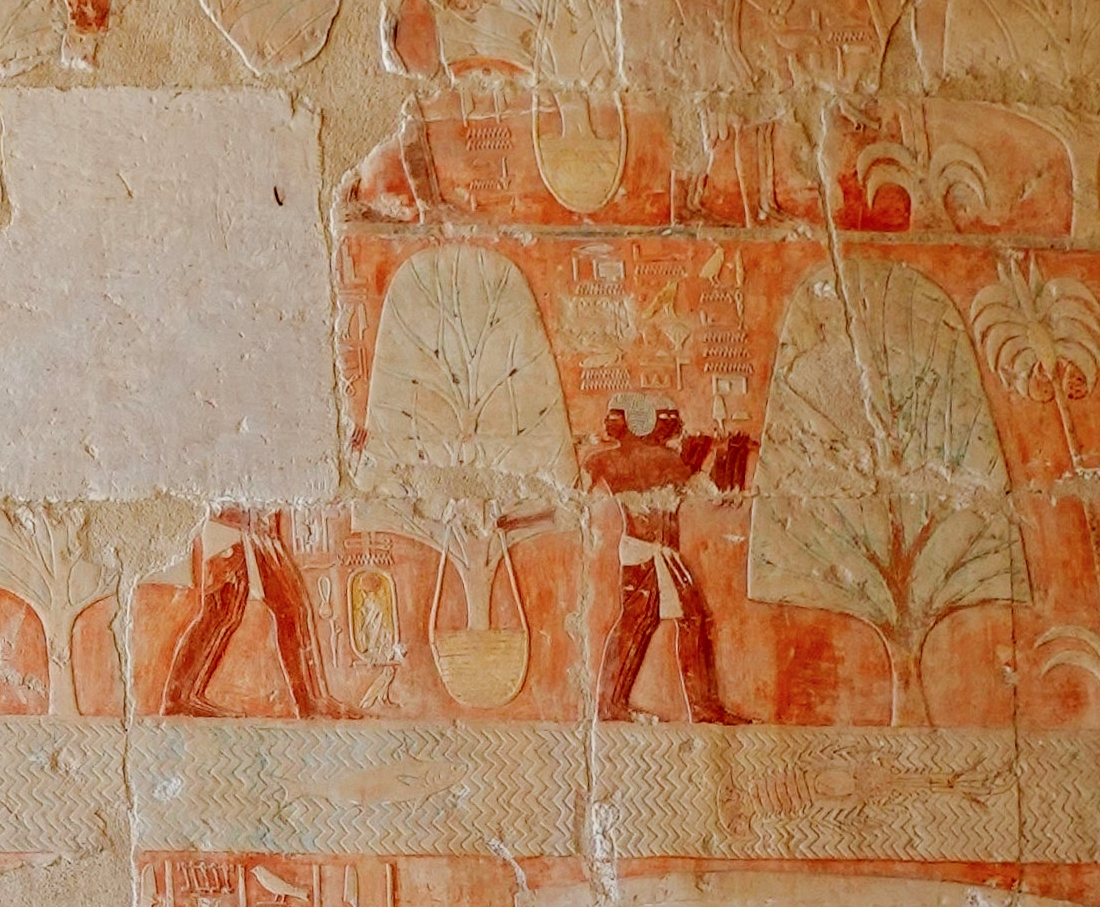
Punt Expedition Reliefs
Royal workshops of Hatshepsut · c. 1470 BCE
 Sculpture
Primary source
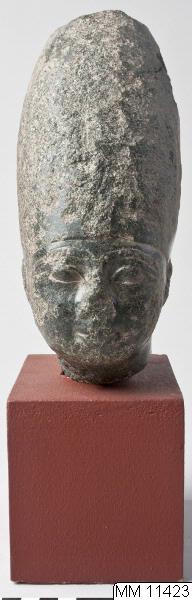
Sculpture Head Probably of Hatshepsut
 Sculpture
Primary source
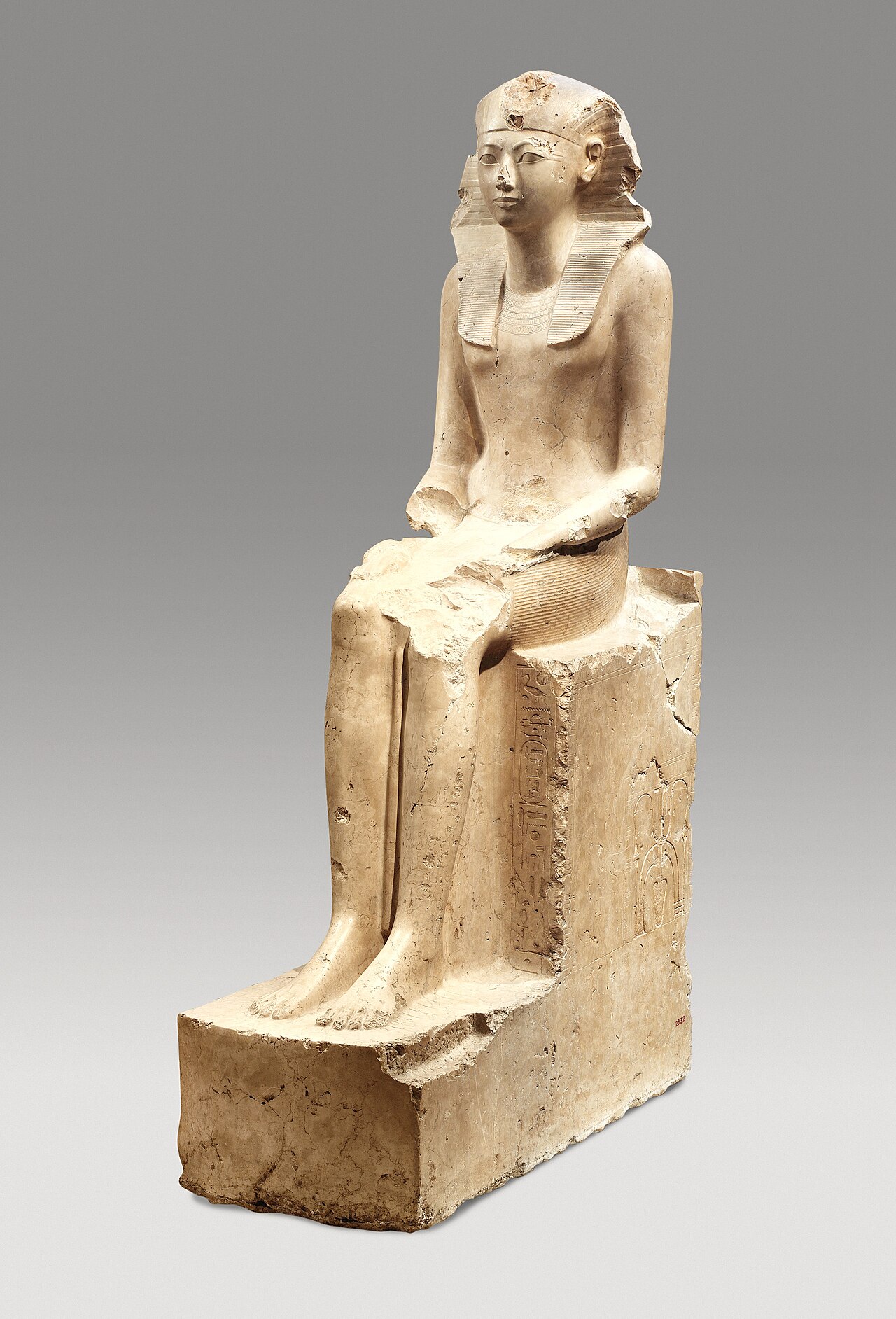
Seated Statue of Hatshepsut
c. 1466 BCE
Ready when you are
Start chatting with Hatshepsut now.
20 messages free · No credit card · Available in 50+ languages.