


Secondary sourcePainting1844
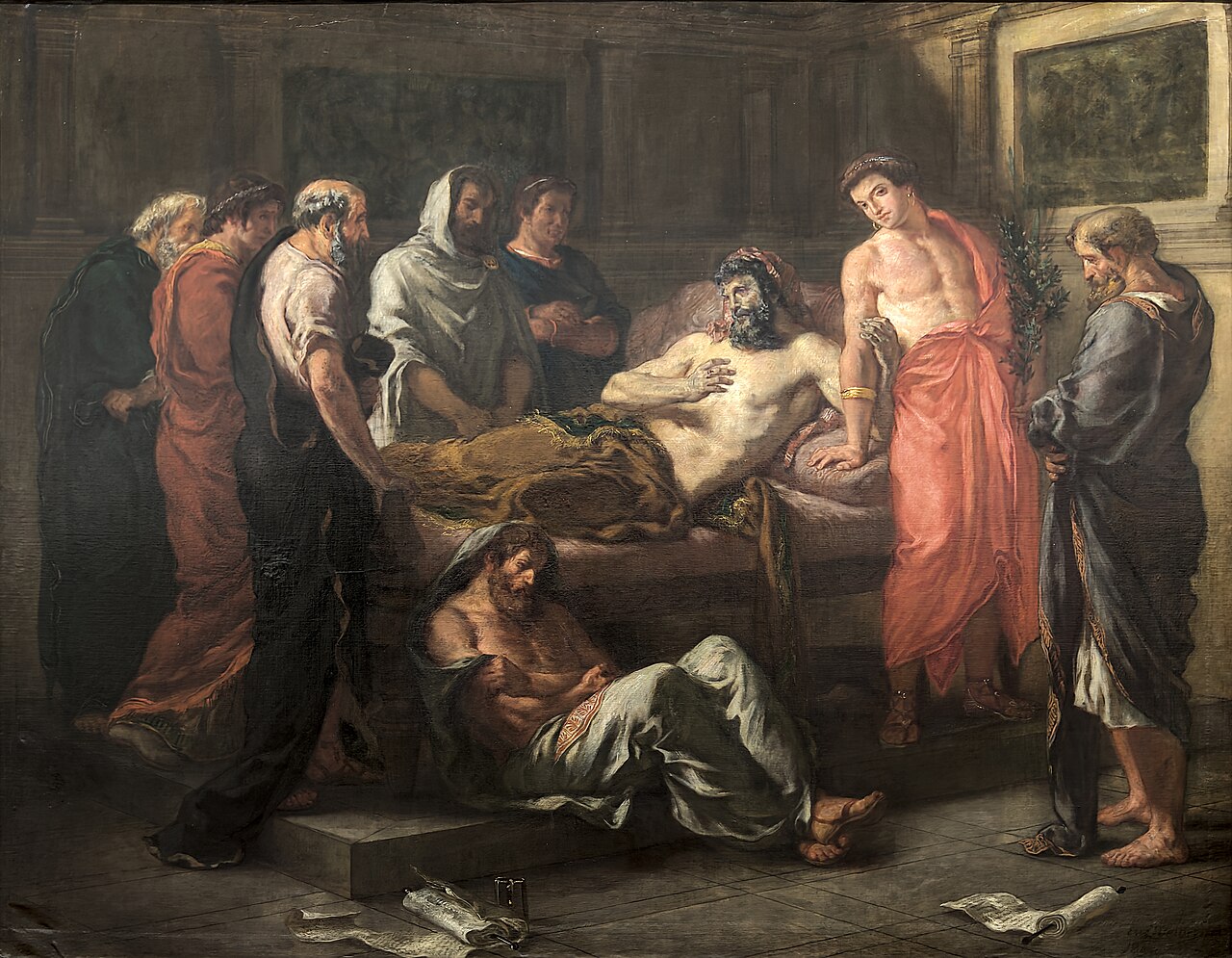
Last Words of the Emperor Marcus Aurelius
Eugène Delacroix · 1844
Delacroix's 1844 painting imagines Marcus Aurelius on his deathbed entrusting his son Commodus to his philosopher advisers.
Depicts Marcus Aurelius on his deathbed, entrusting his son Commodus to his philosopher-advisers.
About this source
What it is
This large oil painting was made by the French Romantic painter Eugène Delacroix in 1844, with underlying work by his student Louis de Planet. It shows the dying Emperor Marcus Aurelius handing his son Commodus over to his Stoic advisers. The main version is held at the Museum of Fine Arts of Lyon.
Why it matters
The painting reflects how later centuries viewed Marcus Aurelius as the model of a wise, virtuous ruler, in contrast to his son Commodus, whose later rule was seen as a disastrous decline. Delacroix used the scene to explore ideas about the fragility of civilization and the tension between wisdom and impulsive power, drawing on earlier traditions of depicting the deaths of great men.
Look closer
- How does Delacroix use posture and clothing to contrast Marcus Aurelius with Commodus?
- Why might a 19th-century French painter choose this ancient Roman subject?
- What historical details might the painting be imagining rather than recording?
This painting is part of the curated material that grounds the AI version of Marcus Aurelius on Humy.ai — when students ask about related events, the AI can quote it and cite it.
More Marcus Aurelius sources
Meet the AI Marcus Aurelius →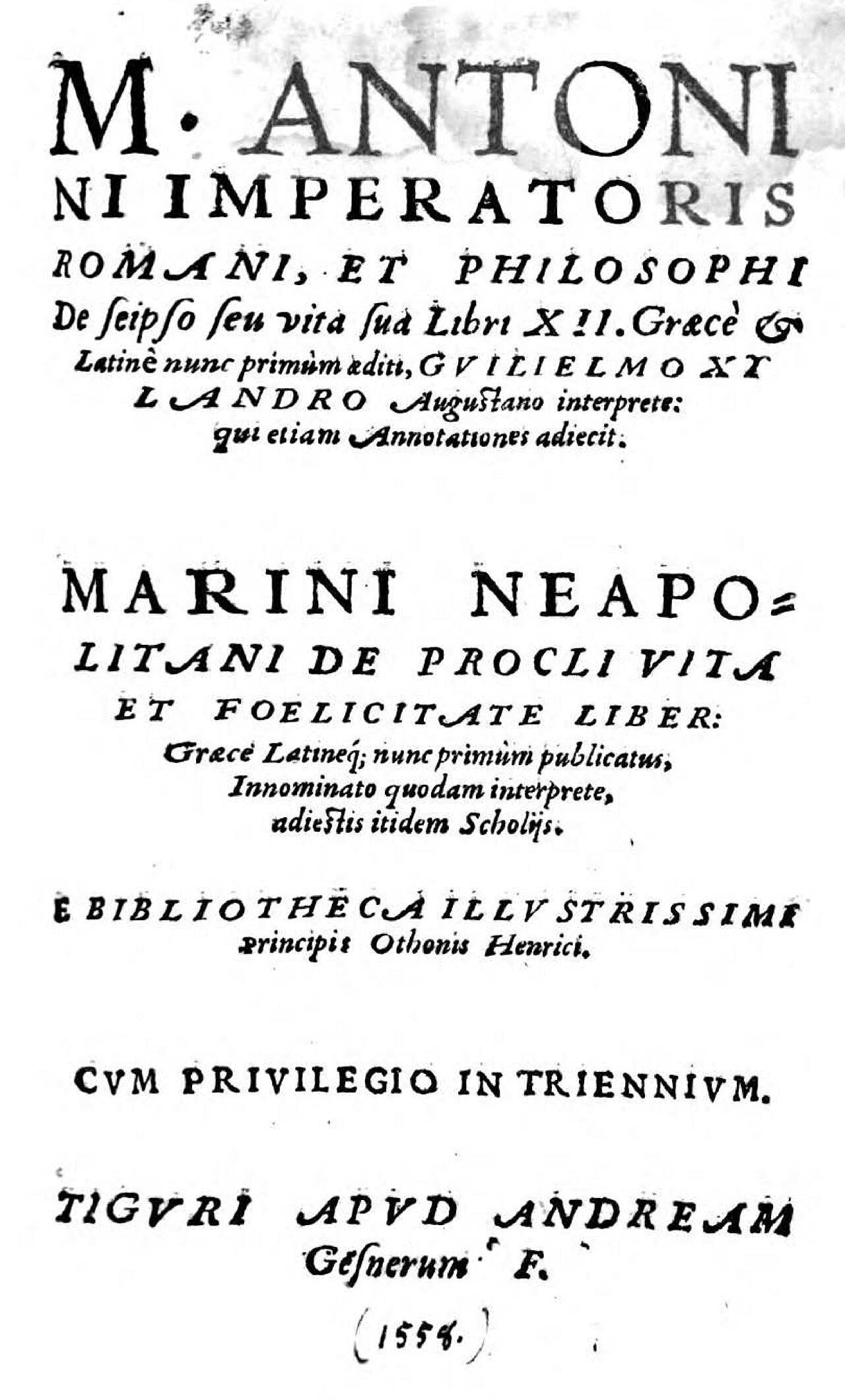 Book
Primary source
Meditations
Marcus Aurelius · c. 170-180 AD (this edition printed 1558)
 Sculpture
Primary source
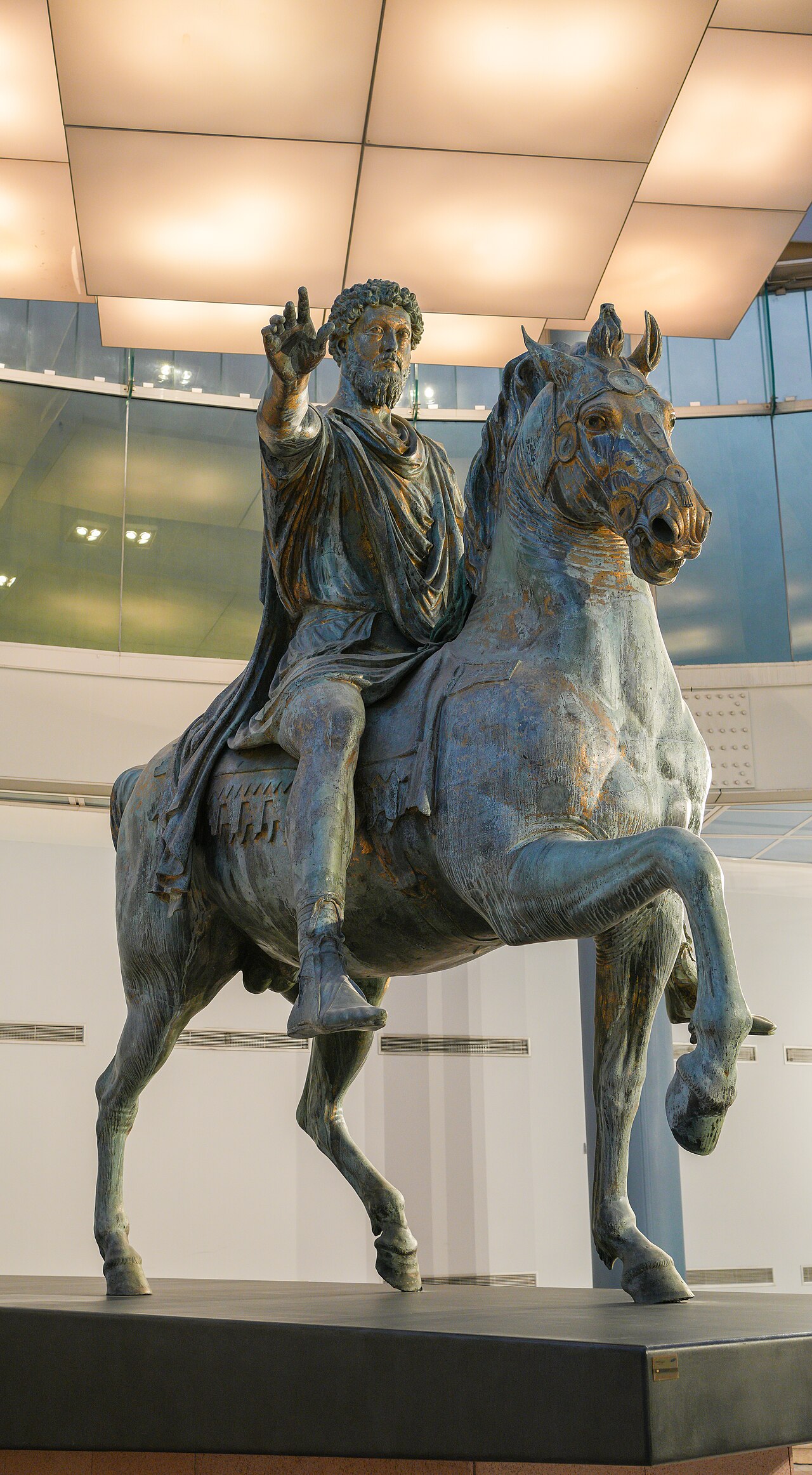
Equestrian Statue of Marcus Aurelius
c. 173 AD
 Artifact
Secondary source
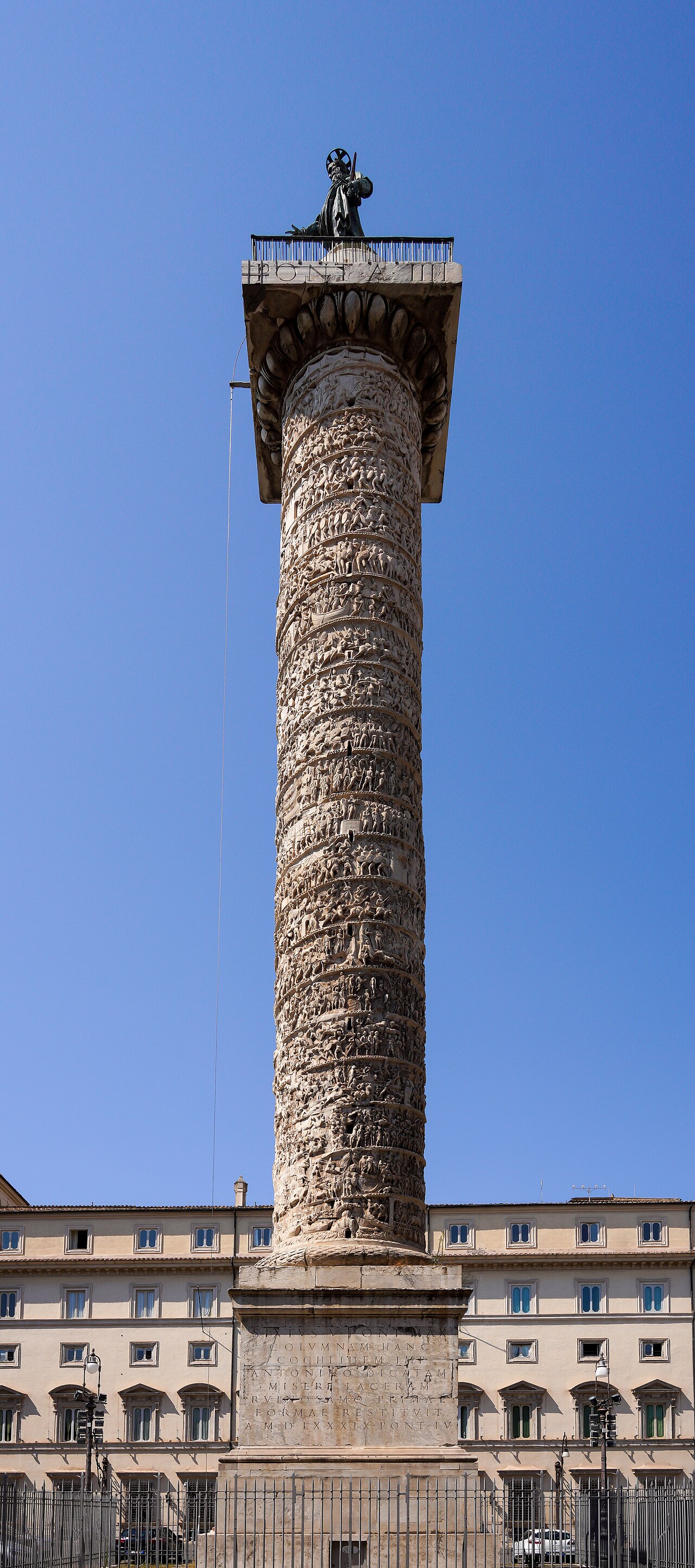
Column of Marcus Aurelius
completed c. 193 AD
Secondary source
Marcus Antoninus (Historia Augusta)
Scriptores Historiae Augustae · probably 4th century AD
 Sculpture
Primary source
Panel Relief of Marcus Aurelius Sacrificing
Ready when you are
Start chatting with Marcus Aurelius now.
20 messages free · No credit card · Available in 50+ languages.