


Secondary sourceBook1008 CE
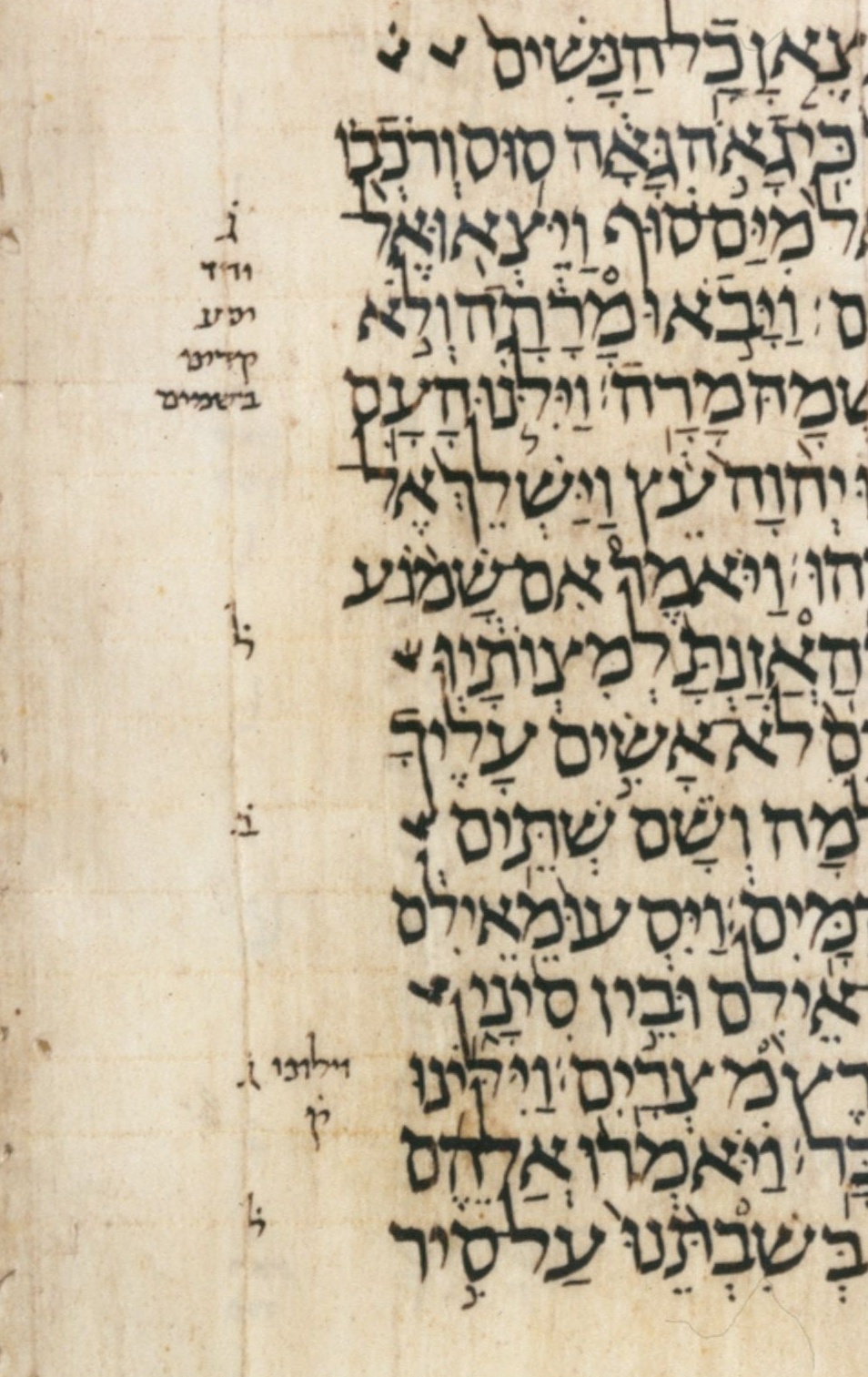
Leningrad Codex
Samuel ben Jacob · 1008 CE
The oldest complete manuscript of the Hebrew Bible, including the full text of the Torah attributed to Moses.
This manuscript preserves the complete Torah text traditionally linked to Moses, the basis of modern Bible editions.
About this source
What it is
The Leningrad Codex is a handwritten book, copied in Cairo around 1008 CE, containing the complete Hebrew Bible with vowel marks and notes added by Masoretic scribes. It is the oldest surviving complete copy of this text and is held at the National Library of Russia in St Petersburg.
Why it matters
Because it is complete and in excellent condition, the Leningrad Codex is the basis for almost all modern printed editions of the Hebrew Bible, including the Torah traditionally attributed to Moses. It shows the careful, skilled work of medieval Jewish scribes, such as Samuel ben Jacob who copied its text, vowels and notes himself — an unusual achievement for the period.
Look closer
- Why does the completeness of a manuscript matter so much to scholars?
- What can the decorated pages and scribal notes tell us about the people who made this book?
- How many centuries separate this manuscript from the events it describes, and what does that gap mean for its reliability?
This book is part of the curated material that grounds the AI version of Moses on Humy.ai — when students ask about related events, the AI can quote it and cite it.
More Moses sources
Browse all 96 →
Ready when you are
Start chatting with Moses now.
20 messages free · No credit card · Available in 50+ languages.