


Secondary sourceBook1702
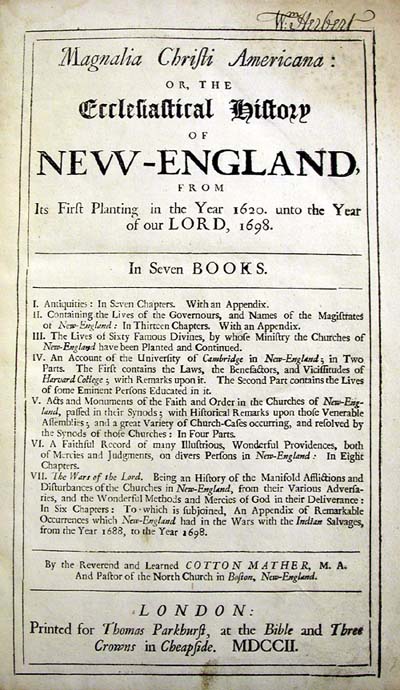
Magnalia Christi Americana
Cotton Mather · 1702
Cotton Mather's 1702 history of New England, which famously describes Roger Williams as having 'a windmill in his head.'
Mather's history mocks Williams as having 'a windmill in his head,' showing the hostile memory of him in Massachusetts.
About this source
What it is
This is a book written by the Puritan minister Cotton Mather, published in London in 1702 for printer Thomas Parkhurst. It is a religious history of New England from 1620 to 1698, covering Massachusetts and nearby colonies, and includes accounts of events such as the Salem witch trials and the founding of Harvard College.
Why it matters
Mather's description of Roger Williams as having 'a windmill in his head' records how the Massachusetts religious establishment remembered him a generation after his banishment, as an unstable troublemaker rather than a principled dissenter. It shows how history can be shaped by the writers in power.
Look closer
- Why might Cotton Mather, a Puritan minister, want to portray Williams negatively?
- What does the phrase 'a windmill in his head' suggest about how his contemporaries saw him?
- How might the story be different if Williams had written his own history of these events?
This book is part of the curated material that grounds the AI version of Roger Williams, Thomas Hooker and Metacomet on Humy.ai — when students ask about related events, the AI can quote it and cite it.
More Roger Williams sources
Meet the AI Roger Williams →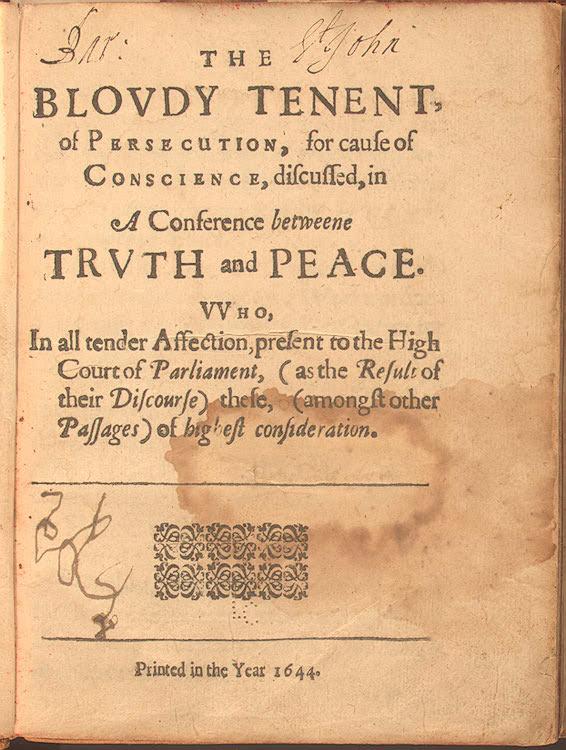 Book
Primary source
The Bloudy Tenent of Persecution for Cause of Conscience
Roger Williams · 1644
 Book
Primary source
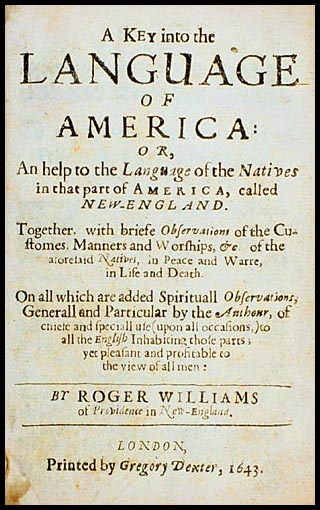
A Key Into the Language of America
Roger Williams · 1643
 Document
Primary source
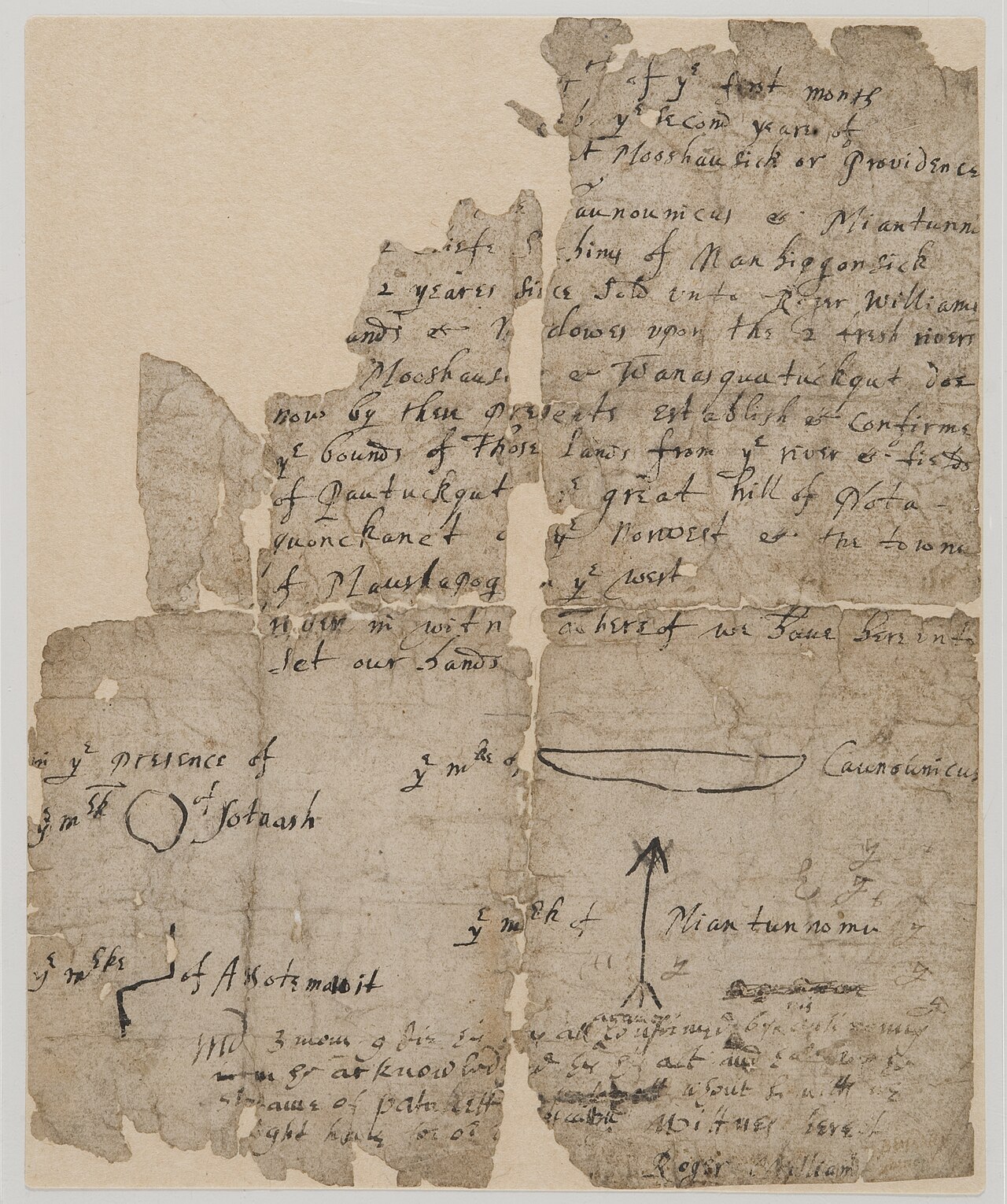
Providence, Rhode Island Original Deed
1636
 Book
Primary source
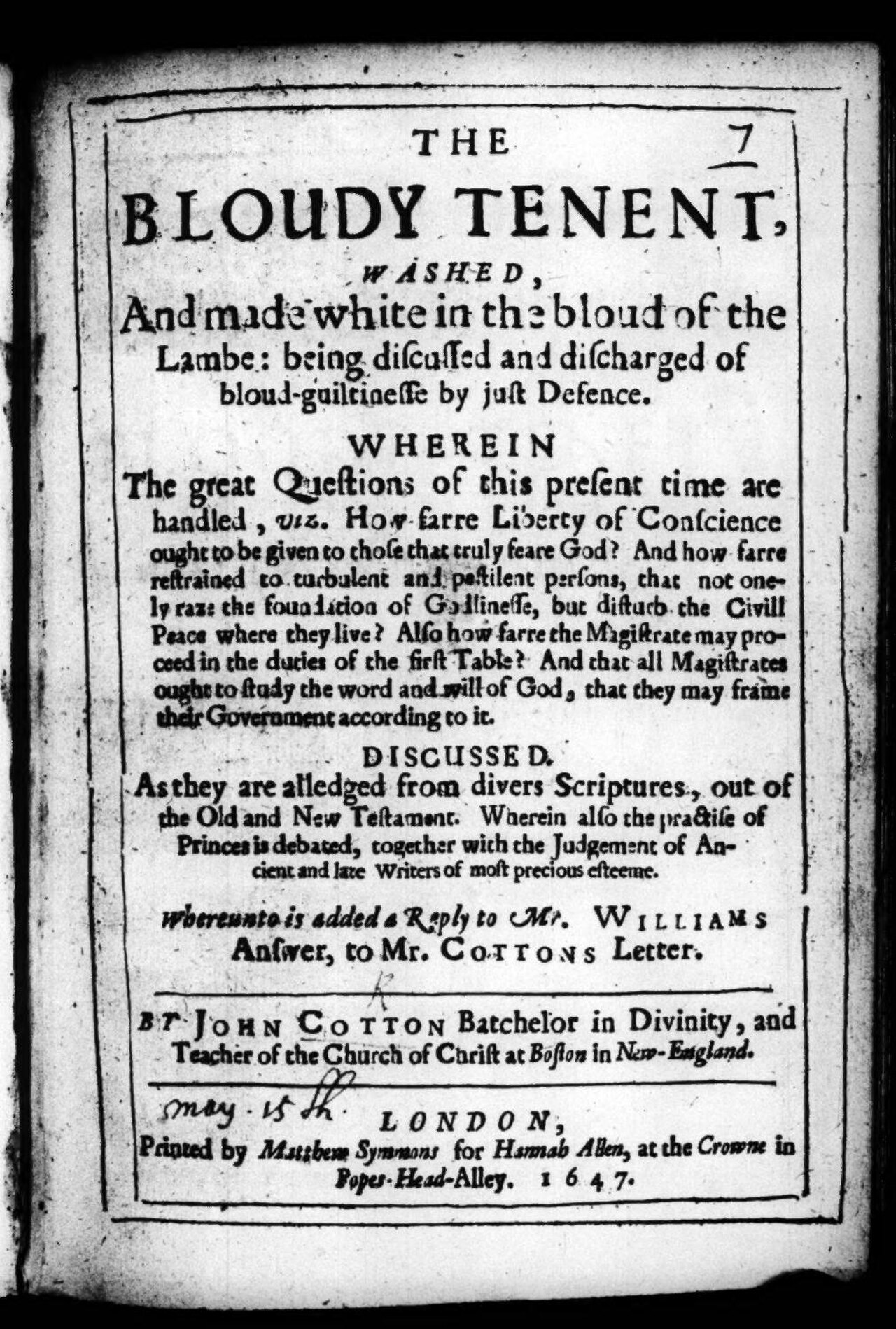
The Bloudy Tenent, Washed and Made White in the Bloud of the Lambe
John Cotton · 1647
Primary source
Rhode Island Royal Charter of 1663
Charles II · 1663
Ready when you are
Start chatting with Roger Williams now.
20 messages free · No credit card · Available in 50+ languages.