


Primary sourceDocument1885 (composed); 1886 (first edition)
Manfred Symphony
Pyotr Ilyich Tchaikovsky · 1885 (composed); 1886 (first edition)
A programme symphony by Tchaikovsky based on Byron's poem Manfred, composed in 1885 from a plan originally devised by critic Vladimir Stasov and passed on by Mily Balakirev.
A programme symphony composed by him in 1885, based on a plan devised by Stasov and passed on by Balakirev.
About this source
What it is
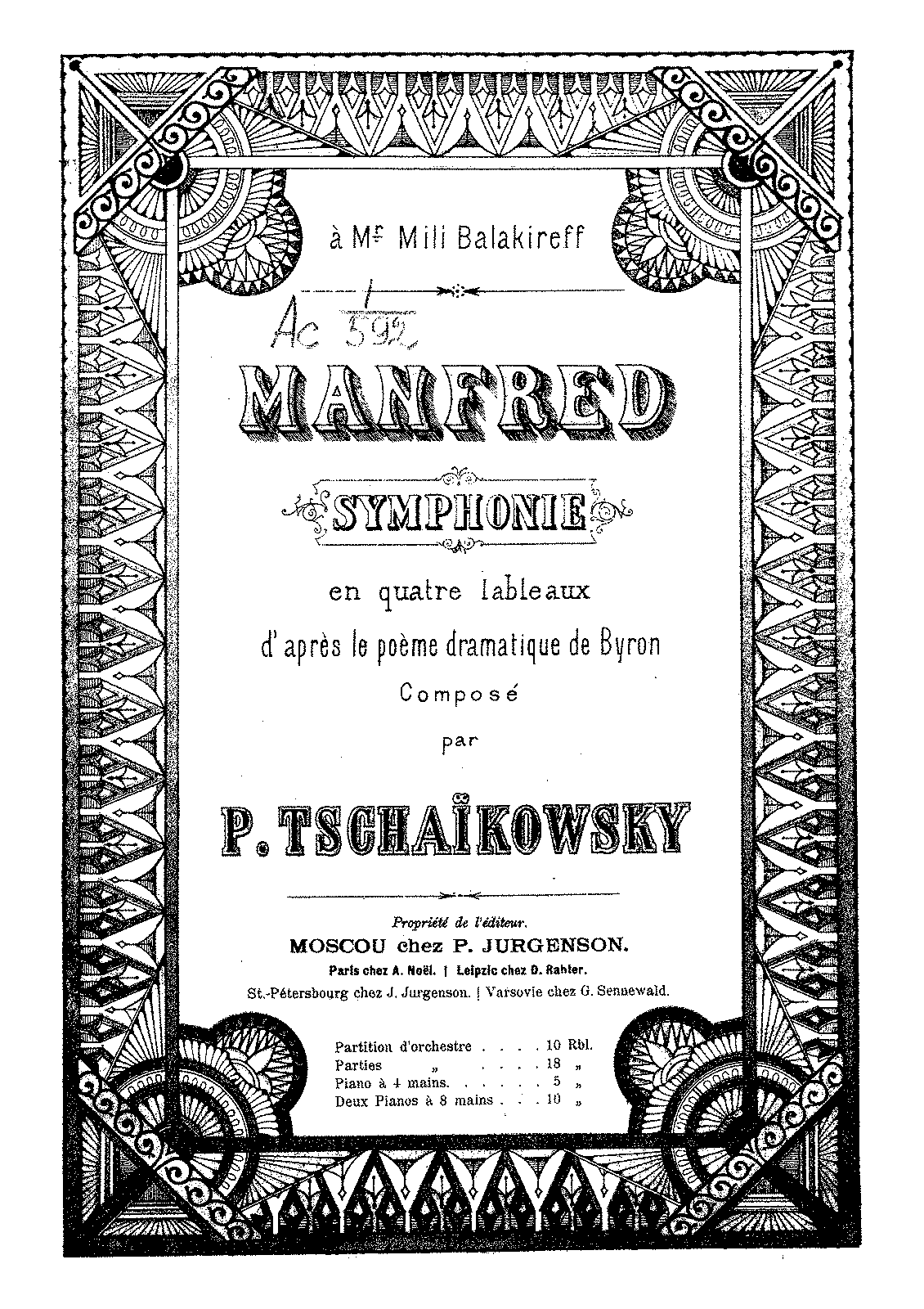
Manfred is a four-movement programme symphony, Op. 58, by Pyotr Ilyich Tchaikovsky, written between May and September 1885. It is based on Lord Byron's 1817 poem of the same name, following a detailed program originally written by critic Vladimir Stasov and passed to Tchaikovsky by the composer Mily Balakirev.
Why it matters
The symphony's history connects several figures of Russian music: Stasov devised the plan, Balakirev first offered it to Hector Berlioz before persuading Tchaikovsky to take it on, after Tchaikovsky had sent Balakirev his revised Romeo and Juliet. It is Tchaikovsky's only multi-movement programmatic symphony, and his changing opinion of it—from pride to a wish to destroy parts of it—shows his self-critical nature.
Look closer
- What does the long chain of people involved (Stasov, Balakirev, Berlioz, Tchaikovsky) tell you about how musical ideas can travel between artists?
- Why might a composer later want to destroy or revise a work he once admired?
- What does the title page's dedication and printing details tell you about how the work was published and shared?
This document is part of the curated material that grounds the AI version of Pyotr Ilyich Tchaikovsky on Humy.ai — when students ask about related events, the AI can quote it and cite it.
More Pyotr Ilyich Tchaikovsky sources
Meet the AI Pyotr Ilyich Tchaikovsky → Artifact
Secondary source
Swan Lake
Pyotr Ilyich Tchaikovsky · 1875–1876
 Artifact
Secondary source
1812 Overture
Pyotr Ilyich Tchaikovsky · 1880
 Artifact
Primary source
Symphony No. 6 (Pathétique)
Pyotr Ilyich Tchaikovsky · 1893
Primary source
Tchaikovsky & Anton Rubinstein & Friends
Julius Block · 1890
 Artifact
Primary source
Eugene Onegin
Pyotr Ilyich Tchaikovsky · 1877–1878
Ready when you are
Start chatting with Pyotr Ilyich Tchaikovsky now.
20 messages free · No credit card · Available in 50+ languages.