


Primary sourceDocument1989
Mansell v. Mansell
Thurgood Marshall · 1989
A 1989 Supreme Court opinion by Thurgood Marshall on whether state courts may treat military retirement pay, waived to receive veterans' disability benefits, as property divided at divorce.
Marshall wrote this majority opinion as a Supreme Court Justice, showing his reasoning on federal law and property in divorce.
About this source
What it is
This is the opinion of the Supreme Court of the United States in Mansell v. Mansell, decided in 1989 and written by Justice Thurgood Marshall. It asks whether state courts may treat military retirement pay as property to be divided at divorce when the retiree waived that pay to receive veterans' disability benefits. The Court holds that they may not, under the federal Uniformed Services Former Spouses' Protection Act. The case is reported as 490 U.S. 581 and is listed on Wikisource.
Why it matters
The opinion shows how the Court read a federal law that governed the division of military pay between divorcing spouses. Marshall explains how retirement pay and disability benefits are calculated for members of the Army, Navy, and Air Force. The decision shows how federal rules could limit what state divorce courts were allowed to do.
Look closer
- Which two kinds of military payments does the opinion describe, and why does the difference matter?
- Who are the people most affected by this ruling, and whose interests does the opinion seem to protect?
- What does the opinion leave out about the personal lives of the couple involved?
This document is part of the curated material that grounds the AI version of Thurgood Marshall on Humy.ai — when students ask about related events, the AI can quote it and cite it.
More Thurgood Marshall sources
Meet the AI Thurgood Marshall →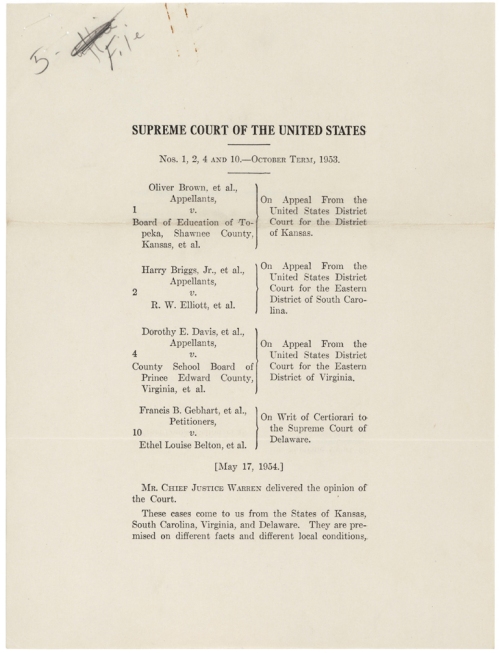 Document
Primary source
Brown v. Board of Education
Earl Warren · 17 May 1954
 Painting
Primary source
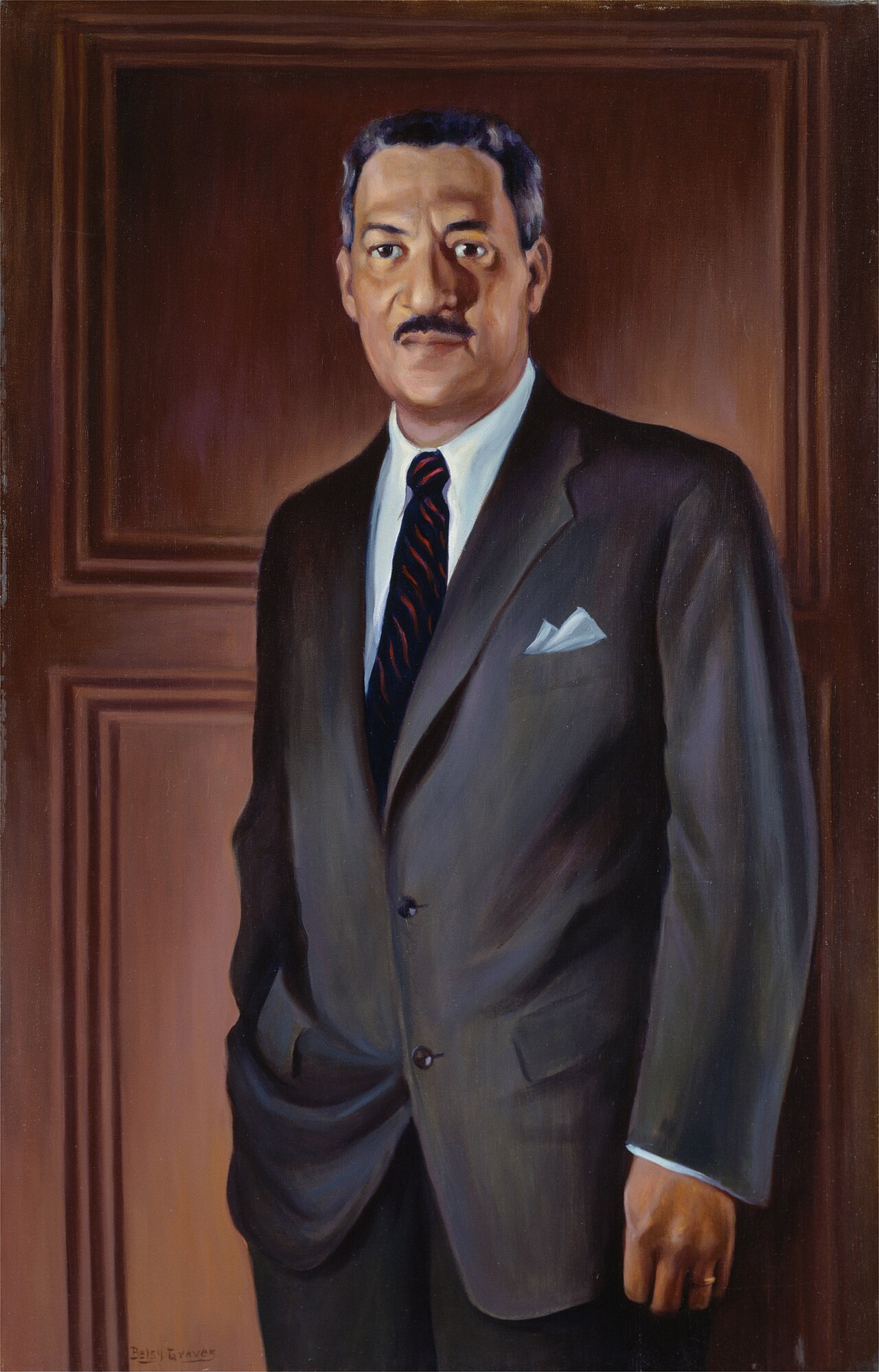
Thurgood Marshall
Betsy Graves Reyneau · 1956
 Photograph
Primary source
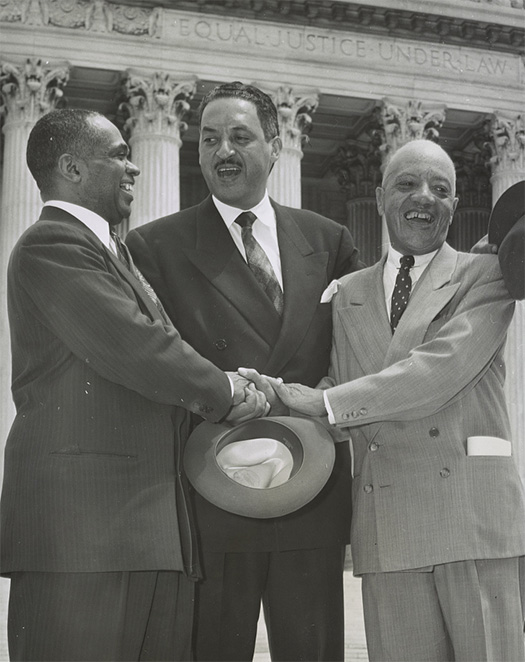
George Edward Chalmer Hayes, Thurgood Marshall, and James Nabrit in 1954 winning Brown case
1954
 Photograph
Primary source
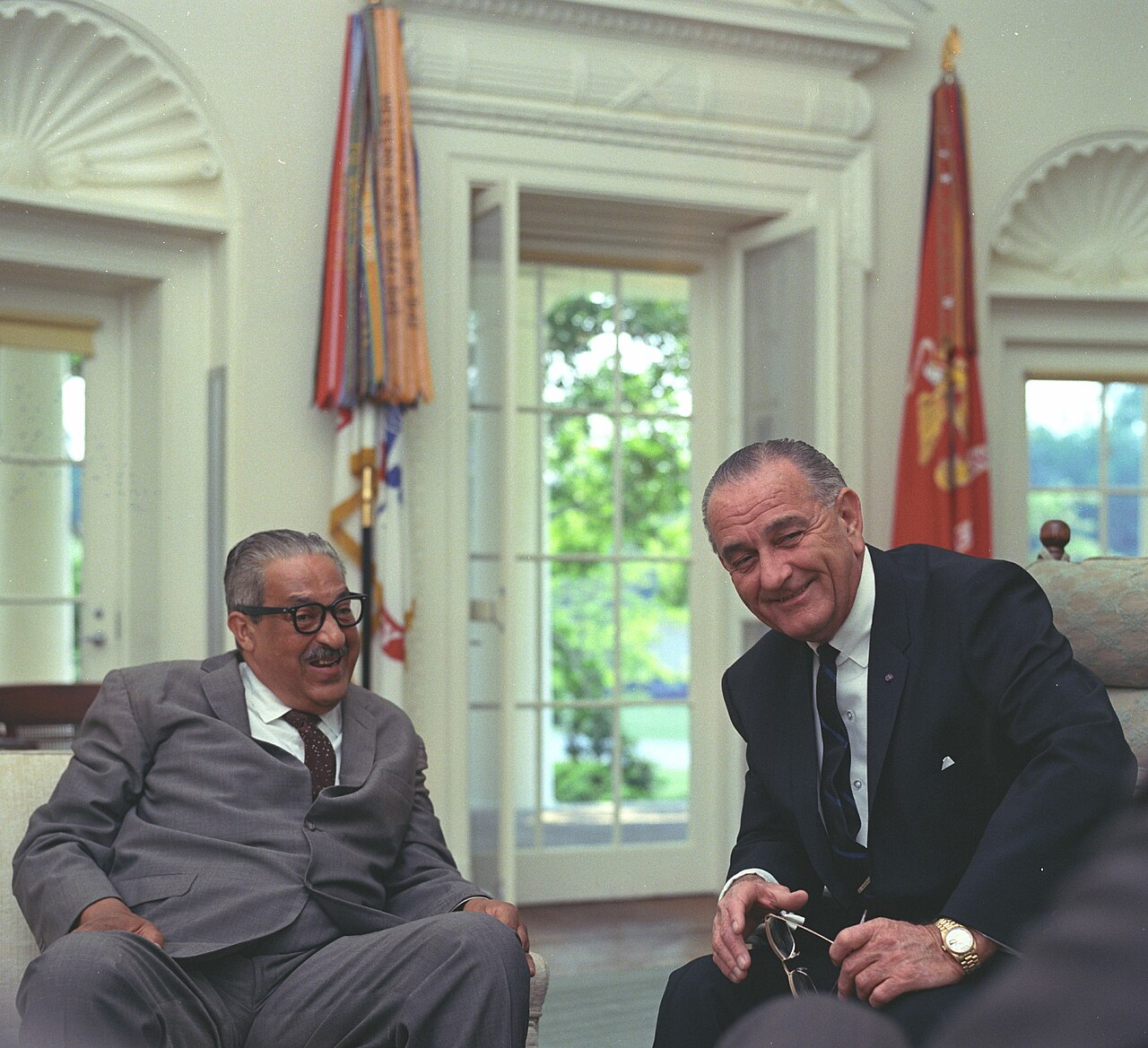
Thurgood Marshall and President Lyndon B. Johnson, June 13, 1967
Frank Wolfe · 13 June 1967
Primary source
Cooper v. Aaron
12 September 1958
Ready when you are
Start chatting with Thurgood Marshall now.
20 messages free · No credit card · Available in 50+ languages.