


Secondary sourcePainting
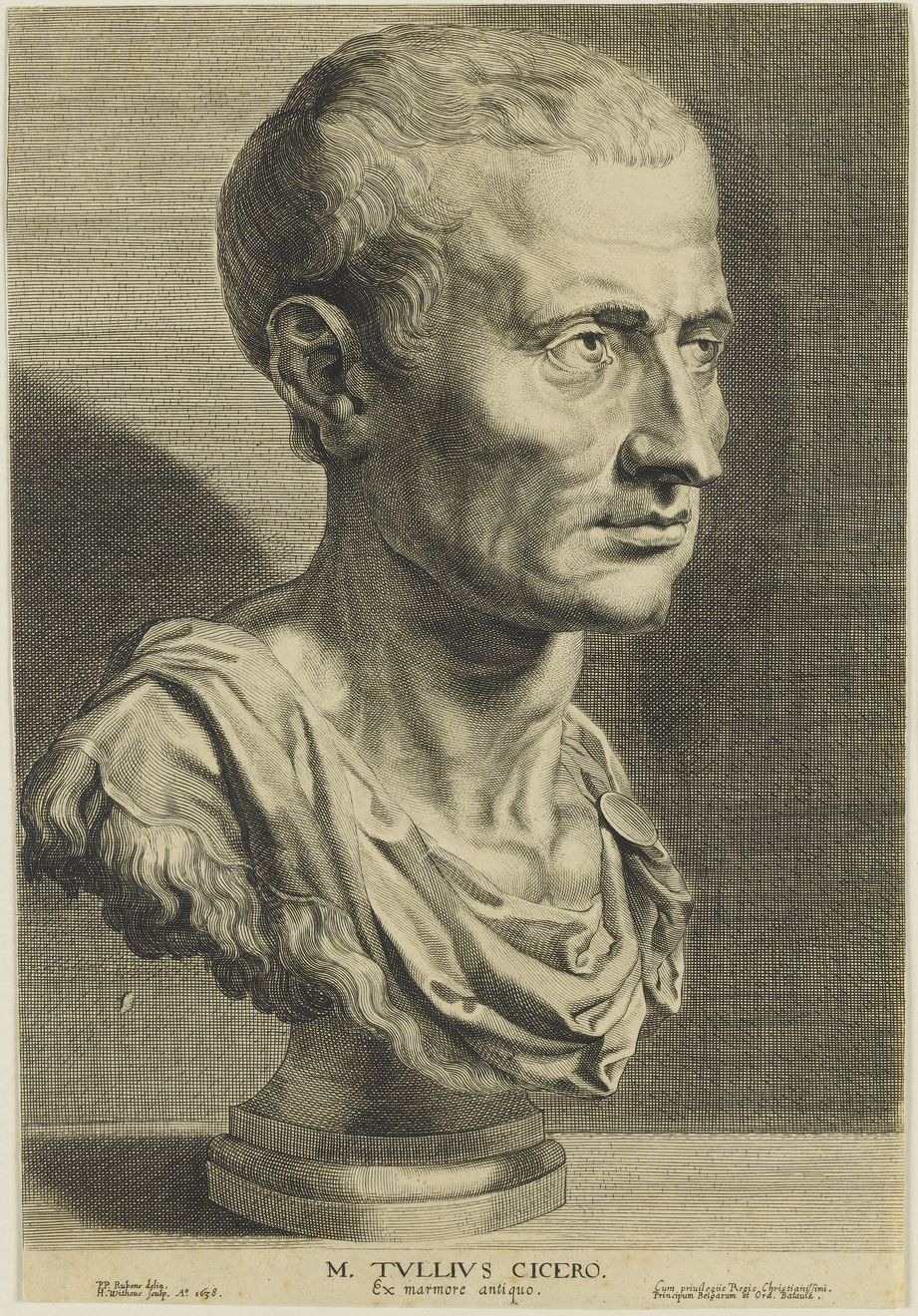
Marcus Tullius Cicero, engraved after antique marble busts
Jan Witdoeck
An engraving by Jan Witdoeck copying ancient marble busts of Cicero, made many centuries after he lived.
A 17th-century engraving copying ancient busts, showing how Cicero's image was preserved and spread after his death.
About this source
What it is
This engraving by Jan Witdoeck shows a bust of Cicero in three-quarter view, based on ancient marble sculptures of him. The Latin caption states it was made 'from an ancient marble'. It is held by the State Gallery Stuttgart in Germany.
Why it matters
Artists like Witdoeck worked from surviving Roman busts to create portraits that circulated widely in print form. This helped spread a standard image of Cicero across Europe, long after his own time, showing how his reputation as orator and statesman endured.
Look closer
- What clues in the image tell you it was copied from a sculpture rather than drawn from a living person?
- Why might an artist in the 1600s want to make a print of an ancient Roman statesman?
- What does the Latin caption add that the image alone does not?
This painting is part of the curated material that grounds the AI version of Cicero on Humy.ai — when students ask about related events, the AI can quote it and cite it.
Ready when you are
Start chatting with Cicero now.
20 messages free · No credit card · Available in 50+ languages.