


Primary sourceDocument1976
Massachusetts Board of Retirement v. Murgia
Thurgood Marshall · 1976
A 1976 dissenting opinion by Justice Thurgood Marshall arguing that Massachusetts's mandatory retirement of state police officers at age 50 deserved stricter constitutional review.
Shows Marshall as a dissenting justice, arguing against the Court's use of the lowest level of review in a case about age-based retirement.
About this source
What it is
This is a dissenting opinion written by Justice Thurgood Marshall in Massachusetts Board of Retirement v. Murgia, decided in 1976 and reported at 427 U.S. 307. Marshall disagrees with the Court's ruling that Massachusetts could require state police officers who had been proved medically fit for service to retire once they reached age 50. The text is preserved on Wikisource.
Why it matters
Marshall argues that the right to work is closely tied to personal freedom, and that the treatment of older people in the United States has not been free of discrimination. The majority applied the lowest level of equal protection review and held that the elderly are not a suspect class. Marshall's dissent shows how the justices disagreed about how far the Fourteenth Amendment protects people from age-based rules that end their careers.
Look closer
- Which earlier case does Marshall quote to describe the right to work, and why does that matter to his argument?
- Marshall writes that the Court found the law not to be 'wholly unrelated' to its goal. What does that phrase suggest about how lenient the review was?
- What does this dissent leave out about the state's reasons for choosing age 50?
This document is part of the curated material that grounds the AI version of Thurgood Marshall on Humy.ai — when students ask about related events, the AI can quote it and cite it.
More Thurgood Marshall sources
Meet the AI Thurgood Marshall →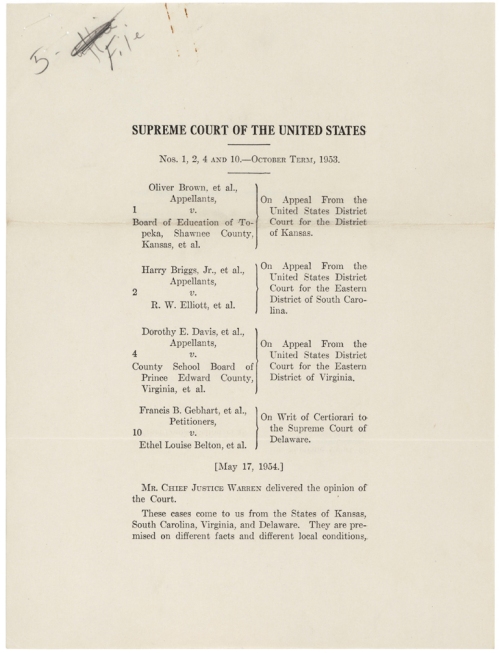 Document
Primary source
Brown v. Board of Education
Earl Warren · 17 May 1954
 Painting
Primary source
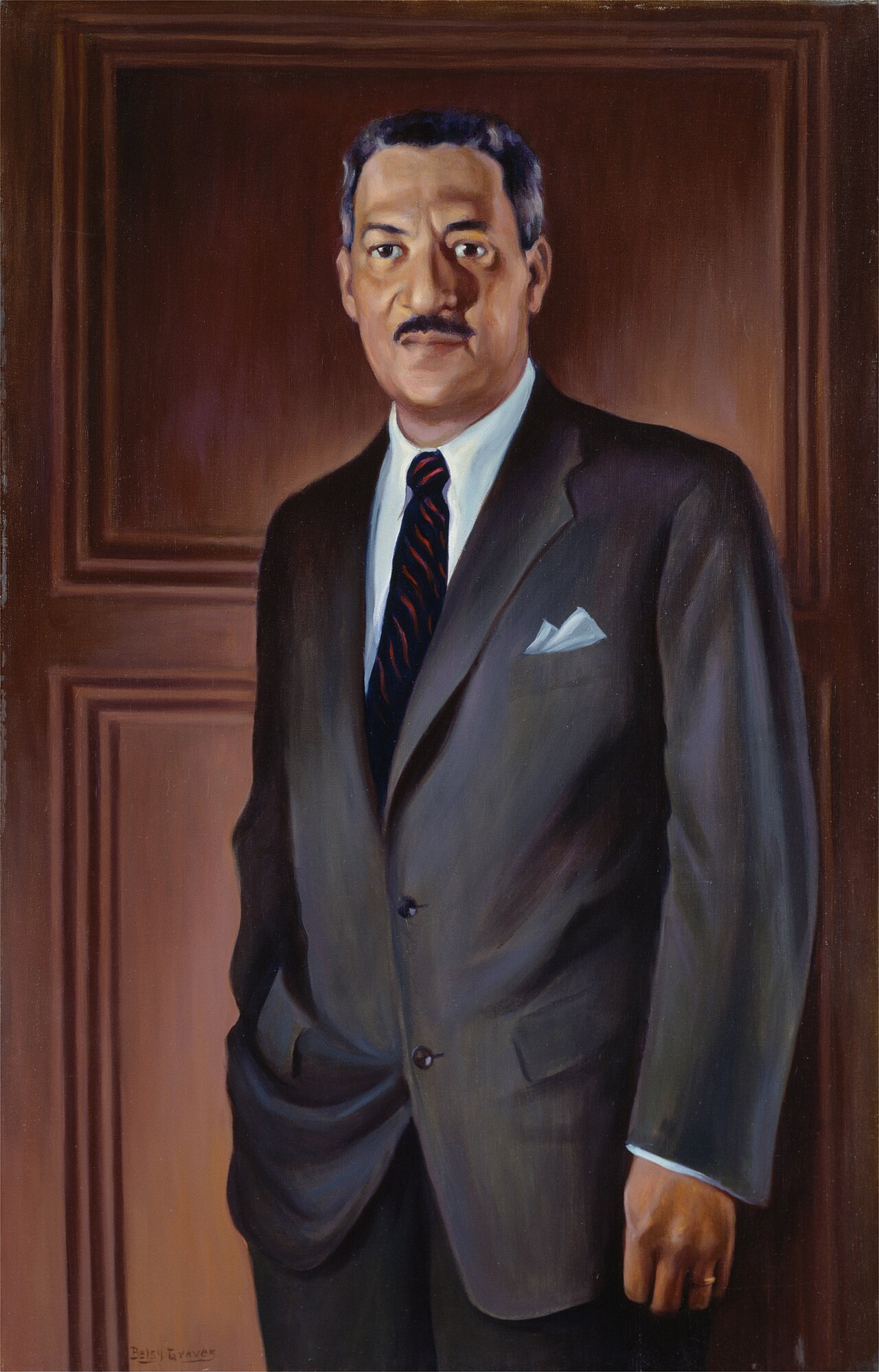
Thurgood Marshall
Betsy Graves Reyneau · 1956
 Photograph
Primary source
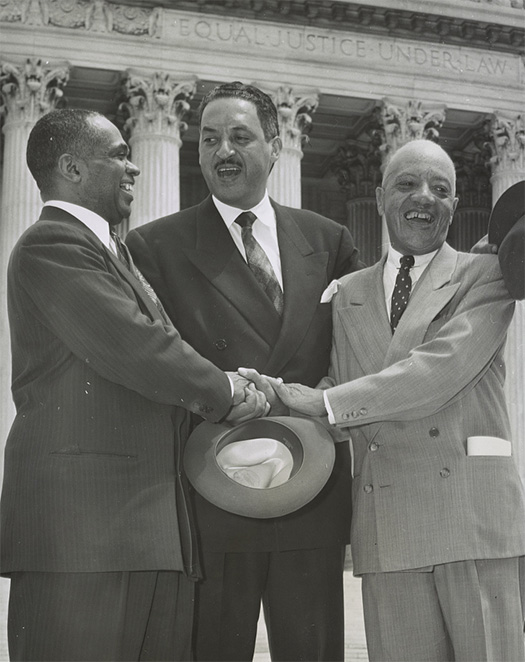
George Edward Chalmer Hayes, Thurgood Marshall, and James Nabrit in 1954 winning Brown case
1954
 Photograph
Primary source
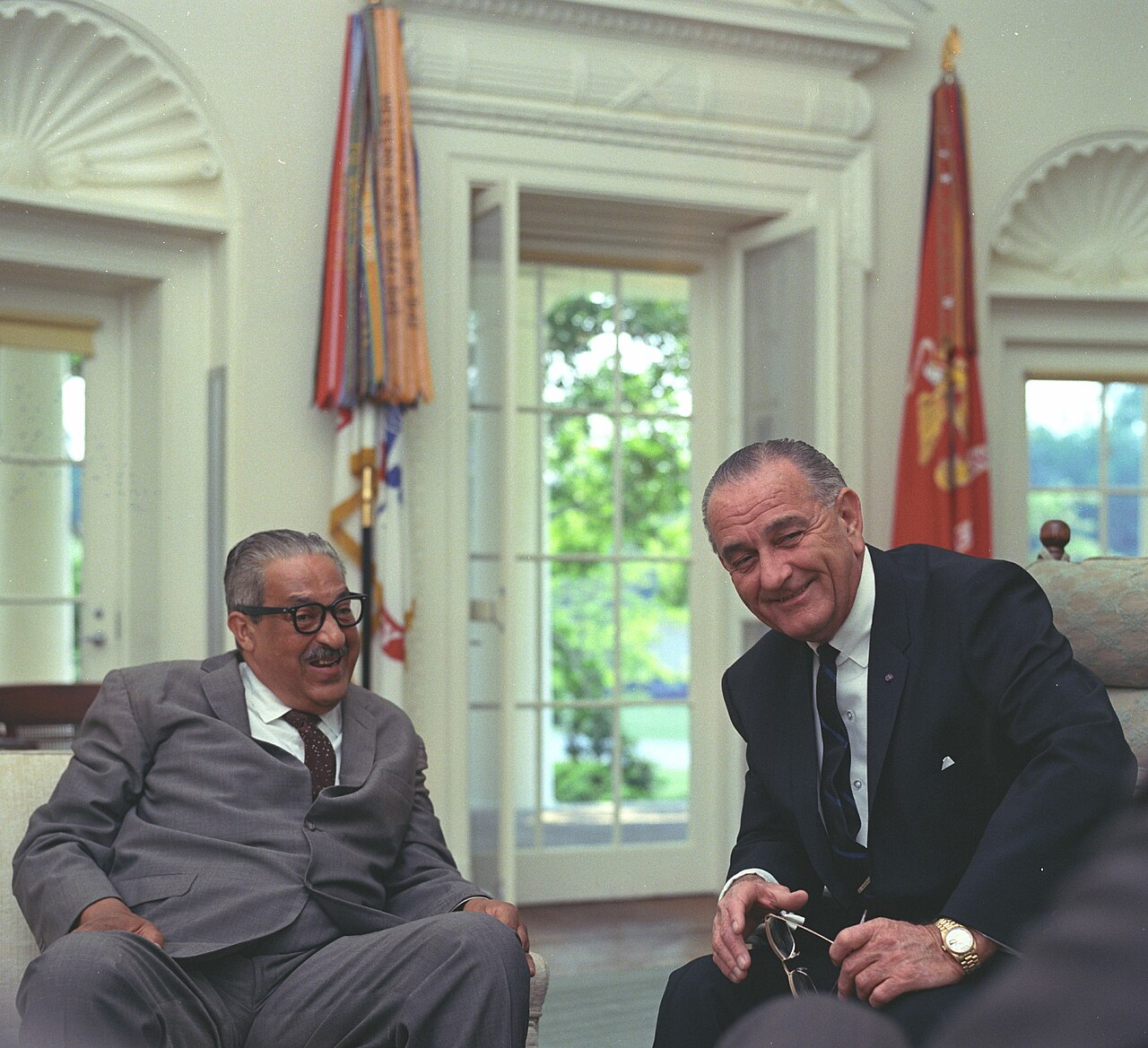
Thurgood Marshall and President Lyndon B. Johnson, June 13, 1967
Frank Wolfe · 13 June 1967
Primary source
Cooper v. Aaron
12 September 1958
Ready when you are
Start chatting with Thurgood Marshall now.
20 messages free · No credit card · Available in 50+ languages.