


Secondary sourceBook1817
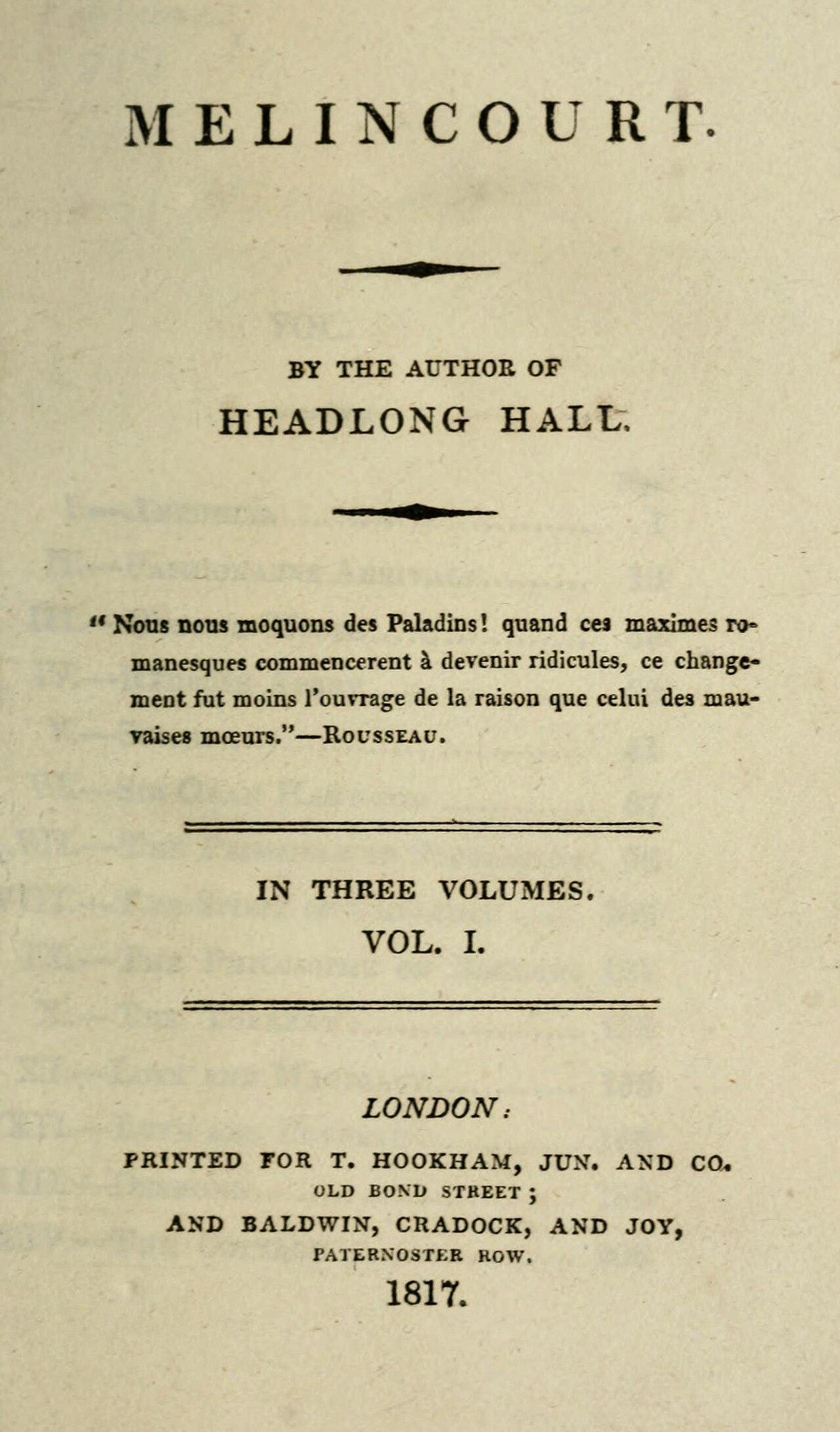
Melincourt
Thomas Love Peacock · 1817
Thomas Love Peacock's 1817 satirical novel, which mocked Malthus in the character of the gloomy 'Mr. Fax'.
Peacock satirised Malthus as the gloomy character 'Mr. Fax' in this novel, showing how his ideas were mocked in literary circles.
About this source
What it is
Melincourt is the second novel by Thomas Love Peacock, published in 1817. It is a satirical story built around an orangutan, Sir Oran Haut-ton, who is put forward as a candidate for Parliament, and includes a cast of characters who mock the intellectual fashions of the day.
Why it matters
Among its targets, the novel caricatures Thomas Robert Malthus as the gloomy character 'Mr. Fax'. The book shows how Malthus's bleak predictions about population and poverty made him a figure of fun and controversy among writers of his own time, not just among economists.
Look closer
- Why might a novelist choose satire, rather than direct argument, to attack someone's ideas?
- What does naming a character 'Mr. Fax' suggest about how Peacock saw Malthus?
- What can a work of fiction tell us about how a real person's ideas were received?
This book is part of the curated material that grounds the AI version of Thomas Malthus on Humy.ai — when students ask about related events, the AI can quote it and cite it.
More Thomas Malthus sources
Meet the AI Thomas Malthus →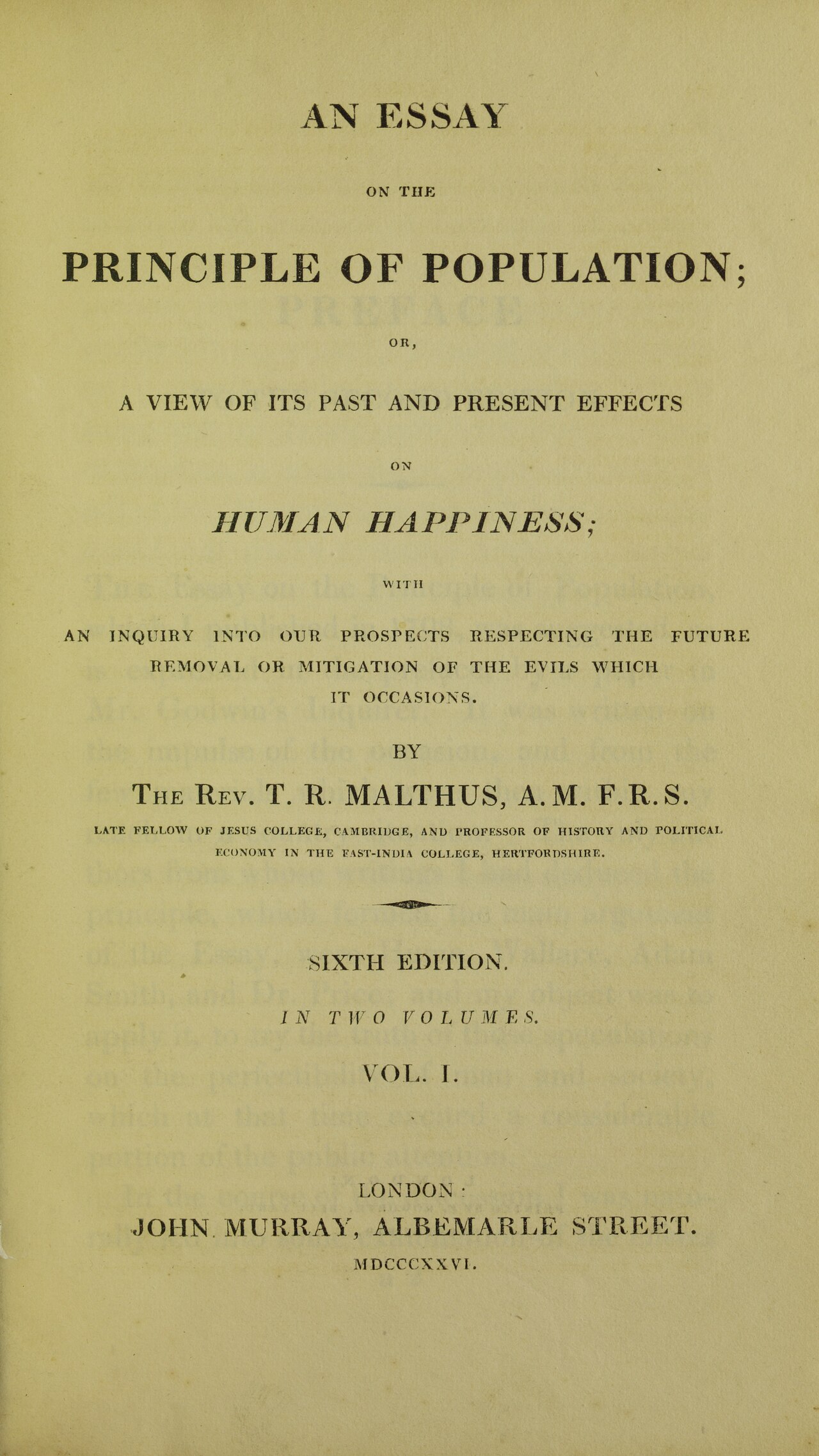 Book
Primary source
An Essay on the Principle of Population
Thomas Robert Malthus · 1798 (6th ed. 1826)
 Painting
Primary source
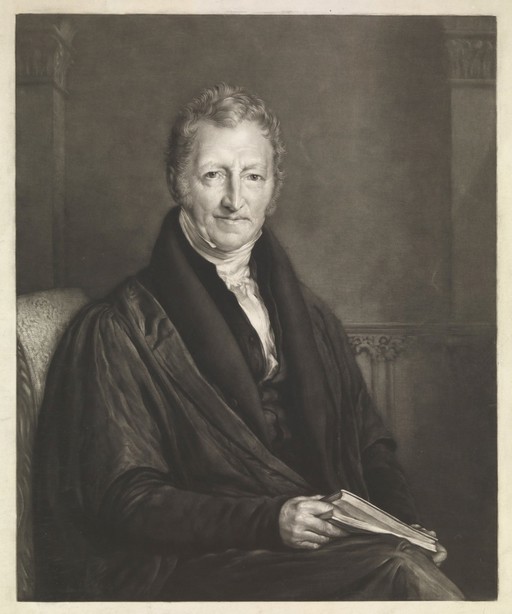
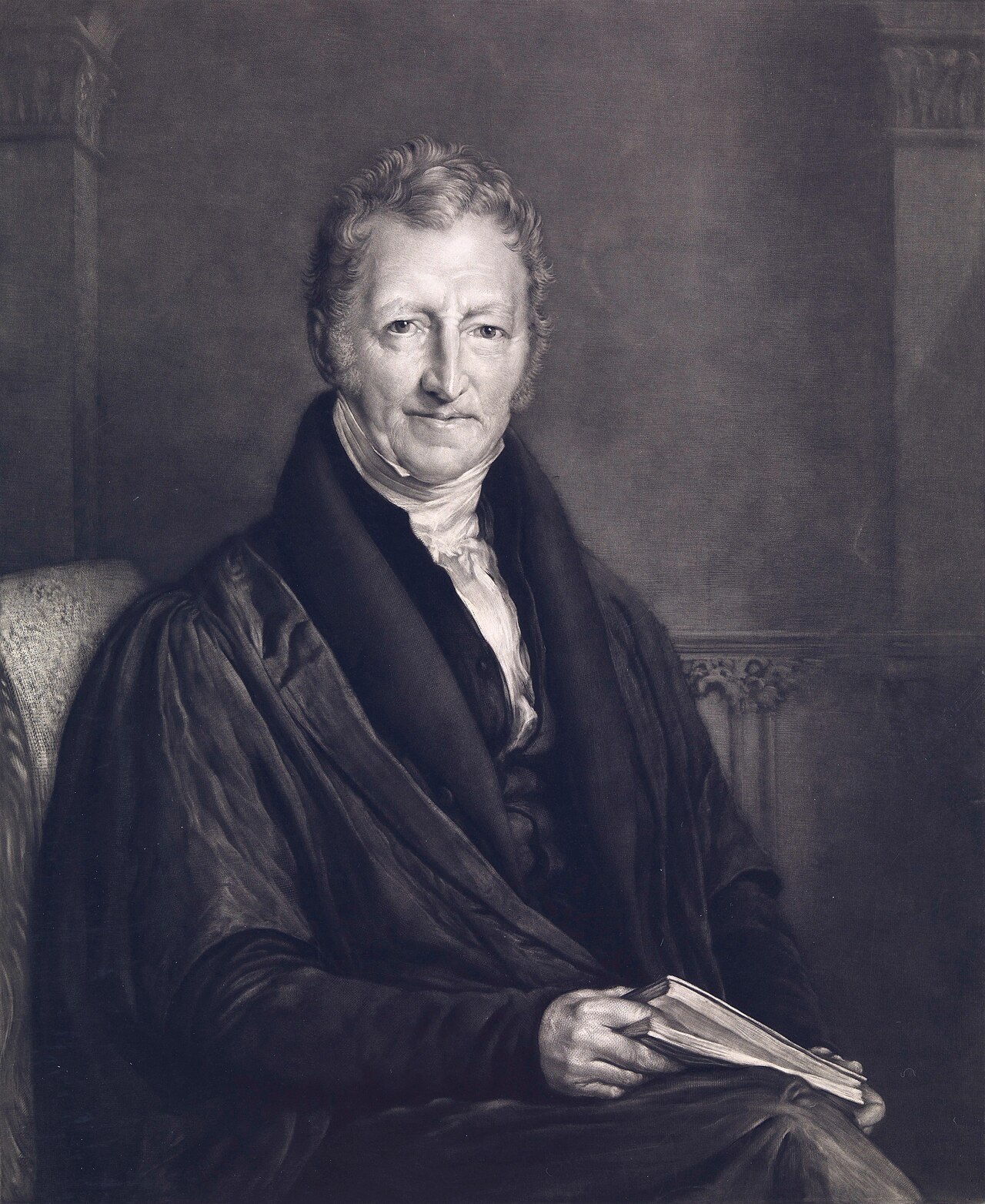
Portrait Print of Thomas Robert Malthus
John Linnell
 Book
Primary source
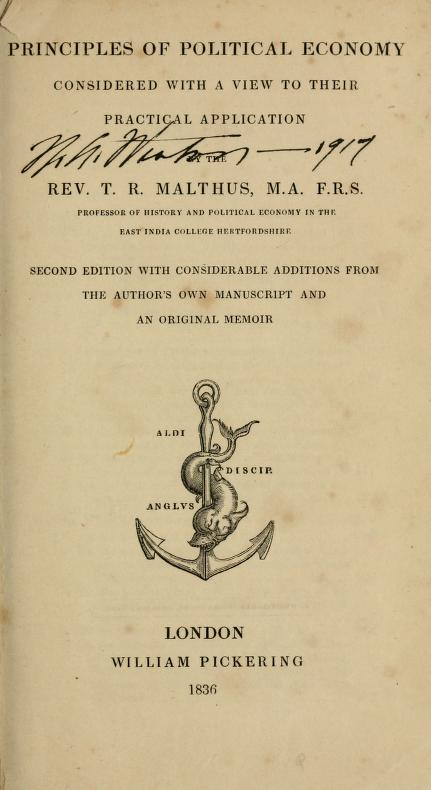
Principles of Political Economy
Thomas Robert Malthus · 1820 (2nd ed. 1836)
 Painting
Primary source
Portrait of Thomas Robert Malthus
John Linnell · after 1833
 Letter
Primary source
Correspondence between Malthus and David Ricardo
Thomas Robert Malthus; David Ricardo · 1811–1823
Ready when you are
Start chatting with Thomas Malthus now.
20 messages free · No credit card · Available in 50+ languages.