


Secondary sourceArtifact
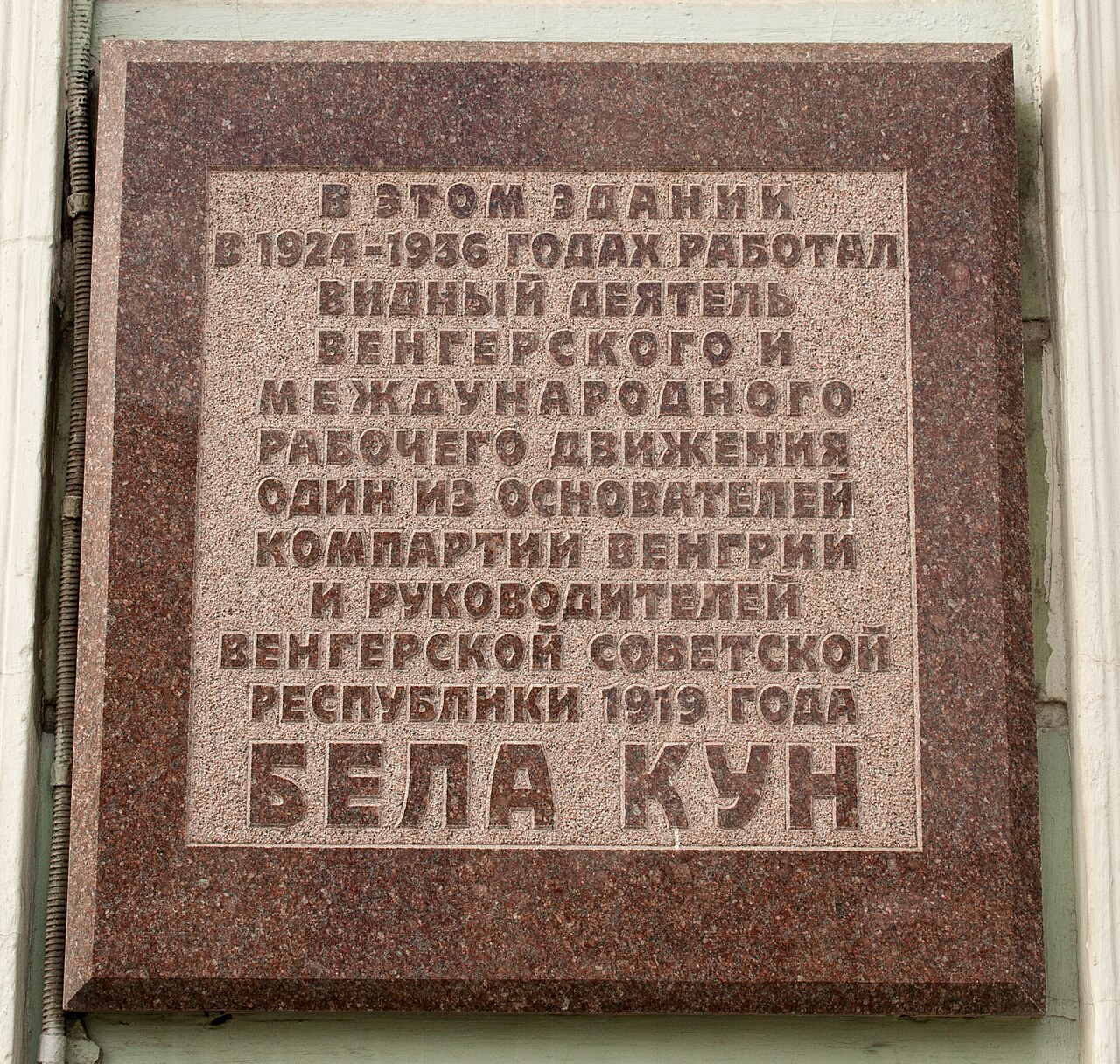
Memorial Plaque of Béla Kun, Moscow
A Soviet-era plaque in Moscow marking the building where Béla Kun worked from 1924 to 1936, reflecting his later career and posthumous rehabilitation.
This plaque commemorates Kun's work in Moscow and his later Soviet rehabilitation after his execution in the Great Purge.
About this source
What it is
A square granite memorial plaque mounted on a building wall in Moscow, photographed in 2009. Its raised Cyrillic text states that Béla Kun worked in this building between 1924 and 1936, ending with his name in large letters.
Why it matters
After fleeing Hungary, Kun worked within the Soviet Communist system until he was arrested and executed during Stalin's Great Purge. This plaque, installed after his official rehabilitation in the Soviet Union following 1956, shows how the Soviet state later chose to honour him despite his earlier persecution.
Look closer
- Why might a plaque be installed decades after someone's death?
- What does the plaque's wording reveal, and what does it not mention about Kun's execution?
- How do public memorials change depending on political circumstances?
This artifact is part of the curated material that grounds the AI version of Béla Kun on Humy.ai — when students ask about related events, the AI can quote it and cite it.
More Béla Kun sources
Meet the AI Béla Kun →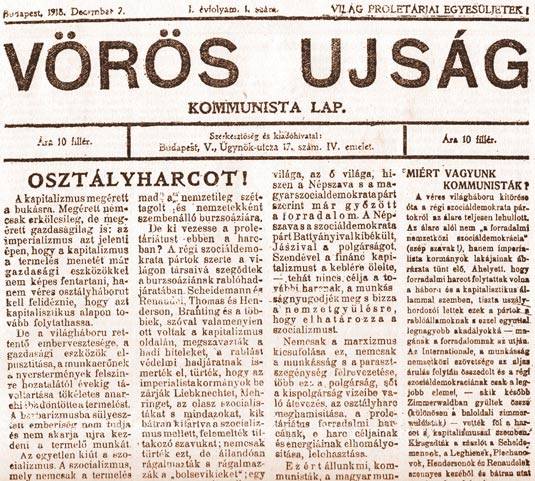 Newspaper article
Primary source
Vörös Újság: First Editorial
Béla Kun · 7 December 1918
 Document
Primary source
Treaty of Trianon
4 June 1920
 Photograph
Primary source
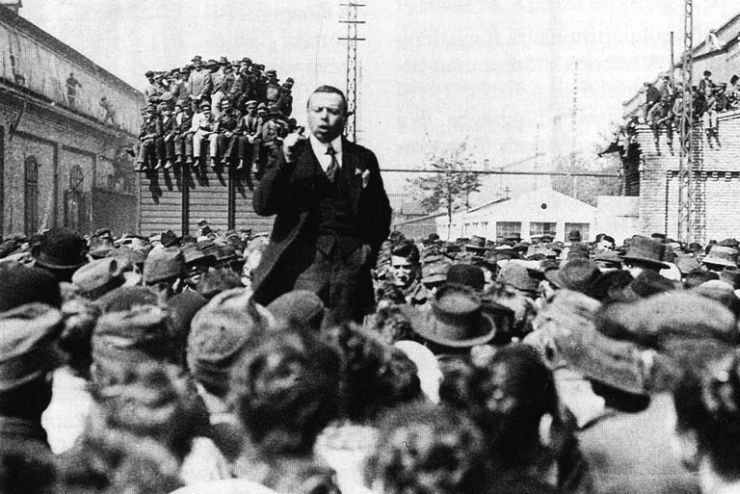
Béla Kun, Leader of the 1919 Hungarian Revolution
1919
 Photograph
Primary source
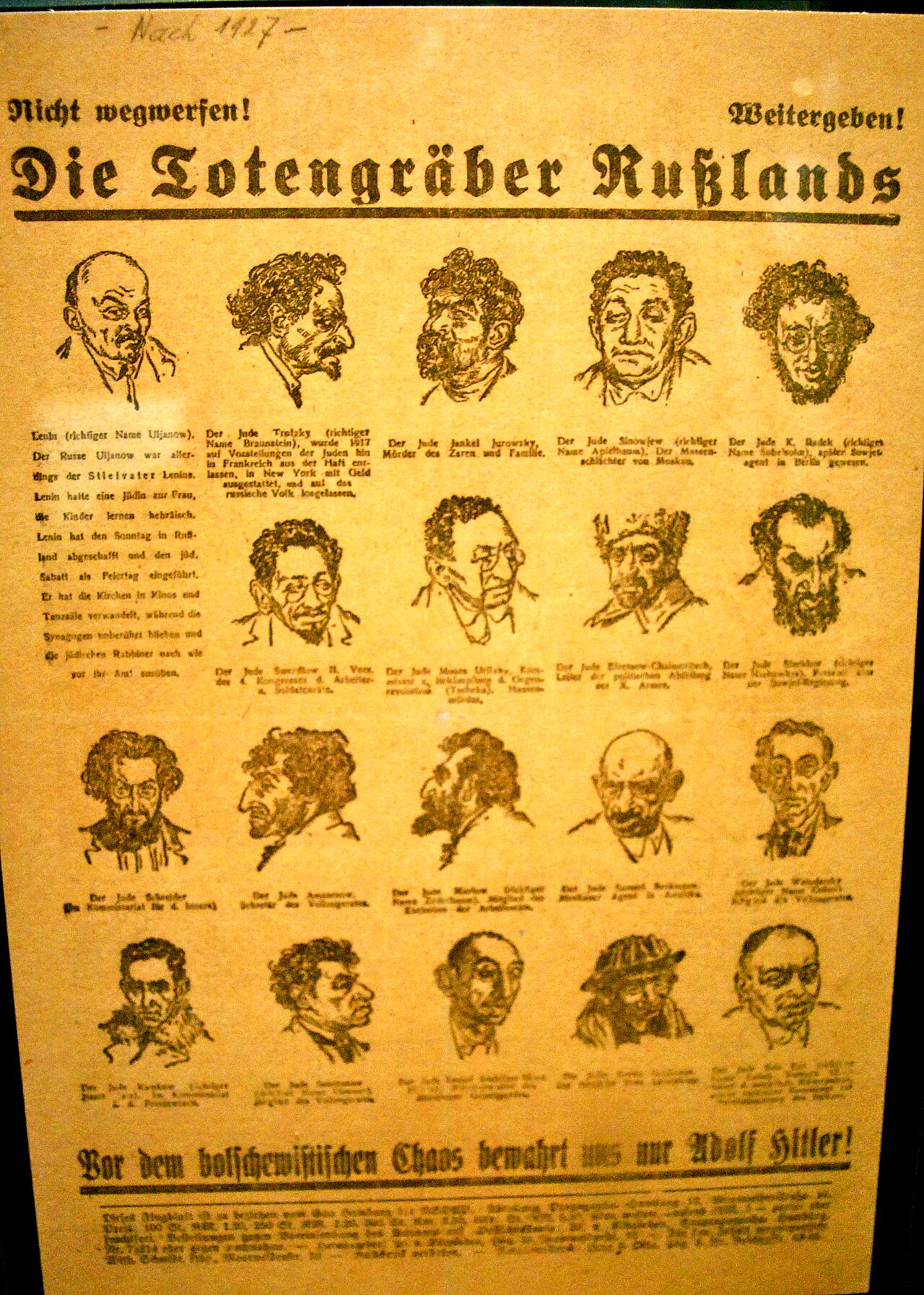
Die Totengräber Russlands
March 1937
 Photograph
Primary source
Sándor Garbai and Béla Kun, Leaders of the Hungarian Soviet Republic
1919
Ready when you are
Start chatting with Béla Kun now.
20 messages free · No credit card · Available in 50+ languages.