


Secondary sourceBook1825
Mr. Malthus
William Hazlitt · 1825
William Hazlitt's 1825 essay portrait of Malthus, published in The Spirit of the Age, offering a hostile contemporary assessment of his ideas.
A contemporary radical's hostile written portrait of Malthus, showing how controversial his ideas were in his own time.
About this source
What it is
This is an essay titled 'Mr. Malthus', written by the radical critic William Hazlitt and published in 1825 as part of his collection The Spirit of the Age, a series of character sketches of leading figures of his time.
Why it matters
Hazlitt was a contemporary radical writer who disagreed strongly with Malthus's ideas about population. The essay shows how controversial and talked-about Malthus's theories were during his own lifetime, and how opponents saw him as spreading pessimism about human progress. It reveals the intensity of political debate in early 19th-century Britain over poverty, population and economics.
Look closer
- What words does Hazlitt use to describe Malthus's reputation?
- Is this a balanced account, or is it written to persuade the reader of a particular view?
- What does the essay suggest about how seriously Malthus's ideas were taken in his own time?
This book is part of the curated material that grounds the AI version of Thomas Malthus on Humy.ai — when students ask about related events, the AI can quote it and cite it.
More Thomas Malthus sources
Meet the AI Thomas Malthus →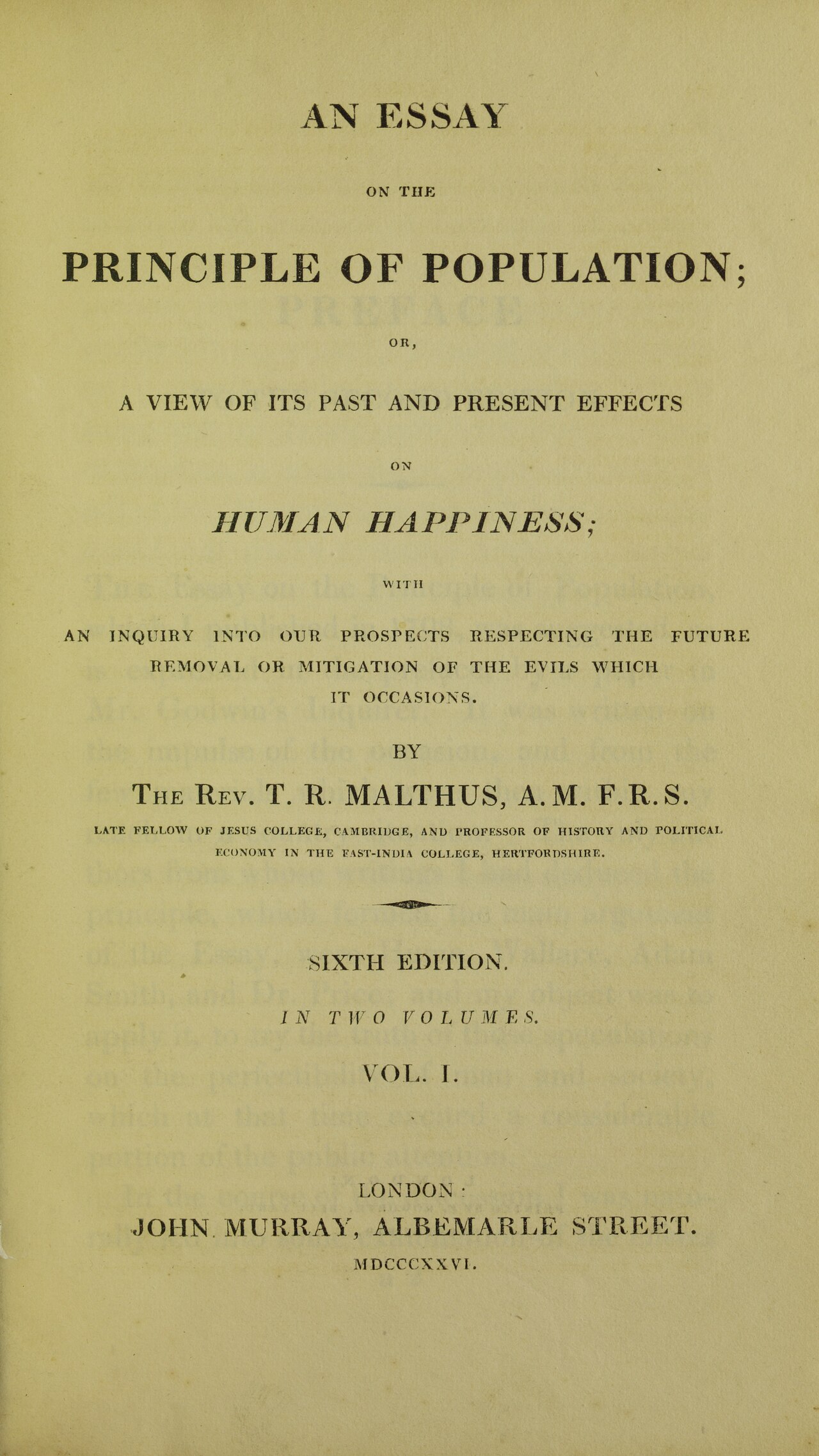 Book
Primary source
An Essay on the Principle of Population
Thomas Robert Malthus · 1798 (6th ed. 1826)
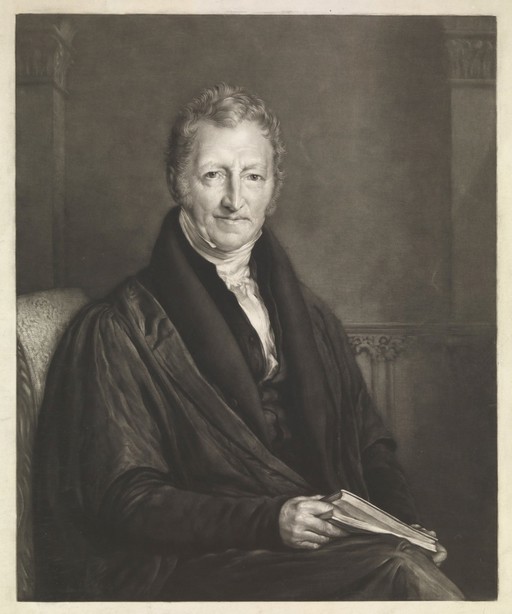 Painting
Primary source
Portrait Print of Thomas Robert Malthus
John Linnell
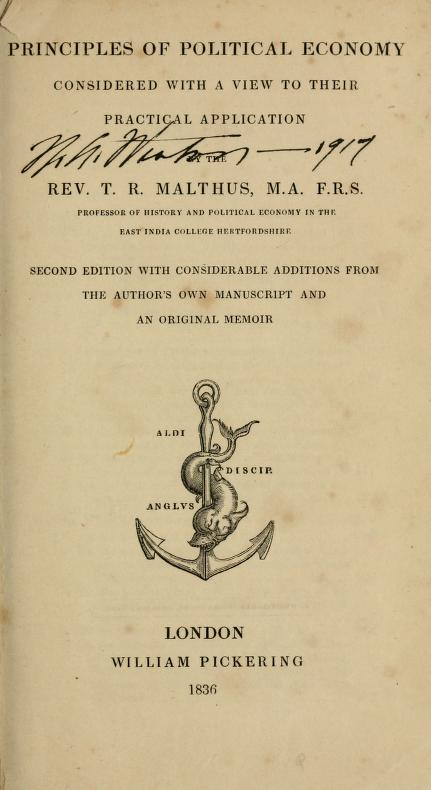 Book
Primary source
Principles of Political Economy
Thomas Robert Malthus · 1820 (2nd ed. 1836)
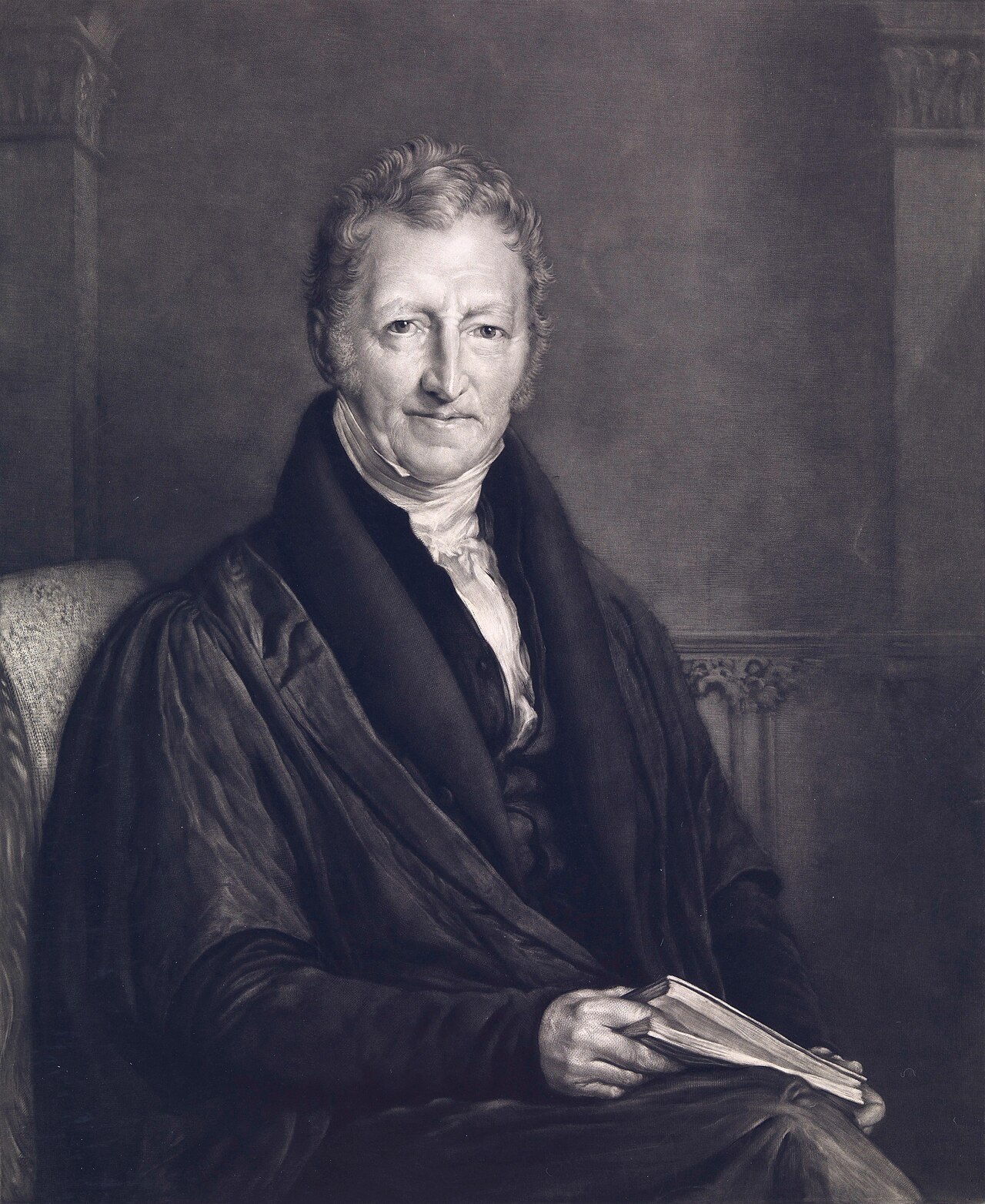 Painting
Primary source
Portrait of Thomas Robert Malthus
John Linnell · after 1833
 Letter
Primary source
Correspondence between Malthus and David Ricardo
Thomas Robert Malthus; David Ricardo · 1811–1823
Ready when you are
Start chatting with Thomas Malthus now.
20 messages free · No credit card · Available in 50+ languages.