


Secondary sourcePainting1876
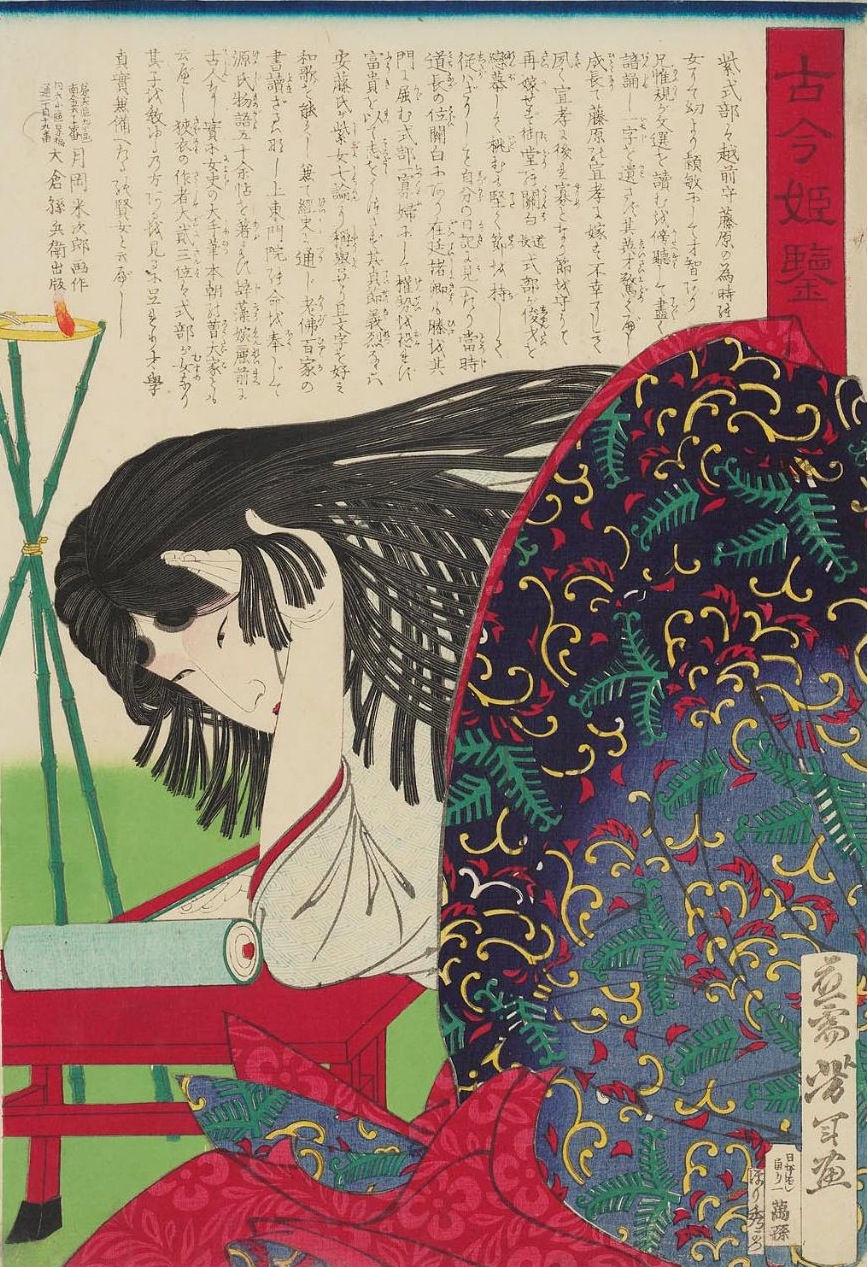
Murasaki Shikibu, Woodblock Print by Yoshitoshi
Tsukioka Yoshitoshi · 1876
An 1876 Meiji-era woodblock print by Tsukioka Yoshitoshi portraying Murasaki Shikibu at her writing desk.
This Meiji-era print shows Murasaki Shikibu still celebrated as a defining figure of Japanese literature long after her death.
About this source
What it is
This woodblock print, made in 1876 by Tsukioka Yoshitoshi, shows a woman with long black hair hanging over her face, seated at a red desk beside a scroll and a lamp stand, wearing a patterned blue robe. Vertical text and a title cartouche appear in the upper area.
Why it matters
Made almost 850 years after Murasaki Shikibu's lifetime, this print belongs to the Meiji period, when traditional Japanese culture and historical figures were often revisited in art. It shows her continuing importance as a symbol of Japanese literature even as Japan was rapidly modernizing.
Look closer
- What mood is created by showing her hair covering her face?
- Why might an artist in the 1870s choose to depict a writer from centuries earlier?
- What does the writing desk and scroll suggest about how she is remembered?
This painting is part of the curated material that grounds the AI version of Murasaki Shikibu on Humy.ai — when students ask about related events, the AI can quote it and cite it.
More Murasaki Shikibu sources
Meet the AI Murasaki Shikibu →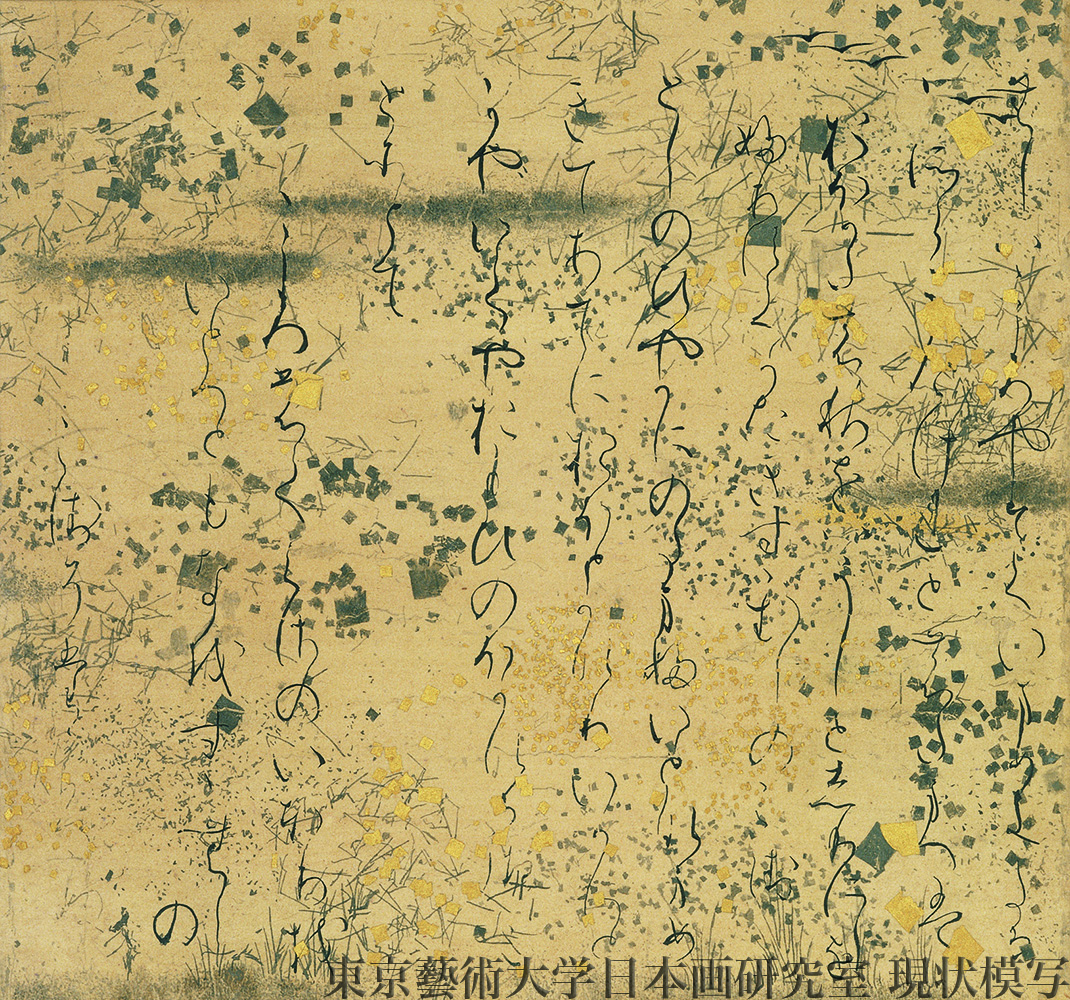 Book
Primary source
The Tale of Genji
Murasaki Shikibu · c. 1010
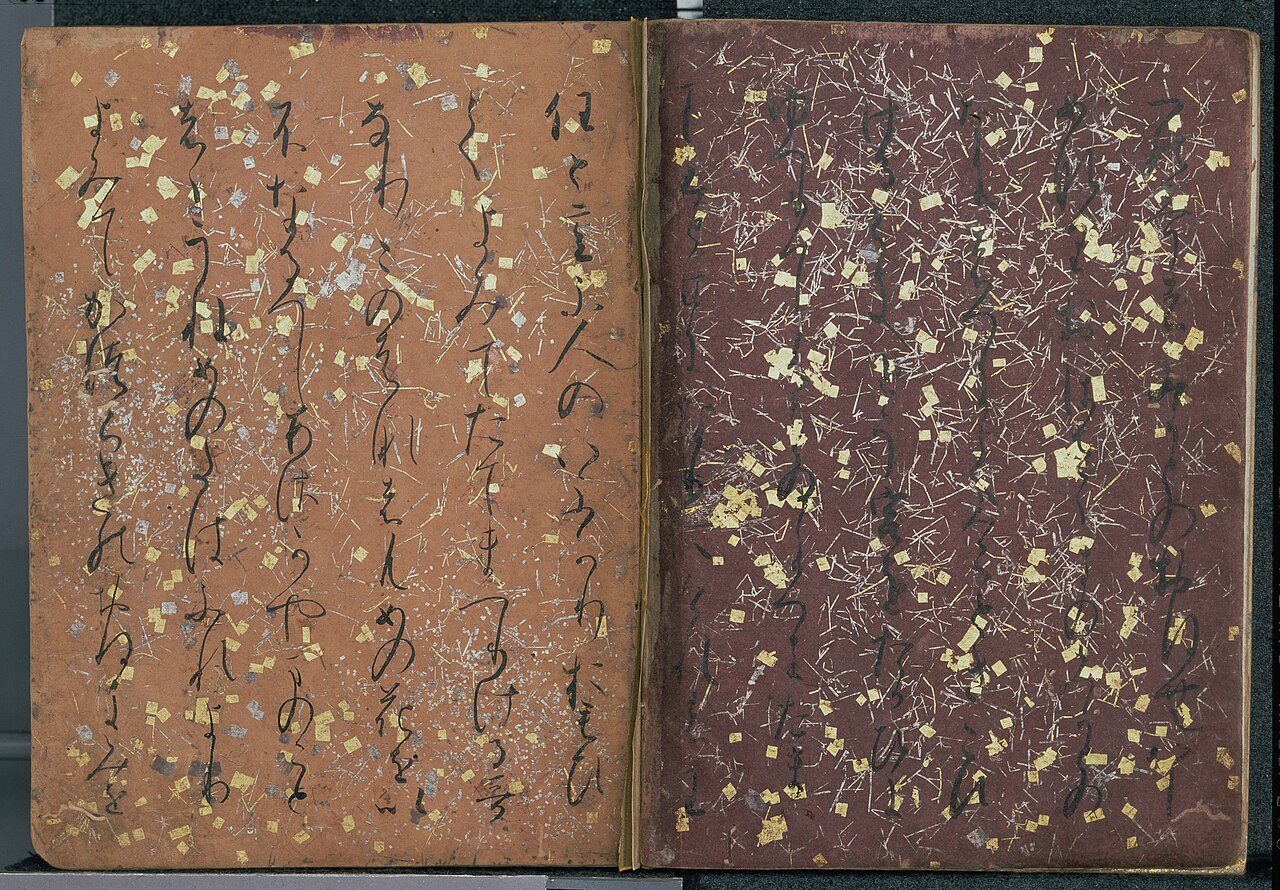 Book
Primary source
Kokin Wakashū
Ki no Tsurayuki and compilers · c. 905-920
Primary source
The Diary of Lady Murasaki
Murasaki Shikibu · c. 1008–1010
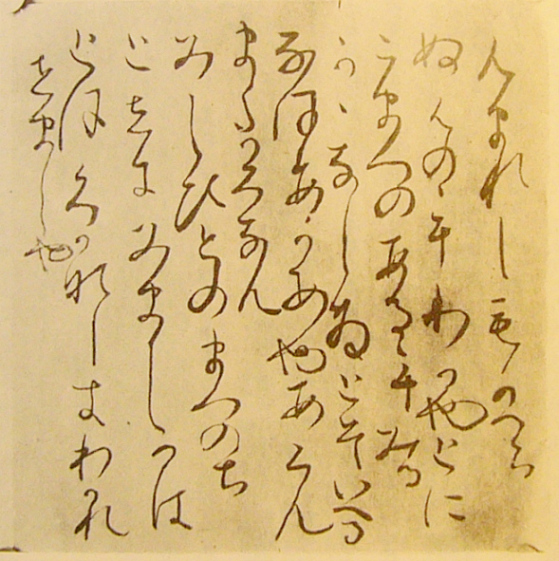 Diary entry
Primary source
Tosa Nikki
Ki no Tsurayuki · 935 (copy 13th century)
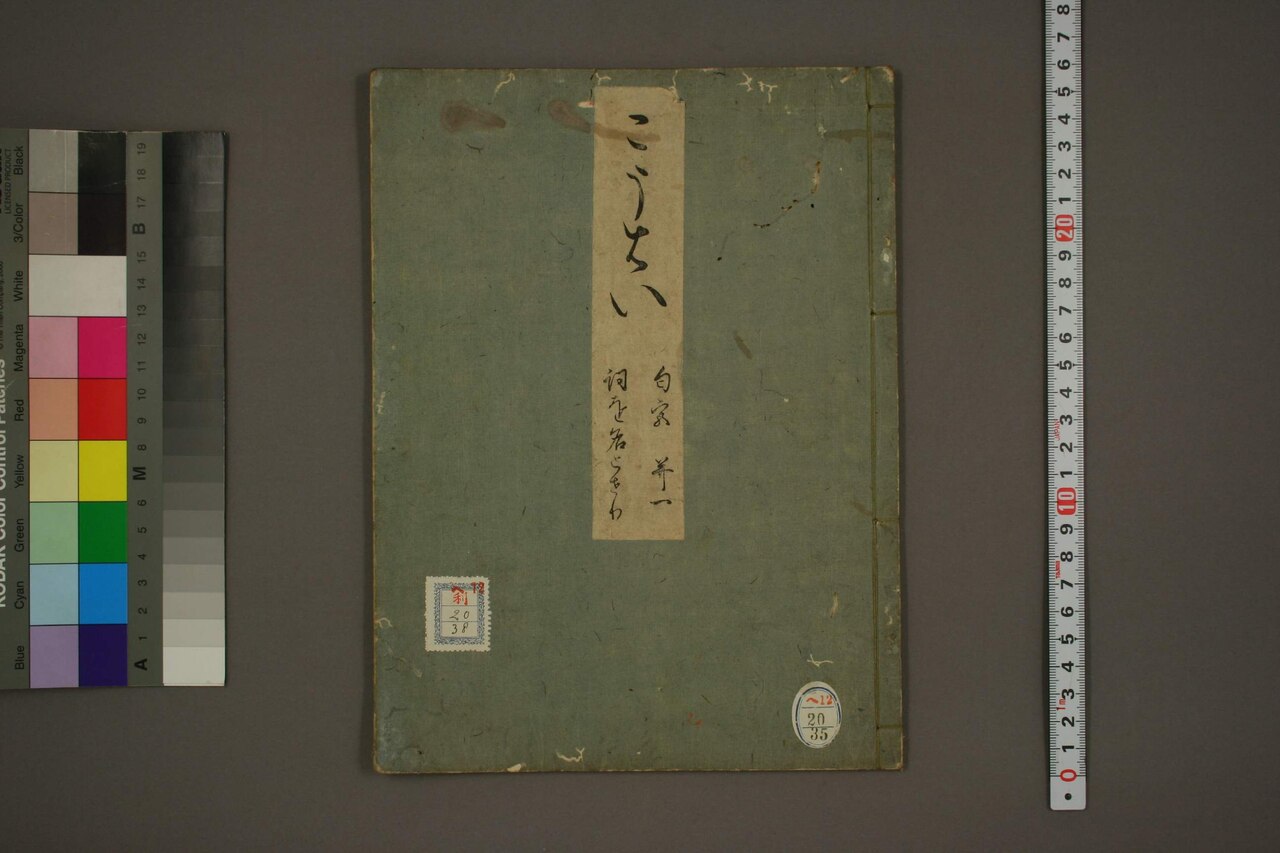 Book
Secondary source
Eiri Genji Monogatari
Yamamoto Shunshō · 1650
Ready when you are
Start chatting with Murasaki Shikibu now.
20 messages free · No credit card · Available in 50+ languages.