


Secondary sourcePaintingmid-19th century
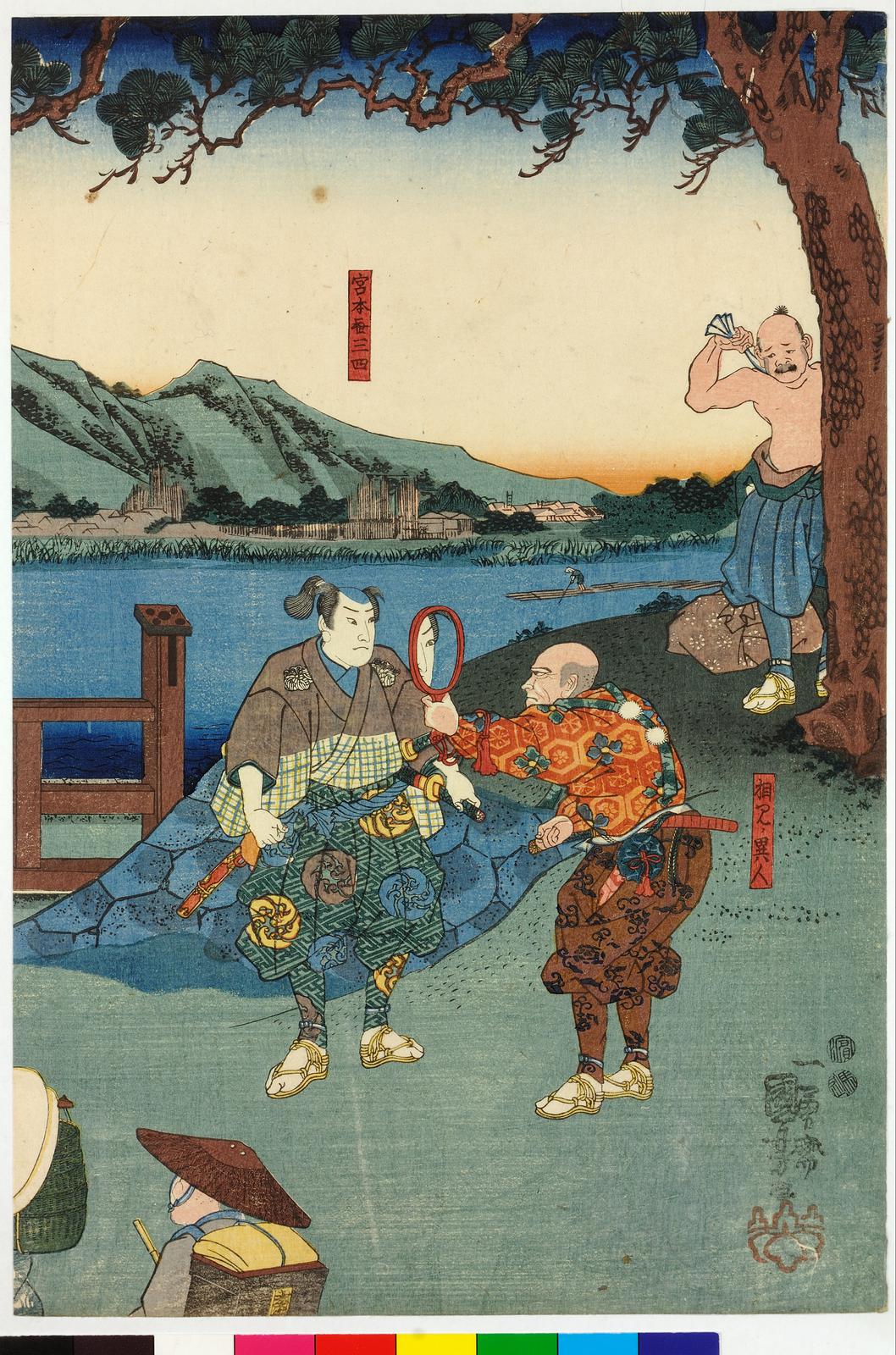
Musashi at a Post-Station
Utagawa Kuniyoshi · mid-19th century
A mid-19th-century Kuniyoshi triptych print showing Miyamoto Musashi among travellers at a post-station, being shown a glass by a stranger.
A later legendary depiction of Musashi, showing how his reputation grew into popular art generations after his death.
About this source
What it is
This is a colour woodblock triptych print made by the Japanese artist Utagawa Kuniyoshi in the mid-1800s, published by Fujiokaya Keijiro. It shows Miyamoto Musashi at the centre of a post-station scene, being shown a glass by a stranger while other travellers look on, with a bridge, lake and mountains in the background.
Why it matters
Musashi died in 1645, but this print was made about two centuries later, showing how his legend grew long after his death into popular art and storytelling. It tells us more about how 19th-century Japanese artists like Kuniyoshi imagined and celebrated famous warriors than about the real events of Musashi's life.
Look closer
- What details in the print suggest it is set at a travellers' post-station?
- Why might artists centuries later still want to create dramatic scenes about Musashi?
- What can and can't this image tell us about the real Musashi?
This painting is part of the curated material that grounds the AI version of Musashi Miyamoto on Humy.ai — when students ask about related events, the AI can quote it and cite it.
More Musashi Miyamoto sources
Meet the AI Musashi Miyamoto →

Ready when you are
Start chatting with Musashi Miyamoto now.
20 messages free · No credit card · Available in 50+ languages.