


Primary sourceDocument1971
New York Times v. United States Concurrence
Thurgood Marshall · 1971
Thurgood Marshall's 1971 concurring opinion in the Pentagon Papers case, defending freedom of the press against government censorship.
Marshall's own written concurrence, defending press freedom against government prior restraint in the Pentagon Papers case.
About this source
What it is
This is the concurring opinion written by Justice Thurgood Marshall in the 1971 Supreme Court case New York Times v. United States, known as the Pentagon Papers case. In it, Marshall argues against the government's attempt to stop newspapers from publishing classified material.
Why it matters
Marshall's opinion raises a basic question about the separation of powers: whether the courts or Congress have the authority to make such restrictions, not just whether the press could be stopped. The case is a landmark in American press freedom, and Marshall's reasoning shows his careful, principled approach to constitutional law.
Look closer
- What underlying question does Marshall say is more basic than the one the government raised?
- Why might a judge focus on who has the power to decide, rather than just the outcome?
- How does this opinion relate to freedom of the press today?
This document is part of the curated material that grounds the AI version of Thurgood Marshall on Humy.ai — when students ask about related events, the AI can quote it and cite it.
More Thurgood Marshall sources
Meet the AI Thurgood Marshall →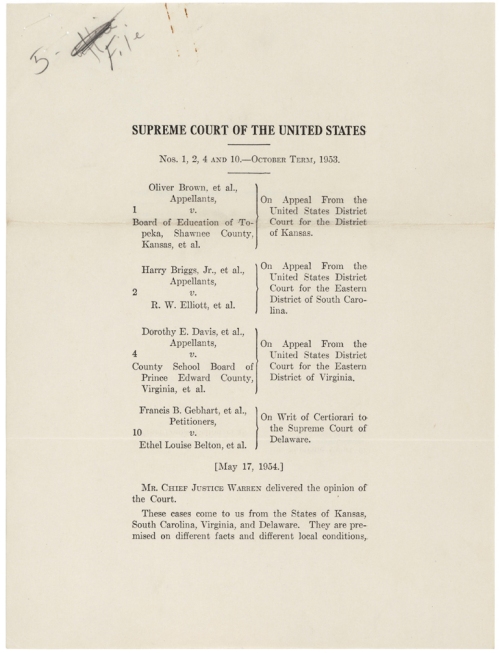 Document
Primary source
Brown v. Board of Education
Earl Warren · 17 May 1954
 Painting
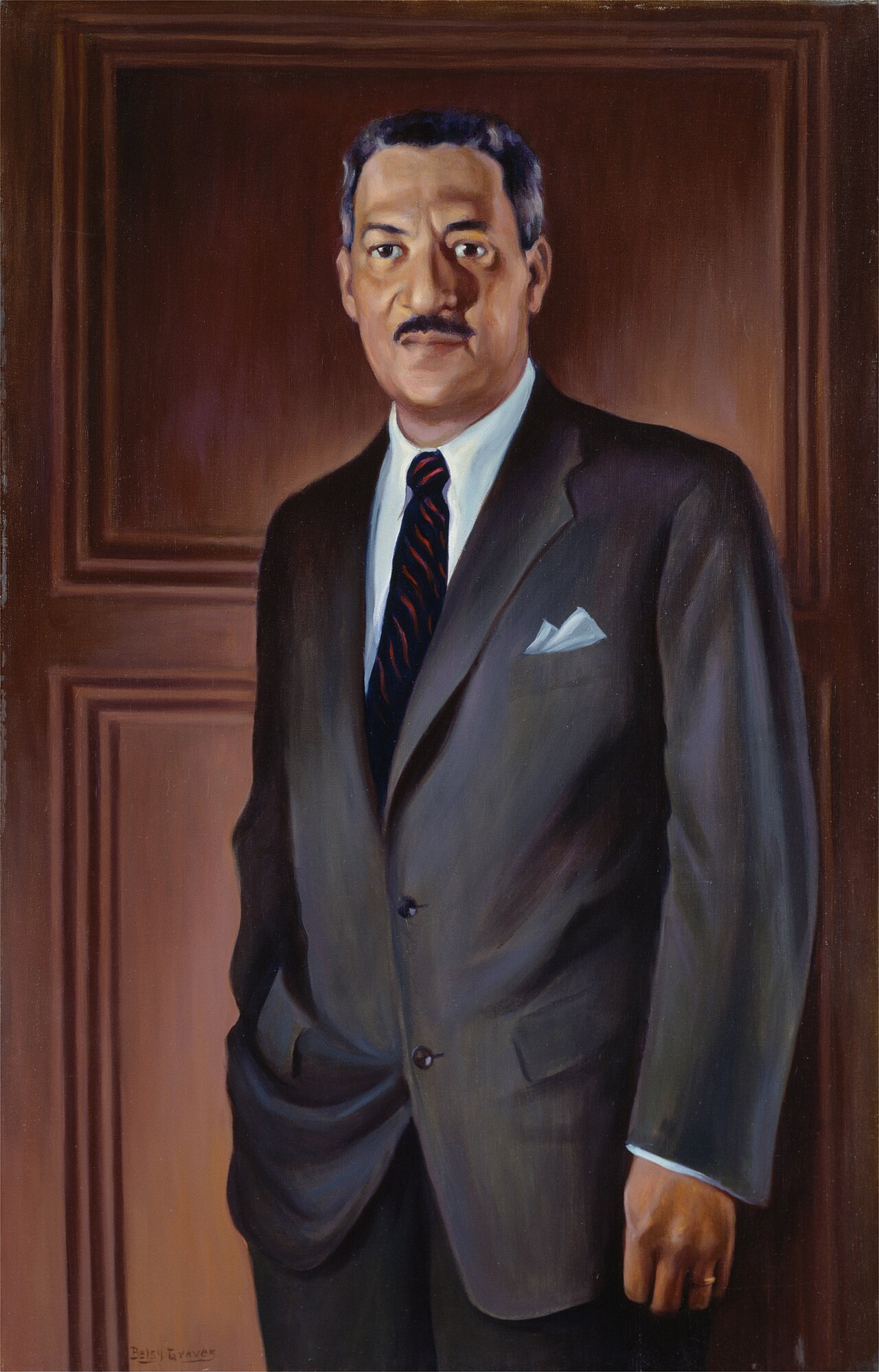
Primary source
Thurgood Marshall
Betsy Graves Reyneau · 1956
 Photograph
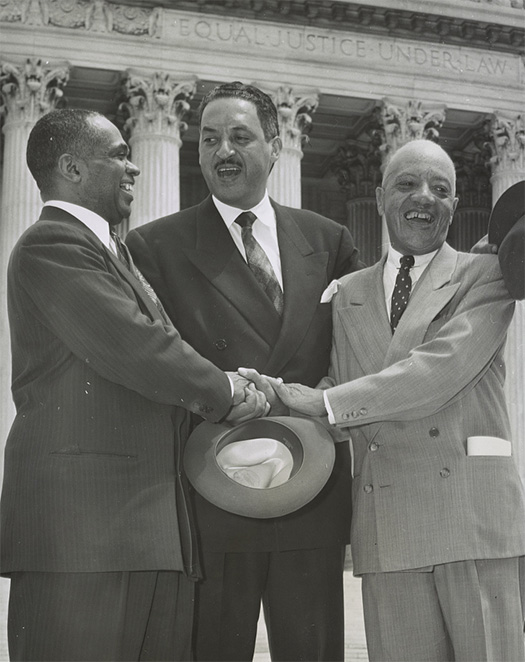
Primary source
George Edward Chalmer Hayes, Thurgood Marshall, and James Nabrit in 1954 winning Brown case
1954
 Photograph
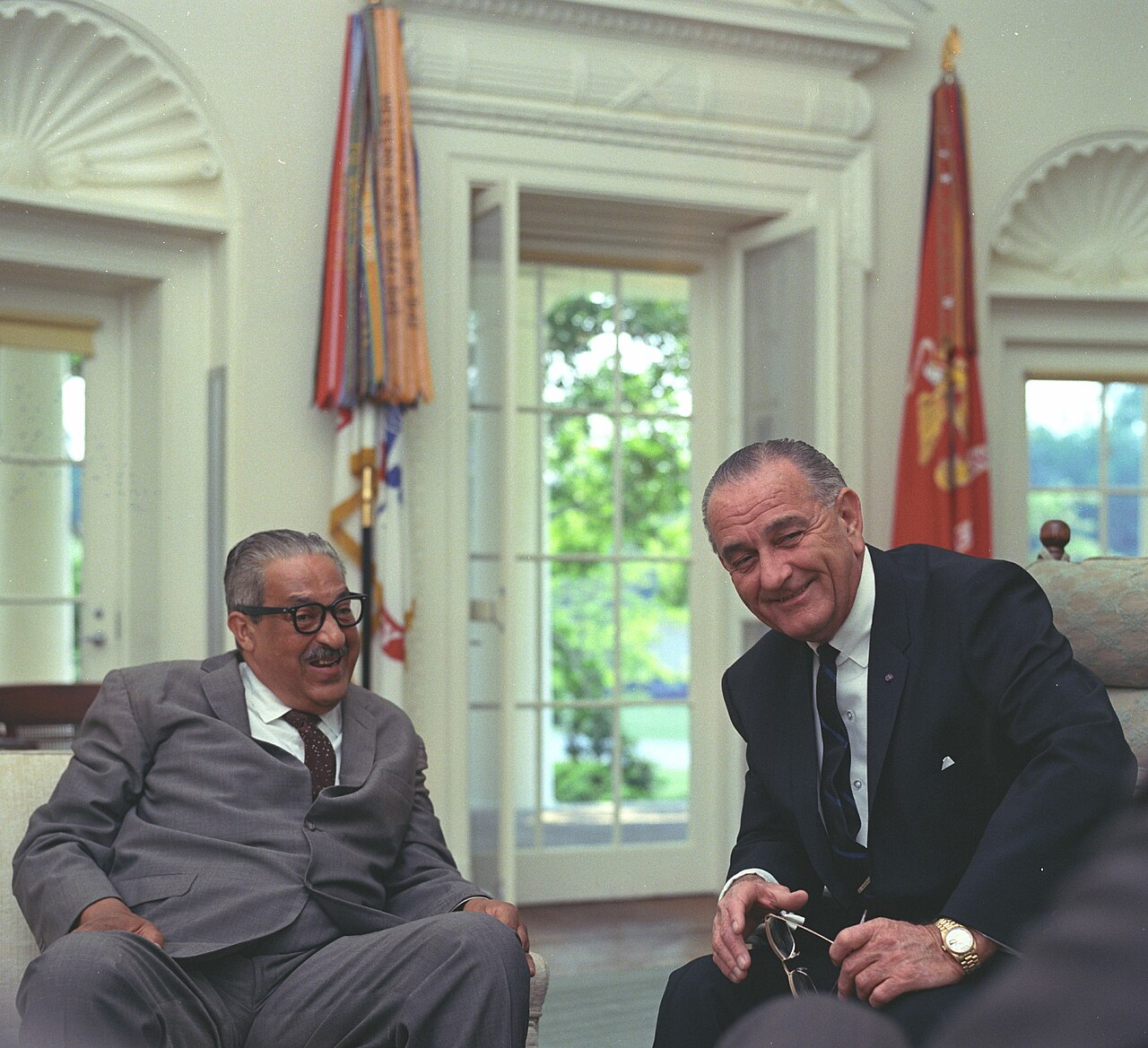
Primary source
Thurgood Marshall and President Lyndon B. Johnson, June 13, 1967
Frank Wolfe · 13 June 1967
Primary source
Cooper v. Aaron
12 September 1958
Ready when you are
Start chatting with Thurgood Marshall now.
20 messages free · No credit card · Available in 50+ languages.