


Primary sourceArtifactc. 1400–1650
Nodena Site
Mississippian peoples · c. 1400–1650
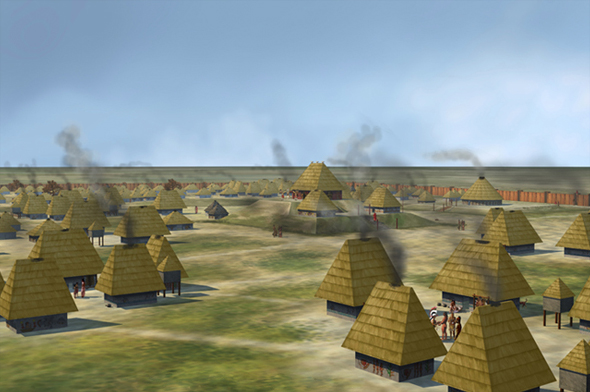
An archaeological site in Arkansas believed to be the Native province of Pacaha, which de Soto's expedition visited and drew into conflict with its rival Casqui.
This site, likely the province of Pacaha, was drawn by de Soto into a war with its rival Casqui during his expedition.
About this source
What it is
The Nodena site in northeast Arkansas is the type site for the Nodena phase, a Mississippian-period settlement dating from about 1400 to 1650. Many archaeologists believe it was the province of Pacaha, visited by Hernando de Soto's expedition in 1542.
Why it matters
De Soto's expedition did not just explore—it intervened in local politics, drawing Pacaha into war with its rival province, Casqui. Sites like Nodena help historians understand the Mississippian peoples who lived there before and during Spanish contact, and how European expeditions disrupted existing Native societies and rivalries.
Look closer
- What does the reconstruction show about how large and organized this Mississippian settlement was?
- Why might de Soto have taken sides in a conflict between Pacaha and Casqui?
- What can archaeological sites tell us that written Spanish accounts might leave out?
This artifact is part of the curated material that grounds the AI version of Hernando de Soto on Humy.ai — when students ask about related events, the AI can quote it and cite it.
More Hernando de Soto sources
Meet the AI Hernando de Soto →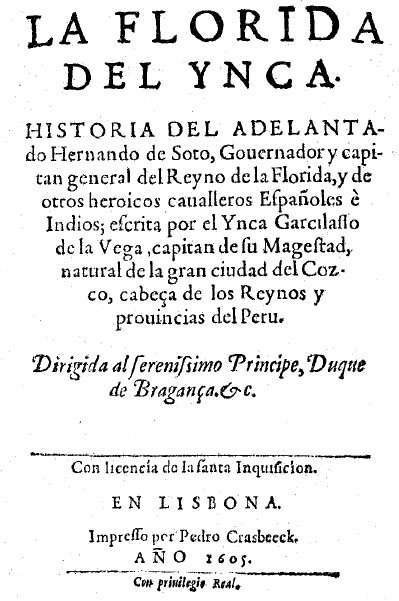 Book
Secondary source
La Florida del Inca
Inca Garcilaso de la Vega · 1605
 Book
Primary source
Verdadera relación de la conquista del Perú
Francisco de Jerez · 1534 (this edition 1891)
 Painting
Secondary source
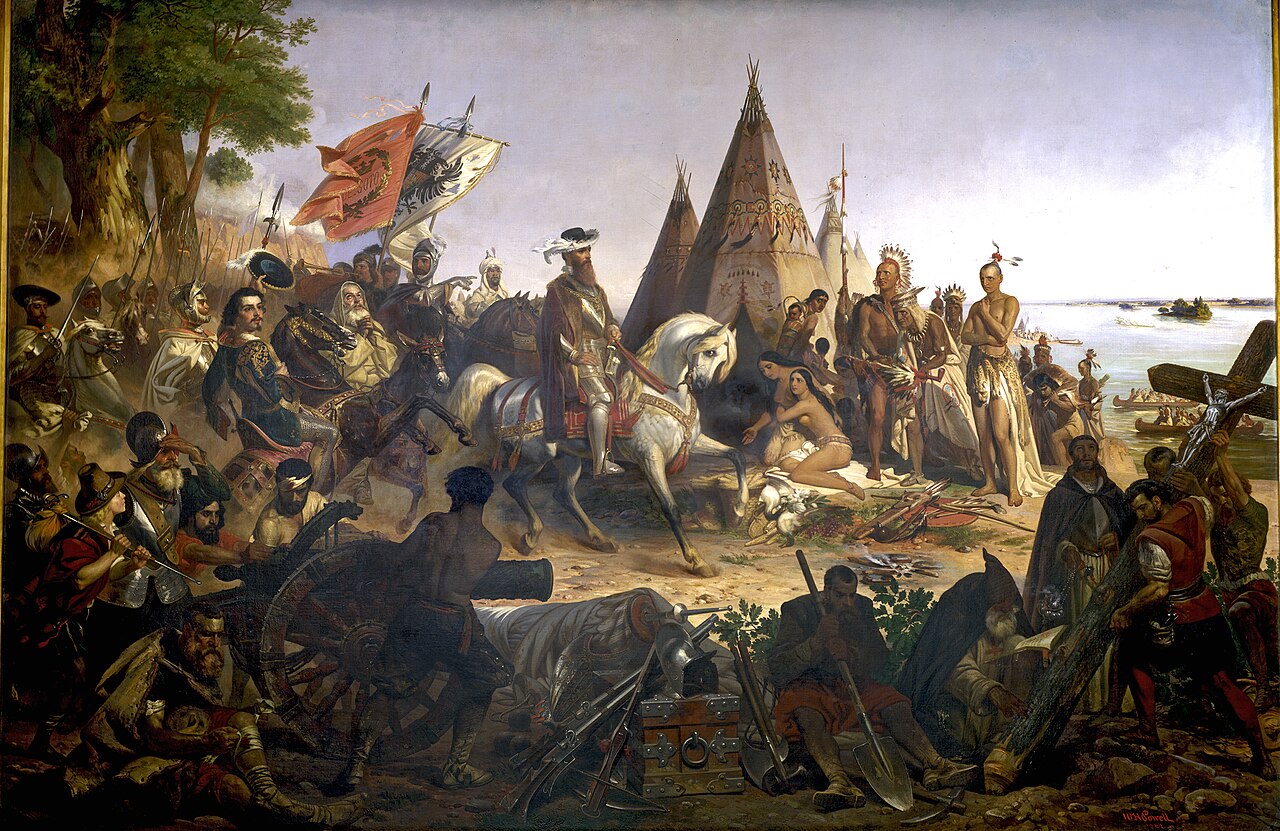
Discovery of the Mississippi by De Soto
William Henry Powell · 1847
 Artifact
Primary source
Florida Museum of Natural History
 Book
Primary source
El primer nueva corónica y buen gobierno
Felipe Guaman Poma de Ayala · c. 1615
Ready when you are
Start chatting with Hernando de Soto now.
20 messages free · No credit card · Available in 50+ languages.