


Primary sourceDocument1843
Note G
Ada Lovelace · 1843
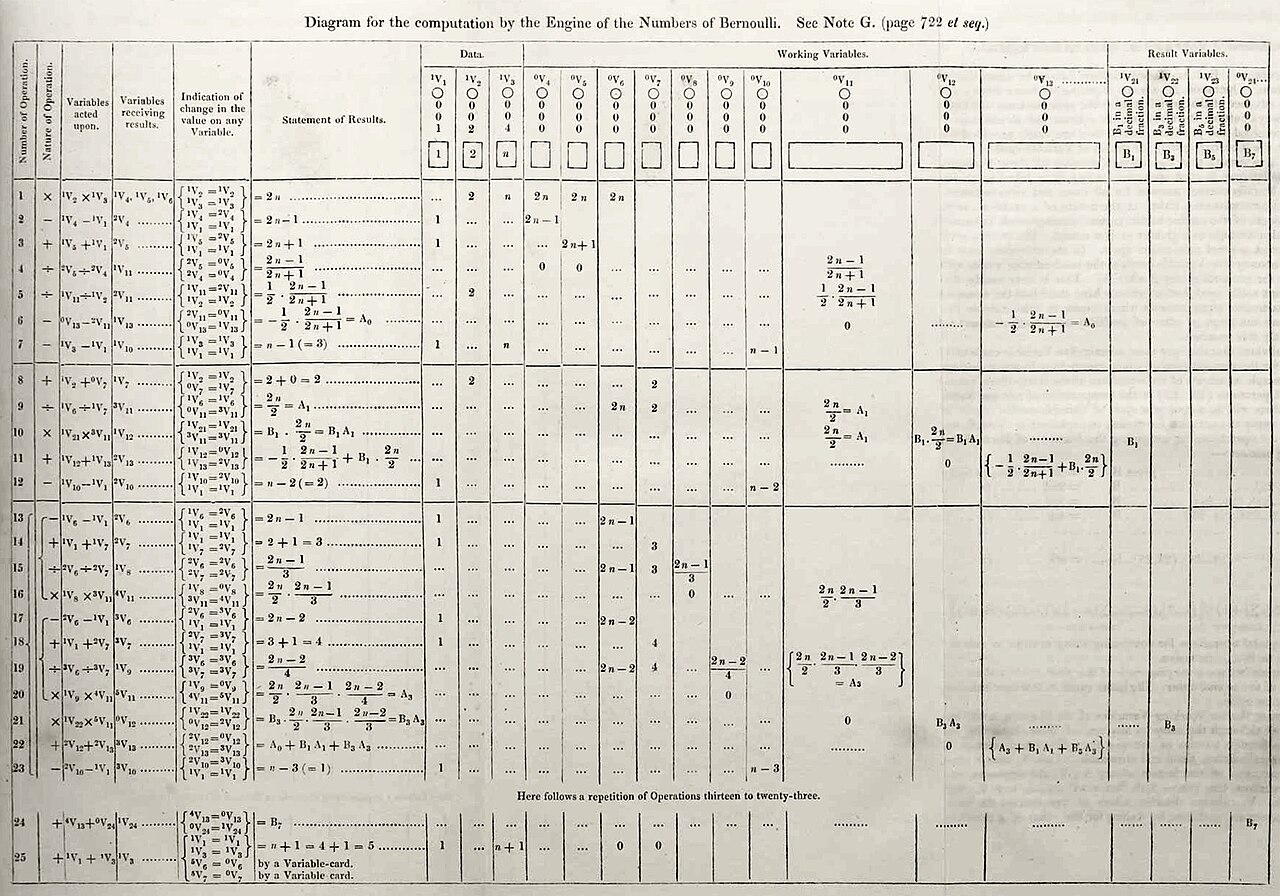
Ada Lovelace's final note to her translation of Menabrea's article, containing a step-by-step table for computing Bernoulli numbers on Babbage's Analytical Engine.
Note G is Lovelace's own algorithm, the achievement for which she is remembered as a pioneer of computing.
About this source
What it is
Note G is the last of seven notes Ada Lovelace added to her 1843 English translation of an article by Luigi Menabrea about Charles Babbage's Analytical Engine. It contains a detailed table of operations showing how the machine could calculate Bernoulli numbers.
Why it matters
Although the Analytical Engine was never built, this note is often called the first published algorithm written for a computer. It shows Lovelace going beyond simply explaining Babbage's machine, working out the mathematics herself and even correcting an error Babbage had made. The note also reveals her bigger idea: that such a machine could one day process more than numbers.
Look closer
- Why do you think Lovelace organised her calculation as a table rather than plain text?
- What does it tell you about her role that Babbage later admitted she found his mistake?
- What does the note leave out, since the machine it describes was never actually built?
This document is part of the curated material that grounds the AI version of Ada Lovelace on Humy.ai — when students ask about related events, the AI can quote it and cite it.
More Ada Lovelace sources
Meet the AI Ada Lovelace →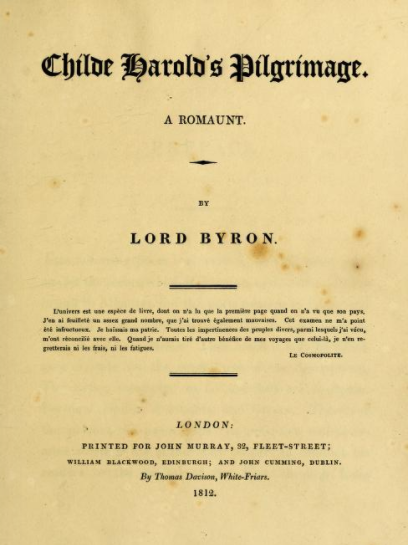 Book
Primary source
Childe Harold's Pilgrimage
Lord Byron · 1812
 Painting
Primary source
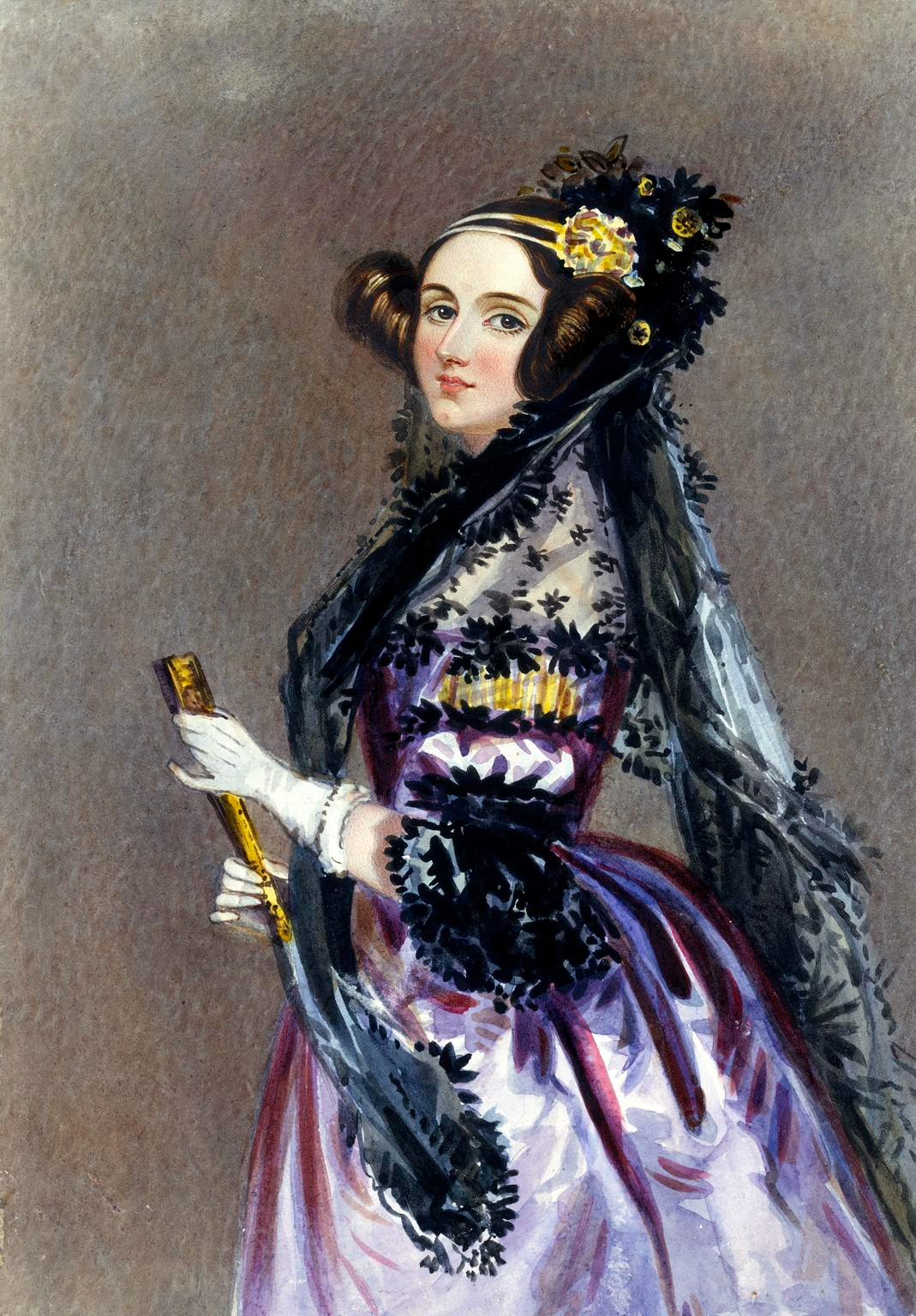
Watercolour Portrait of Ada Lovelace
Alfred Edward Chalon · c. 1840
 Painting
Primary source
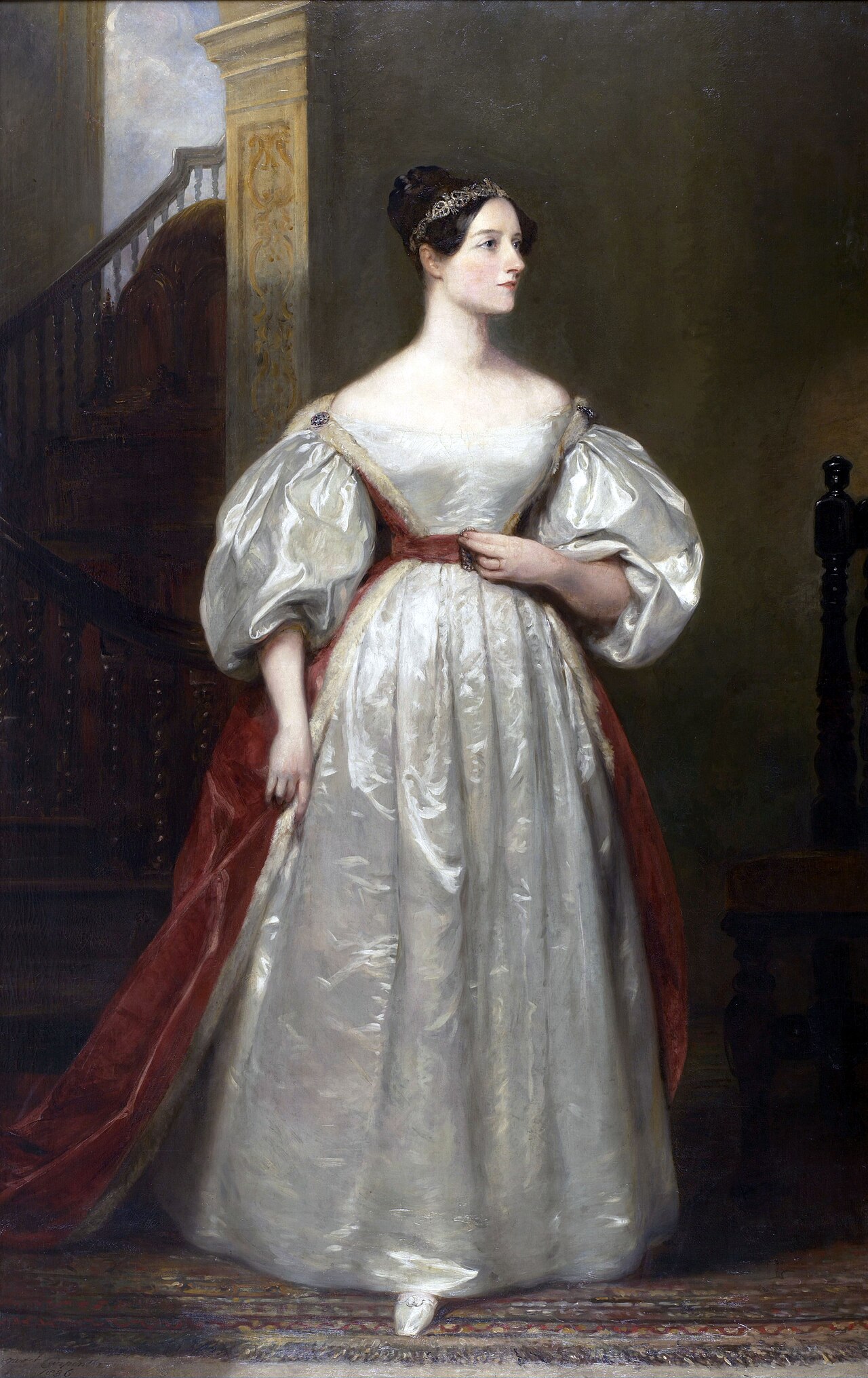
Portrait of Ada Lovelace by Margaret Carpenter
Margaret Sarah Carpenter · 1836
Primary source
Notions sur la machine analytique de M. Charles Babbage
Luigi Federico Menabrea · 1842
 Artifact
Secondary source
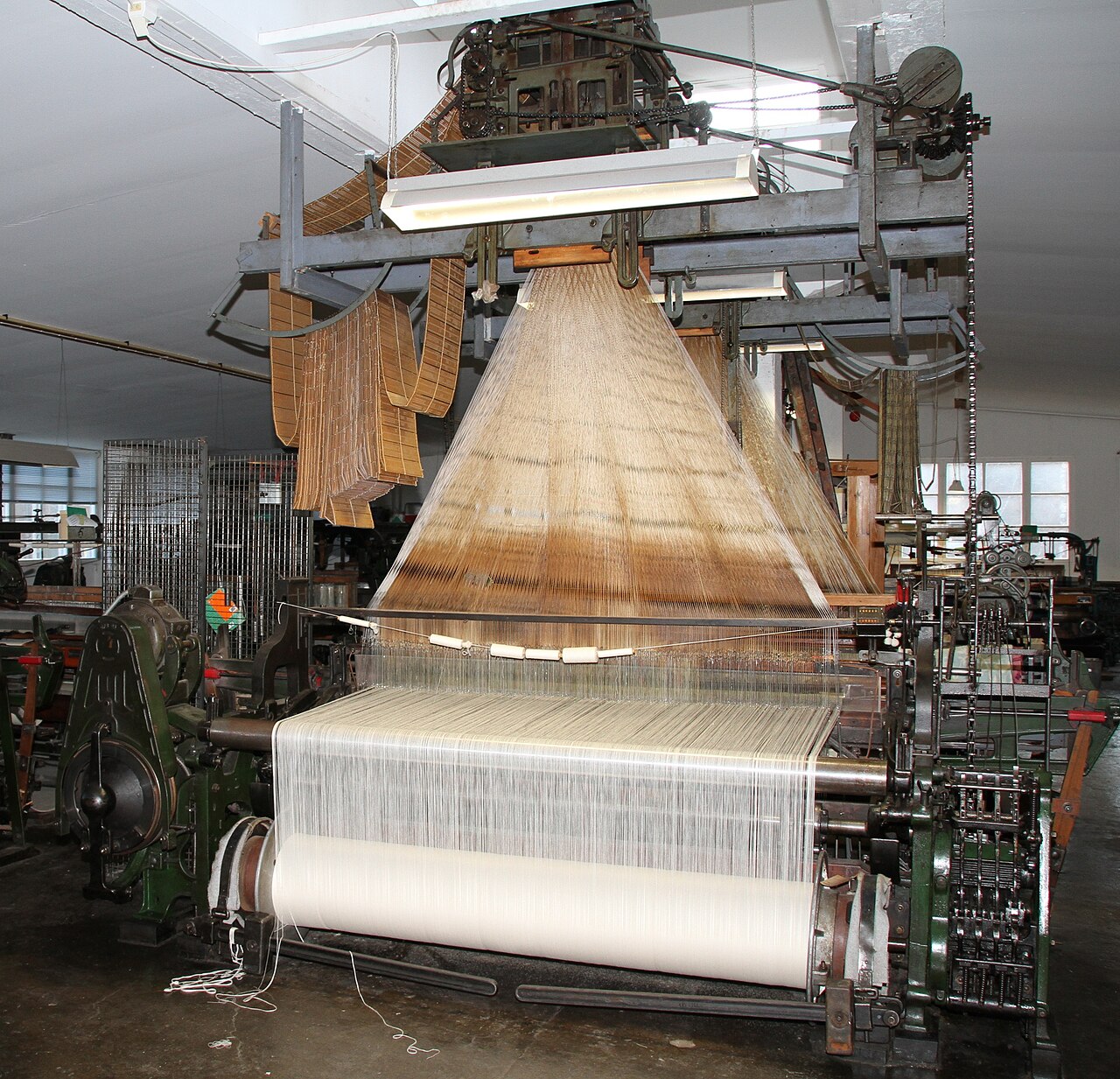
Jacquard Loom
Joseph Marie Jacquard · 1801
Ready when you are
Start chatting with Ada Lovelace now.
20 messages free · No credit card · Available in 50+ languages.