


Primary sourcePainting1837
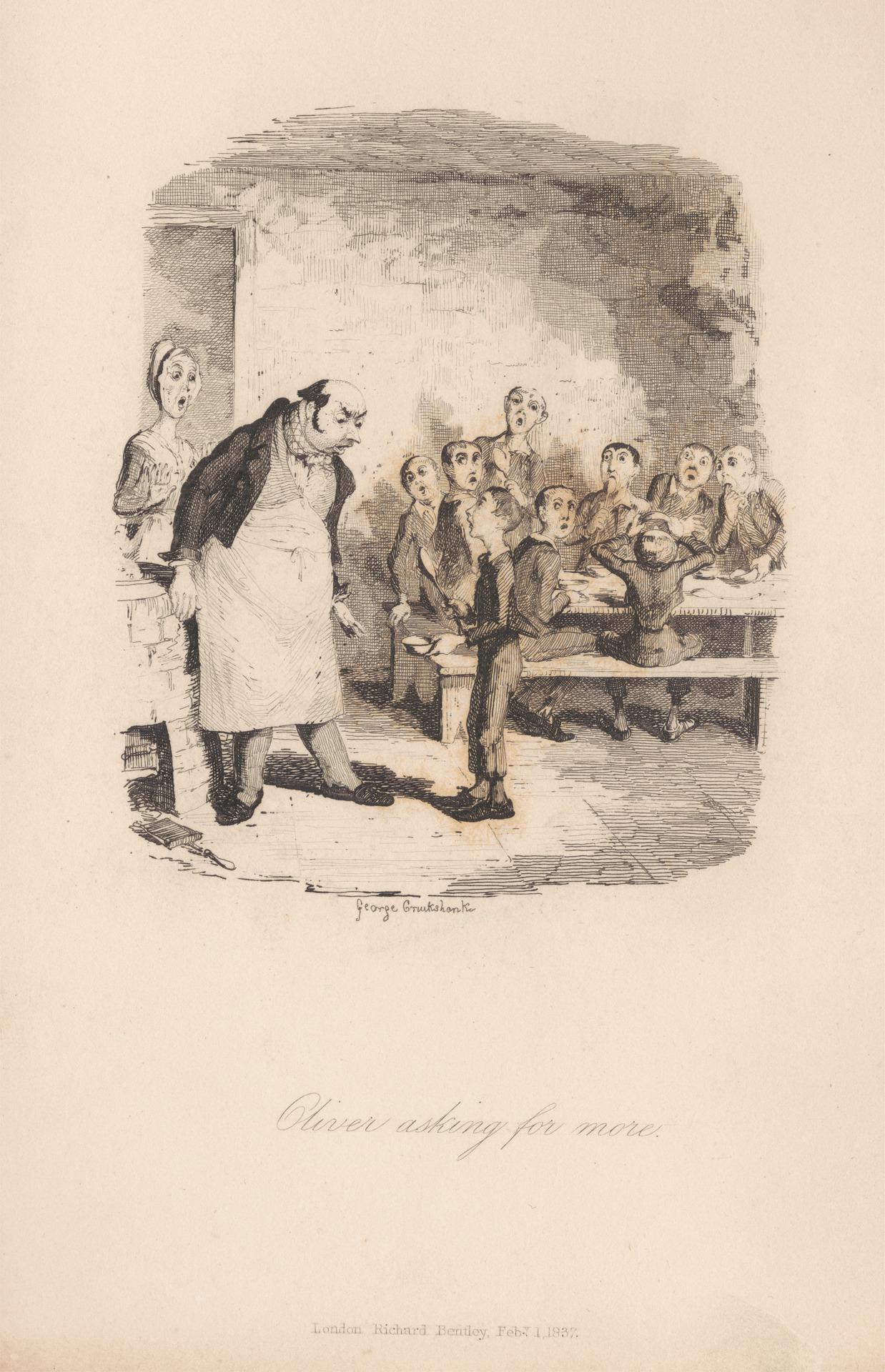
Oliver Asking for More
George Cruikshank · 1837
An 1837 etching by George Cruikshank illustrating a famous scene from Dickens's novel Oliver Twist.
This illustration for Oliver Twist shaped the visual image of the story Dickens wrote about poverty and workhouses.
About this source
What it is
This etching, titled Oliver Asking for More, was made by George Cruikshank in 1837 to illustrate the first edition of Charles Dickens's novel Oliver Twist. It shows a workhouse master looking down at a small boy holding out his bowl, with other boys and a woman watching from the table.
Why it matters
Cruikshank's illustrations appeared alongside Dickens's text and shaped how readers pictured the story's characters and settings, including the harsh conditions of the workhouse. The image became one of the most recognisable scenes connected with Dickens's writing about poverty and child welfare.
Look closer
- What does the posture and size of the boy compared to the adults tell you about his position?
- Why might an illustrator choose this exact moment of the story to depict?
- How does the image's scene connect to wider social problems Dickens was writing about?
This painting is part of the curated material that grounds the AI version of Charles Dickens on Humy.ai — when students ask about related events, the AI can quote it and cite it.
More Charles Dickens sources
Meet the AI Charles Dickens →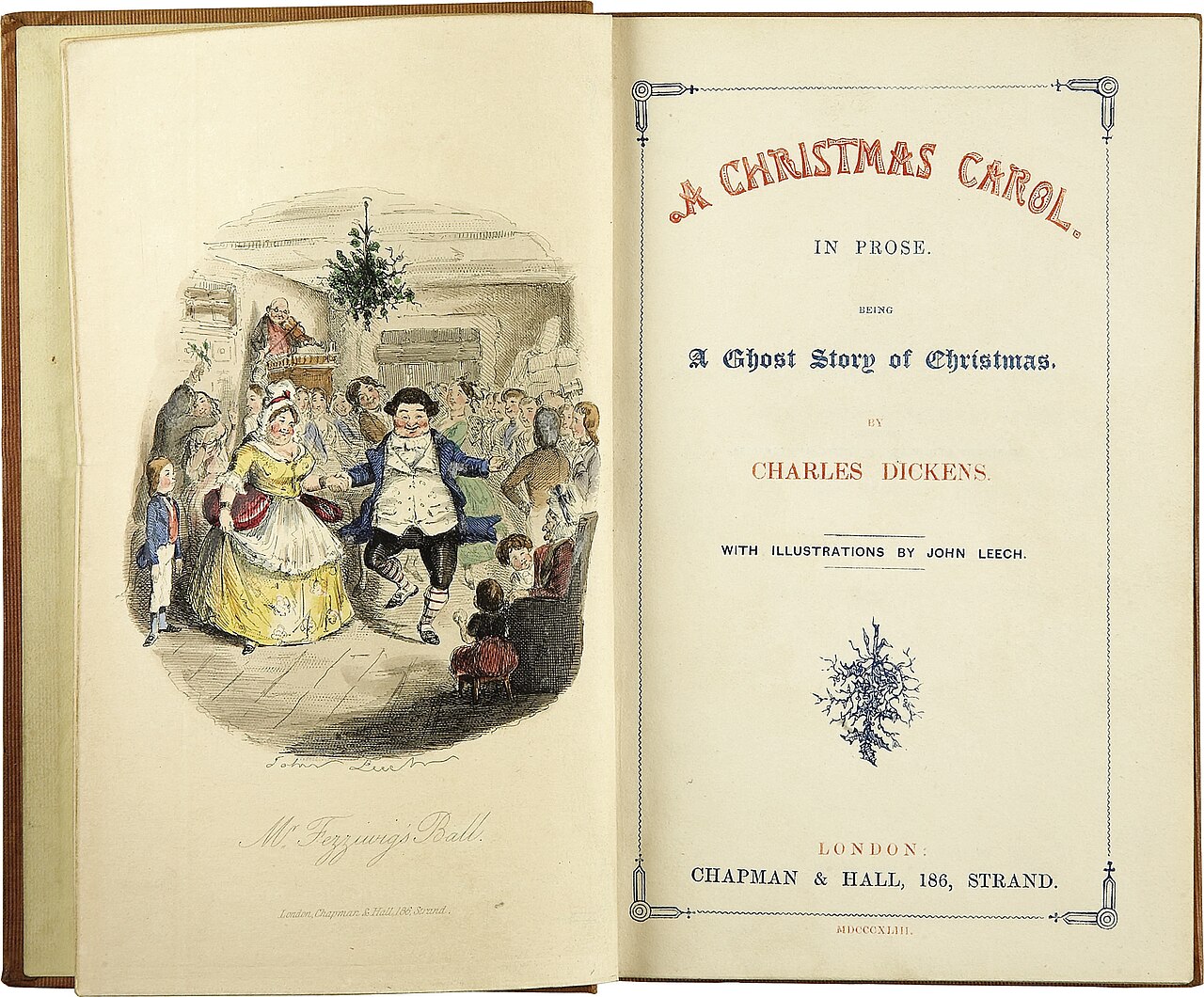 Book
Primary source
A Christmas Carol
Charles Dickens · 1843
 Book
Primary source
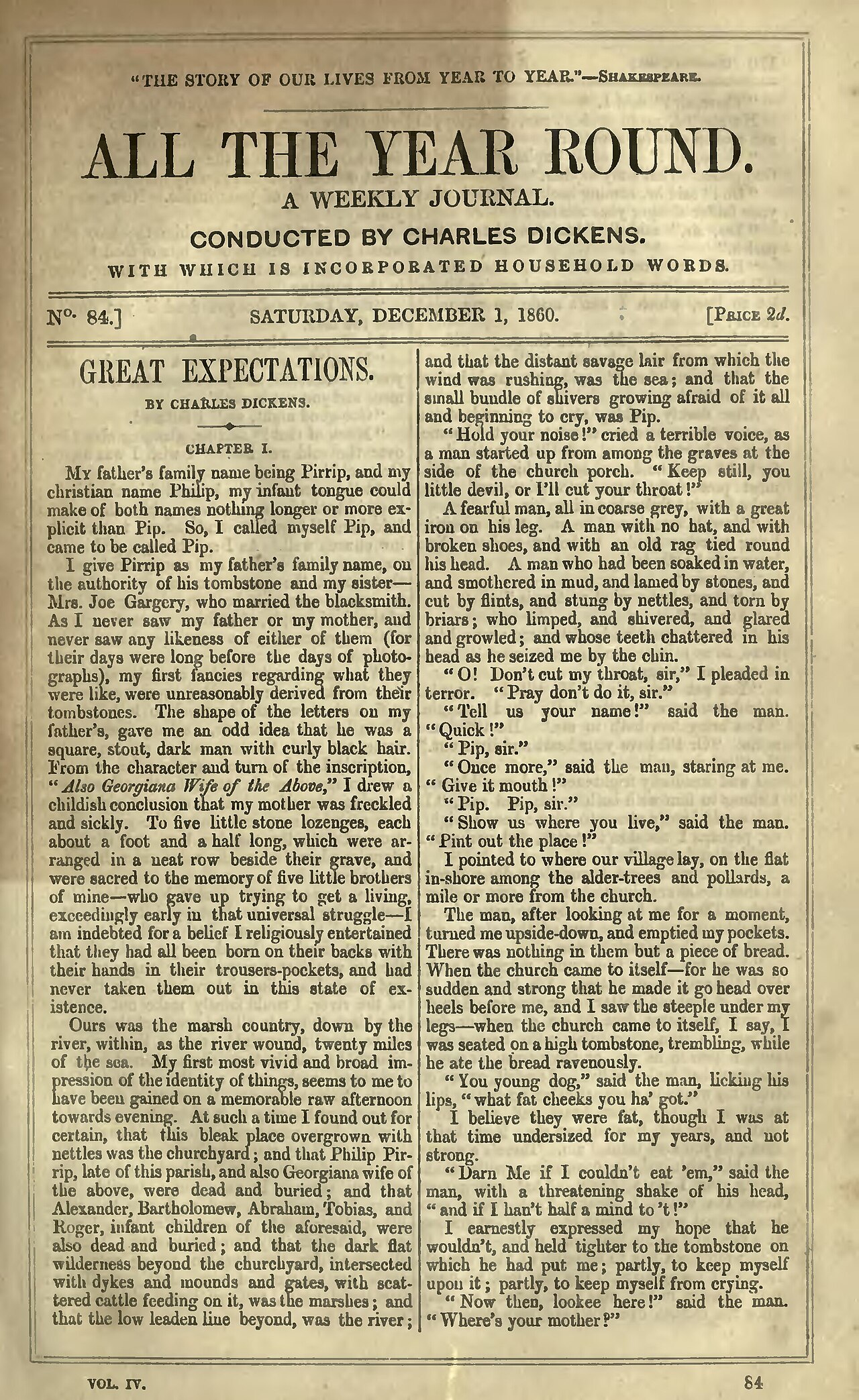
Great Expectations
Charles Dickens · 1860–1861
 Book
Primary source
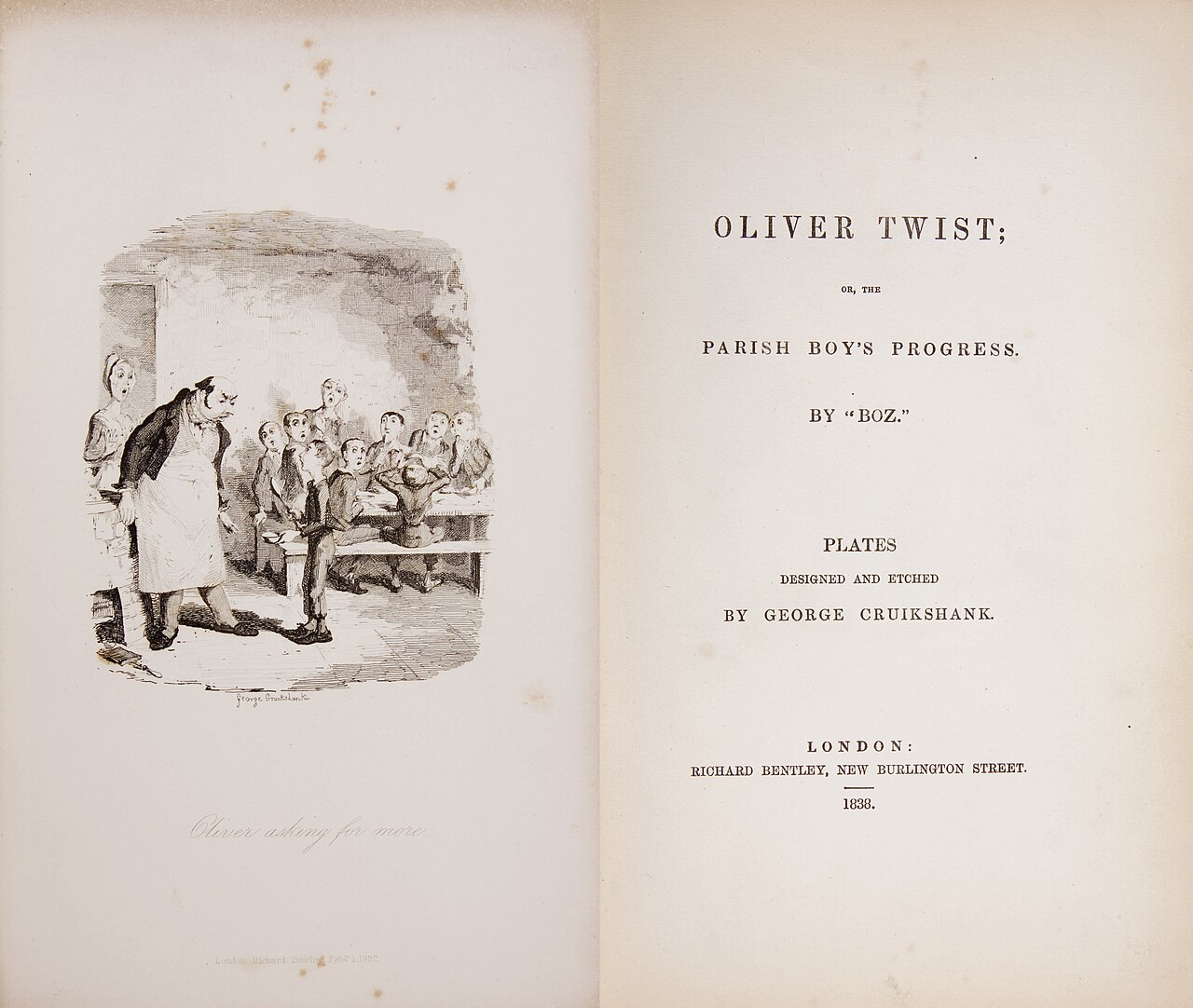
Oliver Twist
Charles Dickens · 1838 (serialised 1837–1839)
 Book
Primary source
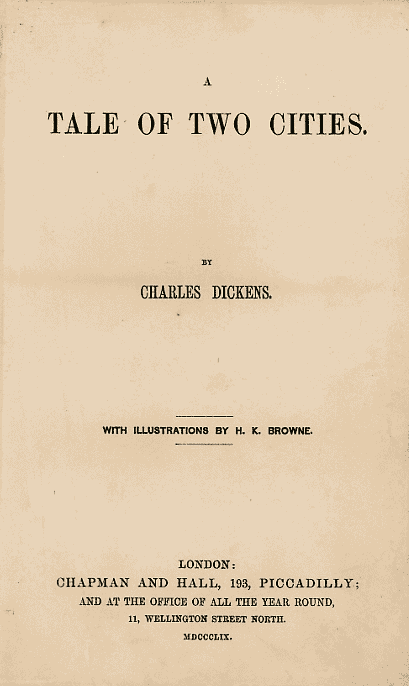
A Tale of Two Cities
Charles Dickens · 1859
 Book
Primary source
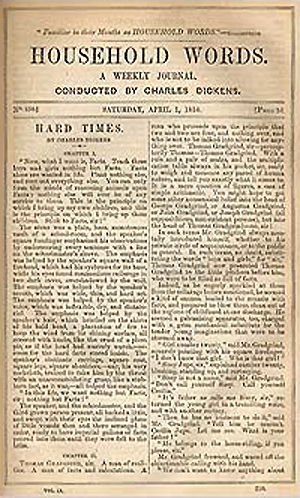
Hard Times: For These Times
Charles Dickens · 1854
Ready when you are
Start chatting with Charles Dickens now.
20 messages free · No credit card · Available in 50+ languages.