


Secondary sourceBook1919
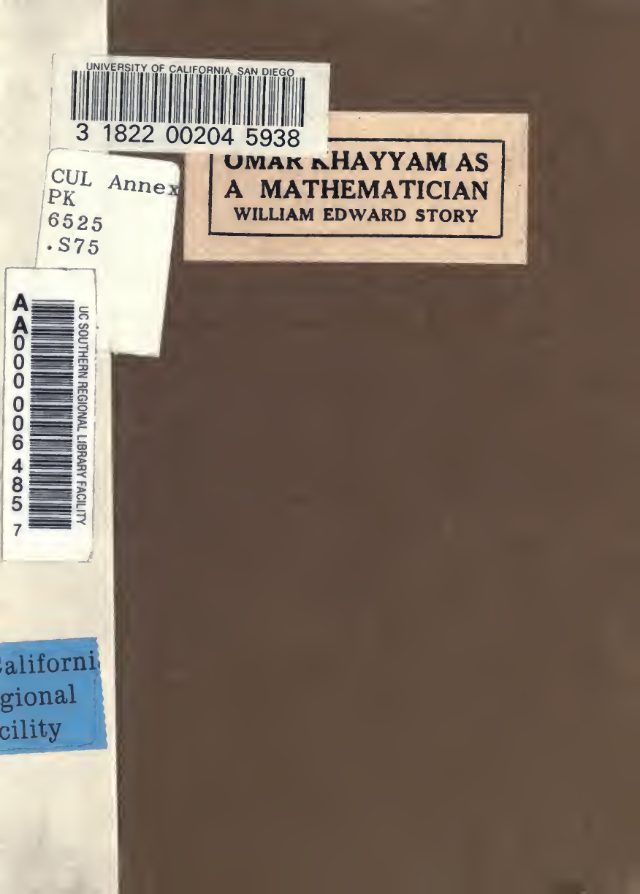
Omar Khayyam as a Mathematician
William Edward Story · 1919
A 1919 scholarly study by mathematician William Edward Story examining Khayyam's mathematical work, including his research on cubic equations.
A mathematician's study of Khayyam's work on cubic equations, honoring his overlooked scientific achievements.
 PDF · 42 pages
About this source
What it is
This short book, read at a 1918 meeting of the Omar Khayyam Club of America and published in 1919, is a study by William Edward Story, a mathematics professor at Clark University, examining Omar Khayyam's contributions to mathematics.
Why it matters
Khayyam is remembered today both as a poet and as a mathematician who worked on cubic equations. This study, written by a professional mathematician centuries after Khayyam's death, shows how later scholars have tried to recover and explain the technical side of his work, which is less widely known than his poetry.
Look closer
- Why might Khayyam's mathematical achievements be less famous than his poetry?
- What challenges might a modern mathematician face in explaining medieval mathematical methods?
- Why was this study presented to a club named after Khayyam rather than published in a mathematics journal alone?
This book is part of the curated material that grounds the AI version of Omar Khayyam on Humy.ai — when students ask about related events, the AI can quote it and cite it.
More Omar Khayyam sources
Meet the AI Omar Khayyam → Book
Secondary source
Rubáiyát of Omar Khayyám
Edward FitzGerald · 1878
 Document
Primary source
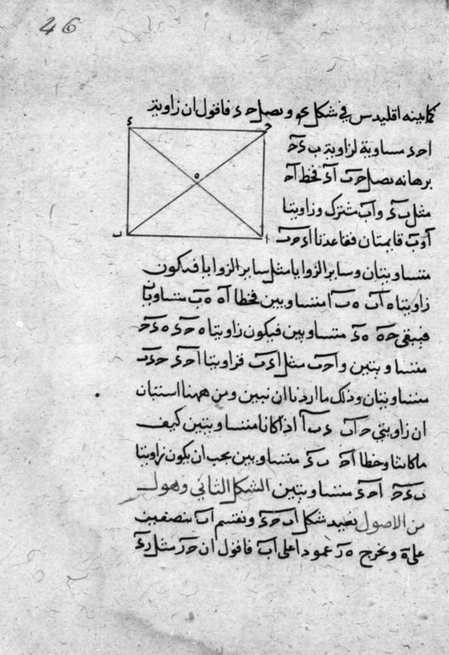
Khayyam Geometry Manuscript
Omar Khayyám
Secondary source
The Rubaiyat of Omar Khayyam (First Edition)
Edward FitzGerald · 1859
 Book
Secondary source
Chahar Maqala
Nizami Aruzi · 1155–1157
 Artifact
Secondary source
Jameh Mosque of Isfahan
841 (rebuilt 1086-1089 under Khayyám's patrons)
Ready when you are
Start chatting with Omar Khayyam now.
20 messages free · No credit card · Available in 50+ languages.