


Primary sourcePainting1923
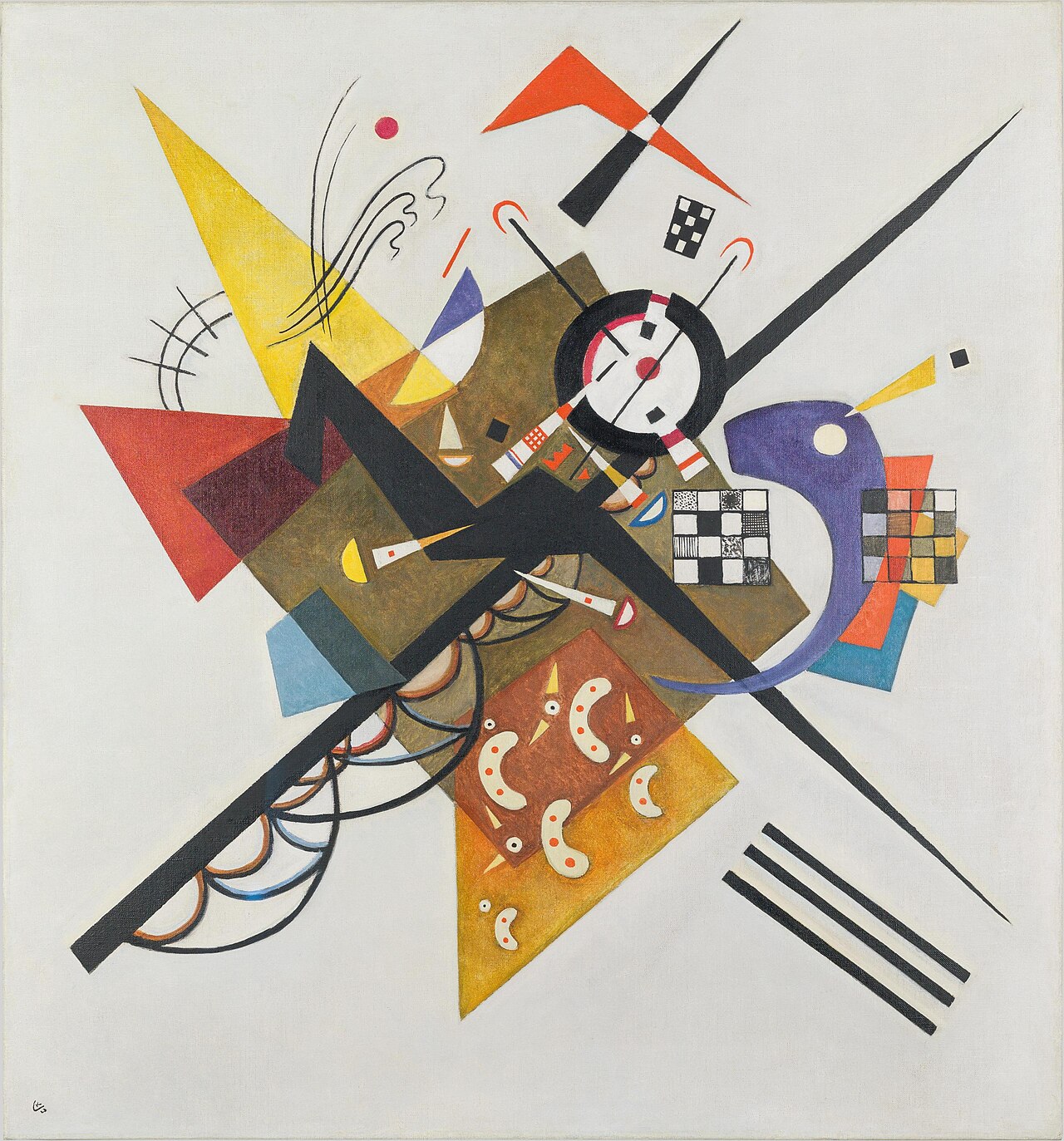
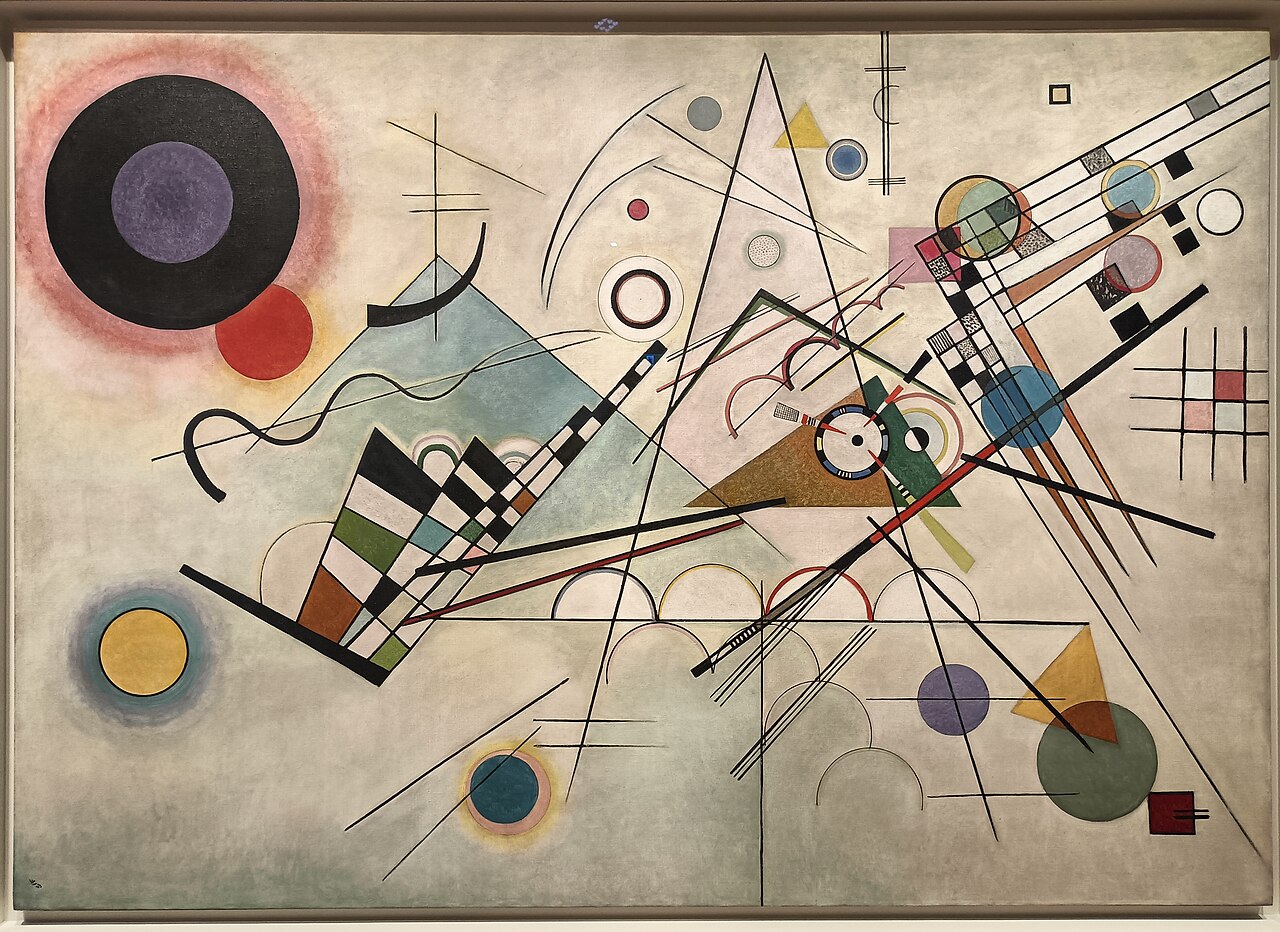
On White II
Wassily Kandinsky · 1923
A geometric abstract painting Kandinsky made while teaching at the Bauhaus, showing sharp diagonals and shapes influenced by Russian Constructivism.
Painted by Kandinsky during his Bauhaus teaching years and kept in his own apartment, showing Constructivist influence on his abstraction.
About this source
What it is
On White II (Auf Weiss II) is an oil-on-canvas painting by Wassily Kandinsky, made in 1923 while he taught at the Bauhaus in Weimar. It once hung in Kandinsky's own apartment at the Bauhaus Dessau, and since 1976 has been in the Musée National d'Art Moderne in Paris, given by Nina Kandinsky.
Why it matters
The painting is built from diagonals, triangles, circles and a checkerboard pattern that recall the Suprematist style of Kazimir Malevich, whom Kandinsky admired. It shows how Kandinsky's abstract language changed at the Bauhaus, moving toward geometric forms that seem to float weightlessly on the white background, reflecting ideas he was exploring about colour, shape and space in his teaching and writing.
Look closer
- Which shapes seem to be floating, and which seem anchored?
- Why might Kandinsky have left so much white background empty?
- Can you spot any shapes that recall earlier motifs, like spears or mountains, from his other paintings?
This painting is part of the curated material that grounds the AI version of Wassily Kandinsky on Humy.ai — when students ask about related events, the AI can quote it and cite it.
More Wassily Kandinsky sources
Browse all 93 →Primary source
Concerning the Spiritual in Art
Wassily Kandinsky · 1911 (dated 1912)
 Painting
Primary source
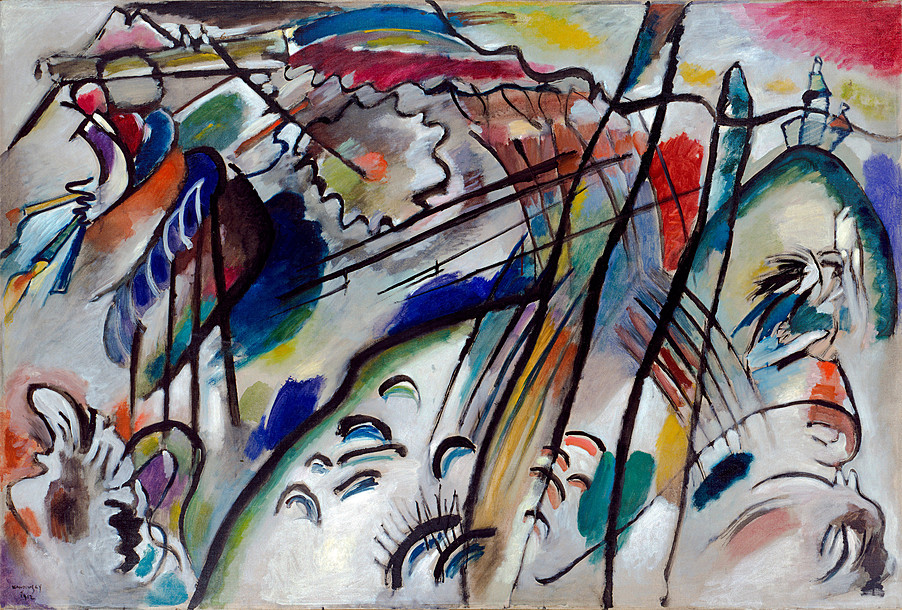
Improvisation 28 (second version)
Wassily Kandinsky · 1912
 Painting
Primary source
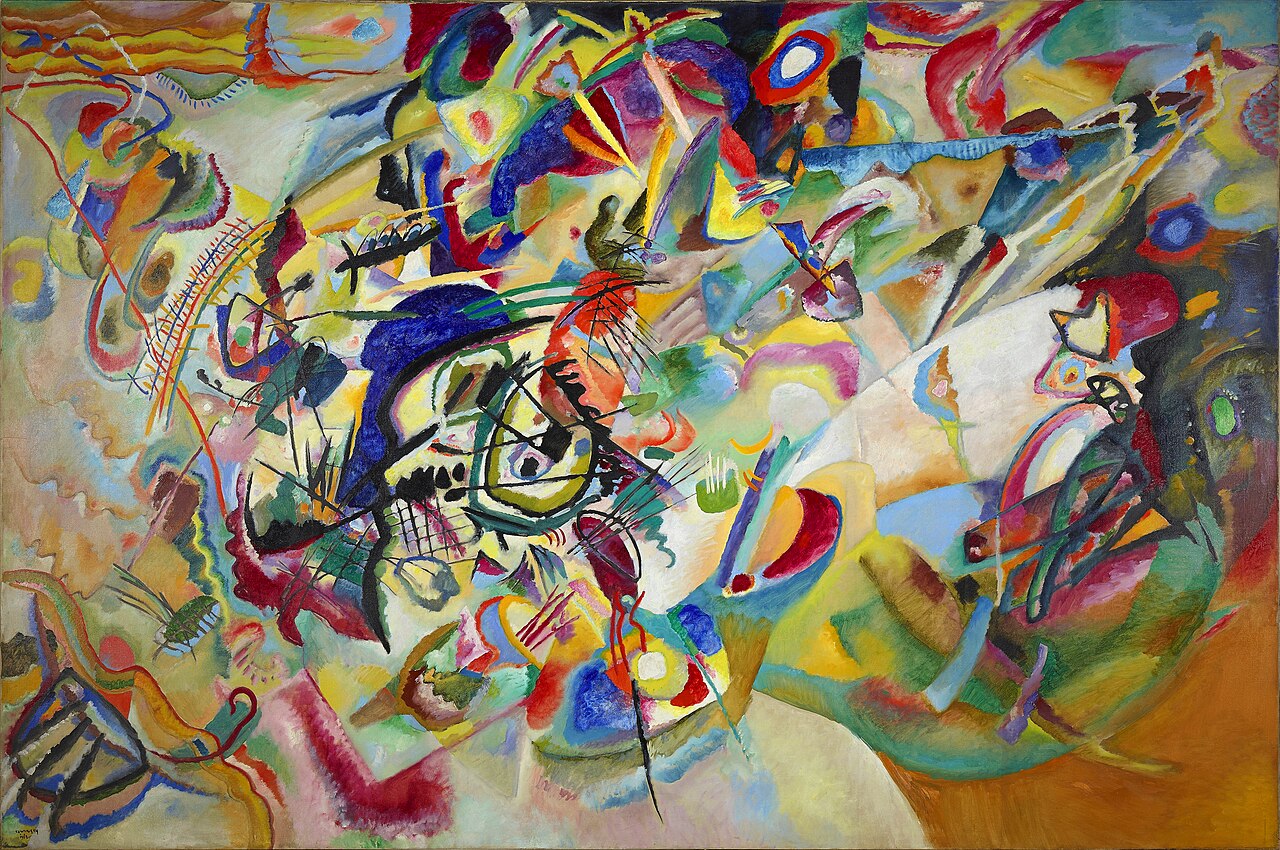
Composition VII
Wassily Kandinsky · 1913
 Painting
Primary source
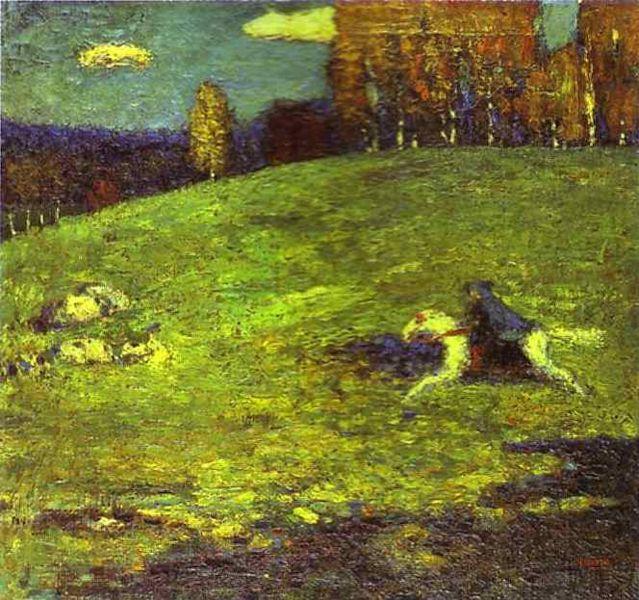
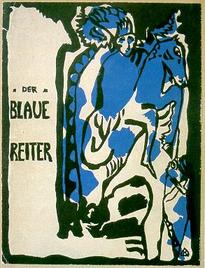
The Blue Rider
Wassily Kandinsky · 1903
Free account
Read every Wassily Kandinsky source
Sign up free →
Ready when you are
Start chatting with Wassily Kandinsky now.
20 messages free · No credit card · Available in 50+ languages.