


Primary sourceArtifactca. 37–43 CE
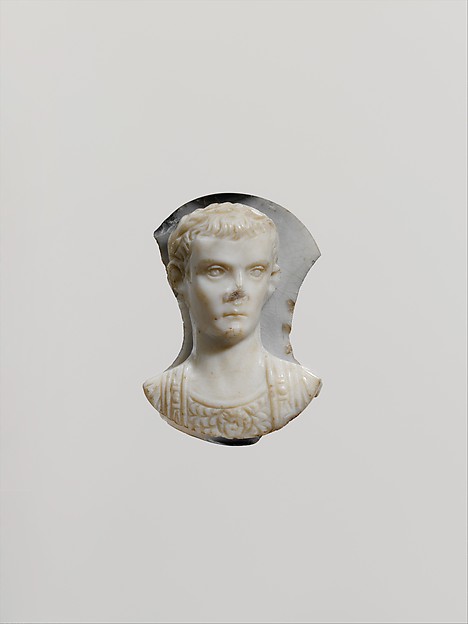
Onyx Cameo Portrait of Caligula
ca. 37–43 CE
A small carved onyx cameo showing a portrait of Caligula, made during or shortly after his reign.
A carved portrait of Caligula made during or just after his reign, showing how he was depicted at the time.
About this source
What it is
This is a small cameo carved from onyx, showing the head and shoulders of a young man in armor, identified as the emperor Gaius, known as Caligula. It dates to around 37–43 CE and is held by The Metropolitan Museum of Art.
Why it matters
Made during or just after Caligula's reign, this cameo is a rare surviving physical image of the emperor created close to his own time. Such portrait objects were used to spread an emperor's image across the Roman world and show how rulers wanted to be seen by their subjects.
Look closer
- What details of hair, clothing, and pose make this look like an imperial portrait?
- Why might someone have carved the emperor's image onto a small, precious stone rather than a large statue?
- What can't this close-up portrait tell us about Caligula's actions or reign?
This artifact is part of the curated material that grounds the AI version of Caligula on Humy.ai — when students ask about related events, the AI can quote it and cite it.
More Caligula sources
Browse all 88 →
Ready when you are
Start chatting with Caligula now.
20 messages free · No credit card · Available in 50+ languages.