


Primary sourceDocument1916
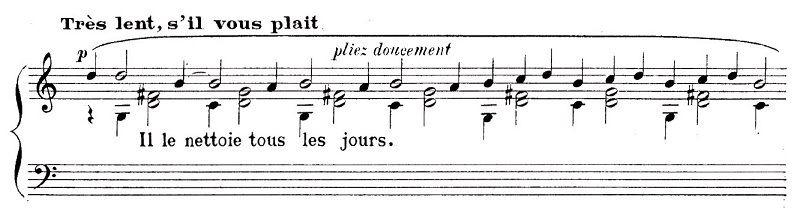
Opening of Trois valses distinguées, first edition
Erik Satie · 1916
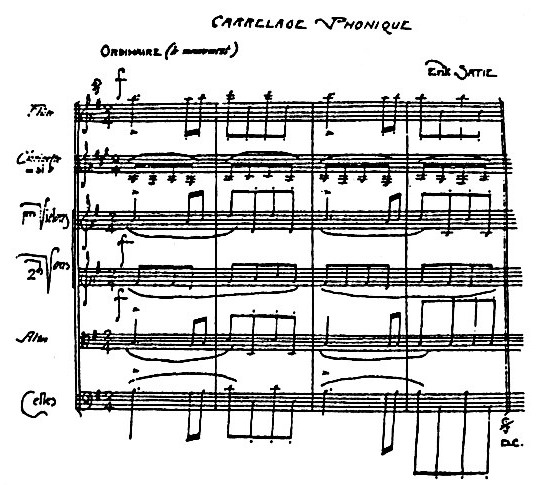
Opening bars from the 1916 first edition score of Satie's piano piece, showing his distinctive performance instructions.
This page from a 1916 first edition shows Satie's own musical notation and his characteristic humorous instructions.
About this source
What it is
This page shows the opening bars of Part II of Erik Satie's Les trois valses distinguées du précieux dégoûté, from the first printed edition of the score, dated 1916.
Why it matters
The page shows Satie's unusual performance markings, written in French rather than the usual Italian musical terms, and a quirky lyric phrase placed beneath the notation. This reflects his tendency to blend humor and music, breaking from traditional conventions of classical composition.
Look closer
- Why might Satie have chosen to write performance instructions in French instead of Italian?
- What effect does the lyric phrase beneath the music have on how we imagine the piece being played?
- What does the slow waltz rhythm suggest about the mood of this section?
This document is part of the curated material that grounds the AI version of Erik Satie on Humy.ai — when students ask about related events, the AI can quote it and cite it.
More Erik Satie sources
Browse all 82 →
Ready when you are
Start chatting with Erik Satie now.
20 messages free · No credit card · Available in 50+ languages.